New books received

A pile of new books received recently. Foucault’s Mal faire, dire vrai is probably the first I will tackle. The Polity ones here were in recompense for a review of a manuscript for them; Alex Jeffrey kindly sent me a copy of his new book The Improvised State, which I’ve mentioned here before; and I’ve been asked to write a review of Re-imaging Western European Geography in English Renaissance Drama. The others such as the Shakespeare, Harvey, Greenblatt and Gottmann were ones I picked up second-hand.

Posted in Books, David Harvey, Michel Foucault, Paul Virilio, Stephen Greenblatt, William Shakespeare | Leave a comment

Reading Shakespeare in Nigeria

I’ve was in Nigeria again the last ten days. It’s not exactly a place for a holiday so when Susan was working in the week I was working hard on the Shakespearean Territories project. I’ve been combining reading plays I didn’t know well – such as Troilus and Cressida and The Two Noble Kinsmen – with more detailed work on ones I knew I would be using for this project.

The first of these was Henry V, which I wanted to analyse in terms of the legal complexities over the claiming of France. This is the discussion of the Salic law, which prevents inheritance through the female line, but the play hinges on the lands to which this applies. If to France, then Henry cannot lay claim to it; if to lands to the east in modern day Germany his advisors say he has a right to the crown of France. I’ve been working almost exclusively on the two scenes of the first Act, leaving the much better known passages aside. There are all sorts of complexities in the first two scenes, concerning why the clergy are urging Henry to France, rather than to take their own ‘temporal lands’, and the threat at home from the Scots. The parallels to Edward III – a play now generally thought to contain at least parts written by Shakespeare – are telling. A reasonably substantial section of a chapter is taking shape on these questions. I also re-read and took notes on the three parts of Henry VI, and am trying to work out how an analysis of these will work in the chapter on the English histories.

I also have a lot of notes on Antony and Cleopatra. These fall into two areas: the parts that talk about the triumvirate, and the tripartite division of the world; and the military conflict at land and sea. In the first, there is all sorts of interesting architectural, military, geometric, cartographic and other language used to discuss the world. The second opens up questions of the different kinds of military power held by Sextus Pompeius, Antony and Octavian. The nautical language is especially vivid.

I don’t think I will do much with The Two Noble Kinsmen, though there are some interesting passages concerning banishment, one seeming throwaway remark that might act as an effective counter-balance to some other claims I make, and a strong passage near the beginning about the importance of burial rites. That echoes Sophocles’ Antigone, not merely in the question of the internment of a body, but also because it is Creon who forbids the burial. I’m not sure what I will do with Troilus and Cressida. One of the audience comments following the Coriolanus paper at Edinburgh was that the bodies in this play, were sexualised in a way that in Coriolanus they tend not to be. It’s a remarkable play with all sorts of imagery of bodies, animals, disease, eating and consumption. There are some interesting comments on calculation and arithmetic that I might do something with.

I also watched some films that relate to the reading and writing I did on this project before I left – Akiro Kurasawa’s Throne of Blood and Trevor Nunn’s version of Macbeth with Ian McLellan and Judi Dench; and the version of Othello with Eamonn Walker and Tim McInnerny. Over a much longer period I’ve also been watching some of the films of the BBC Shakespeare collection filmed in the 1970s and 1980s. While some of these haven’t aged well there are some plays here that I don’t think are otherwise available on film and it’s fun to see some well-known actors much younger.

Now back in the UK and very conscious that a new term is just around the corner, so I’ll have to shift gears somewhat. But I do have a draft book proposal for this project, and plan to submit that before teaching starts.

Posted in Shakespearean Territories, William Shakespeare | Tagged , , , , , , | Leave a comment

Letter from ‘friends of the Politics and Government Department, Ben-Gurion University’

Oren Yiftachel has just sent me this letter to circulate:

NATIONALIST ATTACK ON ACADEMIC FREDOM IN ISRAEL:  A THREAT TO CLOSE THE POLITICS DEPARTMENT, BEN-GURION UNIVERSITY

Your assistance is needed!

As some of you may have heard, the Israeli Council of Higher Education (CHE known also in Hebrew as MALAG) is on the verge of ordering the closure of the Politics and Government Department at Ben-Gurion University (BGU), Beersheba, Israel.

An important CHE meeting on this matter will take place on October 23rd. Hence, the many friends of the department, and of academic freedom and critical thought, feel that international pressure may save this very important department.  We are asking you to write and lobby on this matter, as detailed below.

Background: The Politics Dept. at BGU was founded some 12 years ago, and became home to some of the most progressive researchers, several of them dealing with space, planning and human rights.

During the last five years it became the subject of concerted attacks by nationalist organizations (led mainly by west bank settlers), such as “Im Tirtzu” and “Institute for Zionist Strategy” which began a public campaign of incitement and hatred, supported by large donations by the American Jewish and Christian Fundamentalist Right.   We have firm evidence for all this.

Two years ago the Israeli CHE, now under the rightwing minister of education Gidon Sa’ar, appointed an international evaluation committee for the department. The committee was stacked with conservatives and recommended a range of changes to make the department more mainstream, and improve its ‘political balance’.

As an aside let us remind you that many academic departments in Israel are homogenous, usually on the Zionist-conservatist side. But no official body raises with them the issue of ‘balance’. They are safe under the current hegemony.

Regarding the review process –  the Politics Department at BGU has actually implemented the committee recommendation, and received a good ‘bill of health’ from the international committee. Reacting to this, the Israeli Minister of Education recently decided to appoint another evaluation committee, who recommended to close the department!

Notably, this department is academically very solid, and leads all equivalent Israeli departments in publications, impact factors, student registration and grants.

Any thinking person can clearly see that the intervention is blatantly political. The government and its satellite nationalist organizations have made this department a test case in their quest to silence critical academics.  To this end, we should do all we can to save this department, and with it critical and free research, particularly as regards the Israeli-Palestinian conflict.

Against the worrying scenario of a Mccarthyist purge, we would like to ask for your help. Israeli officials and professors are sensitive to their international image. Hence we ask you to express grave concern about the possible closure of the department. A particularly effective way may be writing directly to the members of the CHE listed below.  Most of them are professors and may be swayed by Israel’s international reputation and by the need to protect academic freedom.

Of course, you may also write to journalist, blogs, petitions, electronic media, to your politicians, your governments and to heads of Israeli universities with a clear message – closing an academic department through blatant political intervention will gravely stain Israel’s standing in the a academy, and hinder future contact and status with academics worldwide!

We appreciate your help very much!

Prof. Oren Yiftachel, on behalf of friends of the Politics and Government Department, Ben-Gurion University.

Members of the Israeli Council of Higher Education

MK Minister Gideon Sa’ar, gsaar@knesset.gov.il

Prof. Jacob Vaya, Tel-Hai College vaya@migal.org.il

Dr. Rivka Wadmani Schauman, Kibbutz Teachers college, Rivka_wad@smkb.ac.il

Prof. Rosa Azhari, Ort Braude College, razhari@braude.ac.il

Prof. Fadia Nasser, Tel-Aviv University, fadia@post.tau.ac.il

Prof. Haim Sandberg, Management College sahaim@colman.ac.il

Prof. Yonina Eldar, Technion Haifa, yonina@ee.technion.ac.il

Prof. Ezri Tarazi, Bezalel Design School, office@tarazistudio.com

Mr. Haim Bibas,Mayor of Modiin, Haim-bibas@modiin.muni.il

Prof. Manuel Trajtenberg, Tel-Aviv University, manuel@post.tau.ac.il, LishcaSec@che.org.il

Prof. Ella Belfar, Ber-Ilan University, ella.belfer@biu.ac.il

Prof. Ora Limor, Open University, orali@openu.ac.il

Prof. Leah Boehm, Israel Aerospace Industries, lboehm@iai.co.il

Prof. Moshe Maor, Hebrew University, msmaor@huji.ac.il

Prof. Rachel Ben-Eliyahu-Zohary, Jerusalem College of Engineering, rbz@jce.ac.il

Prof. Zilla Sinuany, Ben-Gurion University, zilla@bgu.ac.il

Prof. Orzion Bartana, Ariel University Center, obartana@netvision.net.il

Prof. Fuad Fares,Haifa Univesity, ffares@sci.haifa.ac.il

Ms. Pnina Felago, Tel-Aviv Hillel Center, Gadaypninag@hillelisrael.org.il

Mr. Uri Kedar, Student Association, Ben-Gurion University, keidar.uri@gmail.com

Prof. Shmuel Hauser, Academic College Kiryat Ono, shmuelh@isa.gov.il

Prof. Chaya Kalcheim, Hebrew University, kalcheim@cc.huji.ac.il

Dr. Ofir Haivri, Shalem Center, ofirh@shalem.org.il

Dr. Shimshon Shoshani, Past director of education ministry, shoshaniys@gmail.com

Mr. Itzik Shmuli, Head of Israeli student association, itzik.shmuli@facebook.com , office@nuis.co.il

Head of the international Evaluation Committee –  Prof. Thomas Risse, thomas.risse@fu-berlin.de

Update: if you want to write to the committee, as I have just done, then copy and paste following text into your email program. It took me a while to delete the non-address parts, so others might as well benefit from that:

gsaar@knesset.gov.il; vaya@migal.org.il; Rivka_wad@smkb.ac.il; razhari@braude.ac.il; fadia@post.tau.ac.il; sahaim@colman.ac.il; yonina@ee.technion.ac.il; office@tarazistudio.com; Haim-bibas@modiin.muni.il; manuel@post.tau.ac.il;; LishcaSec@che.org.il; ella.belfer@biu.ac.il; orali@openu.ac.il; lboehm@iai.co.il; msmaor@huji.ac.il; rbz@jce.ac.il; zilla@bgu.ac.il; obartana@netvision.net.il; ffares@sci.haifa.ac.il; pninag@hillelisrael.org.il; keidar.uri@gmail.com; shmuelh@isa.gov.il; kalcheim@cc.huji.ac.il; ofirh@shalem.org.il; shoshaniys@gmail.com; itzik.shmuli@facebook.com; office@nuis.co.il; thomas.risse@fu-berlin.de

Posted in Politics, Universities | Leave a comment

Ben Gurion University Politics department under threat again

The Politics and Government department at Ben Gurion University is under threat again – for background see an earlier post on this site. Haaretz has an editorial about it here; and a longer version of the story has been posted at crit-geog-forum.

There was a report on the department last year, which told the department to hire new staff to better ‘balance’ it. It was cloaked as more ‘positivist’ scholars, rather than ‘critical theory’, but there was a more political agenda – this is a department known for its critical voice on Israeli policies at home and abroad. Appointments were made, and in July the external evaluators congratulated the department on their appointments:

The Sub-Committee for Quality Assessment of the CHE has asked us to look at the CVs of the new recruitments at Ben Gurion University’s Department of Politics and Government. We congratulate the department on successfully recruiting three new faculty members in the areas of comparative politics, quantitative methods, and political theory, and for its plans for a fourth recruitment next year. This has been recommended in the report of our Committee. In order to fulfill its deficits in mainstream political science, the department must ensure that these young scholars are given the time, resources, and mentoring to  publish in top ranked international refereed journals and university presses, as well as to carry out the department’s commitment to building a pluralistic curriculum. In addition, we believe that the department should increase its diversity in terms of methods and theoretical orientations in future recruitments, as recommended by our committee.

Prof. Ellen Immergut

Prof. Thomas Risse

But this positive evaluation of the direction they were going, albeit with stress on future things to do, was not enough:

Sept 5, 2012

Recommendation of the Sub-Committee for Quality Control with Regard to the Implementation of the Report of the International Evaluation Committee in the Dept. of Politics and Government at Ben-Gurion University

The Sub-Committee for Quality Control hereby recommends to the Council of Higher Education to accept the following decision with regard to the study program of Political Science at Ben-Gurion University:

1.  The Council of Higher Education commends Ben Gurion University on the granting of new tenured positions to the Department of Politics and Government, aimed at recruiting faculty from within the core of the field of Political Science (qualitative methodological approaches, political theory and comparative politics), as was required by the International Evaluation Committee.

2. The Council takes note of the reservations expressed by members of the International Evaluation Committee with regard to the implementation of recommendations made by the committee regarding the broadening of methodologies and theoretical approaches being taught in the Department of Politics and Government.

3.  In light of these reservations, the Council expresses its dissatisfaction in light of the fact that the Department of Politics and Government did to exploit this opportunity to recruit new faculty members in order to expand upon the methodological approaches employed by faculty in the department in a way that would reflect the pluralism of the discipline, as recommended by the International Evaluation Committee.  Specifically, this relates to the absence of the positivist approach in Political Science among faculty of the department.  The recruitment of faculty from the subfield of qualitative research (critical theory), which is already over-represented in the department, does not follow the recommendations made by the International Evaluation Committee.

4. The Council of Higher Education has decided to establish a sub-committee that will monitor and investigate the changes that have been undertaken in the Department of Politics and Government, following the report of the International Evaluation Committee, particularly with regard to the weight given in courses taught in the department to methodology and theories of the central streams of political science.  This sub-committee will be asked to submit a report to the Council of Higher Education no later December 2012.

5.  In the current situation, we will not allow registration of new students to the Department of Politics and Government for the 2013-14 academic year.  The Department will consider the possibility of registration of new students only after receiving the sub-committee’s report.

There is a clear mismatch here, and hard to see what, beyond a political agenda, is going on. The report is due in only three months time, but new students cannot be recruited for the 2013-14 year in the meantime. Academic timescales mean that students will unlikely wait until then, so the department is going to fail to recruit for the new academic year, probably leading to its closure. Where this leaves existing staff, including those recruited specifically to ‘balance’ things, is unclear.

This is further complicated by the attempts to boycott Israeli academia that some on the left have been advocating. This department is one of the reasons I’ve been against the boycott. It’s home to some very important critical scholars, including David Newman, Haim Yacobi and Neve Gordon. Oren Yiftachel is in the Geography department at this university, with strong links. I’ve spoken at the department twice – the only Israeli University I’ve spoken at to date. Boycotting, and therefore further isolating, critical voices seemed entirely counter-productive to me, though speaking in Israel has been a decision I have long agonised over. Both times I spoke I directly related my work to issues in the country and the region; and both times I made use of the visits to see parts of the West Bank or Beduin settlements in the Negev, some of which I could not have easily visited otherwise. These were facilitated by people at Ben Gurion University.

Do take the time to look at the links above, and consider writing to express concern about what is happening.

Closing a department like this seems unjust, but also counter-productive, given that it will give weight to criticisms of Israeli academic freedom. Somewhat ironically, David Newman, who founded the department and chaired it for many years, has been a strong anti-boycott voice.

Posted in Uncategorized | 1 Comment

Sean Sturm on writing and productivity

Sean Sturm has posted a very good short article on writing, with lots of good references. You can access the full piece here, and do check out his blog Te Ipu Pakore.

Posted in Publishing, Universities, Writing | 1 Comment

Two Geographical Imaginations posts

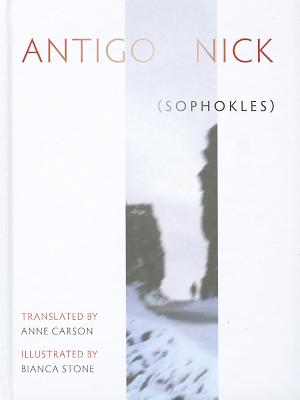
Derek Gregory’s blog Geographical Imaginations has fast become a must-read. Here are two very interesting recent posts – one on Trevor Paglen’s work on US military patches; and one on Judith Butler’s new thoughts on Antigone, inspired by Anne Carson’s Antigonick.

Posted in Derek Gregory, Judith Butler, Trevor Paglen | Leave a comment

Very interesting interview with Eileen Joy on publishing, universities, medieval studies, etc.

Posted in Uncategorized | Leave a comment

Two posts on Urban Africa

Just back from Abuja, a rapidly developing city, I was struck by two posts at Urban Cultural Studies. Both are reblogged, so the following links take you to the original source. One looks at Demographics and Urbanization; the other at maps of urban West Africa.

Posted in Uncategorized | Leave a comment

Du Gouvernement des vivants – more details

Foucault’s 1979-80 course is forthcoming in a little over a month – the date has been put back a couple of weeks. Seuil now has a page up, which Clare O’Farrell’s Foucault News blog has just linked to. Both Clare and Seuil have the text I assume will be on the backcover. There are some interesting claims there relating this course to his entire series of lectures in terms of truth; revealing that there is another reading of Oedipus in the course (he features heavily in the still-untranslated 1970-71 course); and previewing the material on ethics and Christianity that many of us have really been looking forward to.

There is a different blurb on Amazon.fr which reads:

Prenant ses distances avec la problématique du pouvoir-savoir, développée dans les années 1970, Michel Foucault se propose d’étudier ici la question du gouvernement par la vérité. Nouveau déplacement à l’intérieur du champ de la « gouvernementalité » ouvert en 1978, la question n’est plus seulement de retracer l’essor, dans la culture occidentale, d’un art de « conduire la conduite » des hommes, mais d’examiner la façon dont se constitue le sujet dans le jeu du pouvoir et de la vérité. Comment se noue le rapport du sujet à l’obligation de dire vrai sur lui-même ? Ce projet conduit Michel Foucault d’une relecture de l’Œdipe-roi de Sophocle à l’analyse des « actes de vérité » propres au christianisme primitif, à travers les pratiques du baptême, de la pénitence et de la direction de conscience. Foucault choisit de s’intéresser aux actes par lesquels le croyant est conduit à manifester la vérité de ce qu’il est lui-même, en tant qu’être indéfiniment faillible. De l’expression publique de sa condition de pécheur, dans le rituel de la pénitence à la verbalisation minutieuse de ses pensées les plus intimes, dans l’examen de conscience, c’est l’organisation d’une économie pastorale centrée sur l’aveu que l’on voit se dessiner. Ce cours, lié au projet de l’Histoire de la sexualité, ne constitue pas seulement une étape essentielle, jusqu’à présent méconnue, de l’ « histoire du sujet » poursuivie par Foucault jusqu’à ses derniers travaux ; il révèle un visage insolite du philosophe, dans l’attention rigoureuse qu’il porte aux écrits des premiers Pères de l’Église.

There are some slightly different claims here – suggesting it is part of a distancing from the power-knowledge problematic; stressing truth as an new element within the analysis of governmentality; and indicating that Foucault’s interest with the church is not just around sin, penitence and confession but also baptism and general moral and spiritual conduct.

Posted in Michel Foucault | Leave a comment

Poster and Website for Warwick ‘Shakespearean Territories’ lecture

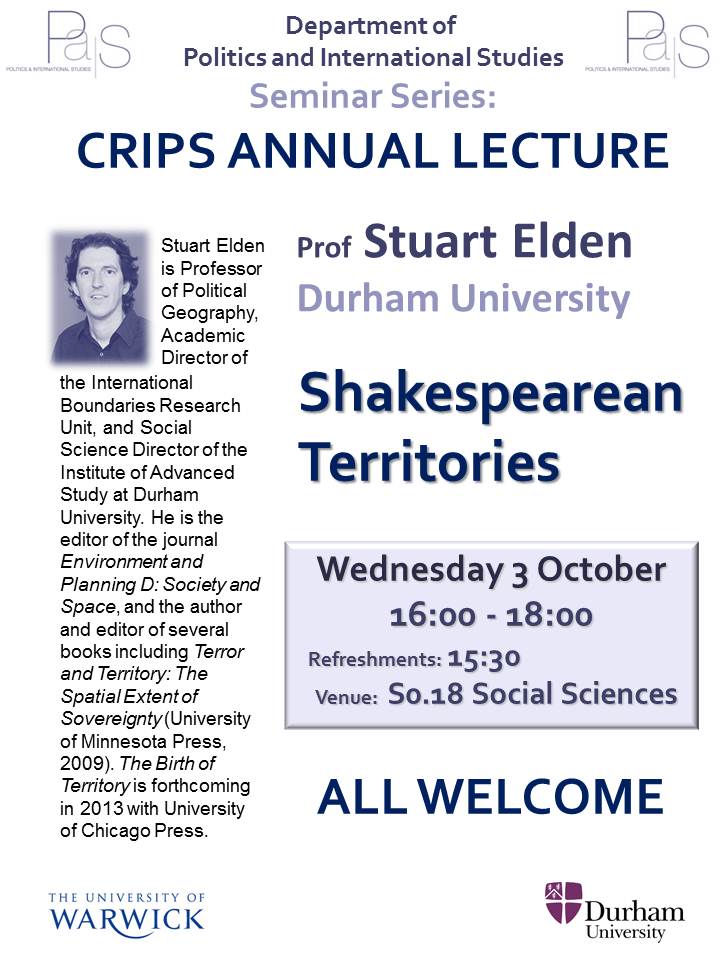
The abstract for my lecture at University of Warwick has been posted online. They’ve also produced this poster.  It will be ten years almost to the day that I left the department, though I’ve been back a few times to give talks or be part of workshops since then.

Posted in Conferences, Shakespearean Territories, William Shakespeare | 1 Comment