Territory and Geopolitics

Yesterday was the last lecture of new material on my level 3 module Territory and Geopolitics (handbook/reading list here). There is a revision lecture after the Easter break. Obviously it’s for those who took the class to say how it went, but unless my ability to gauge a student audience is completely off, then I think it went fairly well. Teaching it was frequently my highlight of the week.

The first term is largely historical, working through a range of time periods and looking at the relation between place and power, out of which things approaching what we now call territory and geopolitics emerged. So there were lectures on Ancient Greece, Ancient Rome, the Middle Ages, the Renaissance, Early Modern Europe, the Birth of the Nation State, and Colonialism. In term 2 we shifted to more contemporary material, looking at some themes – Boundaries, Frontiers and Maps – and some 20th century examples including the inter-war period, World War II, the Cold War, Globalisation, Gulf War 1991, Humanitarian Intervention and the ‘War on Terror’. Yesterday I tried to tie up some themes and open up some others with a lecture on Security, Resources and Environment. In my first two years at Durham (2002-03; 2003-04) I taught a level 2 module called Territory and Politics, and there was, especially in the first term some re-use of material, though the lecture component was longer each week so a lot of stuff was added. Term 2 was largely new material.

I taught the class in one three-hour session, the first part a lecture, then after a short break around 90-100 minutes in, half the class came back for a seminar. About 60 students took the class, so 30 students in the seminar meant it was possible to have much more discussion. I usually got them into groups of 4 or 5, put up some discussion questions and then with a colleague – either John Donaldson or Andrew Burridge from the department’s International Boundaries Research Unit – went round the groups listening in, contributing to the discussion or answering questions. Given each individual student only came every other week the seminar had to cover two lectures worth of material, but it did mean we got to know the students in much smaller groups and had an ongoing sense of how they were engaging with the material. Unfortunately time-tabling restrictions next year mean I cannot have a three-hour slot and will need to have 2 hours plus 1 hour. I’m hoping they can at least be on the same day, and in that sequence, otherwise it will really mess up the teaching method.

Given the subject matter, there is obvious linkage to my research over the past several years, especially The Birth of Territory and Terror and Territory. But I taught on these subjects (though not quite in this way) before either book was written, and to some extent the teaching inspired the research, rather than just vice versa. Obviously some of the research fed back into the lectures, especially this year, but there was no sense from my side that I was merely teaching my books.

I put the Powerpoint slides up a few days before each lecture, and was pleased to see that most students looked at these in advance, perhaps printed them off, and still came to the lecture. I don’t use separate notes, but there is a lot of material in the lecture that isn’t just reading the slides. The slides tend to have maps, quotes, dates, examples, etc. and many students wrote notes onto printouts of the slides. The advantage of this is that nothing that goes onto the screen needs to be written down – no trying to copy down a quote, for example – but rather they can write commentary on the quote, or whatever, either based on what I say or, better, what they think about it. I used video – i.e. films or clips from the web – in a way I’ve not before. I’ll try to develop that further in future years.

As I’ve said before, going back to teaching was not what worried me after the years on a fellowship. It was the administration that goes with it. And yes, this meant there were – to my mind unnecessary – restrictions on things. To take the most striking example, the exam which the students will sit in May had to be be set in November. So I was teaching the class with one eye on a pre-set exam, instead of setting an exam when the class had be taught. And in November I had to set three exams – a mock, the May exam, and a resit for September (without yet knowing if anyone would actually need to take this). These have to go through so many layers of checking – internal ‘nitpickers’ committee (I’m not joking, it really is called that) and potentially back to me; external examiners and potentially back to me; Board of examiners meeting… – that November becomes the setting deadline. Does this genuinely improve the quality of teaching or the way students are assessed? I am not at all convinced.

Equally I have to specify, in advance, what each session will be on. Okay, this sounds good practice. But it has to be done so far in advance that I had to specify the teaching for next year before I’d taught more than a few sessions of this year. So there is precious little room for manoeuvre if, during the course of this year, I realised that things were not structured right, a different session would be better, etc. Or, obviously, to react to events, other than within the framework I’d already set up. Again, I’m not convinced that actually benefits the students.

But overall it was an enjoyable experience, and alongside the teaching I did on the level 2 Political Geography module and the level 3 Theory and Geography one a good return to teaching after a few years away. (You can find the reading lists for my lectures for those modules here and here.)

Posted in Politics, teaching, Territory, Terror and Territory, The Birth of Territory, Universities | Leave a comment

How (not) to write about Africa

In Granta by Binyavanga Wainaina – thanks to Maoquai for the link.

Posted in Politics | 2 Comments

Review of Jenny Edkins, Missing: Persons and Politics

Over at the Society and Space open site you can find my review of Jenny Edkins’s new book from Cornell University Press, Missing: Persons and Politics.

Posted in Books, Jenny Edkins, Politics, Society and Space | Leave a comment

Heidegger’s handwriting

Came across this again (it’s mentioned in Speaking Against Number). Something very interesting in seeing the handwriting of people you’d only before read in print. With Foucault and Lefebvre I’ve seen originals in the archives; with Heidegger at the Heidegger museum in Meßkirch.

Posted in Henri Lefebvre, Martin Heidegger, Michel Foucault, Speaking Against Number | 1 Comment

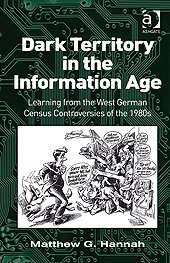
Matt Hannah – Dark Territory Review forum

Review forum on Matthew Hannah’s book Dark Territory in the Information Age – here (requires subscription). Pieces by Neil Smith, Stephen Legg, Bernd Beliner, Patricia Ehrkamp and Jeremy Crampton, with a reply by Hannah. Such a shame about the prohibitive price of the book. Matt’s earlier book Governmentality and the Mastery of Territory in Nineteenth-Century America was excellent – sample available here. (Via Open Geography)

Posted in Books, Jeremy Crampton, Matthew Hannah, Neil Smith, Territory | Leave a comment

Libyan take on the email scam

I’ve said before someone should write a piece on the geographies, or perhaps better the geopolitics, of scam emails. This is the first one I’ve had that takes the Libyan conflict as its backdrop. From none other than ‘Mrs Gadaffi’.

Greetings,

I am Hajia Safia Farkash Gaddafi the wife of the late Libyan Leader Colonel Muammar Gaddafi. Following the recent rebellion in my country and the brutal death of my husband on the 20 Oct 2011, I have been thrown into a state of utter confusion, frustration and hopelessness. I have been subjected to psychological torture here in Algeria where we are currently taking refuge.

My son was killed by the rebels for an offense he did not commit. As a widow that is so traumatized, I have lost confidence in everybody both here in Algeria and back home in Libya where the people that pretended to be loyal to my husband have now abandoned us. You must have heard over the media reports and the internet on the recovery of various huge sums of money deposited by my husband in different firms abroad, some companies willingly gave up their secrets, disclosing our monetary transactions with them for robust reward from the new Libyan government. In fact the total sum discovered by the government so far is in the tune of US$11B (Eleven Billion US Dollars). And they are not relenting their effort in making me and my family poor for life. This is purely a political witch hunting to bring me and my family down. Yes, I am aware that my husband misappropriated Libyan funds, but let us not forget that there is no leader who hasn’t and despite the fact that he did so, he equally alleviated poverty and improved the living standard of over 80% Libyans. Including the imposition of agriculture and pipe-borne water supply all through the desert areas of Libya.

There is a certain amount of money kept securely by my late husband in Europe in my name and I am the only person that is privy to the location. I am writing to you out of desperation. I want you to assist me in moving this money out of its present location to anywhere you deem save for a percentage.

I will give you more information as to this regard as soon as you reply. I repose great confidence in you hence my approach to you through email. Due to the security network placed on the affairs of my family, email has been my only means of communication and I cannot afford to do anything on my own, so, I decided to contact someone who is not in any way connected to my family.

I will appreciate your timely and favorable response.

Best Regards

Hajia Safia Farkash Gaddafi

Posted in Politics, Uncategorized | 5 Comments

Scales of life and the universe

Very good interactive images here.

Posted in Uncategorized | Leave a comment

Stephen Graham on Olympic London

Great piece in The Guardian.

As a metaphor for the London Olympics, it could hardly be more stark. The much-derided “Wenlock” Olympic mascot is now available in London Olympic stores dressed as a Metropolitan police officer. For £10.25 you, too, can own the ultimate symbol of the Games: a member of by far the biggest and most expensive security operation in recent British history packaged as tourist commodity. Eerily, his single panoptic-style eye, peering out from beneath the police helmet, is reminiscent of the all-seeing eye of God so commonly depicted at the top of Enlightenment paintings. In these, God’s eye maintained a custodial and omniscient surveillance on His unruly subjects far below on terra firma…

Posted in Politics, Stephen Graham | 1 Comment

More free downloads

Another five pieces uploaded

Elden, S. National Socialism and the Calculation of the Political. Social and Cultural Geography. 2006;7:753-769.

Elden, S. Place Symbolism and Land Politics in Beowulf. Cultural Geographies. 2009;16:447-463.

Elden, S. Politics, philosophy, geography: Henri Lefebvre in recent Anglo-American scholarship. Antipode. 2001;33:809-825.

Elden, S. Reading Logos as Speech: Heidegger, Aristotle and Rhetorical Politics. Philosophy and Rhetoric. 2005;38:281-301.

Elden, S. Rethinking Governmentality. Political Geography. 2007;26:29-33.

The full list is here.

Posted in My Publications | Leave a comment

Slavoj Žižek on The Wire

Link to audio and story here. Also provides the link to the Fredric Jameson piece I mentioned some time back.

Posted in Fredric Jameson, Slavoj Zizek | 1 Comment