
Blog Stats
- 3,776,816 hits
-
Join 12.1K other subscribers
-
Recent Posts
- Nicholas Mulder, “Total Historian” – on Marc Bloch (and some of the recent publications by or on Bloch)
- Carlo Ginzburg on his Life’s Work and the Writing of History – conversation with Emmanuelle Saada, 13 November 2024
- Thomas Jones and Toril Moi, How Frederic Jameson became Frederic Jameson – LRB Podcast
- Alejandra Mancilla, From Sovereignty to Guardianship: Governing Antarctica, Governing the World – Oxford University Press, June 2026 (print and open access) and ABC News discussion
- Mélanie Lamotte, By Flesh and Toil: How Sex, Race and Labor Shaped the Early French Empire – Harvard University Press, January 2026 and New Books discussion
Archives
- October 2026
- September 2026
- August 2026
- July 2026
- June 2026
- May 2026
- April 2026
- March 2026
- February 2026
- January 2026
- December 2025
- November 2025
- October 2025
- September 2025
- August 2025
- July 2025
- June 2025
- May 2025
- April 2025
- March 2025
- February 2025
- January 2025
- December 2024
- November 2024
- October 2024
- September 2024
- August 2024
- July 2024
- June 2024
- May 2024
- April 2024
- March 2024
- February 2024
- January 2024
- December 2023
- November 2023
- October 2023
- September 2023
- August 2023
- July 2023
- June 2023
- May 2023
- April 2023
- March 2023
- February 2023
- January 2023
- December 2022
- November 2022
- October 2022
- September 2022
- August 2022
- July 2022
- June 2022
- May 2022
- April 2022
- March 2022
- February 2022
- January 2022
- December 2021
- November 2021
- October 2021
- September 2021
- August 2021
- July 2021
- June 2021
- May 2021
- April 2021
- March 2021
- February 2021
- January 2021
- December 2020
- November 2020
- October 2020
- September 2020
- August 2020
- July 2020
- June 2020
- May 2020
- April 2020
- March 2020
- February 2020
- January 2020
- December 2019
- November 2019
- October 2019
- September 2019
- August 2019
- July 2019
- June 2019
- May 2019
- April 2019
- March 2019
- February 2019
- January 2019
- December 2018
- November 2018
- October 2018
- September 2018
- August 2018
- July 2018
- June 2018
- May 2018
- April 2018
- March 2018
- February 2018
- January 2018
- December 2017
- November 2017
- October 2017
- September 2017
- August 2017
- July 2017
- June 2017
- May 2017
- April 2017
- March 2017
- February 2017
- January 2017
- December 2016
- November 2016
- October 2016
- September 2016
- August 2016
- July 2016
- June 2016
- May 2016
- April 2016
- March 2016
- February 2016
- January 2016
- December 2015
- November 2015
- October 2015
- September 2015
- August 2015
- July 2015
- June 2015
- May 2015
- April 2015
- March 2015
- February 2015
- January 2015
- December 2014
- November 2014
- October 2014
- September 2014
- August 2014
- July 2014
- June 2014
- May 2014
- April 2014
- March 2014
- February 2014
- January 2014
- December 2013
- November 2013
- October 2013
- September 2013
- August 2013
- July 2013
- June 2013
- May 2013
- April 2013
- March 2013
- February 2013
- January 2013
- December 2012
- November 2012
- October 2012
- September 2012
- August 2012
- July 2012
- June 2012
- May 2012
- April 2012
- March 2012
- February 2012
- January 2012
- December 2011
- November 2011
- October 2011
- September 2011
- August 2011
- July 2011
- June 2011
- May 2011
- April 2011
- March 2011
- February 2011
- January 2011
- December 2010
- November 2010
- October 2010
- September 2010
- August 2010
- July 2010
- June 2010
- May 2010
- April 2010
Categories
- Achille Mbembe
- Adam David Morton
- Adam Tooze
- Adrian Johnston
- Adriana Cavarero
- Adriano Prosperi
- Alain Badiou
- Albert Camus
- Alberto Toscano
- Alexander B. Murphy
- Alexandre Kojève
- Alexandre Koyré
- Allen Scott
- Alphonso Lingis
- André Leroi-Gourhan
- Andreas Knichen
- Andrew Barry
- Andy Merrifield
- Ann Laura Stoler
- Anthony Giddens
- Antoine Meillet
- Antonio Gramsci
- Antonio Negri
- Arlette Farge
- arundhati roy
- Ash Amin
- Aurel Stein
- Axel Honneth
- Étienne Wolff
- Babette Babich
- Baldus de Ubaldis
- Bartolus of Sassoferrato
- Baruch Spinoza
- Bernard E. Harcourt
- Bernard Stiegler
- Bill Martin
- Bob Jessop
- Bogislaw Philipp von Chemnitz
- Books
- Boris Porshnev
- Boundaries
- Bradley Garrett
- Bruno Latour
- C.L.R. James
- Canguilhem (book)
- Caren Kaplan
- Carl Schmitt
- Carlo Ginzburg
- Catherine Malabou
- China Mieville
- Chris Philo
- Christian Parenti
- Clarence J. Glacken
- Claude Lévi-Strauss
- Claude Lefort
- Claude Raffestin
- Clémence Ramnoux
- Colin Gordon
- Conferences
- Cornel West
- Couze Venn
- Cricket
- Cycling
- Daniel Defert
- Daniel Heller-Roazen
- David Byrne
- David Campbell
- David Farrell Krell
- David Harvey
- David Lachterman
- David N. Livingstone
- Deborah Cowen
- Derek Gregory
- Derek Parfit
- Didier Eribon
- Don Mitchell
- Doreen Massey
- E. P. Thompson
- Ebola
- Edgar Allan Poe
- Edmund Husserl
- Eduardo Mendieta
- Edward Casey
- Edward Gibbon
- Edward Said
- Edward Soja
- Elizabeth Grosz
- Ellen Meiksins Wood
- Emile Benveniste
- Emmanuel Levinas
- Engin Isin
- Enrique Dussel
- Eric Hobsbawm
- Ernesto Laclau
- Ernst Cassirer
- Ernst Kantorowicz
- Erwin Panofsky
- Etienne Balibar
- Eugen Fink
- Events
- Eyal Weizman
- Felix Guattari
- Ferdinand de Saussure
- Fernand Braudel
- Football
- Fossils
- Foucault's Last Decade
- Foucault: The Birth of Power
- François Delaporte
- François Ellenberger
- Francisco de Vitoria
- Franco Moretti
- Frantz Fanon
- Franz Kafka
- Fredric Jameson
- Friedrich Engels
- Friedrich Nietzsche
- Friedrich Wilhelm Joseph Schelling
- Gaston Bachelard
- Gaston Gordillo
- Geographica Helvetica
- Georg Lukács
- Georg Wilhelm Friedrich Hegel
- George Lawson
- Georges Bataille
- Georges Canguilhem
- Georges Dumézil
- Giacomo Marramao
- Gilles Deleuze
- Gillian Rose
- Giorgio Agamben
- Giovanni Botero
- Gottfried Leibniz
- Graham Harman
- Grégoire Chamayou
- Gunnar Olsson
- Guy Debord
- H.P. Lovecraft
- Haim Yacobi
- Hannah Arendt
- Hélène Legotien
- Henri de Boulainviller
- Henri Lefebvre
- Herbert Marcuse
- Horace Kallen
- Hugo Grotius
- Ian Bogost
- Ian Hacking
- Immanuel Kant
- Institute of Advanced Study
- Irnerius
- Isaac Newton
- Isabelle Stengers
- Italo Calvino
- J.G.A. Pocock
- Jacob Klein
- Jacob Taubes
- Jacques Derrida
- Jacques Lacan
- Jacques Rancière
- Jakob von Uexküll
- James Harrington
- Jane Bennett
- Jürgen Habermas
- jean baudrillard
- Jean Bodin
- Jean Cavaillès
- Jean de Menasce
- Jean Gottmann
- Jean Hyppolite
- Jean Jacques Rousseau
- Jean Wahl
- Jean-Luc Nancy
- Jean-Paul Sartre
- Jeff Malpas
- Jeffrey Jerome Cohen
- Jenny Edkins
- Jeremy Bamber
- Jeremy Bentham
- Jeremy Crampton
- Jodi Dean
- Johannes Althusius
- Johannes Hertius
- John Agnew
- John Locke
- John Protevi
- John Rawls
- John Sallis
- John Urry
- Jonathan Simon
- Journal of Urban Cultural Studies
- Judith Butler
- Julia Kristeva
- Juliet Fall
- Karl Jaspers
- Karl Marx
- Klaus Theweleit
- Kostas Axelos
- Lauren Berlant
- Léopold Lambert
- Léopold Sédar Senghor
- Lee Braver
- Levi Bryant
- Louis Althusser
- Louise Amoore
- Luce Irigaray
- Lucien Febvre
- Lucien Gerschel
- Ludwig Binswanger
- Luiza Bialasiewicz
- Maja Zehfuss
- Manuel deLanda
- Mapping Indo-European Thought in Twentieth Century France
- Mapping the Present
- Marc Bloch
- Marc Crépon
- Marcel Detienne
- Marcel Mauss
- Marie-Eve Morin
- Marie-Madeleine Davy
- Mark Neocleous
- Martin Heidegger
- Martin Luther
- Mary Beard
- Massimo Cacciari
- Matthew Hannah
- Matthias Stephani
- Maurice Blanchot
- Maurice Merleau-Ponty
- Maximilien Robespierre
- Medieval Studies
- Mehdi Belhaj Kacem
- Michael Dillon
- Michael Hardt
- Michael Mann
- Michael Watts
- Michel Foucault
- Michel Serres
- Mircea Eliade
- Music
- My Publications
- Naomi Klein
- Nathan Widder
- Neil Brenner
- Neil Smith
- Niccolò Machiavelli
- Nicholas Blomley
- Nicholas of Cusa
- Nicos Poulantzas
- Nigel Thrift
- Nina Power
- Noam Chomsky
- Novels read
- Paolo Virno
- Paul Veyne
- Paul Virilio
- People
- Peter Brown
- Peter Gratton
- Peter Hallward
- Peter Sloterdijk
- Philip Steinberg
- Philipp Melanchthon
- Pierre Bourdieu
- Pierre Hadot
- Pierre Klossowski
- Pierre Macherey
- Politics
- Publishing
- Quentin Meillassoux
- Quentin Skinnner
- Ralph Miliband
- Ray Brassier
- Raymond Ruyer
- Raymond Williams
- Reinhart Koselleck
- Remarkable Research
- René Descartes
- René Girard
- Revista Urban
- Robert Filmer
- Roberto Esposito
- Roger Caillois
- Roland Barthes
- Roman Jakobson
- Samuel Pufendorf
- Sara Ahmed
- Saskia Sassen
- Setha Low
- Shakespearean Territories
- Sigmund Freud
- Simon Critchley
- Simon Schama
- Simone de Beauvoir
- Simone Weil
- Slavoj Zizek
- Society and Space
- Speaking Against Number
- Stanley Cavell
- Stefanos Geroulanos
- Stephen Graham
- Stephen Greenblatt
- Stuart Hall
- Sunday Histories
- Suzanne Bachelard
- T.S. Eliot
- Tariq Ali
- teaching
- terrain
- Territory
- Terror and Territory
- Terry Eagleton
- The Archaeology of Foucault
- The Birth of Territory
- The Early Foucault
- The Space of the World
- Theodor Reinking
- Theory
- Theory, Culture and Society
- Thomas Hobbes
- Thomas Pynchon
- Timothy Morton
- Travel
- Trevor Paglen
- Tristan Garcia
- Troy Davis
- Udalricus Zasius
- Umberto Eco
- Uncategorized
- Understanding Henri Lefebvre
- Universities
- urban/urbanisation
- Vladimir Nabokov
- Walter Benjamin
- Walter Ralegh
- Wendy Brown
- William E Connolly
- William Shakespeare
- Writing
- Wu Ming
Meta
-
History Workshop Journal new website
Here – thanks to Felix Driver for the alert.
Posted in Uncategorized
Leave a comment
Ben Gurion University political science department under threat
I’ve just been sent this story of a report on the Ben Gurion University political science department. This is a department I know quite well, having visited it twice to give talks. The report is critical and suggests closing the department as a last resort. It is impossible not to see this as an attack on a department that has many critical voices of the Israeli state within it. Several instances of criticism of individuals and the department have been recorded in the past (the links in the story above take you to some examples). The report claims the need for balance – presumably pro-state views – but I wonder how much it requires the opposite in all the other, more conservative, political science departments? One of the defences against the proposed boycott of Israeli universities was that they were one of the places were the free exchange of ideas could be had. It would send a terrible signal if one of those dissenting voices was silenced.
Posted in Politics, Universities
1 Comment
Bruno Latour website
Bruno Latour has a new website – very comprehensive. Thanks to Graham Harman for the link.
Posted in Bruno Latour
Leave a comment
Alan Moore interview
The Guardian has an interview with Alan Moore, co-creator of V for Vendetta, on the masks here. You can read my thoughts on the masks over at the Society and Space open site.
Posted in Politics
Leave a comment
British Library Illuminated Manuscripts exhibition
 As I hadn’t had enough of old books, I also made time to go and see the new exhibition at the BL, on medieval illuminated manuscripts from the Royal Library. It’s remarkable and there is loads to see. More details here.
Posted in Books, Events
Leave a comment
Leibniz, historian
The last couple of days at the British Library have mainly been looking at Leibniz’s work as a historian. He was employed by the Duke of Hanover as a librarian, and tasked with writing the family history. He kept going further and further back, eventually deciding to begin with Charlemagne in 768, and planning to go up to 1235, a date he later revised to 1024. When Leibniz died he had reached 1005. The Protogaea was the pre-history to all this; an account of the very soil the family had come from. The family were not impressed by his slow progress, continual distractions, and that he got nowhere close to their own time.
The Annales Imperii Occidentis Brunsvicenses was the eventual publication of Leibniz’s labours as a historian, but it did not appear until over a hundred years after his death, in the first three volumes of the Pertz edition of his Gesammelte Werke. Those three volumes comprise 2,300 pages. In his own lifetime Leibniz published short pieces deriving from this work that can be found scattered in various places. The fifth series of the new Akademie edition of his writings will contain the historical and linguistic works, but so far not a single volume has been published. (I say ‘new’, but this is the edition that has been ongoing since 1923.) The first series has the political and historical correspondence but that’s not complete either, although 23 volumes have been produced and other material is available online. I’ve not even begun to look at that.
Leibniz has been criticised, for example by Lewis Spitz, for not being careful with references and sources as a historian, but while working on the Annales he compiled a huge amount of source material. Much was published in his lifetime, including a collection of legal writings in the Codex juris gentium diplomaticus in 1693, which he then supplemented by a ‘mantissa’ in 1700, itself in two large volumes. His preface to the Codex is an important contribution to his political theory. He compiled medieval imperial chronicles in two volumes of the Accessiones Historicae, and loads of other documents in the three volumes of the Scriptores rerum Brunsvicensium. These include canon law, civil law, papal proclamations, histories, chronicles and so on. From the materials he left behind at his death Georg Eckhardt compiled two enormous volumes (just shy of 4,500 pages in total) of the Corpus historicum Medii Ævi and Christian Ludwig Scheidt and his successor produced five volumes of the Origines Guelficae.
The British Library has all of the above, and so my survey work has been made immeasurably easier by that. That said, it’s not always been easy to locate things in the catalogue or for the librarians to find the right thing on the shelf. I’ve been surveying this material, rather than trying to read it. I’ve been reading Leibniz’s prefaces, some of the shorter pieces, and secondary literature. For my current purposes that is sufficient. But there is almost nothing on Leibniz as a historian in English, and an enormous amount of source material – and this is just what is published; there is almost certainly loads more to be catalogued and examined in the archive. When the ‘great’ philosophers are being examined in ever more recondite ways in order to try to find some tiny aspect that has not yet been done to death, it’s remarkable that such a major concern of such a major figure is so little known. The major study of this work is Louis Davillé’s hundred year old study Leibniz Historien: Essai sur l’activité et la méthode historiques de Leibniz. As far as I know, nothing close has been attempted in any language since. There are a few works in German which are either specialised on a single aspect or briefer surveys, and the Spitz piece mentioned above which is a bit grumpy. There is a major project of historical retrieval here for someone with the skills, time and patience I lack.
Posted in Gottfried Leibniz
Leave a comment
Roundup – Occupy and protest
Here are a few things I found interesting, in among all the stuff being written. I’m sure I’ve missed some other important things, so feel free to use the comments.
Paul Rosenberg at Al Jazeera on the UC Davis events, within a broader context. A good guest post at New APPS on Chancellor Linda Katehi and HE reform in Greece. Mike Davis on the lessons from the 1960s. Naomi Wolf on the coordinated crackdown [update 27 Nov: a strong response to some of the claims here]. A powerful piece on student debts incurred in graduate school, but the lessons are wider, by Justin E.H. Smith. An appeal for support for the Declaration of Occupy Wall Street. A piece at Space and Politics on the human chain as a non-violent weapon; and one on the ‘human mic’ and its effects. A couple of new pieces at the Society and Space forum.
Finally, on a somewhat lighter note, a satire on how the 1% might fight back in The New Yorker.
Posted in Politics, Universities
Leave a comment
‘Pepper spray’
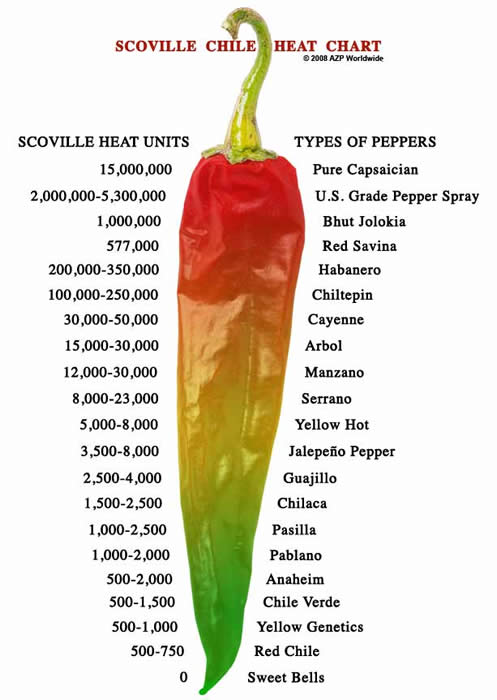 An excellent piece on ‘Pepper Spray’ and the Scoville scale at Berfrois. A brief excerpt, but do look at the whole thing:
We’ve taken to calling it pepper spray, I think, because that makes it sound so much more benign than it really is, like something just a grade or so above what we might mix up in a home kitchen. The description hints maybe at that eye-stinging effect that the cook occasionally experiences when making something like a jalapeno-based salsa, a little burn, nothing too serious.
Until you look it up on the Scoville scale and remember, as toxicologists love to point out, that the dose makes the poison. That we’re not talking about cookery but a potent blast of chemistry.
Posted in Politics, Universities
1 Comment
If you have a spare $5000

A first edition of the Protogaea is for sale here.
Posted in Books, Fossils, Gottfried Leibniz
Leave a comment

