The final volume of this really excellent series. [Update – now listed for May 2025]
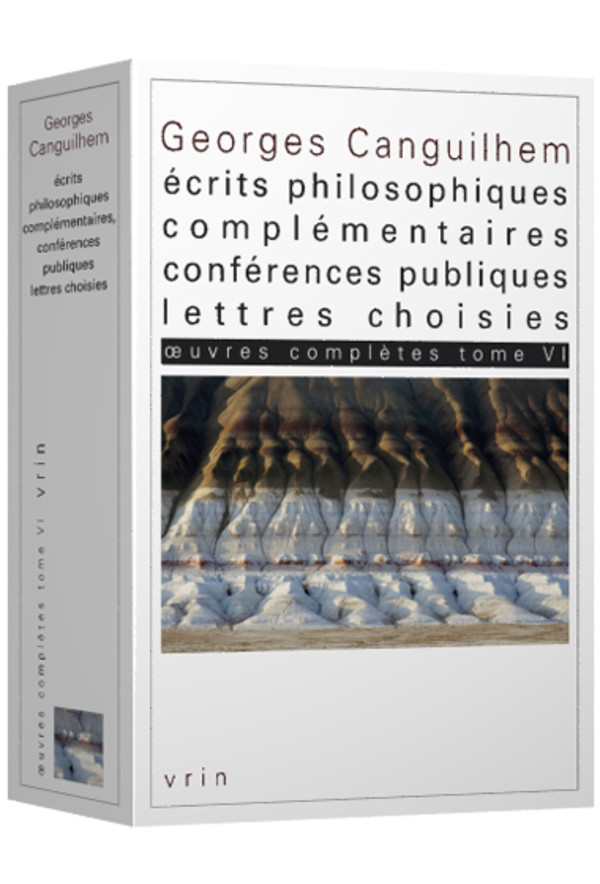
Textes édités, introduits et annotés par Camille Limoges et Pierre-Olivier Méthot.
Le tome VI et dernier des Œuvres complètes de Georges Canguilhem réunit des écrits retrouvés et complémentaires, jusqu’ici peu accessibles, et dont souvent l’existence même restait ignorée. Y figurent des articles des années 1920, le mémoire de diplôme d’études supérieures sur la théorie de l’ordre et du progrès chez Auguste Comte, et près d’une dizaine de conférences publiques prononcées des années 1940 aux années 1970, qui témoignent de l’élaboration chez Canguilhem d’une véritable doctrine sur les normes. Ce tome VI contient également quelque trois cents lettres à une trentaine de correspondants de même qu’un important écrit, Philosophie, sa première synthèse philosophique personnelle, au tournant des années 1930, qui appelle à un réexamen des idées du jeune Canguilhem, notamment sur la psychologie et sur ses rapports avec la philosophie.
Tout en réaffirmant des constats dans la pensée de Georges Canguilhem, ce dernier tome permet d’élargir et d’approfondir notre compréhension d’une oeuvre qui ne connut jamais de purgatoire, mais dont la phase de gestation fut longtemps largement ignorée.
Gut, Brain, and Environment in Nineteenth-Century French Literature and Medicine offers a new way of conceptualizing food in literature: not as social or cultural symbol but as an agent within a network of relationships between body and mind and between humans and environment. By analysing gastrointestinal health in medical, literary, and philosophical texts, this volume rethinks the intersections between literature and health in the nineteenth century and triggers new debates about France’s relationship with food. Of relevance to scholars of literature and to historians and sociologists of science, food, and medicine, it will provide ideal reading for students of French Literature and Culture, History, Cultural Studies, and History of Science and Medicine, Literature and Science, Food Studies, and the Medical Humanities. Readers will be introduced to new ways of approaching digestion in this period and will gain appreciation of the powerful resources offered by nineteenth-century French writing in understanding the nature of connections between gut, mind, and environment and the impact of these connections on our status as human beings.
Just an expensive hardback and e-book at the moment.
Establishes an enduring relationship between theories of categories and ideas about knowledge, politics, and history
Explores the concept of a category and contemporary debates on category politics, category mistakes and the imperialism of categories
Shows how the ideas of classic thinkers on categories, including Plato, Aristotle, Kant and Hegel, have informed three distinct modern schools of thought on the subject including thinkers in both analytical and continental traditions
Explains modern thought on categories as a tension between a desire for a single dominant perspective, whether scientific (as in logical empiricism) or phenomenological (as in Heidegger), and a belief in irretrievable fragmentation (as in Nietzsche and later post-modern thought), with a minority of thinkers (like Cassirer and Ricoeur) trying to find a middle ground
Addresses debates on categories in wide range of different fields in the humanities including the history of philosophy, political philosophy, critical theory, phenomenology, and the philosophy of history
In ancient and modern Western thought, the problem of the nature of categories has been inseparable from arguments about the nature of selfhood; about how knowledge is organised; about how power should be distributed; and about how history should be understood. For Plato, Forms belonging to a timeless order of being played the role of categories or fundamental concepts; for Aristotle categories were immanent in things; for Kant they were a priori logical structures of our consciousness; and for Hegel they were dynamic, dialectical inter-related ideas. In Categories, O’Sullivan shows how these answers have gone forward into the contemporary era, and identifies three key schools of thought that have developed since Hegel in particular. He explains modern thought as a tension between a desire for a single dominant perspective, whether scientific or phenomenological; a belief in irretrievable fragmentation; and an effort to find a middle ground.
If you missed the 2023 Special Issue of Theory, Culture & Society on ‘Foucault Before the Collège de France‘, which I edited with Daniele Lorenzini and Orazio Irrera…
All papers are open access or free access at the moment
Papers include ones by most of the editors of the early courses and manuscripts by Foucault, currently being published and in the process of being translated.
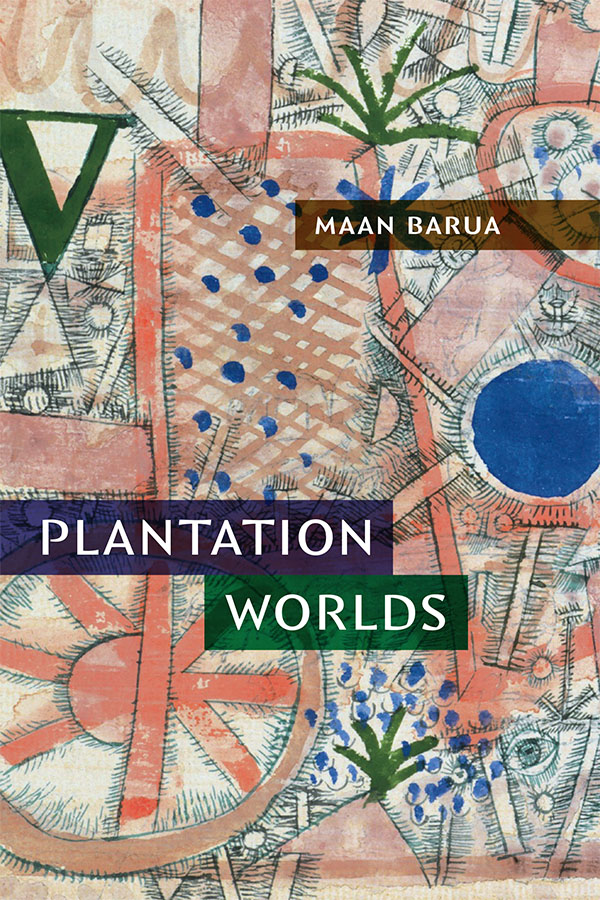
In Plantation Worlds, Maan Barua interrogates debates on planetary transformations through the histories and ecologies of plantations. Drawing on long-term research spanning fifteen years, Barua presents a unique ethnography attentive to the lives of both people and elephants amid tea plantations in the Indian state of Assam. In the nineteenth and early twentieth centuries, nearly three million people were brought in to Assam’s plantations to work under conditions of indenture. Plantations dramatically altered the region’s landscape, plundered resources, and created fraught worlds for elephants and people. Their extractive logics and colonial legacies prevail as durations, forging the ambit of infrastructures, labor, habitability, and conservation in the present. And yet, as the perspectives of the Adivasi plantation worker community and lifeworlds of elephants show, possibilities for enacting a decolonial imaginary of landscape remain present amid immiseration. From the margins of the Global South, Barua offers an alternative grammar for articulating environmental change. In so doing, he prompts a rethinking of multispecies ecologies and how they are structured by colonialism and race.
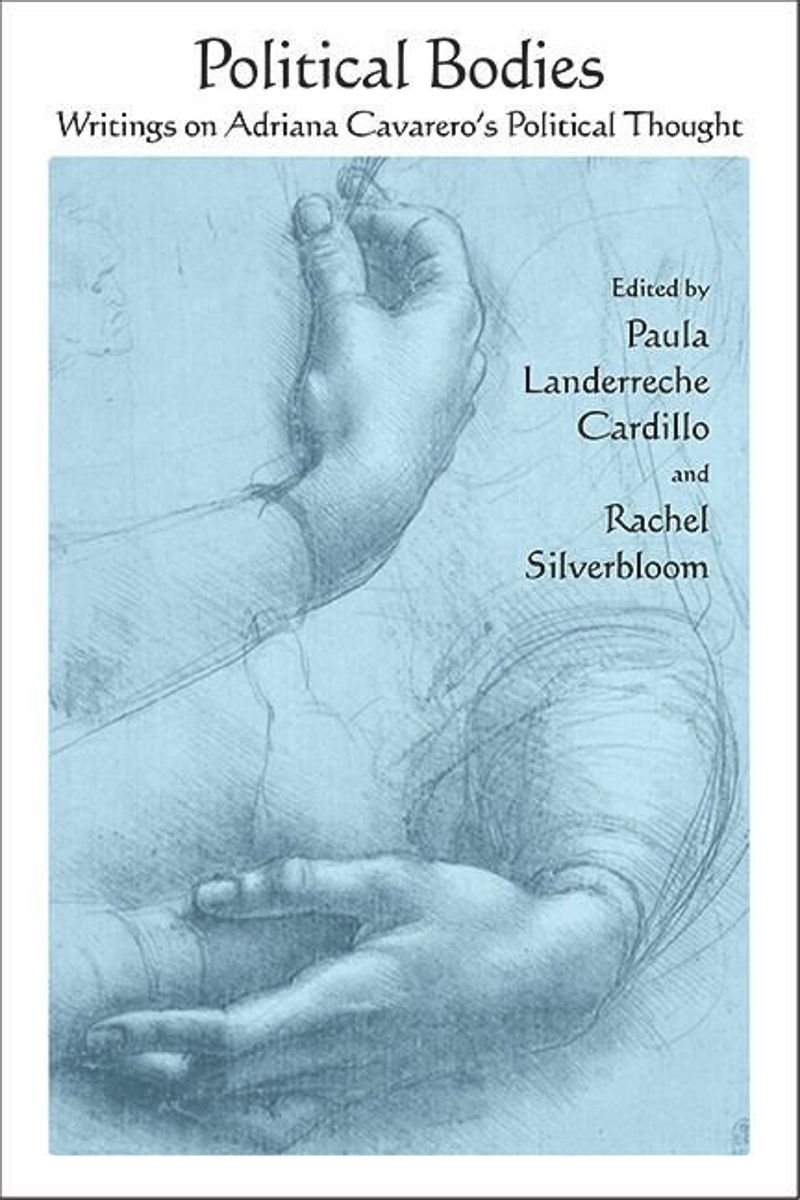
The first edited volume solely dedicated to the philosophy of Adriana Cavaero.
“Landerreche Cardillo and Silverbloom are right to hold that Cavarero has reached ‘critical acclaim’ in the ‘Italian and English-speaking world.’ I would broaden this audience to include the rest of Europe, Latin America, and very likely other areas of the world. Cavarero’s areas of expertise—philosophy, political science, women’s and gender studies, feminist theory, musicology, literature, modern languages, queer theory, and the arts—demand a common theme to link them together within the pages of a single volume. The editors have chosen Cavarer’s political philosophy in response to that demand. Their choice is wise because the political area is central to Cavarero’s many books and of great interest to interdisciplinary as well as to philosophical thinkers and academics. Political Bodies constitutes an exciting inaugural contribution to what might be called the field of ‘Cavarero studies.'” — Fred Evans, author of Public Art and the Fragility of Democracy: An Essay in Political Aesthetics
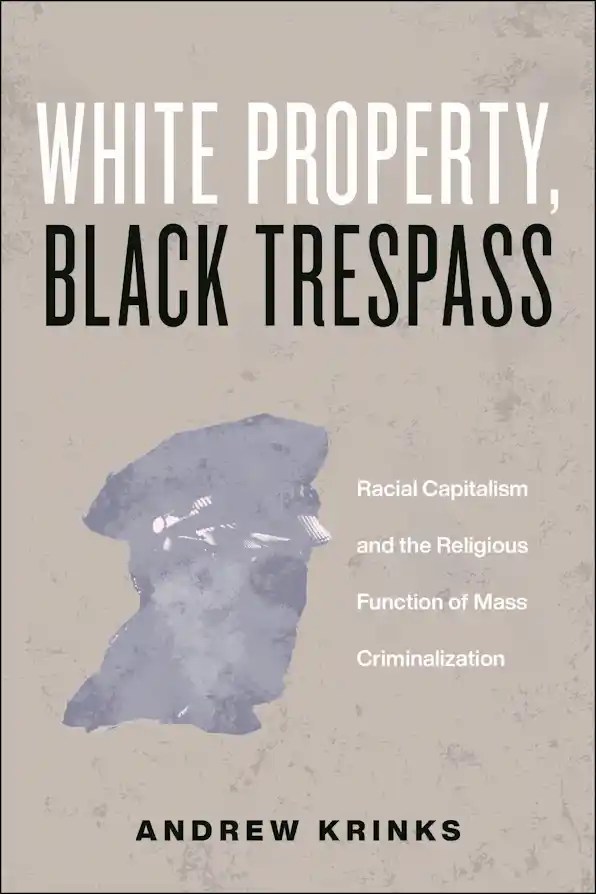
Uncovers the inherently religious structure of the criminalization of Black, Indigenous, and dispossessed peoples
Most popular critical accounts of mass criminalization interpret police and prisons as purely social or political phenomena. While such accounts have been indispensable in moving millions into collective action and resistance, the carceral state remains as pervasive as ever.
White Property, Black Trespass argues that understanding why we have police and prisons, and building a world of safety and abundance beyond them, requires that we acknowledge the inherently religious function that criminalization fulfills for a colonial and racial capitalist order that puts its faith in cops and cages to save it from the existential threat of disorder that its own structural violence creates.
The story of criminalization, Krinks shows, begins with the eurochristian aspiration to become God at the expense of all others—an aspiration that gives rise to the pseudo-sacred powers of whiteness and property, and, by extension, the police power that exists to serve and protect them. Tracing the historical continuity and religiosity of the color line, the property line, and the thin blue line, Krinks reveals police power as the pseudo-divine power to exile nonwhite and dispossessed trespassers to carceral hell.
At once incisive and expansive, this groundbreaking work deepens understanding of racial capitalism and mass criminalization by illuminating the religious mythologies that animate them. It concludes with thoughts on what might be entailed in a religion rooted in rejection of the religious idolatry of mass criminalization—a religion of abolition.
Conservatives have always tended to claim Shakespeare as one of their own. In the 1950s, E. M. W. Tillyard developed the influential thesis that Shakespeare’s plays uphold the traditional social hierarchies and suggest that these hierarchies are embedded in nature. Ulysses’ speech on “degree” in ‘Troilus and Cressida’ serves as one of the key witnesses in this context. Since Tillyard’s time, scholars have persistently pointed out elements of Shakespeare’s plays that do not fit this assumption: the actions on stage persistently seem to contradict and subvert the noble proclamations of Ulysses and his peers. In the histories and tragedies, the persons on top of the hierarchy mostly seem to end up there by a combination of luck, political manipulation and, first and foremost, the effective use of violence, rather than by any apparent inborn excellence.
Accordingly, Shakespeare’s plays represent a volatile social order in which communal life unfolds as perpetual warfare between interest groups – sometimes open, sometimes covert. With Corey Robin and others, one might venture the hypothesis that this apparent discrepancy between words and deeds delineates a symptomatic ambivalence that characterizes the reactionary worldview: while reactionaries claim to be conservative, their enforcement of traditional hierarchies often takes on the form of a violent interruption of these very traditions. In the name of nature and of “real life”, they voice unprecedented demands that those who are destined to rule may finally be allowed to rule as they must and to keep their inferiors in the subjugated position they deserve. The most extreme form these demands can take is that of fascism, a militant movement of revolutionary conservatism that, according to Hannah Arendt, has the inherent tendency to destroy everything it ostensibly holds sacred (such as the family, the state and the nation). Shakespeare’s plays (first and foremost, ‘Coriolanus’, ‘Julius Caesar’, ‘King Lear’ and ‘Hamlet’) have been used to explore this ambivalence, by reactionaries and fascists as well as by their opponents. This one-day symposium aims to investigate this complex relationship.
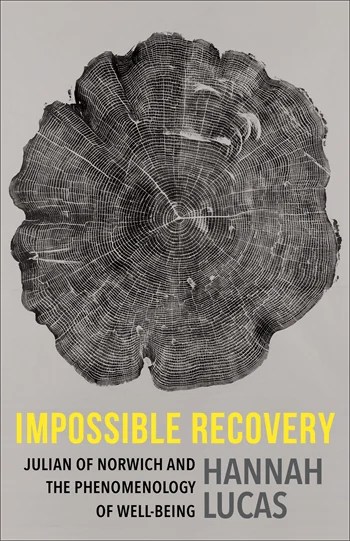
The medieval mystic Julian of Norwich (1342–after 1416) is the first known woman to author a book in the English language, recognized today for her strikingly optimistic claim that “all shall be well.” Her visionary text Revelations of Divine Love is the product of many years of contemplation, written and revised after a life-changing event of near-fatal illness and divine revelation.
Hannah Lucas explores the entanglement of illness and revelation in Julian’s writings, illuminating the unexpected commonalities between the medical and the mystical and their significance for philosophies of health. Framed by an original application of post-Heideggerian philosophy, Impossible Recovery offers a vivid new interpretation of the medieval mystic as crafting a proto-phenomenological theology of well-being. Lucas’s careful readings pay close attention to Julian’s mystical language and poetics, revealing the surprising resonances of her writings with modern and postmodern thought. Refracted through Julian’s Revelations, this book advances a powerful existential query about the possibilities of recovery—of well-being, and of medieval history.