Ingrid A. Medby, Arctic State Identity: Geography, History, and Geopolitical Relations – Manchester University Press, January 2025 

Ingrid A. Medby, Arctic State Identity: Geography, History, and Geopolitical Relations – Manchester University Press, January 2025 

This book sets out to answer what it means to hold a formal title as one of the eight ‘Arctic states’; is there such a thing as an Arctic state identity, and if so, what does this mean for state personnel? It charts the thoughtful reflections and stories of state personnel from three Arctic states: Norway, Iceland, and Canada, alongside analysis of documents and discourses. This book shows how state identities are narrated as both geographical and temporal – understood through environments, territories, pasts and futures – and that any identity is always relational and contextual. As such, demonstrating that to understand Arctic geopolitics we need to pay attention to the people whose job it is to represent the state on a daily basis. And more broadly, it offers a ‘peopled’ view of geopolitics, introducing the concept and framework of ‘state identity’.


Posted in Uncategorized | Leave a comment

Stuart Elden, “Alexandre Koyré and the Collège de France”, online first in History of European Ideas (open access)

My article “Alexandre Koyré and the Collège de France”, is now available online first in History of European Ideas, and it’s open access.

This article discusses an important moment in the career of Alexandre Koyré, and the history of philosophy in France. It looks at the 1951 election of a successor to Étienne Gilson at the Collège de France, for which Koyré was one of the possible candidates, alongside Henri Gouhier and Martial Gueroult. Koyré came close, but Gueroult was elected to the chair. In time, Gueroult was succeeded first by Jean Hyppolite and then, in 1970, by Michel Foucault. Using archival documents to discuss the process in detail, this article shows the weakness of Koyré’s proposers, and the strength of Gouhier’s application. Finally, drawing on Koyré’s outline of his proposed teaching programme, it discusses how success might have shaped his future career, using this as an indication of his position within and beyond a French tradition in the philosophy and history of the sciences.

I’ll be speaking briefly about Koyré and Canguilhem at a workshop organised by Federico in Bristol on 26 September. I’ll share more news about that when I can.

Posted in Alexandre Koyré, Georges Canguilhem, Jean Hyppolite, Michel Foucault, Territory, The Birth of Territory | 1 Comment

Shannon Mattern, Library as Infrastructure – Places Journal

Shannon Mattern, Library as Infrastructure – Places Journal

Fascinating and beautifully illustrated piece on libraries.

Posted in Uncategorized | Leave a comment

Stuart Elden and Morteza Hajizadeh – New Books Network discussion of The Birth of Territory

Stuart Elden and Morteza Hajizadeh – New Books discussion of The Birth of Territory

Although I’ve done quite a few interviews for the New Books Network with Dave O’Brien, these were on the Foucault books and Shakespearean Territories. So I was pleased to be asked by Morteza Hajizadeh to have a discussion of my earlier book The Birth of Territory (University of Chicago Press, 2013). I’m not sure anyone celebrates 11th birthdays of books, but it is close to that anniversary.

Thanks to Morteza and the New Books Network for the interest in the book. I talk a bit about Terror and Territory at the start, and Shakespearean Territories at the end, so it briefly covers all my work on this question.

Posted in Shakespearean Territories, Terror and Territory, The Birth of Territory | Leave a comment

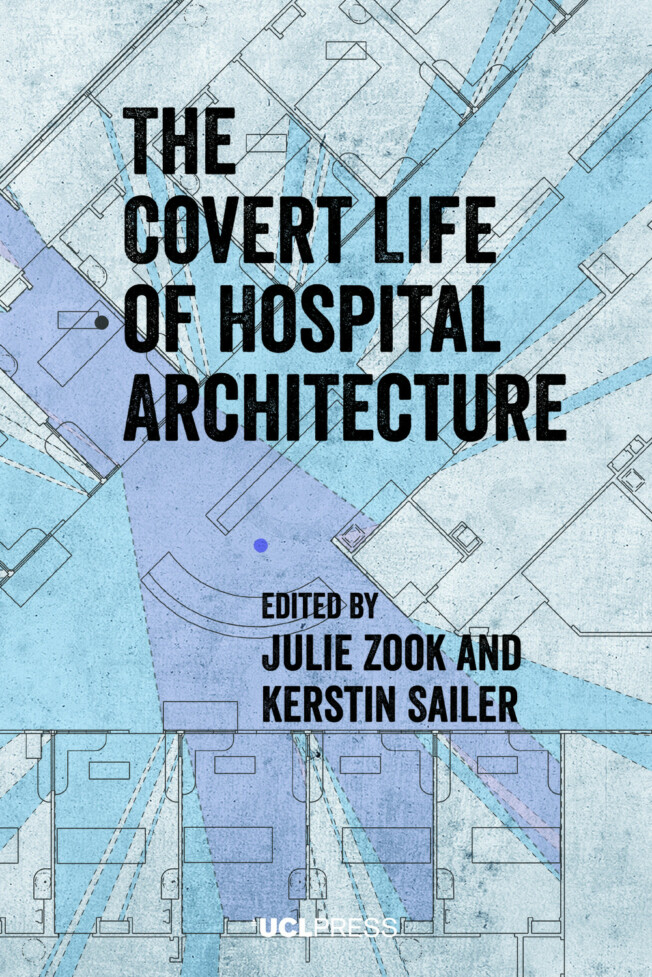
Julie Zook and Kerstin Sailer (eds.), The Covert Life of Hospital Architecture, UCL Press, March 2022 (print and open access)

Julie Zook and Kerstin Sailer (eds.), The Covert Life of Hospital Architecture, UCL Press, March 2022 (print and open access)

The Covert Life of Hospital Architecture addresses hospital architecture as a set of interlocked, overlapping spatial and social conditions. It identifies ways that planned-for and latent functions of hospital spaces work jointly to produce desired outcomes such as greater patient safety, increased scope for care provider communication and more intelligible corridors.

By advancing space syntax theory and methods, the volume brings together emerging research on hospital environments. Opening with a description of hospital architecture that emphasizes everyday relations, the sequence of chapters takes an unusually comprehensive view that pairs spaces and occupants in hospitals: the patient room and its intervisibility with adjacent spaces, care teams and on-ward support for their work and the intelligibility of public circulation spaces for visitors. The final chapter moves outside the hospital to describe the current healthcare crisis of the global pandemic as it reveals how healthcare institutions must evolve to be adaptable in entirely new ways. Reflective essays by practicing designers follow each chapter, bringing perspectives from professional practice into the discussion.

The Covert Life of Hospital Architecture makes the case that latent dimensions of space as experienced have a surprisingly strong link to measurable outcomes, providing new insights into how to better design hospitals through principles that have been tested empirically. It will become a reference for healthcare planners, designers, architects and administrators, as well as for readers from sociology, psychology and other areas of the social sciences.

Posted in Uncategorized | Leave a comment

Jo van Every – Spotlight on: Burnout

Jo van Every – Spotlight on: Burnout

I published my first post with “burnout” in the title, “Burnout is real”,  in 2022. We were just coming out of the most intense phase of the COVID pandemic disruptions. The term was familiar to people, but the idea that it might be a real diagnosable medical condition was less well known. It might still be.

In March 2024, I interviewed a client of mine who had taken sick leave for burnout about her experience with clinically significant burnout. I learned a lot from that conversation. It gave me a different perspective on the situations other clients were facing, and a new perspective on some of the topics I’ve been writing about for years.

Burnout is characterised by severe fatigue. Physical fatigue may even result in collapsing at work. That physical fatigue will be accompanied by cognitive fatigue, symptoms of which include inability to concentrate, memory problems, and so on. Fatigue also contributes to emotional dysregulation.

Another major sign of burnout is starting to hate what you used to love. This may also present as a kind of malaise in which things seem meaningless.

Burnout is caused by exceeding your capacity for an extended period of time. Your physical capacity. Your cognitive capacity. Your emotional capacity. Your body will use adrenaline and cortisol to help you do this, but at some point, even your adrenal glands will give up. I hope you don’t get there.

If you get to that extreme stage, it is going to take time to recover. It is crucial to address fatigue earlier.

continues here

Posted in Uncategorized | Leave a comment

Serene Richards, Biopolitics as a System of Thought – Bloomsbury, May 2024 and Acid Horizon podcast

Serene Richards, Biopolitics as a System of Thought – Bloomsbury, May 2024

Our contemporary mode of life is characterised by what Serene Richards in Biopolitics as a System of Thought calls: Smart Being. Smart Being believes in the solutions of techno-capital where living is always at stake and directed to survival. Armed with this concept, this book examines how we arrived at this mode of being and asks how it could be that, while the material conditions of our lives have increasingly worsened, our capacities for effective political action, understood as the capacity for transforming our existing social relations, appear to be diminishing.

Drawing from jurists and philosophers such as Pierre Legendre, Yan Thomas, Giorgio Agamben, Michel Foucault and Gilles Deleuze, Richards argues that biopolitics intervenes at the most minute level of our everyday lives. She argues that there are conceptual truths presupposed in the mode of biopolitics’ functioning, for instance that life can be assigned a value for the purpose of intervention, abandonment, or death, which have implications for our politics. In exciting engagements with political movements such as the post-May 1968 Mouvement des travailleurs Arabes (MTA), Richards shows how demands to transform our system of social relations are undermined by institutional models that proffer to offer rights protection while simultaneously annihilating the living altogether. Through a reappraisal of law, governance and capital, Richards seeks to reconceptualise our collectivity of thought, arguing for a politics of destitution that could form the basis of a communism to come.

Acid Horizon podcast – thanks to dmf for the link

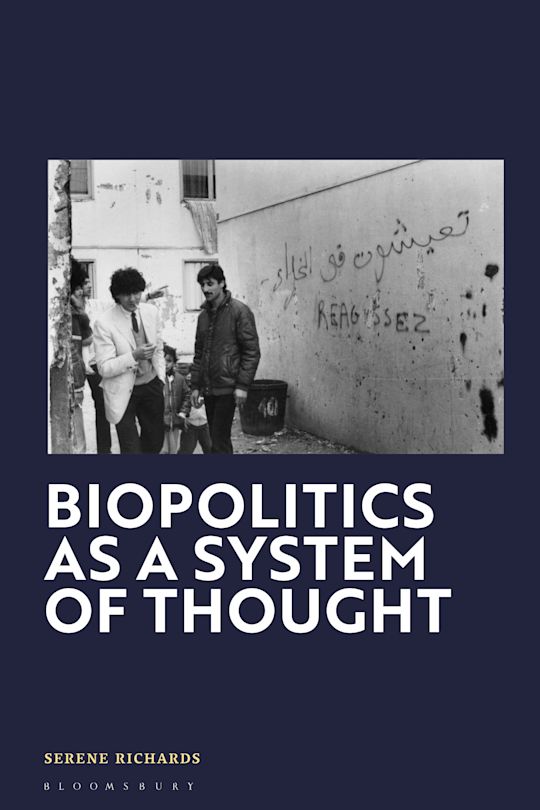
The cover of the book has a 1983 photograph of men and children standing in front of a wall in the Gutenberg transit quarters with graffiti reading in Arabic “You live in the shit” and in French “React!” Translation and information taken from The Funambulist.

Posted in Uncategorized | 2 Comments

Colin Flint – interview at E-International Relations

Colin Flint – interview at E-International Relations

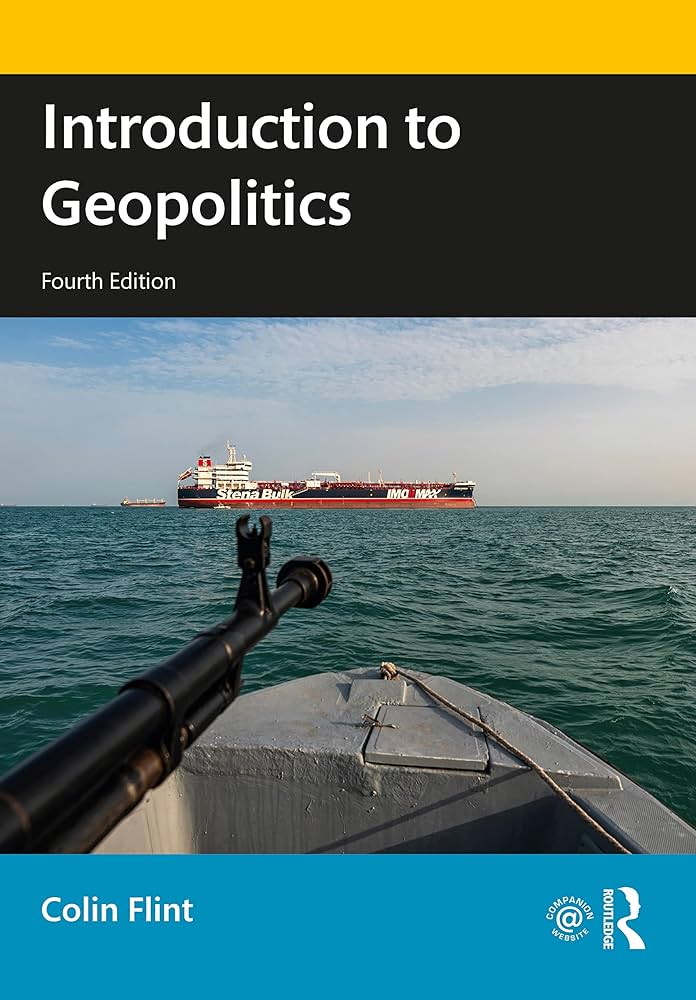
Colin Flint, a geographer by training, is Distinguished Professor in the Department of Political Science at Utah State University. His research interests include geopolitics and peacebuilding. He is the author of Near and Far Waters: The Geopolitics of Seapower (Stanford University Press, 2024), Introduction to Geopolitics (Routledge, 4th ed. 2022), Geopolitical Constructs: The Mulberry Harbours, World War Two, and the Making of a Militarized Transatlantic (Rowman & Littlefield, 2016), and co-author, with Peter Taylor of Political Geography: World-Economy, Nation-State and Locality Routledge, 7th edition, 2018). He is editor emeritus of the journal Geopolitics. His books have been translated into Spanish, Polish, Korean, Mandarin, Japanese and Farsi.


Posted in Uncategorized | Leave a comment

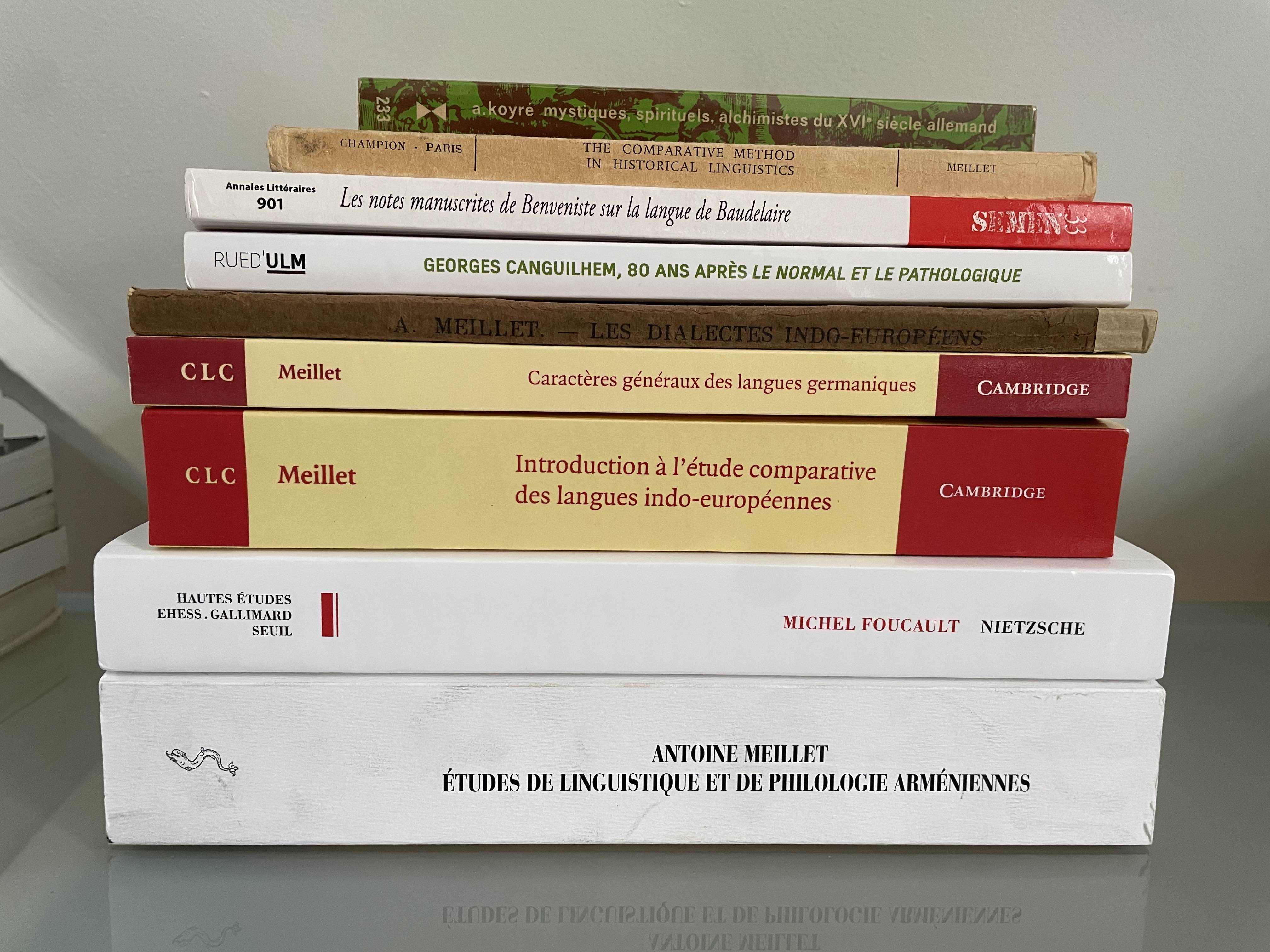
Books received – Koyré, Meillet, Benveniste, Canguilhem, Foucault

Bought new or second-hand for various projects, along with the new collection of previously unpublished material by Foucault, sent by the publisher – Nietzsche: Cours, conférences et travaux, edited by Bernard Harcourt.

Posted in Alexandre Koyré, Antoine Meillet, Bernard E. Harcourt, Emile Benveniste, Friedrich Nietzsche, Georges Canguilhem, Michel Foucault | 1 Comment

Georgios Varouxakis, The West: The History of an Idea, Princeton University Press, July 2025

Georgios Varouxakis, The West: The History of an Idea, Princeton University Press, July 2025

A long time off, but this looks very interesting.

How did “the West” come to be used as a collective self-designation signaling political and cultural commonality? When did “Westerners” begin to refer to themselves in this way? Was the idea handed down from the ancient Greeks, or coined by nineteenth-century imperialists? Neither, writes Georgios Varouxakis in The West, his ambitious and fascinating genealogy of the idea. “The West” was not used by Plato, Cicero, Locke, Mill, or other canonized figures of what we today call the Western tradition. It was not first wielded by empire-builders. It was, Varouxakis shows, decisively promoted in the 1840s by the French philosopher Auguste Comte (whose political project, incidentally, was passionately anti-imperialist). The need for the use of the term“the West” emerged to avoid the confusing or unwanted consequences of the use of “Europe.” The two overlapped, but were not identical, with the West used to exclude certain “others” within Europe as well as to include the Americas.

After examining the origins, Varouxakis traces the many and often surprising changes in the ways in which the West has been understood, and the different intentions and repercussions related to a series of these contested definitions. While other theories of the West consider only particular aspects of the concept and its history (if only in order to take aim at its reputation), Varouxakis’s analysis offers a comprehensive, multilayered account that reaches to the present day, exploring the multiplicity of current and prospective meanings. He concludes with an examination of how, since 2022, definitions and membership in the West are being reworked to include Ukraine, as the evolution and redefinition continue.

Posted in Uncategorized | Leave a comment