Charlotte Lydia Riley and Suzanne Nossel, Is Free Speech Under Threat? – Penguin, October 2024

Charlotte Lydia Riley and Suzanne Nossel, Is Free Speech Under Threat? – Penguin, October 2024
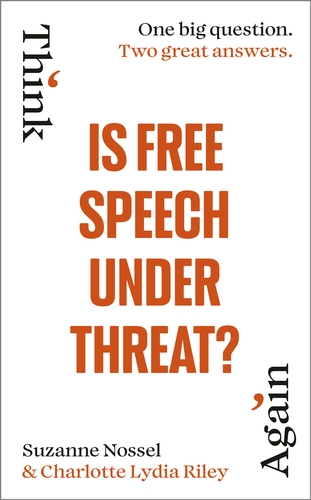
Two leading thinkers present alternative answers to one of the most difficult and divisive questions of our times: Is free speech under threat?

Suzanne Nossel, CEO of PEN America, the leading free expression organisation, argues that alongside the necessary and long-overdue elevation of minority voices in recent years, there has also arisen an uncompromising intolerance – most notably on university campuses and online – that wrongly equates a wide range of offensive speech with violence and seeks to shut it down. This has led to an escalating free speech arms race, from which everyone loses.

Charlotte Lydia Riley, historian of empire and editor of The Free Speech Wars, argues that accusations of cancel culture and defences of free speech are too often disingenuous attempts to fuel a culture war and so inhibit an important realignment in which hateful speech is at last being called out for what it is and the right to free expression is being extended to more people than ever before.

Published in conjunction with Intelligence Squared, the world’s leading curator of debate, this book is part of the THINK AGAIN series: short books that present two expert, contrasting but equally persuasive views in a single volume that can be read from either end.

Posted in Uncategorized | Leave a comment

New issue of Parrhesia with translation of a short text by Foucault, ‘Message or Noise?’ with a commentary by Chris O’Neill

The latest issue of Parrhesia is out, with a translation of and commentary on a short text by Foucault. All open access.

Foucault and information theory: on “message or noise?” (1966) – Chris O’Neill

“Message or noise?” – Michel Foucault, translated by Chris O’Neill

A couple of years ago, while researching The Archaeology of Foucault, I wrote a short post about this piece.

The feature section also has another related translation

The fracture of cybernetics – Raymond Ruyer, translated by James Kelly

Posted in Michel Foucault, The Archaeology of Foucault | Leave a comment

Thomas Osborne and Nikolas Rose, Questioning Humanity: Being Human in a Posthuman Age – Edward Elgar, June 2024

Thomas Osborne and Nikolas Rose, Questioning Humanity: Being Human in a Posthuman Age – Edward Elgar, June 2024

This innovative book questions what it means to be human today and in the future. Drawing on the natural, human and life sciences, Thomas Osborne and Nikolas Rose encourage us to reconsider the human condition and the ways in which humans are affected by their animality, technology and the prospect of their annihilation. 

Questioning Humanity builds on and questions established orthodoxies in the social sciences and humanities. Using arguments from the life sciences it introduces readers to debates surrounding posthumanism, human evolution, the uniqueness of the human mind and human consciousness. The book goes further, into novel territory, to examine relations and distinctions between humans and non-human animals, developments in ‘artificial intelligence’ and its limits, the prospect of human extinction by climate change, and the possibilities of alien civilizations. Osborne and Rose argue that despite calls for a new posthuman ethics, we remain all too human, and the social and human sciences should be imbued with a naturalistic humanism if they are to address the real and immediate challenges of local and global inequity and injustice.

Providing an accessible introduction into both the contemporary challenges and future key questions within the social and human sciences, this book will be a vital read for undergraduate and postgraduate students in these areas. Questioning Humanity will also appeal to scholars from social, cultural, anthropological and biological disciplines interested in human distinctiveness.

Posted in Uncategorized | 1 Comment

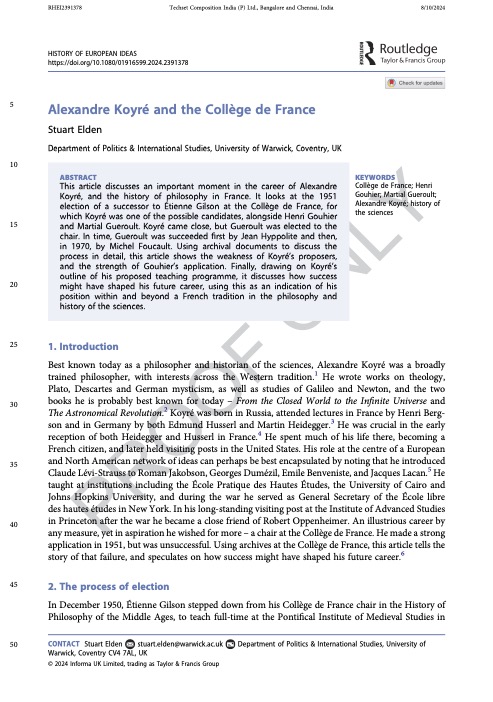
“Alexandre Koyré and the Collège de France”, forthcoming in History of European Ideas; and a talk on Canguilhem and Koyré in Bristol

In some previous updates on my Indo-European thought project, I’d mentioned doing some research on Alexandre Koyré. In March and May. I said I’d been working on a piece about his unsuccessful attempt to get elected to a chair at the Collège de France. It was very much a side-project – Koyré is a minor figure in the main story I’m telling. But I have long been interested in him and he connects to almost all of the projects I’ve worked on in the past – from Foucault to Heidegger, territory to Canguilhem. I first discussed his connections to this project back in April 2023, when I was intrigued, again, by his role in a network of ideas. The archives, especially at the Collège de France itself, helped to shed new light on his failure to get elected or, alternatively, the Collège’s missed opportunity. In June I finally got the piece into shape, had some very useful comments from Federico Testa, and submitted it to History of European Ideas. I got the reports very quickly and it was accepted earlier this month.

The article is now available online first, open access – here.

This article discusses an important moment in the career of Alexandre Koyré, and the history of philosophy in France. It looks at the 1951 election of a successor to Étienne Gilson at the Collège de France, for which Koyré was one of the possible candidates, alongside Henri Gouhier and Martial Gueroult. Koyré came close, but Gueroult was elected to the chair. In time, Gueroult was succeeded first by Jean Hyppolite and then, in 1970, by Michel Foucault. Using archival documents to discuss the process in detail, this article shows the weakness of Koyré’s proposers, and the strength of Gouhier’s application. Finally, drawing on Koyré’s outline of his proposed teaching programme, it discusses how success might have shaped his future career, using this as an indication of his position within and beyond a French tradition in the philosophy and history of the sciences.

The journal production moves fast – the proofs have just been sent back. The article will be open access and I’ll share a link as soon as I’m able.

I’ll be speaking briefly about Koyré and Canguilhem at a workshop organised by Federico in Bristol on 26 September. Again, I’ll share more news about that as well.

Posted in Alexandre Koyré, Georges Canguilhem, Jean Hyppolite, Michel Foucault, Territory, The Birth of Territory | 2 Comments

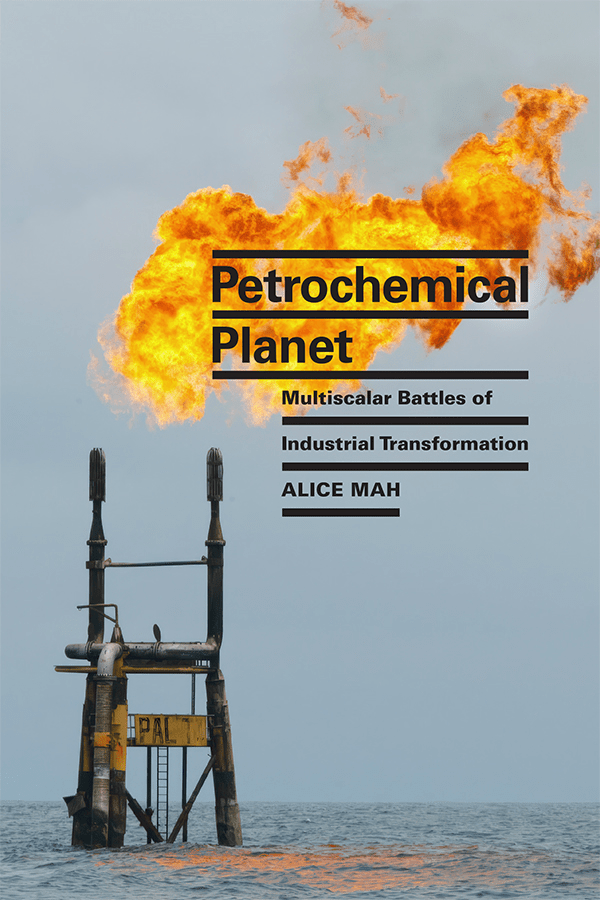
Alice Mah, Petrochemical Planet: Multiscalar Battles of Industrial Transformation, Duke University Press, September 2023 (print, open access and New books discussion)

Alice Mah, Petrochemical Planet: Multiscalar Battles of Industrial Transformation, Duke University Press, September 2023 – print and open access

New Books discussion with Dave O’Brien. Thanks to dmf for these links.

In Petrochemical Planet Alice Mah examines the changing nature of the petrochemical industry as it faces the existential threats of climate change and environmental activism. Drawing on research from high-level industry meetings, petrochemical plant tours, and polluted communities, Mah juxtaposes the petrochemical industry’s destructive corporate worldviews with environmental justice struggles in the United States, China, and Europe. She argues that amid intensifying public pressures, a profound planetary industrial transformation is underway that is challenging the reigning age of plastics and fossil fuels. This challenge comes from what Mah calls multiscalar activism—a form of collective resistance that spans local, regional, national, and planetary sites and scales and addresses the interconnected issues of environmental justice, climate, pollution, health, extraction, land rights, workers’ rights, systemic racism, and toxic colonialism. Reflecting on the obstacles and openings for critical interventions in the petrochemical industry, Mah offers important insights into the possibilities for resistance and for developing alternatives to the reliance on fossil fuels.

Posted in Uncategorized | Leave a comment

The Anti-Security Collective, The Security Abolition Manifesto – Red Quill Books, August 2024

The Anti-Security Collective, The Security Abolition Manifesto – Red Quill Books, August 2024

Introduction open access at this link

Security is the monstrous idea that we are alone and locked into competition over scarce resources, that private property is a natural right, that we need to protect our island of private life against the threat of others, and that we must submit to authority to do so.

Security encourages us to believe that the state exists to protect us from an ever-growing list of internal and external threats, from criminals to terrorists, insurgents to drug cartels, from migrants to refugees, and on it goes.

Security demands we look up and submit to the Leviathan, rather than look across in solidarity to our fellow beings on this planet, human and otherwise. Security tells us that we are obstacles to each other’s freedom, rather than the realization of it.

Posted in Uncategorized | Leave a comment

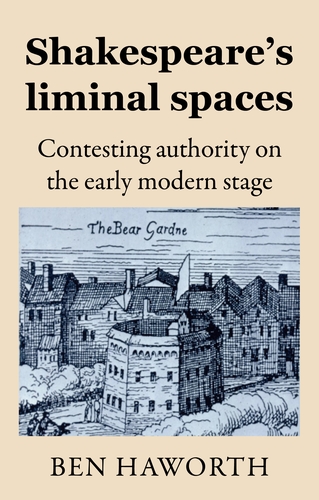
Ben Haworth, Shakespeare’s Liminal Spaces: Contesting Authority on the Early Modern Stage – Manchester University Press, July 2024

Ben Haworth, Shakespeare’s Liminal Spaces: Contesting Authority on the Early Modern Stage – Manchester University Press, July 2024

This engaging study appreciably advances recent critical developments in the way the playwright created his worlds to reflect concurrent cartographic, geopolitical and social anxieties. In seeking to expose the dynamics and fluctuations of power on the stage, Shakespeare’s liminal spaces provides a unique set of perspectives through which Shakespeare’s forests, battlefields, shores and gardens are revealed as deliberate dramatic devices with the capacity to destabilise social structures. Haworth’s nuanced consideration of these spaces reveals that they were ideally suited to the staging of social frictions as he traces the shifting balance of power between opposing ideological standpoints and the internal struggles between an emergent subjectivity and conformity with the centralised authorities of Church and Court.


Posted in William Shakespeare | Leave a comment

Stuart Blaney, Equality and Freedom in Rancière and Foucault – Bloomsbury, December 2024

Stuart Blaney, Equality and Freedom in Rancière and Foucault – Bloomsbury, December 2024

Responding to the increasing need for new and peaceful forms of emancipation, Stuart Blaney offers a unique solution in the synergy between two pioneering strands of continental philosophy: Michael Foucault’s ideas on freedom and Jacques Ranciere’s ideas on equality. 

Building a dialogue between these two thinkers, Blaney presents new perspectives on their work and a clear picture that emancipation comes from everyday practices rather than any particular movement or revolution.

In exploring these combined views of equality and freedom, Blaney draws on some of the central facets of both concepts, including revolution, disagreement, care for the self, free speech and stoicism. To put these ideas into a practical framework of real, lived experience, we are introduced to the figure of Louis-Gabrielle Gauny the nineteenth century worker-poet and self confessed plebeian philosopher. Gauny is a nexus for Ranciere’s and Foucault’s ideas; his life exemplifying a dual mode of existence in-between conformity and political revolution. This lived philosophy of equality and freedom shows the strong synergy between the two concepts, with one reinforcing the other and strengthening their efficacy as forms of emancipatory practice.

Posted in Michel Foucault | Leave a comment

Samuel Fury Childs Daly, Soldier’s Paradise: Militarism in Africa after Empire – Duke University Press, October 2024

Samuel Fury Childs Daly, Soldier’s Paradise: Militarism in Africa after Empire – Duke University Press, October 2024

In Soldier’s Paradise, Samuel Fury Childs Daly tells the story of how Africa’s military dictators tried and failed to transform their societies into martial utopias. Across the continent, independence was followed by a wave of military coups and revolutions. The soldiers who led them had a vision. In Nigeria and other former British colonies, officers governed like they fought battles—to them, politics was war by other means. Civilians were subjected to military-style discipline, which was indistinguishable from tyranny. Soldiers promised law and order, and they saw judges as allies in their mission to make society more like an army. But law was not the disciplinary tool soldiers thought it was. Using legal records, archival documents, and memoirs, Daly shows how law both enabled militarism and worked against it. For Daly, the law is a place to see decolonization’s tensions and ironies—independence did not always mean liberty, and freedom had a militaristic streak. In a moment when militarism is again on the rise in Africa, Daly describes not just where it came from but why it lasted so long.

Posted in Uncategorized | Leave a comment

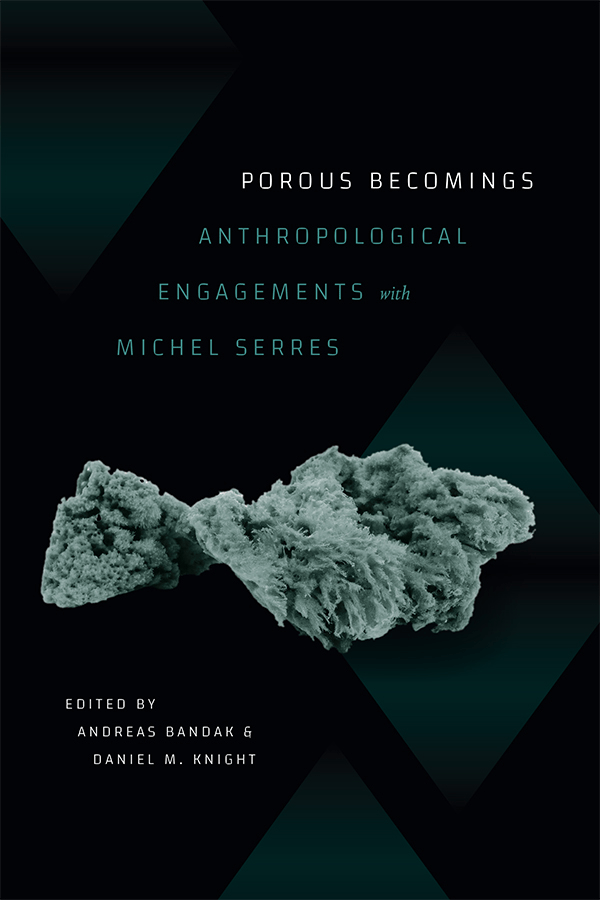
Andreas Bandak and Daniel M. Knight (eds.), Porous Becomings: Anthropological Engagements with Michel Serres – Duke University Press, March 2024

Andreas Bandak and Daniel M. Knight (eds.), Porous Becomings: Anthropological Engagements with Michel Serres – Duke University Press, March 2024

One of the foremost intellectuals of his generation, French philosopher of science Michel Serres (1930–2019) broke free from disciplinary dogmas. His reflections on science, culture, technology, art, and religion have proved foundational to scholars across the humanities. The contributors to Porous Becomings bring the inspirational and enigmatic world of Serres to the attention of anthropology. Through ethnographic encounters as diverse as angels and religious conversion in Ethiopia, the percolation of war in Bosnia, and incarcerated bodies crossing the Atlantic, the contributors showcase how Serres’s interrogation of the fundamentals of human existence opens new pathways for anthropological knowledge. Proposing the notion of “porosity” to characterize permeability across boundaries of time, space, literary genre, and academic discipline, they draw on Serres to map the constellations that connect humans, time, technology, and planet Earth. The volume concludes with a conversation between the editors and Vibrant Matter author Jane Bennett.

Contributors: Jane Bennett, Tom Boylston, Steven Brown, Matei Candea, Alberto Corsín Jiménez, David Henig, Michael Jackson, Celia Lowe, Morten Nielsen, Stavroula Pipyrou, Elizabeth A. Povinelli, Andrew Shryock, Arpad Szakolczai

Posted in Jane Bennett, Michel Serres | 1 Comment