Expensive hardback and e-book only at present, but as with other volumes in the Historical Materialism series, to follow 12 months later as a paperback with Haymarket.
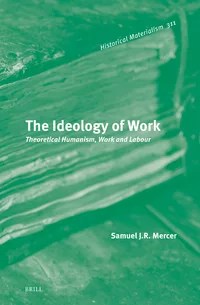
In On the Reproduction of Capitalism, Louis Althusser cited an appendix which, it seems, remains lost or was never completed. This appendix was titled ‘the Ideology of Work’.
This book takes inspiration from this appendix, to think about what is at stake for both Marxism and sociology in analysing work from an Althusserian perspective today. The dominant form of this ideology of work today is theoretical humanism. This book demonstrates how theoretical humanism has undermined the analysis of work and makes the case for a Marxism in sociology with a committed theoretical anti-humanism at the forefront of its endeavour.
The Making of a Marxist Philosopher is a revealing and beautifully written memoir and family history from renowned Marxist philosopher Sean Sayers.
His father was the son of a Jewish-Irish businessman who was a friend of Michael Collins and other leaders in the Irish struggle for independence. He became a writer who was given his first job by T. S. Eliot, shared a flat with George Orwell, went to America and was blacklisted under McCarthyism. Sean’s mother was the American-born daughter of a world famous Italian American anarchist. She became a communist and lived and worked in China. Sean was born in New York and grew up in London. He studied philosophy in Cambridge and Oxford Universities in the 1960s and has become an internationally known Marxist philosopher. As one of the founders of the journal Radical Philosophy and the creator of the Marx and Philosophy Review of Books, Sayers has been at the centre of the development of philosophy on the left in the English-speaking world during the past fifty years.
Reflecting on the fate of Marxism in an engaging, thoughtful way, The Making of a Marxist Philosopher is filled with revealing family photographs which Sayers uses to craft an original must-read on left-wing thought and politics.
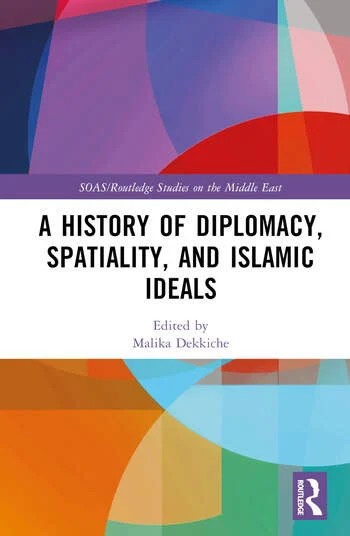
Inspired by the “spatial turn,” this volume links for the first time the study of diplomacy and spatiality in the premodern Islamicate world to understand practices and meanings ascribed to territory and realms.
Debates on the nature of the sovereign state as a territorially defined political entity are closely linked to discussions of “modernity” and to the development of the field of international relations. While scholars from different disciplinary backgrounds have long questioned the existence of such a concept as a “territorial state,” rarely have they ventured outside the European context. A closer look at the premodern Islamicate world, however, shows that “space” and “territoriality” highly mattered in the conception of interstate contacts and in the conduct and evolution of diplomacy. This volume addresses these issues over the longue durée (thirteenth to nineteenth centuries) and from various approaches and sources, including letters, chancery manuals, notarial records, travelogues, chronicles, and fatwas. The contributors also explore the various diplomatic practices and understandings of spatiality that were present throughout the Islamicate world, from Al-Andalus to the Ottoman realms.
The book will be of interest to students and researchers in a range of disciplines, including international relations, diplomatic history, and Islamic studies.
Seapower has been a constant in world politics, a tool through which powerful countries have policed the seas for commercial advantage. Political geographer Colin Flint highlights the geography of seapower as a dynamic, continual struggle to gain control of near waters—those parts of the oceans close to a country’s shoreline—and far waters—parts of the oceans beyond the horizon and that neighbor the shorelines of other countries. A forceful and clarifying challenge to conventional accounts of geopolitics, Near and Far Waters offers an accessible introduction to the combination of economic and political relations that are the reason behind, and the result of, the development of seapower to control near waters and project force into far waters.
Examining the histories of three naval powers (the Netherlands, Britain, and the United States), this book distills the past and present patterns of seapower and their tendency to trigger repercussive conflict and war. Readers will gain an appreciation for how geopolitics works, the importance of seapower in economic competition, the motivations behind China’s desire to become a global naval force, and the risks of current and future wars. Drawing on decades of experience, Flint urges readers to take seriously the dilemma of near/far waters as a context for an alternative understanding of global politics.
July has been a steady month of progress on this project. I’d hoped to complete the chapter on Georges Dumézil’s work between 1938 and 1949 well before now, but it continued into this month too. It is another very long chapter – somehow, I am going to have to find ways to condense the treatment.
Entrance to the Manuscrits reading room at the Bibliothèque nationale, Richelieu site
Earlier this month I had a couple of weeks in Paris, when I worked almost exclusively on the Emile Benveniste manuscripts at the Bibliothèque nationale. I went through some more boxes of material, going in number sequence for the most part. But the boxes are not organised chronologically or thematically, so it jumps around a lot. There are some indications of contents for some boxes on the BnF website, but lots of material isn’t indicated, and some of what is described is partial or inaccurate. The archivist responsible for this collection is going through the boxes ahead of me and producing a much more comprehensive listing of what’s there. So, I’m trying to look both at the more obviously interesting things in each box, but also take notes to build up a more detailed outline of where things are, with a view to returning to material at a later date. But even a first pass through all this material is going to take me well into the autumn, especially as I’ve been avoiding Paris from the Olympics buildup through August and won’t be back before September.
Box 40 is one of the ones which didn’t have any description online, but it’s an interesting box for many reasons. One of these is that it includes the manuscript of his 1968-69 Collège de France course published in Last Lectures. The manuscript is very organised by Benveniste’s standards, with fifteen subfolders bearing a lecture number and the date delivered. But while it is the main source of the published version, the editors filled in detail from notes taken by auditors (marked in the published version by a different typeface). But there are also parts of Benveniste’s manuscript which are not included. I will have to return to this box, in particular, when I’ve written a discussion of these lectures. Box 41 has an earlier lecture course, again fairly well organised and which accords with the summary published in the Collège de France Annuaire for that year. But the difference between the manuscript of the 1968-69 course and its published version gives some indication of the relation between this manuscript and what he might have said in the class, and how limited it is to rely on just this source alone.
The non-chronological ordering of the archive is one of the challenges of the work I’m doing. In the research and writing at home I’m broadly proceeding chronologically; but in archival work it’s often personal-specific or thematic (all the Lévi-Strauss papers that seem relevant in one go, for example), dependent on archival sequence (Benveniste or Dumézil’s papers, across multiple visits), or geographically (archives in Switzerland). So, I’ll often find something in the archive which I think might be useful when I’ve reached that moment in the story at a later point; or realise only later that something I’ve seen, somewhere, might be more interesting than I realised at the time. This is why I try to take notes that will help me in the future, so I don’t think “I’ve seen that in a box somewhere…” But it’s easier said than done when it’s not always clear what a page or folder in the archive actually is.
Perhaps working through everything in print first, and then through the archives, writing it all up, and then going back to the archives to finish up, before returning to my written text, would be more sensible. But that would require being in the archives for a consolidated period of many months towards the end of the project, which would be difficult logistically and financially – the limited research funds on this fellowship are on a year-by-year basis. So, the work continues in different registers in alternation.
One of Benveniste’s books, LeVocabulaire des institutions indo-européens, is particularly well represented in its archival traces. There are materials relating to the book in a few boxes I’ve looked at, and in box 73 there are a lot of drafts of chapters of the second volume. These are interesting because there are typed texts which are very close to the published version, and earlier typed texts with a lot of corrections, rewriting on the typed page, and supplemental handwritten pages. I don’t think that Benveniste typed his own manuscripts, though I don’t know that for sure. For some of the chapters there are summaries of the content in a different hand: the book says the summaries are by Jean Lallot, so it’s presumably him. In other words, there is an incomplete but interesting record of the development of the book. It is incomplete in that the written version (or versions) which preceded the first typescript seems to be missing, nor are there the proofs which presumably had amendments for the relatively few changes between the last typed version and the published text. Not all chapters are in the files I’ve looked at so far.
While in Paris I had a couple of part-days at the Mitterand site of the BnF, working on some published texts which are not easy to find in the UK, and I made a short trip to the Archives nationales to look again at the text of a lecture by Benveniste which I don’t think is in his own archives.
Outside of Paris, another Swiss archive digitised a few things they had, which filled in a little more detail in the Benveniste story. It’s great that some archives will do this, sometimes with a charge, and sometimes without. Uppsala University, for example, was willing to scan the correspondence between Benveniste and Dumézil with Stig Wikander and H.S. Nyberg. But other archives say it isn’t possible – either logistically for them to do, or because of copyright reasons. There is one archive I’d need to visit in Copenhagen, for example, but it’s for a relatively limited task, and I have the worry that if I go now I might discover something else to do there later. So, I’m deferring that visit, though I hope to get there at some point. But from the visit to Geneva and Fribourg, and the archives which have digitised material, I have now built up a detailed and I think compelling account of Benveniste’s experiences in the Second World War. I know, for example, the military units he was in, where he was deployed and captured, something of his movements after his escape, how and where he crossed into Switzerland, and the internment camps he was in there before being released to work in the library in Fribourg. The broad contours of the story told by Georges Redard and others are correct, but there is a lot of new detail I’m able to add. (As I mentioned in the previous update Juliet Fall has been invaluable on some of the Swiss geography.)
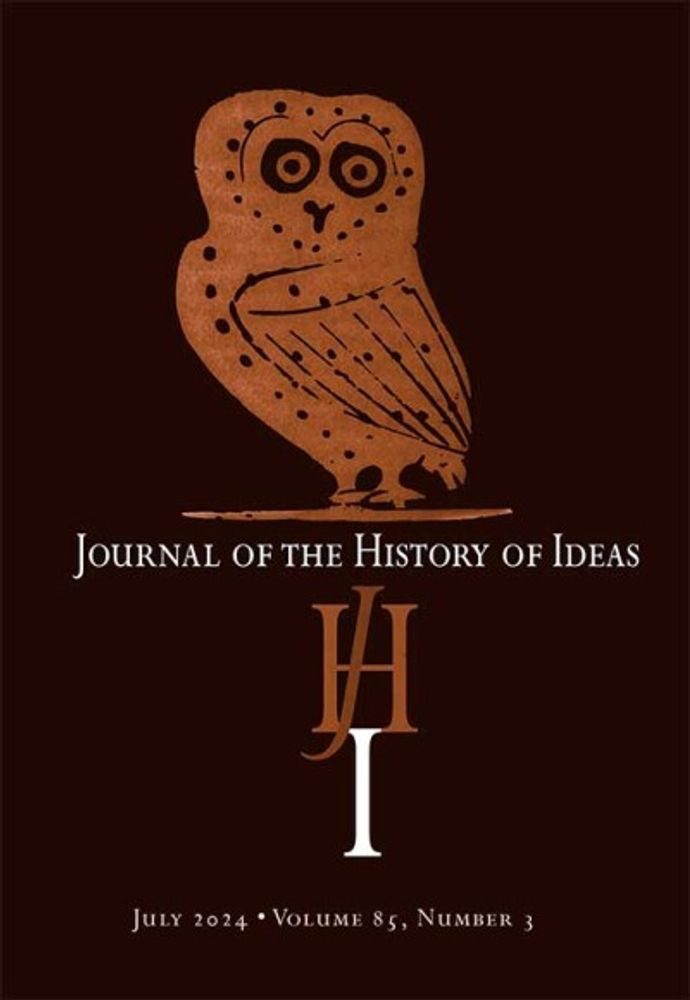
In another post, I said that my article “Foucault and Dumézil on Antiquity” was recently published in the Journal of the History of Ideas. The article is behind a paywall, but email me if you are interested but don’t have institutional access to a copy. As I said in that earlier post, I see this piece as the third of an informal trilogy of articles which bridge the Foucault and Canguilhem books and this new project.
It doesn’t directly relate to this new project, but over the years I’ve been working on Foucault I’ve done quite a lot of comparisons between variant forms of texts, which have informed my writing, and many of which I’ve shared here on Progressive Geographies. I’ve now made a list with an attempt at a comprehensive survey of those texts, with links to comparisons I’ve done or where they can be found elsewhere. There are still texts where comparison is yet to be done. For this project, I’ve done a few textual analyses of Dumézil (linked here) and on Saussure’s work on German legends. I hope these are helpful – all work in progress, so comments or corrections welcome.
The end of July 2024 is the half-way stage of this three-year project – I’m adding four months to the original schedule to make up for the time I lost due to illness last year, and now have a notional end date of January 2026. I don’t feel half-way done, by a long way, though I have written a lot of material – far more than half of a possible book.
Previous updates on this project can be found here, along with links to some research resources and published or forthcoming publications. The re-edition of Georges Dumézil’s Mitra-Varunais now scheduled for December 2024. There is a lot more about the earlier Foucault work here. The final volume of the series is The Archaeology of Foucault and the special issue of Theory, Culture & Society I co-edited on “Foucault before the Collège de France” has some important contributions on the earlier parts of Foucault’s career.
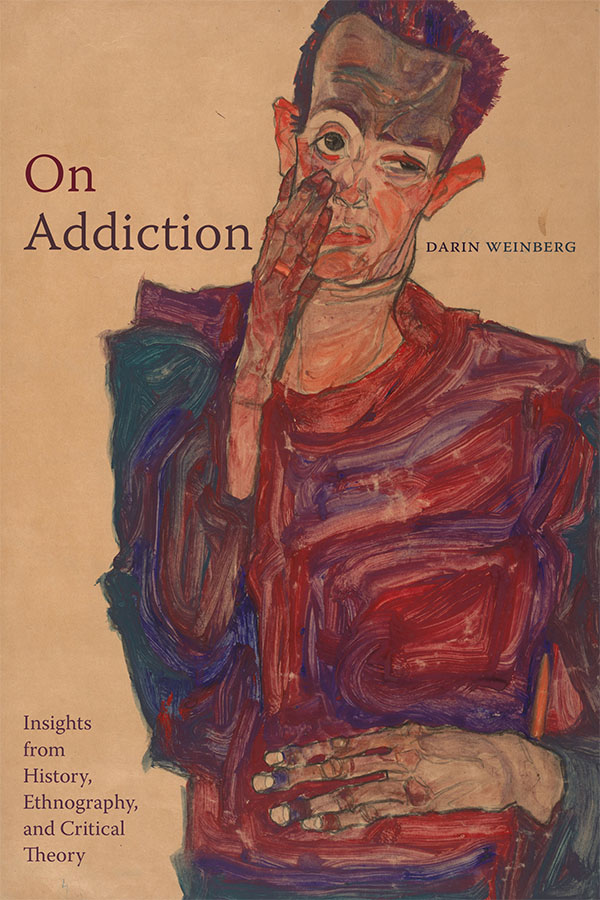
Mainstream addiction science sees addiction either as a biomedical disease that renders one incapable of self-control or as a voluntary practice engaged in freely. In On Addiction, Darin Weinberg shows how this dynamic is deeply influenced by a series of binaries (free will/determinism, mind/body, objectivity/subjectivity) that hinder our understanding of addiction. Here, he offers a new theorization of addiction in which he breaks down these contradictions and incompatibilities, calling into question the taken-for-granted distinction between the “biological” and the “social.” To the extent that it is understood as a loss of self-control over one’s behavior, addiction, Weinberg contends, requires a supple theoretical framework that provides for movements into and out of self-control, for the social and natural processes that influence these movements, for the historical contexts within which they occur, and for the ethical ramifications of taking them seriously. To create this framework, Weinberg brings together history, ethnography, and critical theory as well as the clinical and social sciences. In this way, Weinberg takes a more holistic approach to examining the fundamental nature and ethics of addiction.
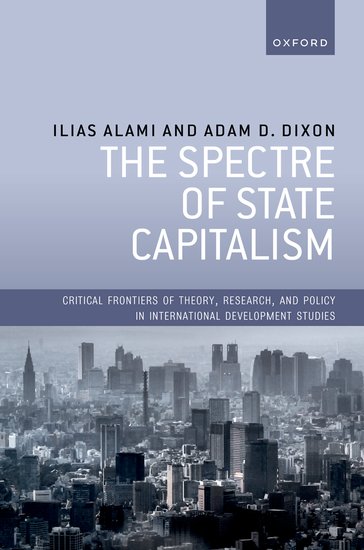
The state is back, and it means business. Since the turn of the 21st century, state-owned enterprises, sovereign funds, and policy banks have vastly expanded their control over assets and markets. Concurrently, governments have experimented with increasingly assertive modalities of statism, from techno-industrial policies and spatial development strategies to economic nationalism and trade and investment restrictions.
This book argues that we are currently witnessing a historic arc in the trajectories of state intervention, characterized by a drastic reconfiguration of the state’s role as promoter, supervisor, shareholder-investor, and direct owner of capital across the world economy. It offers a comprehensive analysis of this “new state capitalism”, as commentators increasingly refer to it, and maps out its key empirical manifestations across a range of geographies, cases, and issue areas. Alami and Dixon show that the new state capitalism is rooted in deep geopolitical economic and financial processes pertaining to the secular development of global capitalism, as much as it is the product of the geoeconomic agency of states and the global corporate strategies of leading firms. The book demonstrates that the proliferation of muscular modalities of statist interventionism and the increasing concentration of capital in the hands of states indicate foundational shifts in global capitalism. This includes a growing fusion of private and state capital, and the development of flexible and liquid forms of property that collapse the distinction between state and private ownership, control, and management. This has fundamental implications for the nature and operations of global capitalism and world politics.
This is an open access title available under the terms of a CC BY-NC-ND 4.0 International licence. It is free to read on the Oxford Academic platform and offered as a free PDF download from OUP and selected open access locations.
The biographical links between Michel Foucault and the comparative mythologist and philologist Georges Dumézil have received more attention than their intellectual connections. This article contributes by surveying Foucault’s engagements, from a 1957 radio lecture to his late lectures at the Collège de France. Particular focus is on lectures on structuralism and history in 1970, some references between 1970 and 1981, and the use of Dumézil’s work in each of Foucault’s two final courses at the Collège de France. In each, Foucault takes up Dumézil’s analyses of mythology in developing his own projects concerning history and antiquity.
The article is behind a paywall, but email me if you don’t have institutional access to a copy.
Theory and Social Inquiry is dedicated to analyzing all facets and dimensions of social life, from micro-level interactions between individuals to the durable institutions that organize societies at a macro level. Our modal article asks big questions, theorizes boldly, and draws on thorough empirical research to arrive at knowledge that often challenges conventional wisdom. We endorse the principle that a critical analysis of existing social structures and social processes is not divorced from – but an important source of – scientific discovery. The journal values rigorous humanistic inquiry as well as historical perspectives on continuity and change. We are open to the full range of social scientific methods, including scholarship that draws on new and innovative approaches under the rubric of problem-solving sociology and engaged research. Theory-inspired, theory-driven, and theory-relevant social science takes many forms. Theory and Social Inquiry is interested in all these modes.
Available open access, this includes new translations of Foucault – parts of his 1950s course on anthropology and his tribute to Jean Hyppolite.
Contributors: Isabelle Alfandary, Éric Alliez, Anna Argirò, Howard Caygill, Michel Foucault, Daniel Gottlieb, Louis Hartnoll. Orazio Irrera, Eric Prenowitz, Morteza Samanpour, Stella Sandford, Naomi Waltham-Smith, Simon Wortham
Post-Kantian European philosophy has always involved a process of reflection upon and contestation of its own problematic status as an independent discipline. The constant setting and the overstepping of boundaries – conceptual and institutional – are the hallmark of its development. The writings in this volume – organized according to the institutional genres of the presentations within CRMEP from which they derive – revisit some of these encounters of philosophy with anthropology, economy, sociology and psychoanalysis, respectively, in both the French and German traditions. Increasingly, thinkers such as Foucault and Derrida – the bookends of this collection – appear as singular figures only within the broader, densely imbricated contexts from which they depart. Still figures of the future, constituting our philosophical present with new pasts.
This book is available as a free eBook. The electronic version of this book is licensed under a Creative Commons Attribution-Non-Commercial No Derivatives 4.0 International Licence (CC-BYNC-ND). For more information, visit creativecommons.org.