Shakespeare and the Reactionary Mind: Counterrevolution Fascism Militarism – Garrick’s Temple to Shakespeare, 31 August 2024

Shakespeare and the Reactionary Mind: Counterrevolution, Fascism, Militarism – Garrick’s Temple to Shakespeare, 31 August 2024

Garrick’s Temple to Shakespeare, Hampton Court Road, Hampton, TW12 2EJ, United Kingdom

Speakers – John Gillies, Amy Lidster, Björn Quiring, Jennifer Rust and Richard Ashby.

Booking via Eventbrite

Conservatives have always tended to claim Shakespeare as one of their own. In the 1950s, E. M. W. Tillyard developed the influential thesis that
Shakespeare’s plays uphold the traditional social hierarchies and suggest that these hierarchies are embedded in nature. Ulysses’ speech on “degree”
in ‘Troilus and Cressida’ serves as one of the key witnesses in this context. Since Tillyard’s time, scholars have persistently pointed out elements of Shakespeare’s plays that do not fit this assumption: the actions on stage persistently seem to contradict and subvert the noble proclamations of Ulysses and his peers. In the histories and tragedies, the persons on top of the hierarchy mostly seem to end up there by a combination of luck, political manipulation and, first and foremost, the effective use of violence, rather than by any apparent inborn excellence.

Accordingly, Shakespeare’s plays represent a volatile social order in which communal life unfolds as perpetual warfare between interest groups – sometimes open, sometimes covert. With Corey Robin and others, one might venture the hypothesis that this apparent discrepancy between words and deeds delineates a symptomatic ambivalence that characterizes the reactionary worldview: while reactionaries claim to be conservative, their enforcement of traditional hierarchies often takes on the form of a violent interruption of these very traditions. In the name of nature and of “real life”, they voice unprecedented demands that those who are destined to rule may finally be allowed to rule as they must and to keep their inferiors in the subjugated position they deserve. The most extreme form these demands can take is that of fascism, a militant movement of
revolutionary conservatism that, according to Hannah Arendt, has the inherent tendency to destroy everything it ostensibly holds sacred (such as the family, the state and the nation). Shakespeare’s plays (first and foremost, ‘Coriolanus’, ‘Julius Caesar’, ‘King Lear’ and ‘Hamlet’) have been used to explore this ambivalence, by reactionaries and fascists as well as by their opponents. This one-day symposium aims to investigate this complex relationship.

Posted in Uncategorized | Leave a comment

Foucault’s revised texts – a list with links to comparisons

Michel Foucault did not continually revise his earlier texts in the way some other authors do. But some of his books and articles do exist in different versions. This is not always fully recognised, and some of these changes are quite important in tracking his changing ideas and terminology. 

A photograph of some photocopies of texts by Foucault with handwritten indications of changes between versions

Over the years I’ve been working on Foucault I’ve done quite a lot of comparisons between variant forms of texts, which have informed my writing, and many of which I’ve shared here on Progressive Geographies. I’ve now made a list with an attempt at a comprehensive survey of those texts, with links to comparisons I’ve done or where they can be found elsewhere. There are still texts where comparison is yet to be done.

The list does not include excerpts from Collège de France lectures which have now been published in full. Nor does it include texts which were published in unauthorised editions which have since been reedited in more reliable versions in the Vrin series Philosophie du présent. This is very valuable work, but in those instances the original unauthorised version is fully superseded by the critical edition. What I’m interested in are those texts where Foucault himself published two distinct versions, where both retain an importance in tracing his ideas.

In some instances, Dits et écrits provides a comparative text, marking the changes, but the English translation in Essential Works simply reprints or lightly amends a previous translation of one or other version instead. This is unfortunate, since Essential Works claims to be a translation of texts from Dits et écrits, and the French editors had already done the hard work.

For English translations of short texts by Foucault see Richard Lynch and Daniele Lorenzini’s useful bibliography. As that listing shows, there are often multiple translations of texts, but that is not my purpose with this list – it is to point to comparison of different French versions.

The list is here. As ever with these research resources it is work in progress and comments and corrections are welcome. I hope people working on Foucault find it useful.

Posted in Michel Foucault, Uncategorized | Leave a comment

How annoying are adverts on Progressive Geographies?

If you read this blog on the web (rather than through an rss reader, for example), and don’t use an ad-blocker, how annoying are the adverts?

They are hopefully fairly minimal and have two benefits – they mean I don’t have to pay WordPress to not have them, and the tiny amount they bring in covers the running cost of the site (domain registration, file storage upgrade, etc.).

I’ve largely thought that if people find them that annoying they can use an ad-blocker – this site is hardly the only place where you experience them. But I’m tempted to remove them entirely, even if that costs me a bit. I’ve not wanted to go down the subscription model, or premium content, or donations…

Any thoughts appreciated.

Posted in Uncategorized | 4 Comments

Jean-Luc Nancy and Claire Denis, The Intruder – trans. Jeff Fort, Fordham University Press, May 2024

Jean-Luc Nancy and Claire Denis, The Intruder – trans. Jeff Fort, Fordham University Press, May 2024

In 1991, Jean-Luc Nancy’s heart gave out. In one of the first such procedures in France, a stranger’s heart was grafted into his body. Numerous complications followed, including more surgeries and lymphatic cancer. The procedure and illnesses he endured revealed to him, in a more visceral way than most of us ever experience, the strangeness of bodily existence itself and surviving the stranger within him. 

During this same period, Europe began closing its borders to those seeking refuge from war and poverty. Alarmed at this trend and drawn to a highly intimate form of strangeness with which he had been living for years, Nancy set out in The Intruder to articulate how intrusion—whether of a body or a border—is not antithetical to one’s identity but constitutive of it. 

In 2004, Claire Denis adapted The Intruder into a film already hailed among the most important of our century. This edition includes Nancy’s and Denis’s accounts of turning philosophy into film and the text of a shorter collaboration between the two of them. Throughout, Nancy and Denis push us to recognize that to truly welcome strangers means a constant struggle against exoticism, enforced assimilation, and confidence in our own self-identity

Posted in Jean-Luc Nancy, Uncategorized | Leave a comment

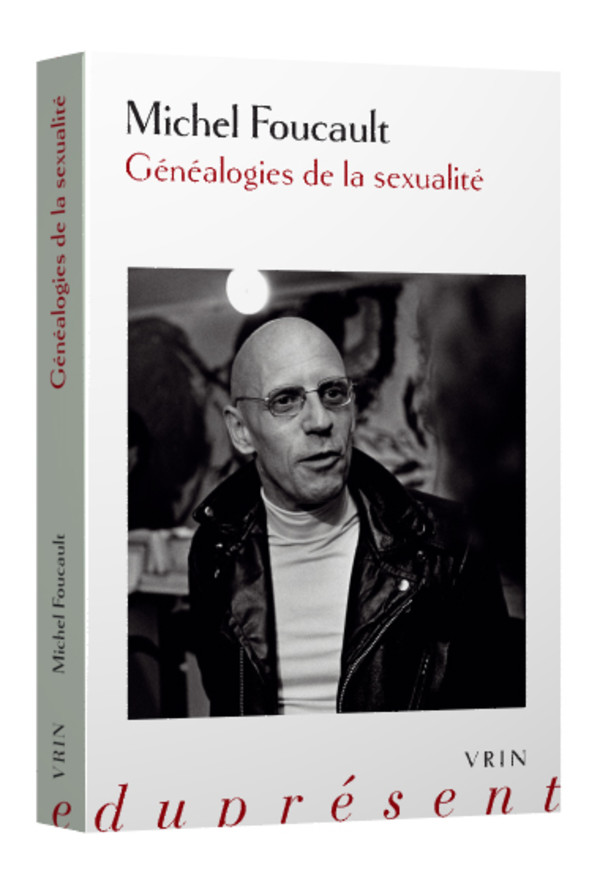
Michel Foucault, Généalogies de la sexualité – ed. Henri-Paul Fruchaud and Daniele Lorenzini, Vrin, September 2024

Michel Foucault, Généalogies de la sexualité – ed. Henri-Paul Fruchaud and Daniele Lorenzini, Vrin, September 2024

A really important collection of material around the early stages of the History of Sexuality, including insights into volumes not published, and a critical edition of the 1980 seminar in New York which is a valuable document in how the series was undergoing a major transformation.

La sexualité, est-elle réprimée? Devrions-nous par conséquent nous efforcer de la libérer? Et si elle l’est, pourquoi sommes-nous sans cesse appelés à en parler – à dire vrai à propos de nos désirs sexuels et à reconnaître dans notre sexualité la clé de notre identité?
Ces questions sont au cœur du projet foucaldien d’une histoire de la sexualité. Ce volume réunit une série de textes inédits qui relèvent de deux moments fondamentaux dans l’élaboration d’un tel projet. D’une part, le moment 1975-1976 : les conférences prononcées aux États-Unis sur la notion de répression, le cours à l’Université de São Paulo sur la généalogie du savoir moderne sur la sexualité, ainsi que la première version du début de La volonté de savoir sont tous centrés sur l’époque moderne et nous offrent une perspective précieuse sur la façon dont Foucault conçoit initialement son Histoire de la sexualité. D’autre part, le séminaire que Foucault anime, en 1980, au New York Institute for the Humanities sur le thème « Sexualité et solitude » témoigne du recentrement de l’étude du dispositif de sexualité en direction de l’analyse de l’émergence historique de la chair chrétienne dans le christianisme primitif.
Les textes ici recueillis permettent ainsi de suivre l’évolution complexe du projet foucaldien d’une histoire de la sexualité et de prendre la mesure de son ambition, de sa richesse et de son actualité.

Édition et apparat critique par H.-P. Fruchaud et D. Lorenzini. Introduction par D. Lorenzini, H.-P. Fruchaud, A.I. Davidson.

Posted in Michel Foucault, Uncategorized | 1 Comment

Federico Testa, On the Politics of the Living: Foucault and Canguilhem on Life and Norms – Bloomsbury, December 2024

Federico Testa, On the Politics of the Living: Foucault and Canguilhem on Life and Norms – Bloomsbury, December 2024

Bringing the philosophies of Michel Foucault and Georges Canguilhem into dialogue, Federico Testa examines the notions of life and norms underlying our modern experience of politics. 

Today’s global health crisis acts as a stark reminder that life is at the core of our political debates and dilemmas. We can no longer think of forms of political organization, citizenship and participation without considering the materiality and precarity of our own organic life. Ours is a politics of the living.

Within this context, this book examines Foucault’s work on the politicization of life and biopolitics through the lens of Canguilhem’s notion of norms. Testa extracts from Canguilhem’s philosophy the conceptual tools to re-interpret Foucault’s ideas on power, and reconceptualises normativity as a process of the creation of norms that provide tools for political and social analysis and for thinking resistance. In so doing, he uncovers new and important possibilities for biopolitical resistance. 

Demonstrating not only Canguilhem’s underexplored social and political concerns but also the intellectual osmosis between the two thinkers, On the Politics of the Living is an urgent examination of the ever-increasing significance of the concepts of life, care and health in today’s political discourse.

Posted in Georges Canguilhem, Michel Foucault, Uncategorized | 5 Comments

Steve Stakland (ed.), The Phenomenology of Play: Encountering Eugen Fink – Bloomsbury, July 2024

Steve Stakland (ed.), The Phenomenology of Play: Encountering Eugen Fink – Bloomsbury, July 2024

Eugen Fink’s deep engagement with the phenomenon of play saw him transcend his two towering mentors, Edmund Husserl and Martin Heidegger, to become a crucial figure in early 20th-century phenomenology. The Phenomenology of Play draws on Fink’s concept of play to build a picture of his philosophy, from its foundations to its applications. 

The book’s three sections focus on the building blocks of Fink’s phenomenology of play, how his work maps onto the broader history of philosophy, and finally how his writing can be applied to contexts from education and care to politics and religion. This rich account of Fink’s contribution to theories of play demonstrates its immense value and fundamental importance to human existence. Relating Fink’s work to that of his contemporaries and predecessors like Husserl, Heidegger, Schiller, Gadamer, Nietzsche and Sartre shows the range and importance of his ideas to modern European thought. The Phenomenology of Play also features newly translated material including notes from conversations between Fink and Heidegger, and Fink’s own essay ‘Mask and Cothurnus’ on ancient theatre – which shed new light on his philosophical enquiries.

Good to see Fink getting some attention in English. I reviewed the 2016 translation of his masterwork Play as a Symbol of the World for Notre Dame Philosophical Reviews; and wrote about him for Parrhesia in 2008 (both open access).

Posted in Eugen Fink | Leave a comment

Peter Adey, Evacuation: The Politics and Aesthetics of Movement in Emergency – Duke University Press, September 2024

Peter Adey, Evacuation: The Politics and Aesthetics of Movement in Emergency – Duke University Press, September 2024

Open access introduction

In Evacuation, Peter Adey examines the politics, aesthetics, and practice of moving people and animals from harm during emergencies. He outlines how the governance and design of evacuation is recursive, operating on myriad political, symbolic, and affective levels in ways that reflect and reinforce social hierarchies. Drawing on a wide range of case studies, from the retrieval of wounded soldiers from the battlefield during World War I and escaping the World Trade Center on 9/11 to the human and animal evacuations in response to the 2009 Australian bushfires and the 2010 Haiti earthquake, Adey demonstrates that evacuation is not an equal process. Some people may choose not to move while others are forced, some may even be brought into harm through evacuation. Often the poorest, racialized, and most marginalized communities hold the least power in such moments. At the same time, these communities can generate compassionate, creative, and democratic forms of care that offer alterative responses to crises. Ultimately, Adey contends, understanding the practice of evacuation illuminates its importance to power relations and everyday governance.

Posted in Uncategorized | Leave a comment

Naomi Waltham-Smith, Free Listening – University of Nebraska Press, November 2024

Naomi Waltham-Smith, Free Listening – University of Nebraska Press, November 2024

Free Listening offers a radical reframing of seemingly intractable debates and polarized positions on free speech, academic freedom, systemic injustice, and political dissent by shifting attention from our voices to our ears. Instead of reclaiming the terrain of free speech that is increasingly ceded to conservatives, Naomi Waltham-Smith argues that progressives should assume a more radical task—to liberate listening from those frameworks that have determined what freedom looks like, who enjoys it, and at what cost. Refocusing on aural responsiveness forces a confrontation with the liberal tradition that has traditionally anchored claims for freedom of expression and inquiry. If listening is placed at the heart of public deliberation and disagreeing well, the relational, open-ended, and unpredictable character of free expression becomes a common good.

In a wide-ranging critical reflection on issues from civility to criticality, righteous anger to gentle listening, and silencing to streaming platforms, Free Listening makes an ambitious contribution to sound studies and political philosophy. Weaving together deconstruction, Black political thought, and decolonial theory, Waltham-Smith argues that the retort to accusations of “cancel culture” should be a revival of abolition democracy.

Posted in Uncategorized | Leave a comment

Martin Paul Eve, Theses on the Metaphors of Digital-Textual History – Stanford University Press, July 2024 (print and open access)

Martin Paul Eve, Theses on the Metaphors of Digital-Textual History – Stanford University Press, July 2024 (print and open access)

Digital spaces are saturated with metaphor: we have pages, sites, mice, and windows. Yet, in the world of digital textuality, these metaphors no longer function as we might expect. 

Martin Paul Eve calls attention to the digital-textual metaphors that condition our experience of digital space, and traces their history as they interact with physical cultures. Eve posits that digital-textual metaphors move through three life phases. Initially they are descriptive. Then they encounter a moment of fracture or rupture. Finally, they go on to have a prescriptive life of their own that conditions future possibilities for our text environments—even when the metaphors have become untethered from their original intent. Why is “whitespace” white? Was the digital page always a foregone conclusion? Over a series of theses, Eve addresses these and other questions in order to understand the moments when digital-textual metaphors break and to show us how it is that our textual softwares become locked into paradigms that no longer make sense.

Contributing to book history, literary studies, new media studies, and material textual studies, Theses on the Metaphors of Digital-Textual History provides generative insights into the metaphors that define our digital worlds.

Posted in Uncategorized | Leave a comment