“As editors of one of our field’s leading journals, we feel a strong responsibility to help build collective momentum towards a better arrangement: a publishing model that no longer wastes massive amounts of public resources feeding profits to private corporations, secures editorial independence against the pressures of profit-making and makes research available to everyone, free of charge.”
The current rise of nationalism across the globe is a reminder that we are not, after all, living in a borderless world of virtual connectivity. In Nationalism, historian Eric Storm sheds light on contemporary nationalist movements by exploring the global evolution of nationalism, beginning with the rise of the nation-state in the eighteenth century through the revival of nationalist ideas in the present day. Storm traces the emergence of the unitary nation-state—which brought citizenship rights to some while excluding a multitude of “others”—and the pervasive spread of nationalist ideas through politics and culture.
Storm shows how nationalism influences the arts and humanities, mapping its dissemination through newspapers, television, and social media. Sports and tourism, too, have helped fashion a world of discrete nations, each with its own character, heroes, and highlights. Nationalism saturates the physical environment, not only in the form of national museums and patriotic statues but also in efforts to preserve cultural heritage, create national parks, invent ethnic dishes and beverages, promote traditional building practices, and cultivate native plants. Nationalism has even been used for selling cars, furniture, and fashion.
By tracing these tendencies across countries, Storm shows that nationalism’s watershed moments were global. He argues that the rise of new nation-states was largely determined by shifts in the international context, that the relationships between nation-states and their citizens largely developed according to global patterns, and that worldwide intellectual trends influenced the nationalization of both culture and environment. Over the centuries, nationalism has transformed both geopolitics and the everyday life of ordinary people.
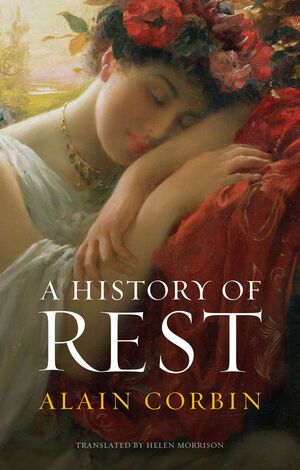
Alain Corbin, A History of Rest, trans. Helen Morrison – Polity, June 2024
Rest occupies a space outside of sleep and alertness: it is a form of recuperation but also of preparation for what is to come, and is a need felt by human and animal alike. Through the centuries, different and conflicting definitions and forms of rest have blossomed, ranging from heavenly repose to what is prescribed for the modern affliction of burn-out. What has remained constant is its importance: long the subject of art and literature, everyone understands the need not to disturb the aimless, languishing, daydreaming Lotus-eater.
Not viewed simply as an antidote for fatigue, for a long time rest was seen as the prelude to eternal life, until everything changed in the nineteenth century and society entered the great ‘age of rest’. At this point, the renowned French historian Alain Corbin explains, rest took on new therapeutic and leisurely qualities, embodied by the new types of human that emerged. The modern epicurean frolicked on beaches and soaked up the rays, while melancholics were rejuvenated in pristine sanatoria, the new temples of rest. Paid holidays and a widespread acceptance of the need to build up the strength sapped during work followed, while the 1950s became the decade of ‘sea, sex and sun’.
This new book, as original as Corbin’s other histories of neglected aspects of human life, pans the long evolution of rest in a highly readable and engaging style.
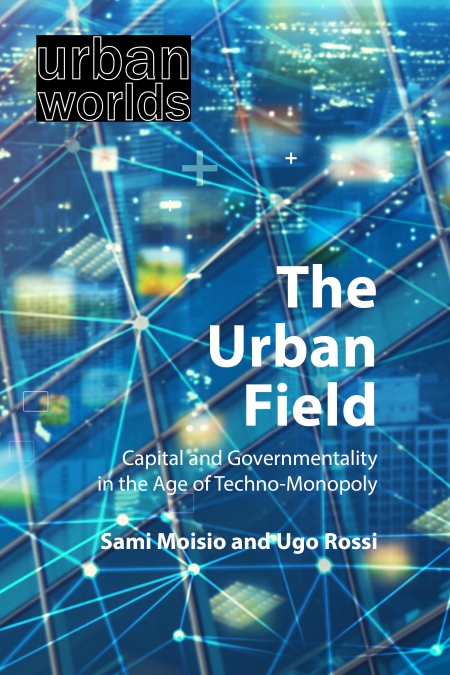
We live in an era of techno-monopoly power in which technocapitalism – through ubiquitous digital platforms – has colonized both the internet and key aspects of our everyday lives. Cities and larger urban and metropolitan environments have provided a fertile ground for the rise and rapid growth of this power. In The Urban Field, Moisio and Rossi reveal an urban monopoly capitalism supported by the “corporatized state”. They critically examine the relationship between capital and the state, and the generation of an urban governmentality centred on the economization of knowledge and technology in four key sites: labour, human capital, startups and forms of life. Moisio and Rossi contend that, ultimately, the urban field is a constitutively political construct that can be enacted in a different way, no longer as a value-extraction machine but as a collective endeavour aiming at redefining established modes of economic value creation.
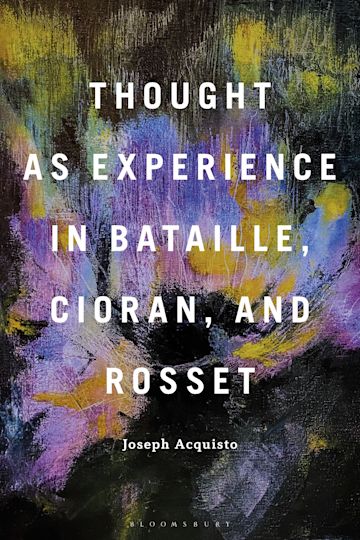
Examines how postwar French writers constitute the thinking subject and reshape its relation to the external social world. Joseph Acquisto analyzes the writings of three thinkers during and shortly after the Second World War who address the question of what it means to think, and what it means to constitute oneself as a thinking subject – at a time that seems to come “after everything”; with the ruins of attacked cities echoing the remains of a philosophical tradition that was confident in its establishment of human beings as rational, of reason leading to progress, and of both the self and the world as knowable.
What Georges Bataille calls “inner experience” and Emil Cioran labels “thinking against oneself” is something akin to a drama; not a mere representation of the self in relation to the world, but a process of remapping the relation of subject to object of thought dialectically. Acquisto argues that both writers adopt an anti-systematic approach to thinking that implicates fragmentary writing as a way of turning answers about subject-object relations into questions. Acquisto contends that this stands in contrast to the approach of Clément Rosset, whose affirmation of the inaccessibility of the real leads to an anti-intellectual, grace-filled affirmation of life as it is given, under the guise of what he calls the “tragic.”
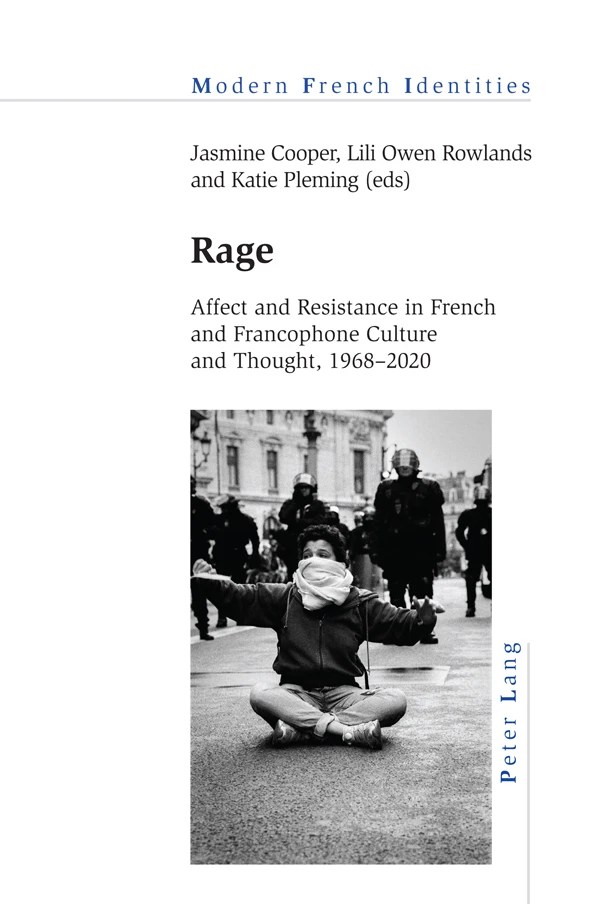
This volume explores the political life of rage as it has been experienced and mobilized in the Francosphere since 1968. If mai is remembered as a failure to convert insurrectionary feeling into lasting political change, the vast number of activist groups who have alchemized their anger into resistance over the past fifty years are a testament to the continued, necessary role of rage in political life. This volume traces the various morphologies of anger across French-language literature, thought, cinema and activism. From Black feminisms to punk, flamboyance to suicide, cacophonous sound to riotous song, the contributions probe the aesthetics and politics of rage. This collection also examines the uneven legitimization of political anger – how rage is allowed to be expressed, by whom and in which contexts. Rage is often dismissed as inimical to proper academic inquiry: what unites the contributions in this publication is a commitment to thinking with feeling.
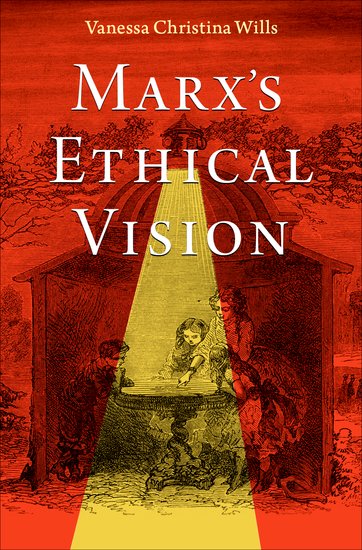
“The communists do not preach morality at all”; this line from The Communist Manifesto might seem to settle the question of whether Marxism has anything to offer moral philosophy. Yet, Marx issued both trenchant critiques of “bourgeois” morality and thundering condemnations of capitalism’s “vampire-like” destructiveness. He decried commodity-exchange for corroding our ability to value one another for who we are, not how much our lives could be traded away for. He expressed apparently ethical views about human nature, the conditions necessary for human flourishing, and the desirability of bringing such conditions about–views that are interwoven throughout his life’s work, from his youthful philosophical poetry to his unfinished masterpiece, Capital.
Renewed attention to Marx’s distinctively “dialectical” and historical materialist approach to conflict and change makes sense of this apparent tension in his thought. Following Marx, Vanessa Christina Wills centers labor–human beings satisfying their needs through conscious, purpose-driven, and transformative interaction with the material world–as the essential human activity. Working people’s struggles reveal capitalism’s worst ravages while pointing to a better future and embodying the only way there: rational transformation of our relationships to ourselves, to one another, and to the natural world, so that the human condition emerges not as a burden we must bear but as life we joyfully create. The purposiveness of labor gives rise to a normativity already inherent in the present state of things, one that can guide us in knowing what sort of world we should build and that further prepares us to build it.
Rather than “preach morality,” the key task for moral philosophy is to theorize in the light that working peoples’ struggles for survival shine on capitalism–an existential threat to humanity and the defining ethical problem of our time.
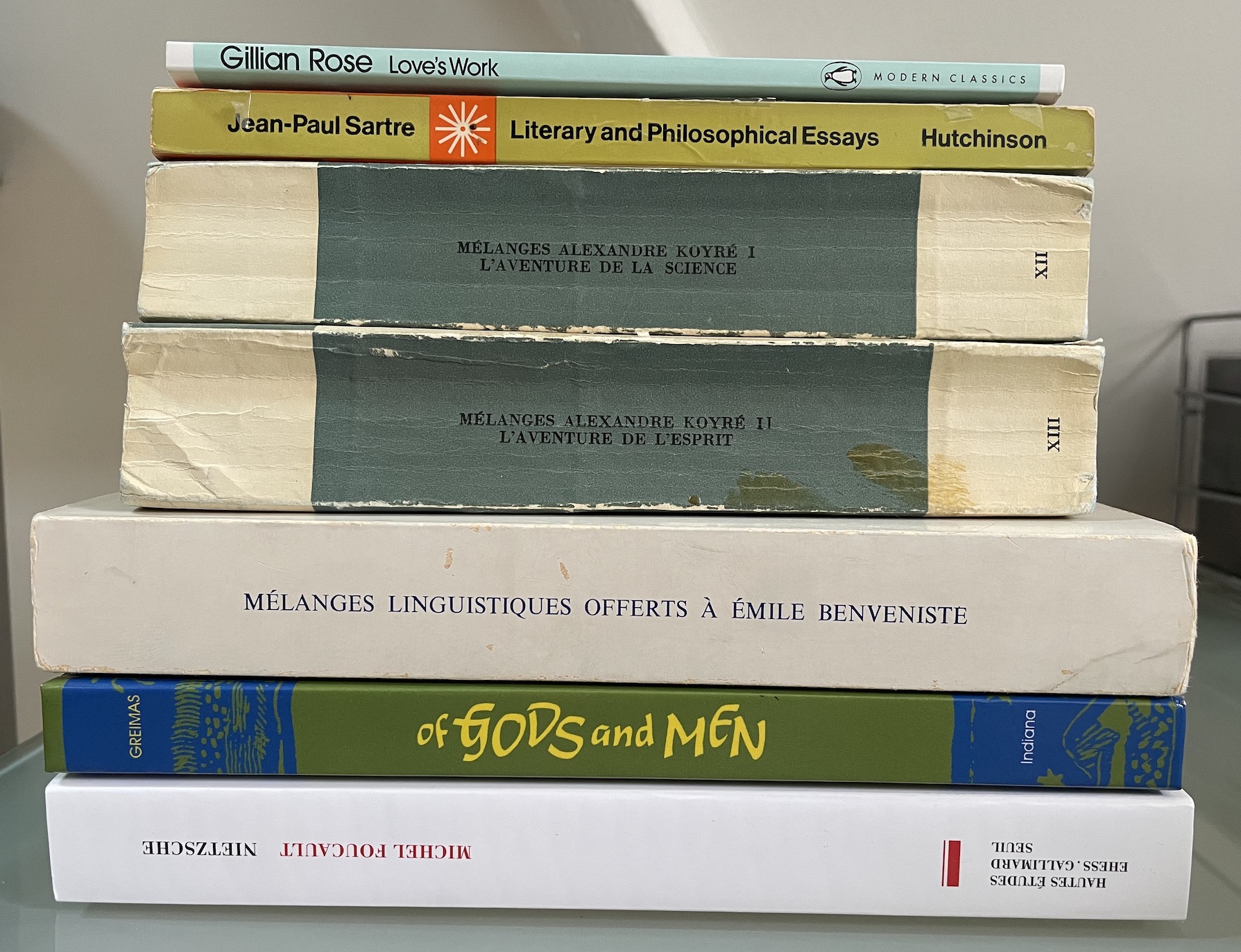
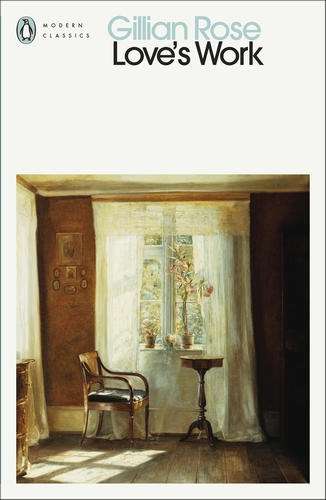
Gillian Rose’s classic book, Love’s Work was reissued by Penguin earlier this year. There was a discussion of the book and her work generally at the London Review Bookshop with James Butler, Rebekah Howes and Rowan Williams – available here.
When Gillian Rose’s Love’s Work was published shortly before the author’s death in 1995, Marina Warner wrote in the LRB: ‘This small book contains multitudes. It fits to the hand like one of those knobbed hoops that do concise duty for the rosary, each knob giving the mind pause to open up to vistas of meditation on mysteries and passion.’
To mark the publication of a new edition (Penguin Modern Classics) with an introduction by Madeleine Pulman-Jones, we hosted a discussion of Rose’s ‘masterpiece of the autobiographer’s art’ (Edward Said) and its legacy. Participants were be LRB contributing editor James Butler, Rebekah Howes of the University of Winchester and the former Archbishop of Canterbury Rowan Williams.