The importance of small details

As last week’s update on the book said, there were lots of minor things that I wanted to get resolved before I left London. Most of these presented relatively few problems.

A few though caused me considerably more work. With Vitoria I ended up using a bi-lingual German-Latin edition of his Vorlesungen. With the Plutarch quotation that Lipsius uses I was able to track down the ‘Plutarch, Apopht‘ reference to his Moralia (with some help from a friend) and then to find the original. This is the passage I posted a few days ago. I did eventually find Voltaire’s comment about the Holy Roman Empire, but it wasn’t where the reference I’d seen said it was. And I finally found the original place where Baldus says that territory and jurisdiction go together ‘like mist in a swamp’.

The original Greek text of Aelius Aristides’ 26th oration, on Rome, doesn’t appear to have been published in a modern edition. The Loeb library intended to produce bilingual editions, but only the first volume which covers the first two Orations, was published and then it was discontinued. The Opera quae exstant Omnia, edited by Lenz and Behr only appears to have had the first volume—in four parts—published. This covers Orations I-XVI but as far as I can tell no further. In the end I found a 1898 German edition which had the required text. What’s strange is that the English translation which I first read – and wanted to check for some small details – is by Charles Behr, and he says that all the translations are based on the critical edition he’d done. So if he’d done the work, why was the Opera unfinished?

Another challenge – and one that so far remains unresolved – is a passage in Nicholas of Cusa’s De concordantia catholica (III, vi, 343).

We should note that his power to command does not extend beyond the boundaries of his empire [terminus imperii] under him, as is evident in the text Ego Ludovicus, where although Louis describes himself as emperor, he issues commands only to the inhabitants of the kingdom of France and the Lombards who were his de facto subjects. And following this we should say that the emperor is said to be lord of the world as ruler of the empire that the Romans once conquered by their valor, as the text [C.] 28 q. 1 para Ex his says, deriving from that title from the fact that the Romans had the greater part of the world under their rule.

The reference to ‘Ego Ludovicus’ is to Decretum Gratiani, I, lxiii, xxx, in J.P. Migne (ed.), Patrologiæ Latinæ, 1891, Vol 187, columns 339-40.

The bit I can’t trace is the reference to “28 q. 1 para Ex his”. The English editor Sigmund inserts the “[C]”. I wondered if this was a reference to a chapter , or even the Roman law Codex, but neither are right. The Latin text has “C. 28 q. 1 § 2 Virtutibus promererunt imperium (post C. 14)”.  It didn’t seem to be to Decretum Gratiani, I, lxiii, xxviii (that is, very close to the prior reference); and it did not appear to be a reference to Causa 28 quaestio 1 canon 2. That particular hunt continues.

Why does all this matter? I’ve made a decision that I will check everything to the original language; that I will not have references of the style ‘X cited by Y’; and that I’ll try to take nothing on trust or assumption. It’s vastly increased the workload, and there have been many moments when I’ve been sorely tempted by the academic shortcut, but I’ve discovered so many things by following things up and checking everything that I’d hate to abandon this policy. Yes it’s obsessive, and I know that there will still be mistakes. But they will be ones of incompetence rather than inaction.
Posted in Baldus de Ubaldis, Francisco de Vitoria, Nicholas of Cusa, Territory, The Birth of Territory | Leave a comment

Rumours of the cuts to come

Rumours of the cuts to come to British Higher Education here and here. As I said in my immediate thoughts on the Browne report a few days ago (here), the the unsaid part of the report was the massive cuts coming in the comprehensive spending review. These are now said to be in the region of 80% to the teaching budget, with the aim of making up the shortfall through the increased fees. But from various figures doing the rounds, universities would have to charge £7,000 just to stand still, if – and this is clearly a big if – they are able to maintain recruitment levels. But £7,000 is over the notional £6,000 figure where availability of loan support dries up and levies are made on the amount going to universities.

So, there will be a squeeze there, and it seems optimistic to think that the change in funding will not change student willingness to go to university, do the same courses, and at the same places. In other words, some really big changes are on the horizon.

Steve Smith, VC of Exeter and chair of Universities UK said this:

The biggest worry is simple to state: if Browne fails to get through the Commons, or gets unpicked, or gets accepted but only after major changes are made, we will simply not be able to replace the unprecedented reductions in state funding that are coming in the Spending Review.

So, quite apart from anything else, the shift in the balance that seems to be being attempted here may be out even before the new system has begun. There are also presumably some complications in timing. The cuts will be set for the budgets of future years; the legislation to bring in different fees will take time; and in the first year of implementation only around 1/3 of undergraduate students will be paying the higher fees (a smaller proportion for longer courses and part-time degrees). So it will take a number of years before the whole system is running in the way that this seems to be planned.

Posted in Politics, Universities | Leave a comment

Environment and Planning

There will be a five volume compilation from the Environment and Planning series of journals coming out with Sage next year. It’s designed for library use. 

There are four volumes devoted to the four journals – A, B, C and D – and one volume that takes papers from each of the series. I’m the managing editor, the editor of the volume on Society and Space, and the lead editor on the fifth ‘Foundations’ volume. Mike Batty is doing EPB: Planning and Design; Bob Bennett is doing EPC: Government and Policy, and the ‘A’ team is Nigel Thrift, Trevor Barnes and Jamie Peck.

Posted in Nigel Thrift, Society and Space | 1 Comment

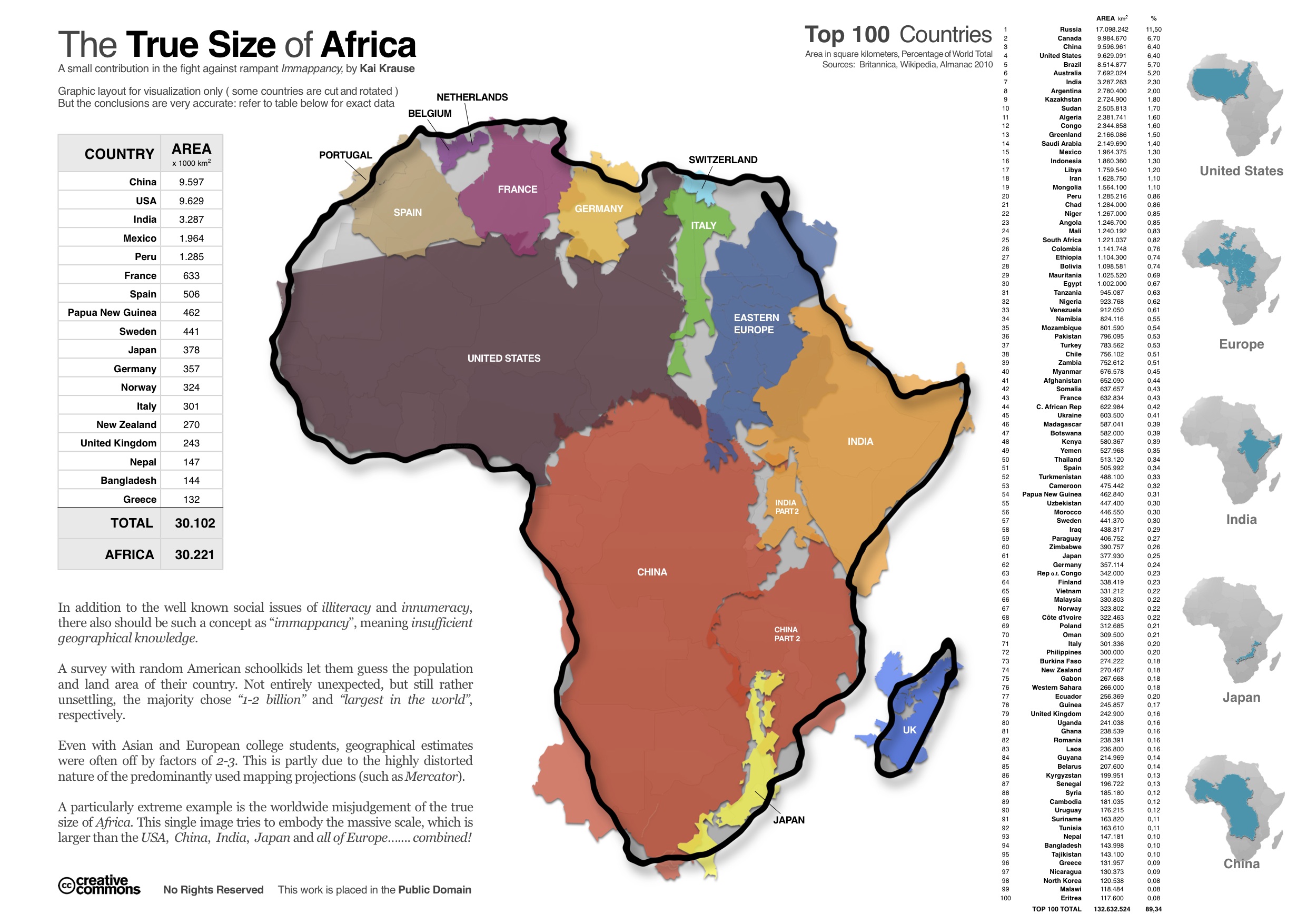
‘The True Size of Africa’

This image has been fairly widely circulated.

David Campbell asks a good question here: “in comparing a continent with countries, doesn’t it run the risk of perpetuating the homogenization of Africa’s 61 political territories into one entity?” One way this is seen is in the common undergraduate essay line about “countries like Africa”, but it’s much more widespread. I’ve so far just been to Kenya, Swaziland, South Africa, Morocco and Tunisia, but it looks like I will be there more often in the near future.

Posted in Politics | 1 Comment

Badiou on Beckett

At Infinite Thought, Nina Power has posted an announcement that the translation of Badiou’s book On Beckett is now freely available as a pdf here. here.

Posted in Alain Badiou | 1 Comment

The Browne Report

The Browne report ‘Securing a Sustainable Future for Higher Education’ is here.

The headlines

  • loans for living costs; grants for families with below £60,000 income
  • no upfront fees for tuition, these too funded by loans
  • repayment of loans to start at £21,000, but 9% of income above that
  • universities can now charge fees as they wish above the current limit of £3290, but £6000 seems to be the new target. Above £6000 universities will pay a levy back to government.

It’s pretty clear that the report is trying to minimise government financial involvement in HE, and that it is doing this by claiming it is in the interests of students, parents and institutions.

There is a lot in here of why this is not a ‘graduate tax’ – the key differences being a pay ceiling (the ‘charge of the degree’) or a time limit (30 years!); and the direct link between the institution and the student rather the treasury and the student.

One thing that is striking is that it takes 2006 and the introduction of fees for tuition as its starting point. The struggles over that – remember it nearly brought down Blair – have long been lost. Having been lost, it becomes a question of whether this should be a free market or a regulated market. There is also the depressing line about who benefits from a degree – “the public also receives a benefit but this is less than the private benefit”. In the part on postgraduates, there is the comment that resources should be targeted “on courses that are a priority for the public interest”. I’d like to see them define that.

There is also a request for some more information to be available to students when they are applying for or choosing (what is now effectively ‘purchasing’) their degree course. Its emphasis is heavy on student evaluations – quantitative, of course – and course information (hours, proportion of this and that, employment percentages, average salary of graduates). Compare the Higher Education Market dot com…

And despite the idea of less government regualtion, there is a new HE Council proposed with regulatory powers. This will replace HEFCE, QAA, OFFA and OIA. Its aims are Investment, Quality, Equity of Access, Competition and Dispute Resolution.

And the unsaid part of the report – massive cuts coming in the comprehensive spending review. A major shift away from a public good toward a market based system.

It’s not a very long report – 64 pages.

Update 11.10: BBC’s Nick Robinson boils the party politics down to their essence:

Here’s what to remember when you hear politicians trading blows about tuition fees:

• Labour introduced them and commissioned the report proposing that the cap on them be lifted, but now says it wants them abolished

• the Tories originally proposed scrapping them, but now backs almost doubling them

• the Lib Dems said they’d vote against any increase in tuition fees, but are now in charge of the department which will do just that

• if Lib Dem ministers and the Tories stick together, these proposals will get through – even if a large number of Lib Dem MPs rebel against their party line

Posted in Politics, Universities | 1 Comment

Ancient boundary dispute resolution

When the Argives seemed to make out a better case than the Spartans to a land in dispute, he drew his sword and said, ‘He that is master of this can best talk about the boundaries of countries’.

Plutarch, Moralia, 190e5 – on the Spartan general Lysander.

Posted in Boundaries | 1 Comment

The Birth of Territory contents

This is the proposed contents for The Birth of Territory…

Posted in My Publications, The Birth of Territory | 2 Comments

Territory book update

Last week felt like a really important step forward with The Birth of Territory manuscript. This week has been less dramatic, but good progress again. The discussion of Grotius and Selden now forms a brief coda to Chapter Seven which is on the rediscovery of Roman law. Thematically it fits well, though it’s not chronologically so comfortable. But in a way the discussion of De jure belli ac pacis the mare liberum/mare clausum debate leads nicely into Chapter Eight, which begins with the Treaty of Tordesillas and then reads Renaissance thought against the backdrop of colonisation.

A lot of the rest of the week has been spent chasing down as many references as possible before I leave London. The resources here are so terrific for the kind of research I’m doing. I know that there will be stray references that will come up when I’m away, but I’m trying to keep these to a minimum.

So it’s been things like Servius’ commentary on Virgil’s Aeneid; Nicolas of Cusa’s scientific treatises; Galileo’s book on the compass; some papal bulls; Tyrell’s response to Filmer that slightly predates Locke; a range of original language texts to check quotations. I’ve consolidated into one list all the things to check, find, track down, etc. from the individual chapters. There are lots of minor things that I want to get sorted out – a couple of texts in the Monumenta Germaniae Historica; an obscure reference to Plutarch cited by Lipsius; a minor check to the Decretum Gratiani; the original of a text by Aelius Aristides; the original text of the Treaty of Tordesillas (Spanish? Latin? Portuguese?); Montaigne and Voltaire in French… I’m hoping one day each in the British Library, Warburg Institute, Senate House Library and the Institute of Historical Research will tidy up the majority of these.

In terms of the chapters as a whole, Chapter One on Ancient Greece needs the most work – it was drafted nine years ago – but the others are in reasonable shape. The discussions of feudalism, the crusades, and Luther need work though.

And I also wrote a proposal for the book as a whole. I’ve never left that so late in a writing project before, and never written so much without a contract. But this book is, or at least has felt, different, so I’ve done things another way this time. Even though I am planning on about three more months work to complete the book, I’m definitely in the end stages. I think that is why Benjamin’s writing suggestions resonated so much.

Posted in Hugo Grotius, John Locke, Martin Luther, Nicholas of Cusa, Robert Filmer, Territory, The Birth of Territory, Walter Benjamin | 2 Comments

British Higher Education

Nina Power does a helpful job of linking to/summarising the anticipation of the Browne review of British Higher Education, and particularly funding, here.

Posted in Universities | Leave a comment