Territoriality workshop day 2

Four more very interesting papers today. I was particularly struck by the paper by Claudio Minca that situated Raffestin within debates in Italian geography. Although Raffestin is Swiss, he publishes in Italian (as well as French) and has played an important role in debates within that country. Francisco Klauser’s paper was also very intriguing, in the way that, among other things, it brought Raffestin into dialogue with Peter Sloterdijk.

Being back up in Durham just for a few days was good in other ways, including a chance to catch up with friends here and also to get out on some quiet, hilly country roads on the bike.

Posted in Claude Raffestin, Conferences, Cycling, Peter Sloterdijk | Leave a comment

Foucault Studies issue 9 published

New issue of the journal here

Posted in Michel Foucault | Leave a comment

Territoriality workshop day 1

End of the first day of the Territoriality/Raffestin workshop. Papers by Alec Murphy, myself, Jean Ruegg, Mike Heffernan and Juliet Fall. There was also a discussion session led by Elena dell’Agnese around three pieces of Raffestin’s work.

The workshop was an initiative mainly of Francisco Klauser, along with Joe Painter and myself. We wanted to bring Raffestin’s valuable work, most of which is unavailable in English, into dialogue with Anglophone debates. We’d hoped Raffestin himself would give a major paper to orientate discussions, but he was very unfortunately too unwell to travel to Durham. He is still hoping to finish the paper for subsequent publication in a projected theme section of Society and Space.

The discussions were wide-ranging and seemed to go well. My own paper, which was entitled ‘Space, Territory, and Territoriality’ tried to argue for a conceptual separaration between territory and territoriality. I began with the three part claim.

  1. Territory is a concept that requires explanation
  2. Territoriality is proposed as a notion that can provide an explanation
  3. While territoriality undoubtedly provides an explanation, my contention is that it is not an explanation of territory

 I therefore spent a bit of time outlining a genealogy of the notion of territoriality (animal ethology; human geography of a behaviourist angle; Robert Sack’s challenge) and tried to show its limits. I then moved to a discussion of Raffestin, saying that while I found him helpful in my broader project on territory, he was less helpful when he used territoriality as the way into such debates.

I closed with this claim:

Territory is a concept and practice that needs explanation. It is not, itself, an explanation. But, neither is territoriality an explanation of territory. Territoriality and territory need to be distinguished, but I think that a more sophisticated and nuanced understanding of territory might help us to rethink what territoriality – to return to a valuable earlier meaning of the word as a condition of territory – is.

An intentionally provocative paper – especially for a workshop on territoriality – which did indeed lead to a good discussion. Four more papers tomorrow.

Posted in Claude Raffestin, Conferences, Territory | 2 Comments

Geographies of Rhythm

I did some review work for Ashgate, and one of the books I ordered in recompense was Tim Edensor (ed.), Geographies of Rhythm: Nature, Place, Mobilities and Bodies. It’s a collection of essays in part inspired by Henri Lefebvre’s book Rhythmanalysis, that Gerald Moore and I translated. Looks an interesting collection, and it is good to see how the work of translation or editing can, in a small way, help produce work like this.

Posted in Henri Lefebvre | Leave a comment

Publishing workshop

Back in Durham for three days. Yesterday, Alec Murphy from the University of Oregon and I led a workshop on publishing for early-career researchers. The idea was that as editors of journals, Alec and I could offer some insight and advice into the process and things not to do. It wasn’t from the perspective of publishing our own work. It seemed to go well. I’ve done similar workshops in Singapore and at Queen Mary when Alec and I were both visitors there in 2009.

Today and tomorrow is a two day workshop on territoriality, inspired in part by the work of the Swiss geographer Claude Raffestin. Alec is here for that, along with a number of other speakers.

Posted in Claude Raffestin, Conferences, Publishing | 4 Comments

Hacking in Holland

Ian Hacking is due to give the René Descartes lectures in Tilburg, 6-8 October 2010. Details here.

Posted in Ian Hacking | Leave a comment

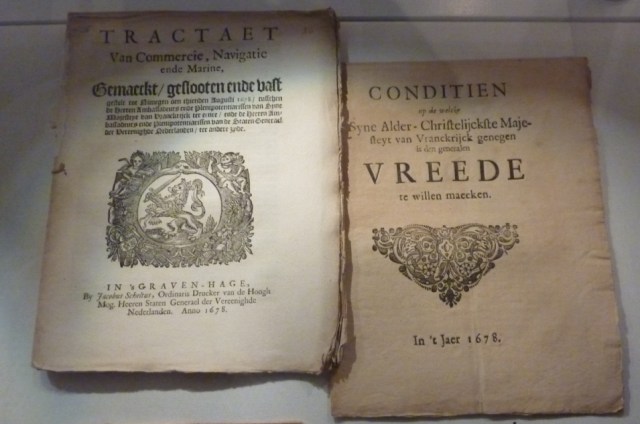
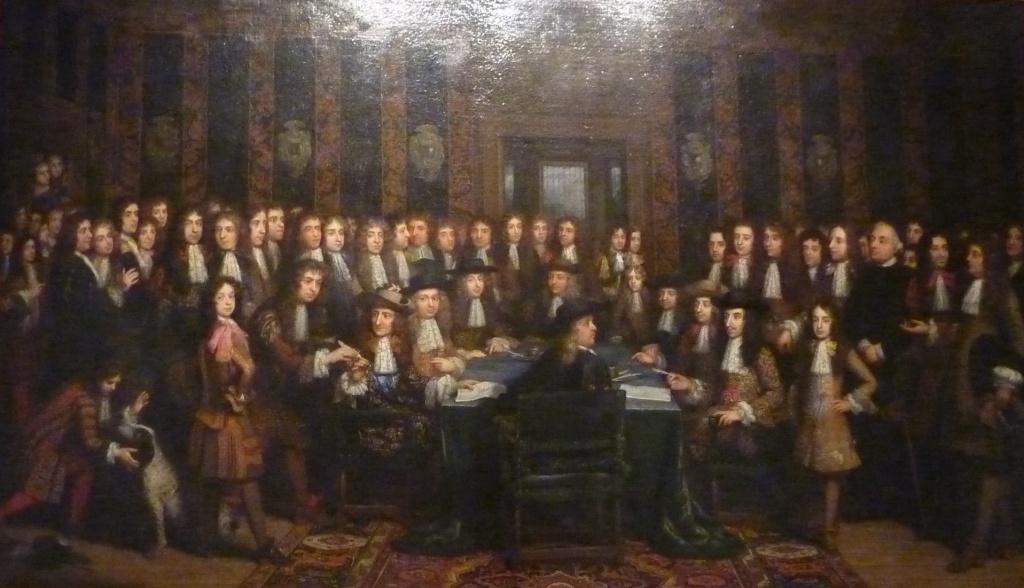
Peace of Nijmegen

 Some photographs from the museum…

Posted in Territory, Travel | Leave a comment

Scu on Esposito; Harman on Meillassoux

Scu at Critical Animal has a discussion of Roberto Esposito, Terza persona. Esposito’s book Bios was translated a few years ago, and his Communitas at the end of last year.

Over at Object-Orientated Philosophy, Graham makes a few comments about Meillassoux’s understanding of life, and a little on his politics.

Both books under discussion are unavailable to me – the first because it’s in Italian and not yet translated; the second because it’s unpublished – so these are very helpful orientations.

Posted in Graham Harman, Quentin Meillassoux, Roberto Esposito | Leave a comment

Enough already

With the Foucault endorsement I’ve now cleared the last review task outstanding. Counting journal articles, book manuscripts and proposals, promotions, and grants, I’ve done 27 reviews of some kind in 2010. (This doesn’t include anything related to the journal I edit.) That’s probably enough for a while.

Posted in Publishing, Universities | Leave a comment

Foucault, The Courage of Truth

Although I’d read the French lectures, and probably could have written the endorsement for the English translation anyway, I did ask for the ms. and have now finished reading it. It’s a very good translation – again by Graham Burchell. I should also note the work Frédéric Gros did as editor. Most people probably know this, but the lectures are based on transcriptions from tape recordings, supplemented by Foucault’s manuscript notes. In this course there are a few instances were quite long ms. sections that were not delivered are included in notes.

Lots of things in the course, but a few things that struck me on reading it again.

– how much of the material is on the cynics, which forms the focus of the course.

– Foucault noting at the end of his detailed discussion of Socrates and the Apology that every philosophy professor should lecture on this at least once in their career. Now he has. Salvate animam meam.

– the brief but interesting discussion of King Lear.

– How political the lectures are, at least in the sense that he tries to insist on the political aspects of parrhesia. Essentially, he says, this is another stage in his long-running interest in the interrelations of the subject, truth and power.

– The asides where he talks about his discussions with Dumézil and Veyne about technical points.

– His remarks on the German secondary literature on cynicism. He notes that he’s been told about Sloterdijk’s recently published book Kritik der zynischen Vernunft. He’s not yet read it, but notes that ‘no critique of reason will be spared us’, as we’ve had pure, dialectical, political and now cynical. He notes that he’s been given some rather differing assessments of the book’s interest.

– The contrast between Spinoza and Leibniz, with the former as someone who follows an earlier model of living a philosophical life, whereas the latter was more modern because of his more practical engagement with a range of professions, and often working his philosophy through them. The point doesn’t quite work, as Foucault admits, but it’s interesting to think about.

– Some intriguing remarks about where he might go with the lectures in the next year – not delivered, of course. Foucault is clearly very unwell at this time – the lectures start later in the year, and Foucault notes his health on a few occasions.

The English translation is projected for April 2011.

Posted in Gottfried Leibniz, Michel Foucault, Peter Sloterdijk | 4 Comments