Gillian Rose, Marxist Modernism: Introductory Lectures on Frankfurt School Critical Theory – Afterword by Martin Jay, edited by James Gordon Finlayson and Robert Lucas Scott, Verso Books, July 2024

Gillian Rose, Marxist Modernism: Introductory Lectures on Frankfurt School Critical Theory – Afterword by Martin Jay, edited by James Gordon Finlayson and Robert Lucas Scott, Verso Books, July 2024

Update October 2024: there is a review by Adrian Wilding in Historical Materialism (open access)

Lectures on art, Marxism, and critical theory by the legendary philosopher, collected for the first time

Marxist Modernism is a comprehensive yet concise and conversational introduction to the Frankfurt School. It is also a new resource from one of the twentieth century’s most important philosophers: Gillian Rose.

Her 1979 lectures on the Frankfurt School explore the lives and philosophies of a range of the school’s members and affiliates, including Adorno, Lukács, Brecht, Bloch, Benjamin, and Horkheimer, and outline the way each theorist developed Marx’s theory of commodity fetishism into a Marxist theory of culture.
Posted in Uncategorized | Leave a comment

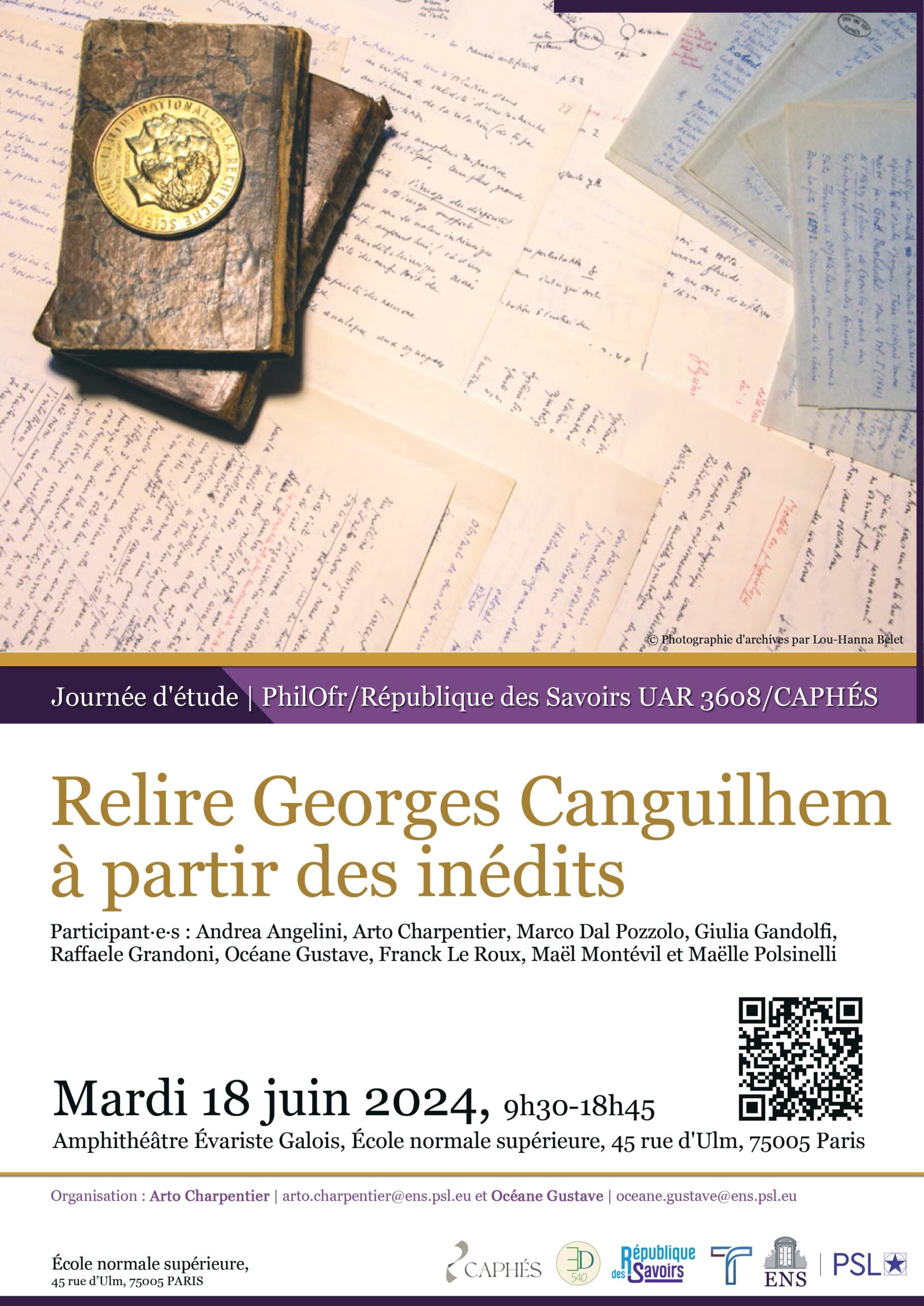
Journée d’étude: Relire Canguilhem à partir des inédits – ENS-PSL, Paris 18 juin 2024

Journée d’étude: Relire Canguilhem à partir des inédits – ENS-PSL, Paris 18 juin 2024

Posted in Conferences, Georges Canguilhem, Uncategorized | Leave a comment

Stanley Aronowitz, Live Theory: The Aronowitz Reader, foreword by Cornel West, edited by Peter Bratsis, Bruno Gulli, Kristin Lawler, and Michael Pelias – Columbia University Press, September 2024

Stanley Aronowitz, Live Theory: The Aronowitz Reader, foreword by Cornel West, edited by Peter Bratsis, Bruno Gulli, Kristin Lawler, and Michael Pelias – Columbia University Press, September 2024

Stanley Aronowitz was a towering figure on the American Left for over sixty years. Both a tireless organizer and a militant social and political theorist, Aronowitz was a highly perceptive analyst of class power. He was dedicated throughout his career to the development and circulation of conceptual weapons for the working class and for all those who faced oppression within American society.

Live Theory: The Stanley Aronowitz Reader brings together in thirteen seminal essays Aronowitz’s theoretical contributions to fundamental questions regarding science, class, culture, and education, alongside his pioneering interventions on labor, contract unionism, and the ongoing struggle for radical democracy. It is a crucial introduction to an indispensable thinker.

Posted in Uncategorized | Leave a comment

Étienne Achille and Oana Panaïté, Fictions of Race in Contemporary French Literature: French Writers, White Writing – Oxford University Press, March 2024

Étienne Achille and Oana Panaïté, Fictions of Race in Contemporary French Literature: French Writers, White Writing – Oxford University Press, March 2024

Fictions of Race in Contemporary French Literature: French Writers, White Writingengages with Whiteness in French literature to provide an unprecedented critique of the institutionally and symbolically hegemonic figure that has gone heretofore unacknowledged and untheorized. The book identifies a set of formal features, functions, and aesthetic dispositions which reveal the ways in which White writers grapple with the postcolonial subject matter. We focus on seven case studies featuring texts by Marie Darrieussecq, Virginie Despentes, Annie Ernaux, Nicolas Fargues, Pierre Lemaitre, Édouard Louis, and Nicolas Mathieu, representative of a larger body of works published by left-leaning, politically progressive writers who stand in stark ideological contrast while sharing certain thematic and aesthetic similarities with books published by neo-reactionary authors such as Michel Houellebecq, purportedly the epitomic French writer of our age. By positing the operative and transitional concept of White writer, our analysis surpasses disciplinary boundaries established in distinct historical and political contexts and maintained by institutional inertia and ideological inducements, to foreshadow the poetics of White writing in contemporary France and offer a replicable model for engaging with a literary field pervaded by (post)colonial themes. We argue that it is imperative to recast critically the enduring boundedness of race and empire as a matter of equal concern to White and non-White writers. Ultimately, this epistemological gesture, stemming from the recognition that Whiteness constitutes a determining factor in the construction of the modern literary field, allows readers and scholars to grasp the relationality of contemporary writing and to uncover the ‘common library’ of literature in French.

Posted in Uncategorized | Leave a comment

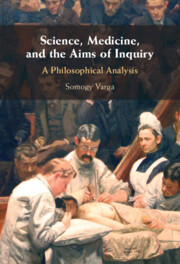
Somogy Varga, Science, Medicine, and the Aims of Inquiry: A Philosophical Analysis – Cambridge Univesity Press, May 2024

Somogy Varga, Science, Medicine, and the Aims of Inquiry: A Philosophical Analysis – Cambridge Univesity Press, May 2024

After its unparalleled rise and expansion over the past century, medicine is increasingly criticized both as a science and clinical practice for lacking scientific rigor, for contributing to overmedicalization, and for failing to offer patient-centered care. This criticism highlights serious challenges which indicate that the scope and societal role of medicine are likely to be altered in the 21st century. Somogy Varga’s ground-breaking book offers a new perspective on the challenges, showing that they converge on fundamental philosophical questions about the nature and aim of medicine. Addressing these questions, Varga presents a philosophical examination of the norms and values constitutive of medicine and offers new perspectives on how to address the challenges that the criticism raises. His book will offer valuable input for rethinking the agenda of medical research, health care delivery, and the education of health care personnel.

Posted in Uncategorized | Leave a comment

David Lay Williams, The Greatest of All Plagues: How Economic Inequality Shaped Political Thought from Plato to Marx – Princeton University Press, Sept/Oct 2024

David Lay Williams, The Greatest of All Plagues: How Economic Inequality Shaped Political Thought from Plato to Marx – Princeton University Press, Sept/Oct 2024

Economic inequality is one of the most daunting challenges of our time, with public debate often turning to questions of whether it is an inevitable outcome of economic systems and what, if anything, can be done about it. But why, exactly, should inequality worry us? The Greatest of All Plagues demonstrates that this underlying question has been a central preoccupation of some of the most eminent political thinkers of the Western intellectual tradition.

David Lay Williams shares bold new perspectives on the writings and ideas of Plato, Jesus, Thomas Hobbes, Jean-Jacques Rousseau, Adam Smith, John Stuart Mill, and Karl Marx. He shows how they describe economic inequality as a source of political instability and a corrupter of character and soul, and how they view unchecked inequality as a threat to their most cherished values, such as justice, faith, civic harmony, peace, democracy, and freedom. Williams draws invaluable insights into the societal problems generated by what Plato called “the greatest of all plagues,” and examines the solutions employed through the centuries.

An eye-opening work of intellectual history, The Greatest of All Plagues recovers a forgotten past for some of the most timeless books in the Western canon, revealing how economic inequality has been a paramount problem throughout the history of political thought.

Posted in Uncategorized | Leave a comment

Louise Boyle, Anxious Geographies: Worlds of Social Anxiety – Routledge, June 2024

Louise Boyle, Anxious Geographies: Worlds of Social Anxiety – Routledge, June 2024

Anxious Geographies offers a unique perspective on social anxiety, framing it as both a social and spatial phenomenon. Through a meticulous exploration using online questionnaires and interviews, the book provides a crucial examination of the intricacies of anxious lives.

This book presents a critical intervention in the experience of mental health in 21st-century society and provides a compelling geographical account of the underpinnings of the anxious experience. The book pivots on the in-depth perspectives of people with social anxiety, diagnosed or “sub-clinical”, but with an academic commentary that relates their experience to the medicalisation of a disrupted relational life, offering lessons for all of us in modern societies. Each chapter considers a unique aspect of social anxiety accounting for the social, spatial, temporal, relational and embodied dynamics, a geographical approach that enriches our understanding of the contexts and conditions that exacerbate and sustain anxious distress. The phenomenological descriptions herein, capture how social anxiety can profoundly alter a person’s coherent, habitual and embodied sense of being in and navigating through their social and spatial worlds. Through the experiential accounts of anxious distress and by considering the social contexts in which they emerge, this book provides readers with crucial insights into the hidden lives of those living with social anxiety.

This book will be of appeal to academics, researchers and postgraduate students in the fields of human geography and across the social sciences and humanities. It will also provide useful insights for academics and health professionals in social psychiatry, social psychology, counselling studies and therapeutic practice.

Posted in Uncategorized | Leave a comment

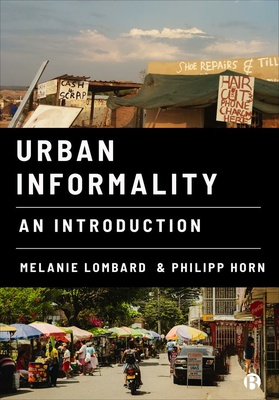
Melanie Lombard and Philipp Horn, Urban Informality: An Introduction – Bristol University Press, June 2024

Melanie Lombard and Philipp Horn, Urban Informality: An Introduction – Bristol University Press, June 2024

This book is the first to provide an introductory overview to the concept of ‘urban informality’, taking an international perspective across the global North and South. It explores theoretical understandings of the term, and looks at how it affects ways of living, such as land use, housing and basic services, working lives and politics. 

Using a broad range of material to bring the topic to life, including non-conventional sources – such as fiction, poetry, photography, interviews and other media – the book helps students, practitioners and scholars develop learning and research on this topic. The book also includes interjections from diverse voices of practitioners, community activists and regional experts.

Posted in Uncategorized | Leave a comment

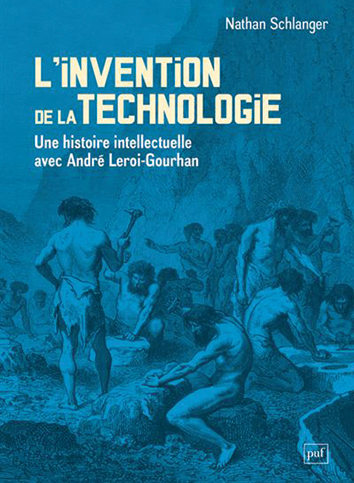
Nathan Schlanger, L’Invention de la technologie: Une histoire intellectuelle avec André Leroi-Gourhan – PUF, January 2023

Nathan Schlanger, L’Invention de la technologie: Une histoire intellectuelle avec André Leroi-Gourhan – PUF, January 2023

According to this interview with Stefanos Geroulanos, an English translation is forthcoming.

La technologie, entendue comme la discipline qui étudie les techniques, prend son essor au XXe siècle, grâce notamment à l’apport décisif d’André Leroi-Gourhan. Son œuvre foisonnante atteste d’une certaine « indiscipline » dans ses approches et ses thématiques. Aux côtés de ses démarches expérimentales et documentaires, il s’entoure de mots-clefs et de concepts tels la « tendance », l’« élan vital » ou la « libération ». Dans un premier temps, Leroi-Gourhan s’investit dans l’étude des « civilisations matérielles », fondée sur les objets, sous l’influence de Marcel Mauss et de Paul Rivet. Une inflexion décisive est donnée à sa pensée par L’Évolution créatrice d’Henri Bergson, et notamment par la figure de l’Homo faber, qui dominera désormais sa pensée technologique. Initialement conçu comme l’élément premier ou primitif d’une dyade paléontologique, l’Homo faber va gagner d’importance dès 1950, lorsque Leroi-Gourhan s’engage à « suivre les gestes, éclat par éclat » pour reconstruire la structure mentale des tailleurs de pierre du paléolithique. Le rapprochement qu’il opère alors entre la technicité humaine, la psychologie comparée et la biologie le mène aux notions de « comportement technique » et de « chaîne opératoire ». Fort de ses acquis scientifiques et de ses inspirations spirituelles, il conjecture une « continuité incrémentale » qui s’étend des premiers Australopithèques jusqu’à l’artisan Homo faber d’aujourd’hui, rapprochant ainsi la nostalgie du passé à la rédemption de l’avenir.

Posted in Uncategorized | Leave a comment

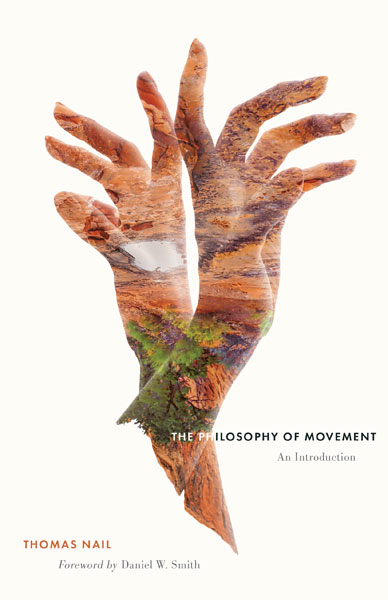
Thomas Nail, The Philosophy of Movement: An Introduction – University of Minnesota Press, September 2024

Thomas Nail, The Philosophy of Movement: An Introduction – University of Minnesota Press, September 2024

Why are city dwellers worldwide walking on average ten percent faster than they were a decade ago? Why are newcomer immigrant groups so often maligned when migration has always constituted civilization? To analyze and understand the depth of the reasons, Thomas Nail suggests that it serves us well to turn to a philosophy of movement. Synthesizing and extending many years of his influential work, The Philosophy of Movement is a comprehensive argument for how motion is the primary force in human and natural history.

Nail critiques the bias toward stasis at the core of Western thought, asking what a philosophy that began with the primacy of movement would look like. Interrogating the consequences of movement throughout history and in daily life in the twenty-first century, he draws connections and traces patterns between scales of reality, periods of history, and fields of knowledge. In our age of rapid movements shaped by accelerating climate change and ensuing mass global migration, as well as ubiquitous digital media, Nail provides a contemporary philosophy that helps us understand how we got here and how to grapple with these interlocking challenges.

With a foreword by philosopher Daniel W. Smith, The Philosophy of Movement: An Introduction is a must-read for scholars and students not only of philosophy but also history, anthropology, science and technology studies, mobility studies, and other fields across the humanities and social sciences.

Posted in Uncategorized | Leave a comment