Martijn Konings, The Bailout State: Why Governments Rescue Banks, Not People – Polity, October 2024

Martijn Konings, The Bailout State: Why Governments Rescue Banks, Not People – Polity, October 2024
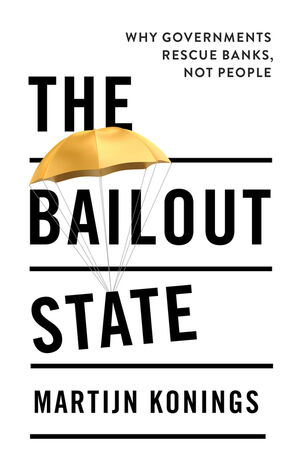
How did we end up in a world where social programs are routinely cut in the name of market discipline and fiscal austerity, yet large banks get bailed out whenever they get into trouble?

In The Bailout State, Martijn Konings exposes the inner workings of this sprawling infrastructure of government guarantees. Backstopping financial markets and securing banks’ balance sheets, this contemporary Leviathan manages the inflationary pressures that its generosity produces by tightening the financial screws on the rest of the population.

To a large extent, the bailout state was built by progressives seeking to buttress the institutions of the early postwar period. The resulting tide of capital gains fostered an asset-centered politics that experienced its heyday in the nineties. But ever since the financial crisis of 2007-08, promises of inclusive economic growth have looked increasingly thin. A colossus locked in place, the bailout state disburses its benefits to a rapidly shrinking group of property owners.  Against the backdrop of a ferocious post-pandemic turn to anti-inflationary policy, the only remaining way to exit the logic of the bailout, Konings argues, is to challenge the monetary drivers at the heart of capitalist society.
Posted in Uncategorized | Leave a comment

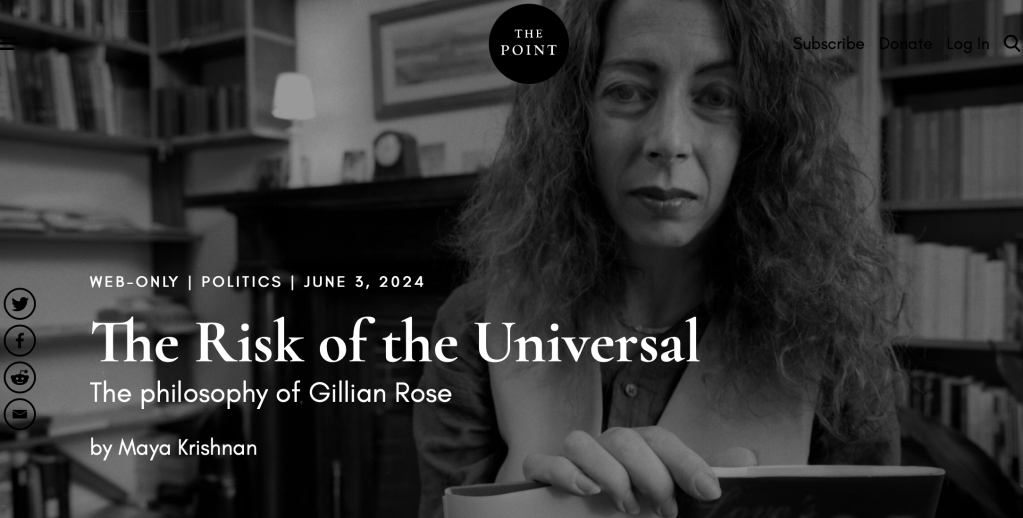
Maya Krishnan on the legacy of Gillian Rose

Maya Krishnan, The Risk of the Universal: The Philosophy of Gillian Rose

Posted in Gillian Rose | 1 Comment

Working with archives – a collection of links

A few links about working with archives. I’ve started a page on this site with these links. At the moment it is just the links below, but intended to be a work-in-progress page and I’ll add other things that look useful. Suggestions welcome.

These are all by others, but if there is interest I might write up a few thoughts of my own, particularly about using them for the history of ideas.

The National Archives, How to use archives

Mary Morrisey, Royal Historical Society, Working in Archives

Laura Schmdt, Using Archives: A Guide to Effective Research

Royal Geographical Society, Getting started with archival research

Royal Geographical Society, Top ten tips for researching in archives

Will Pooley, Doing Archival Research

Kate Stewart – series at Medium

Alessandro Silvestri, Making History through Archives (review of Stéphane Péquignot et Yann Potin (dir.), Les conflits d’archives : France, Espagne, Méditerranée, Presses universitaires de Rennes)

Happy to have other suggestions and will update this page with things I think are useful.

Posted in Uncategorized | 2 Comments

Jameson at 90: A Verso Blog Series – updated

Jameson at 90: A Verso Blog Series

Fredric Jameson turns 90 years old this month. To celebrate this milestone, we’re publishing a series of short essays focused on the major books in Jameson’s oeuvre.

Several new entries added recently.

Unintimidated languages – Daniel Hartley

On prophetic form and the whole tangled, dripping mass of the dialectic – Christopher Breu

Intense Curiosity – Matthew Beaumont

On Fredric Jameson’s Fables of Aggression – Ian Buchanan

History is what hurts – Maria Elisa Cevasco

Deep Listening – Phillip E. Wegner

Synchronic History – Kristin Ross

Negative Dialectics – C.D. Blanton

Historicizing the Present – Robert T. Tally

Inevitable Negations – Clint Burnham

Orienting towards the social totality – Alberto Toscano

Utopia Hurts – Christian P. Haines

On Brecht and Method – Olivier Neveux

Losing Historicity – Kirk Boyle

The becoming cultural of the economic, and vice versa – Xudong Zhang

Imagining Utopia – Gerry Canavan

Rereading “On Rereading Doktor Faustus” – Nicholas Brown

Jameson’s complex chord – Sianne Ngai

The Rebus in Fredric Jameson’s The Hegel Variations – Andrew Cole

Marxist interpretation as a vocation – Anna Kornbluh

Posted in Uncategorized | Leave a comment

A minor note on UK prime ministers and general elections

There have been twelve UK prime ministers in my lifetime – Heath, Wilson, Callaghan, Thatcher, Major, Blair, Brown, Cameron, May, Johnson, Truss, Sunak. Only five became prime minister because of a general election (Heath, Wilson, Thatcher, Blair, Cameron). Only four lost power because of an election (Heath, Callaghan, Major, Brown). So only one of those both became prime minister because of an election, and lost it because of one (Heath). (Wilson’s first term was before I was born.) All the others either gained power through an internal party process or lost it that way, sometimes both.

Because Heath was elected before I was born, I’ve never seen a PM both elected to that office and voted out of it. There is no profound point here, and certainly not a party political one, other than noting how rare it is that general elections make and end a Prime Minister’s term in office.

(Even Heath clung on to power for a few days after the February 1974 election, resigning when he failed to get an agreement with the Liberal Party to remain PM. Going further back, Wilson’s first term and Attlee are prime ministers both elected and defeated at a general election.)

Posted in Uncategorized | Leave a comment

Andy Merrifield, “A Life Full Circle: Gramsci in Sardinia”

Andy Merrifield, “A Life Full Circle: Gramsci in Sardinia“

Posted in Uncategorized | Leave a comment

Peter Salmon, “Paper Trails”, on philosophers and their archives, Aeon Essays

Peter Salmon, “Paper Trails“, on philosophers and their archives, Aeon Essays

In part a review of the newly translated book on How Nietzsche Came in From the Cold: Tale of a Redemption by Philipp Felsch, it has a wider discussion of archives.

Posted in Uncategorized | Leave a comment

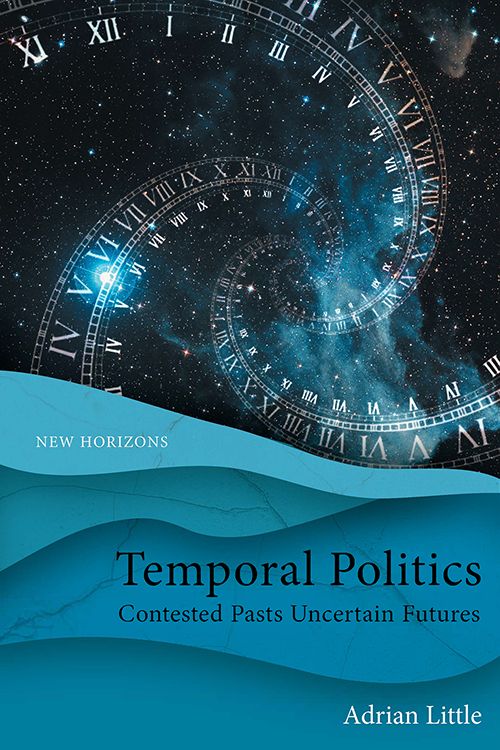
Adrian Little, Temporal Politics: Contested Pasts, Uncertain Futures – Edinburgh University Press, May 2024

Adrian Little, Temporal Politics: Contested Pasts, Uncertain Futures – Edinburgh University Press, May 2024

Develops a new theory of political temporality to demonstrate how to conduct political analysis in times of conflict and uncertainty
  • Offers an important differentiation between a political theory of temporality and philosophies of time
  • Examines contemporary debates on migration and border control to demonstrate the myopia in the understanding of historical contexts that give rise to the displacement and/or mobility of migrants 
  • Analyses current debates about the decline of or lack of faith in democratic institutions exemplified by the rise of populism and highlights the limitations of elite politics
  • Develops a new theory of political temporality focused on process-driven accounts of political development

Adrian Little demonstrates how different conceptions of past, present and future contribute to the nature of political conflict in the world today. Reacting against narratives of political disillusionment and apathy, he focuses on how a new understanding of political temporality can inform our approach to political problems. He forms his argument around three major cases in which the nature of past, present and future is contested: Indigenous politics in settler colonies; the politics of bordering and migration; and debates over the future of democracy.

Posted in Uncategorized | Leave a comment

Matthijs Lok, Europe Against Revolution: Conservatism, Enlightenment, and the Making of the Past – Oxford University Press, March 2023 and New Books discussion

Matthijs Lok, Europe Against Revolution: Conservatism, Enlightenment, and the Making of the Past – Oxford University Press, March 2023

Contemporary Europe seems to be divided between progressive cosmopolitans sympathetic to the European Union and the ideals of the Enlightenment, and counter-enlightened conservative nationalists extolling the virtues of homelands threatened by globalised elites and mass migration. This study seeks to uncover the roots of historically informed ideas of Europe, while at the same time underlining the fundamental differences between the writings of the older counter-revolutionary Europeanists and their self-appointed successors and detractors in the twenty-first century. In the decades around 1800, the era of the French Revolution, counter-revolutionary authors from all over Europe defended European civilisation against the onslaught of nationalist revolutionaries, bent on the destruction of the existing order, or so they believed. In opposition to the new revolutionary world of universal and abstract principles, the counter-revolutionary publicists proclaimed the concept of a gradually developing European society and political order, founded on a set of historical and – ultimately divine – institutions that had guaranteed Europe’s unique freedom, moderation, diversity, and progress since the fall of the Roman Empire. These counter-revolutionary Europeanists drew on the cosmopolitan Enlightenment and simultaneously criticized its alleged revolutionary legacy. Throughout the nineteenth and twentieth centuries, these ideas of European history and civilisation were rediscovered and adapted to new political contexts, shaping in manifold ways our contested idea of European history and memory until today.

New Books discussion with Morteza Hajizadeh. Thanks to dmf for the link.

Posted in Uncategorized | Leave a comment

Genevieve Lloyd, Reading Spinoza in the Anthropocene – Edinburgh University Press, May 2024

Genevieve Lloyd, Reading Spinoza in the Anthropocene – Edinburgh University Press, May 2024

Brings Spinoza’s philosophy into engagement with contemporary debates on climate change
  • Re-reads Spinoza’s Ethics from a perspective of concern with current climate change issues
  • Brings the history of philosophy into direct engagement with conceptual aspects of current climate change issues
  • Challenges common assumptions about Spinoza’s ‘rationalism’, through a fresh look at his treatment of the inter-relations of Reason, Imagination, and Emotion
  • Acknowledges alternative textual interpretations, while making those scholarly disagreements themselves a source of engagement with contemporary issues

Central to Genevieve Lloyd’s approach is a fresh look at Spinoza’s critique of what he regards as Descartes’ flawed way of imagining the nature and status of human thought in relation to the rest of Nature. Lloyd argues that the influence of the Cartesian model lingers in the contemporary collective imagination. She challenges a common way of reading the Ethics, which reflects and reinforces the figure of Spinoza as a ‘rationalist’ — committed to the superiority and dominance of Reason within human minds. By offering a more nuanced account of Spinoza’s version of Reason, Lloyd brings his philosophy to bear on a range of familiar, but largely unexamined attitudes, which connect the supposed supremacy of Reason within the human mind to humanity’s supposed supremacy within Nature.

Posted in Uncategorized | Leave a comment