Natasha Wheatley, The Life and Death of States: Central Europe and the Transformation of Modern Sovereignty – Princeton University Press, June 2023

Natasha Wheatley, The Life and Death of States: Central Europe and the Transformation of Modern Sovereignty – Princeton University Press, June 2023
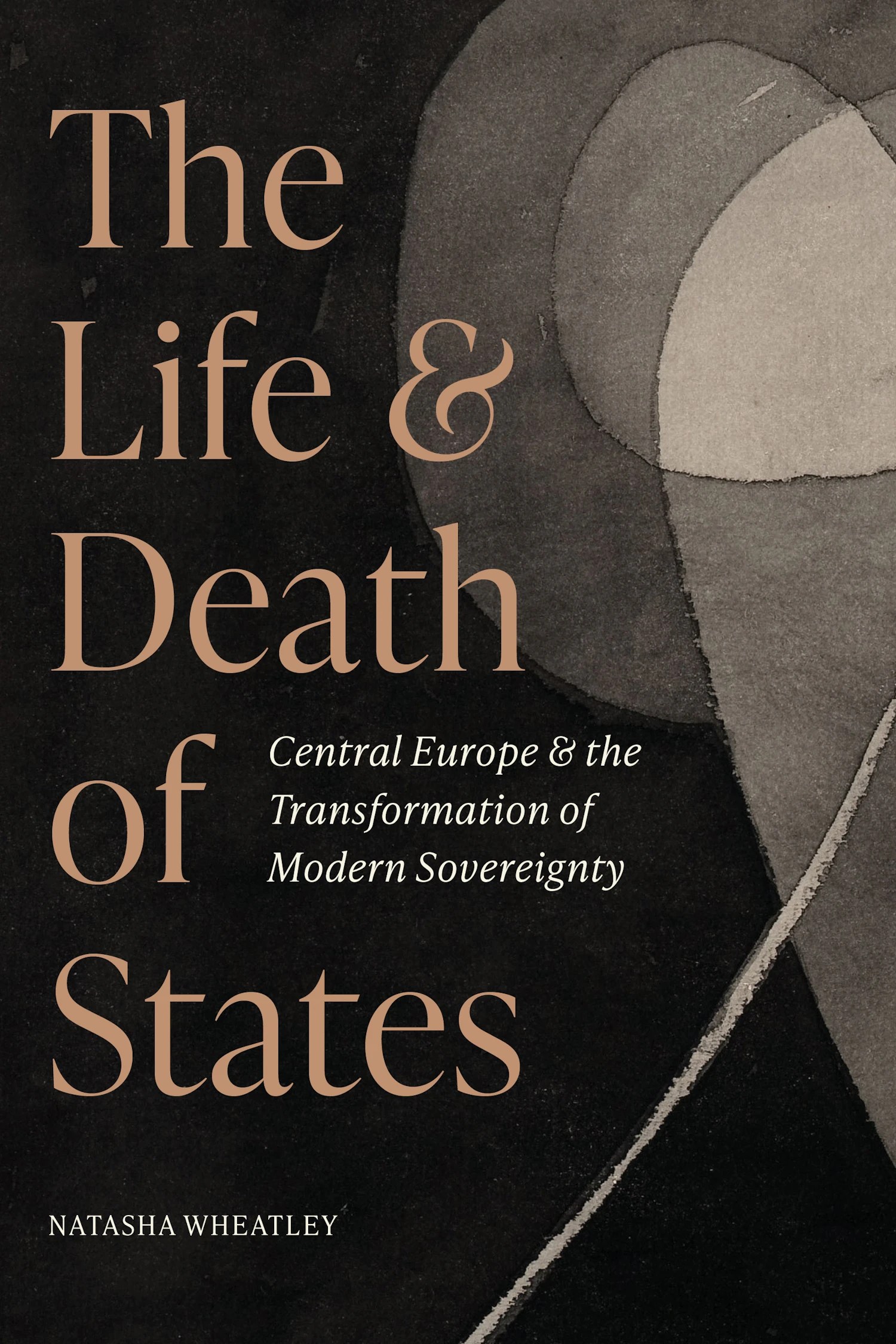
Sprawled across the heartlands of Europe, the Habsburg Empire resisted all the standard theories of singular sovereignty. The 1848 revolutions sparked decades of heady constitutional experimentation that pushed the very concept of “the state” to its limits. This intricate multinational polity became a hothouse for public law and legal philosophy and spawned ideas that still shape our understanding of the sovereign state today. The Life and Death of States traces the history of sovereignty over one hundred tumultuous years, explaining how a regime of nation-states theoretically equal under international law emerged from the ashes of a dynastic empire.

Natasha Wheatley shows how a new sort of experimentation began when the First World War brought the Habsburg Empire crashing down: the making of new states. Habsburg lands then became a laboratory for postimperial sovereignty and a new international order, and the results would echo through global debates about decolonization for decades to come. Wheatley explores how the Central European experience opens a unique perspective on a pivotal legal fiction—the supposed juridical immortality of states.

A sweeping work of intellectual history, The Life and Death of States offers a penetrating and original analysis of the relationship between sovereignty and time, illustrating how the many deaths and precarious lives of the region’s states expose the tension between the law’s need for continuity and history’s volatility.

Update December 2025: lecture and discussion here – thanks to dmf for the link
Posted in Uncategorized | Leave a comment

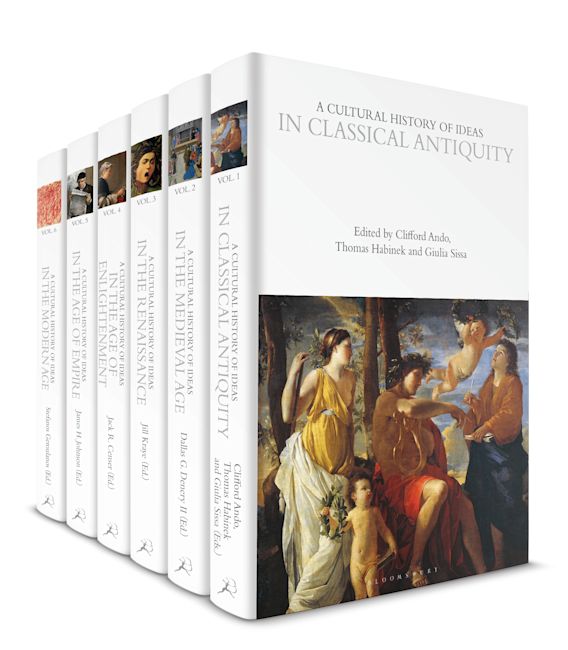
Peter T. Struck and Sophia Rosenfeld (eds.), A Cultural History of Ideas – Bloomsbury, six volumes, November 2022

Peter T. Struck and Sophia Rosenfeld (eds.), A Cultural History of Ideas – Bloomsbury, six volumes, November 2022

A massive, six-volume reference work, at a high price, but looks impressive if you can find a suitable library copy…

How has the nature of ideas evolved over time? How have ideas been shaped, employed and received in different social and cultural contexts?

In a work that spans 2,800 years, these ambitious questions are addressed by 62 experts, each contributing an overview of a particular theme in a specific period in history. The volumes explore the development of ideas , primarily in the West, from a range of disciplinary angles.

Individual volume editors ensure the cohesion of the whole and, for ease of navigation, chapter titles are identical across each of the volumes. This schema offers the reader the choice of reading about a specific period in one of the volumes or following one theme across history by reading the relevant chapter in each of the 6.

The 6 volumes cover: 1. – Classical Antiquity (800 BCE – 500 CE); 2. – Medieval Age (500 – 1450); 3. – Renaissance (1450 – 1650) ; 4. – Age of Enlightenment (1650 – 1800); 5. – Age of Empire (1800 – 1920); 6. – Modern Age (1920 – 2000+).

Themes (and chapter titles) are: Knowledge; The Human Self; Ethics and Social Relations; Politics and Economies; Nature; Religion and the Divine; Language, Poetry and Rhetoric; The Arts; History.

The page extent is approximately 1,728pp with c. 240 illustrations. Each volume opens with Notes on Contributors, Series Preface and Introduction, and concludes with Notes, Bibliography and an Index.

Posted in Uncategorized | Leave a comment

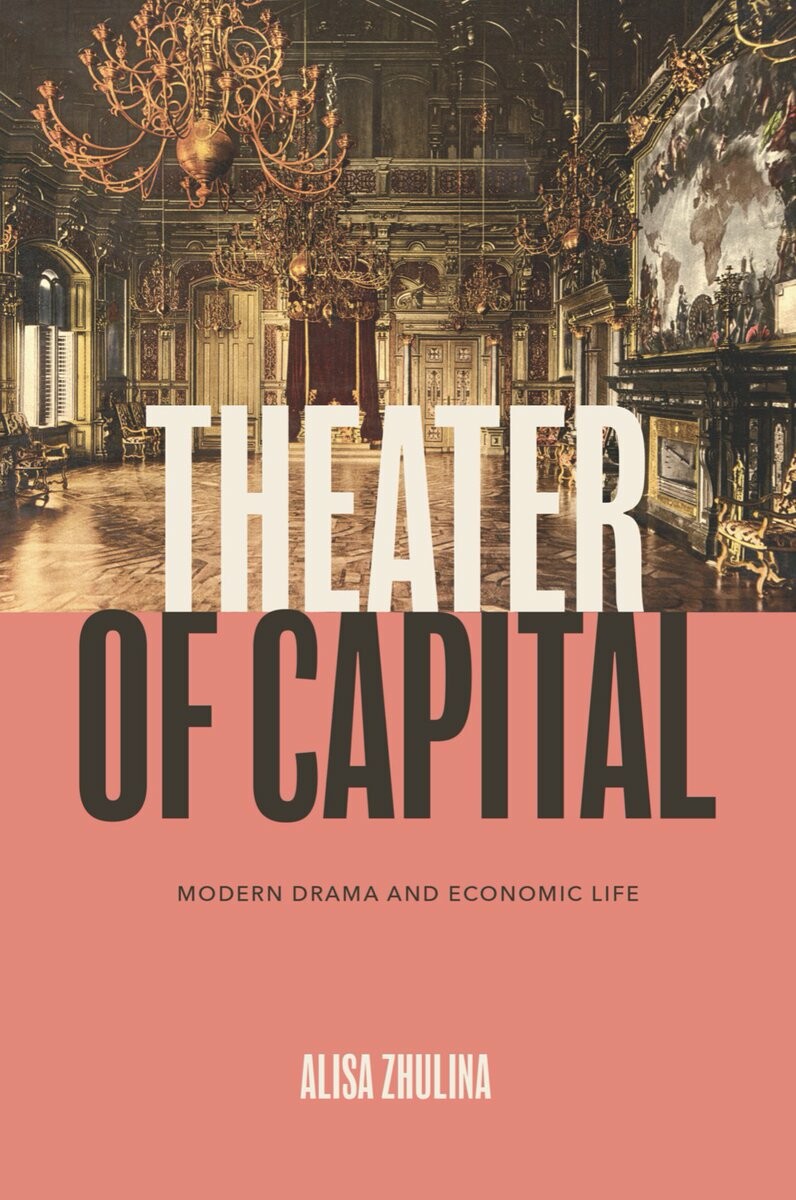
Alisa Zhulina, Theater of Capital: Modern Drama and Economic Life – Northwestern University Press, January 2024

Alisa Zhulina, Theater of Capital: Modern Drama and Economic Life – Northwestern University Press, January 2024

Reads canonical works of modern drama in relation to the economic ideas of their era

Emerging amid the turbulent rise of market finance and wider socioeconomic changes, modern drama enacted vital critiques of art and life under capitalism. Alisa Zhulina shows how fin-de-siècle playwrights such as Henrik Ibsen, August Strindberg, Anton Chekhov, George Bernard Shaw, and Gerhart Hauptmann interrogated the meaning of this newly coined economic concept. Acutely aware of their complicity in the system they sought to challenge, these playwrights staged economic questions as moral and political concerns, using their plays to explore the theories of Adam Smith, Karl Marx and Friedrich Engels, Max Weber, and others within the boundaries of bourgeois theater.

Theater of Capital: Modern Drama and Economic Life reveals the prescient and unsettling visions of life in a new financial and societal reality in now-canonical plays such as A Doll’s HouseMiss Julie, and The Cherry Orchard as well as in lesser-known and long-overlooked works. This wide-ranging study prompts us to reevaluate modern drama and its legacy for the urgent economic and political questions that our present moment.

“An extraordinary book whose scope and ambition are truly impressive. Alisa Zhulina works hard to overcome the academic silos that separate the humanities from economic theory by recuperating a more expansive notion of economics—that of the oikos—to put them in a productive exchange. All of this is executed with the highest rigor, intelligence, and creativity, and grounded in an expansive knowledge of the materials. There aren’t many scholars today who can match Zhulina’s linguistic and intellectual range.” —Leonardo Lisi, Johns Hopkins University 

Posted in Uncategorized | Leave a comment

Generative AI and University Futures: Three Seminars at University of Manchester, May 2023

Generative AI and University Futures: Three Seminars at University of Manchester, May 2023

We’re hosting 3 in person seminars about generative AI and university futures at the University of Manchester on Critical AI literacy (May 10th), Assessment Reform (May 17th) and Training for Academics (May 24th). All in person from 3pm to 5pm on those dates. Please only register if you intend to participate in person because we have a limited number of places available for each event, which we intend to offer in the order of registration.

Since it was launched in November 2022, Open AI’s ChatGPT has enthralled millions with its uncanny ability to respond to queries in a conversational manner. Its capacity to immediately respond to natural language questions with detailed factual knowledge has sparked debate about whether the typical forms of university-based assessment can survive this technological innovation. While there are many questions remaining to be answered about how different groups within the student community perceive these developments, and the extent to which they are already being used in assessment, there is a widespread belief within the university sector that something fundamental has shifted. This rapid growth in generative AI’s capacity to automatically produce authoritative cultural forms presents a challenge to the university as a custodian of knowledge and conferrer of credentials…

More details and booking form here.

Posted in Uncategorized | Leave a comment

Excerpt from The Archaeology of Foucault at The Montreal Review (open access)

A short excerpt from the coda of The Archaeology of Foucault is available open access at The Montréal Review.

It discusses Foucault’s tributes to Jean Hyppolite and the visits to SUNY Buffalo in 1970 and 1972.

Thanks to publicity staff at Polity for making this possible, and the editor Tony Tsonchev for the invitation to include something.

More details on the book at the Polity website.

I also did an interview on the book for the New Books Network this week, which the host Dave O’Brien says will be available next week. [update: now available here]

Posted in Jean Hyppolite, Michel Foucault, The Archaeology of Foucault | Leave a comment

Books received – Surya, Foucault, Calvino, Blanchot, Artières, Eliade, Loyer, Bataille, Cunliffe

Bought in Paris or second-hand, connecting to either the new Indo-European thought project or the earlier Foucault one. I’ll just mention a couple – La bibliothèque de Georges Bataille is the illustrated catalogue to the recent sale of a part of his library (available to download as pdf here), and Emmanuelle Loyer’s Paris à New York is about French academics and artists who left Europe for New York in the Second World War.

Posted in Italo Calvino, Uncategorized | Leave a comment

Translation and the Archive in the Continental Tradition workshop, Senate House, London, 19 May 2023 – organised by Henry Somers-Hall with Julia Ng, Alan Schrift, Daniel Smith, Charles Stivale and Stuart Elden

On 19 May 2023 I’ll speaking at a workshop on Translation and the Archive in the Continental Tradition, organised by Henry Somers-Hall for Royal Holloway, University of London. It will be held in central London at Senate House. Registration is free, but required via Eventbrite.

The other speakers are Alan Schrift on Nietzsche, Daniel Smith and Charles Stivale on Deleuze and Julia Ng on Benjamin. My talk will be “From the Archive to the Edited Translation: Lefebvre, Foucault, Dumézil”.


We have put together this workshop to explore those aspects of the project of philosophy that are often seen as simply the groundwork or condition for the philosophical project itself, namely those processes of translating, editing, compiling, and those of the archive, both its constitution and consultation. This workshop will explore themes of the nature and operation of these processes in the continental tradition, both in terms of how they constitute the territory of philosophical thought, but also the ways in which the specificity of continental philosophy affects the process of translation, and how these projects of translation have affected the philosophical work of the translators themselves. 

The workshop brings together a number of internationally recognised researchers to discuss the role of these themes in their own work, both as translators and editors, and as thinkers. 

The workshop will take place in Senate House, Central London, on May 19th, 2023. 

Posted in Friedrich Nietzsche, Georges Dumézil, Gilles Deleuze, Henri Lefebvre, Michel Foucault, Uncategorized, Walter Benjamin | Leave a comment

Michel Foucault, “What Is Critique?” and “The Culture of the Self” (2024)

Pre-order details for these important essays and related texts.

Clare O'Farrell's avatarFoucault News

Now available for pre-order on the University of Chicago Press website.
Michel Foucault, What Is Critique? & The Culture of the Self
Edited by Henri-Paul Fruchaud, Daniele Lorenzini, and Arnold I. Davidson
Translated by Clare O’Farrell
, University of Chicago Press, forthcoming 2024,
ISBN-13: 9780226383446, Publication date: 01/15/2024, 208pp, Hardcover (First Edition): $35.00

Newly published lectures by Foucault on critique, Enlightenment, and the care of the self.

On May 27, 1978, Michel Foucault gave a lecture to the French Society of Philosophy where he redefines his entire philosophical project in light of Immanuel Kant’s 1784 text, “What Is Enlightenment?” Foucault strikingly characterizes critique as the political and moral attitude consisting in the “art of not being governed in this particular way,” one that performs the function of destabilizing power relations and creating the space for a new formation of the self within the “politics of truth.”

This volume presents the…

View original post 86 more words

Posted in Uncategorized | Leave a comment

Sur les traces de Georges Canguilhem – CAPHÉS website with archive information, bibliographies, interviews, etc.

The CAPHÉS archive in Paris, which houses Georges Canguilhem’s archive and his library, among other valuable resources, has produced an invaluable website about his work.

Sur les traces de Georges Canguilhem

Le philosophe Georges Canguilhem (1904-1995) est un ancien élève de l’École normale supérieure de Paris de la promotion littéraire de 1924. Après son décès et celui de son épouse, la famille Canguilhem a confié à l’École normale supérieure (ENS) ses archives et sa bibliothèque de travail déposées depuis 2005 au Centre documentaire du CAPHÉS, membre du réseau des bibliothèques de l’ENS. C’est au CAPHÉS que le fonds a été traité et qu’il est régulièrement consulté. Depuis, d’autres fonds sont venus rejoindre celui de Georges Canguilhem. Plusieurs d’entre eux viennent le compléter.

Ce projet documentaire se propose de mettre en valeur cet héritage : d’une part, le fonds Georges Canguilhem, d’une richesse exceptionnelle, en dispensant des informations utiles à son exploitation scientifique (éléments biographiques et bibliographiques, rappel d’événements scientifiques) ; d’autre part, la communauté de recherche qui s’est constituée autour de l’homme, de son œuvre et du fonds au fil des années à travers des entretiens vidéos qui témoignent de l’importance de l’œuvre, de sa réception internationale et de l’engouement dont elle est l’objet.

Ce projet en devenir se développe dans le sillage de l’entreprise éditoriale incontournable des Œuvres complètes de Georges Canguilhem publiées chez Vrin, qui permet de saisir enfin l’ampleur de l’œuvre et le parcours du philosophe. L’ambition ultime de notre projet documentaire serait de faire émerger une communauté de recherche et de créer un lieu d’échanges virtuels annonçant des événements scientifiques et des publications dédiés à l’œuvre de Georges Canguilhem, ou simplement des informations susceptibles d’être partagées.

The site includes video interviews with researchers who have used the collection and with Canguilhem’s former students Claude Debra and Anne-Marie Moulin. There are also biographies, bibliographies and information on events.

It’s a great resource, well worth a look. Most of the information is in French, but some of the interviews are in English, with subtitles. My interview was done a few years ago, during the first of the UK lockdowns, and I talk about the research process for my Foucault books being stuck due to an inability to get to archives – fortunately now all complete.

Many thanks to Natalie, David, Julie and colleagues for putting this all together.

Posted in Canguilhem (book), Georges Canguilhem, Michel Foucault, The Archaeology of Foucault, The Early Foucault, Uncategorized | Leave a comment

Un inédit de Michel Foucault publié en mai (2023)

News about Michel Foucault, Le Discours philosophique, a previously unpublished book manuscript, due out in May.

Clare O'Farrell's avatarFoucault News

Un inédit de Michel Foucault publié en mai
AFP, 10 mars 2023

Un inédit de Michel Foucault, “Le Discours philosophique”, réflexion sur les rapports entre philosophie et actualité, sera publié le 12 mai, ont annoncé jeudi les éditions du Seuil.

Cet essai permettra de lire un manuscrit quasi achevé que le philosophe entama en 1966 et ne publia jamais, pour une raison non précisée.

L’édition de ce livre est assurée par deux universitaires, Orazio Irrera de Paris 8 Vincennes-Saint-Denis et Daniele Lorenzini de l’Université de Pennsylvanie, aux Etats-Unis.

Le premier y a consacré un semestre de cours à Paris 8 fin 2022. Le second avait publié la table des matières sur Twitter en février.

Michel Foucault (1926-1984), auteur prolixe, avait écrit dans son testament qu’il refusait de faire l’objet de publications posthumes.

Toutefois, son dernier compagnon et légataire, Daniel Defert, décédé mardi, et l’ancien assistant de Foucault, François Ewald, ont…

View original post 116 more words

Posted in Uncategorized | Leave a comment