En 1941, Roland Barthes soutient son diplôme d’études supérieures à la Sorbonne sous la direction de Paul Mazon. Le mémoire, qui porte sur les évocations et incantations dans la tragédie grecque, analyse les passages où les hommes appellent les dieux et les morts à se manifester grâce au chant. Inédit jusqu’à ce jour, cet écrit de jeunesse dialogue désormais avec la totalité de l’œuvre de Barthes dont il révèle à la fois les permanences et les métamorphoses.
thanks to Dany Nobus for the link on Twitter
Published for the 1st time in early Feb '23: Barthes' 1941 'mémoire' for his 'études supérieures' degree at the Sorbonne,which slipped through the net of those compiling his Œuvres complètes.There's an excellent review of the book by Philippe Roger in the latest issue of Critique pic.twitter.com/mDXGOva0K2
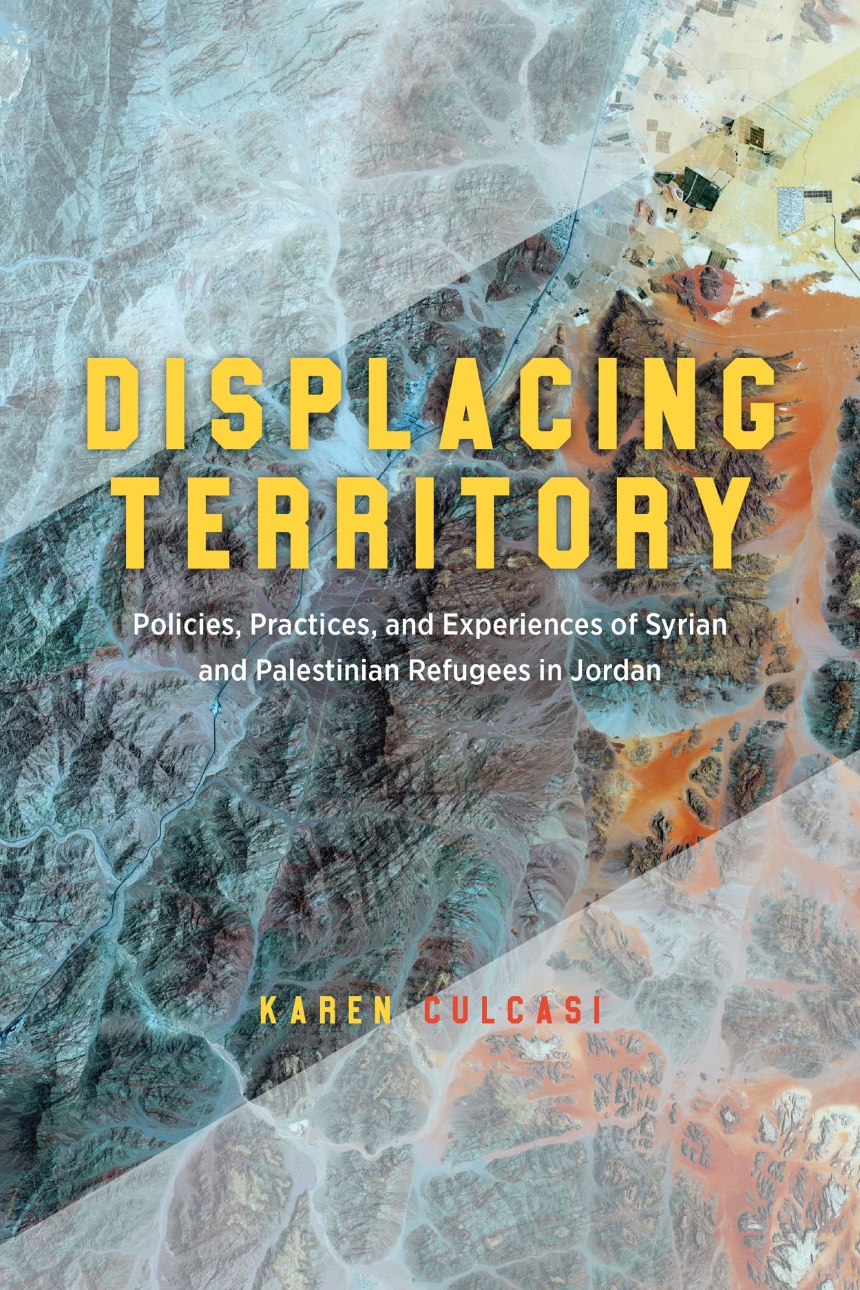
Based on fieldwork with Palestinian and Syrian refugees in Jordan, Displacing Territory explores how the lived realities of refugees are deeply affected by their imaginings of what constitutes territory and their sense of belonging to different places and territories. Karen Culcasi shows how these individual conceptualizations about territory don’t always fit the Western-centric division of the world into states and territories, thus revealing alternative or subordinated forms and scales of territory. She also argues that disproportionate attention to “refugee crises” in the Global North has diverted focus from other parts of the world that bear the responsibility of protecting the majority of the world’s refugees. By focusing on Jordan, a Global South state that hosts the world’s second-largest number of refugees per capita, this book provides insights to consider alternate ways to handle the situation of refugees elsewhere. In the process, Culcasi brings the reader into refugees’ diverse realities through their own words, inherently arguing against the tendency of many people in the Global North to see refugees as aberrant, burdensome, or threatening.
Terence Blake has translated the table of contents of the forthcoming previously unpublished book manuscript by Michel Foucault: Le discourse philosophique
Publication of an unpublished book manuscript by Michel Foucault: PHILOSOPHICAL DISCOURSE. Text established by Daniele Lorenzini and Orazio Irrera, under the direction of François Ewald – to be published by Gallimard/Seuil/EHESS, in May 2023
The manuscript dates from 1966, it was written after THE ORDER OF THINGS, published in 1966, and before the publication of THE ARCHEOLOGY OF KNOWLEDGE in 1969.
As will be seen from the table of contents, and as the dating of the writing suggests, this book provides the perfect bridge between those two established works. Further, this posthumously published book is of far more than nostalgic value.
Foucault’s meditations are “untimely” and so may serve again today where we are confronted with a reactionary revision (Domenico Losurdo, Jan Rehmann) in Theory, trying yet again to liquidate the heritage of the great French post-Nietzschean thinkers.
What follows is my translation of the detailed Table of Contents that Daniele Lorenzini…
An examination of anticolonial thought and practice across key Indigenous thinkers.
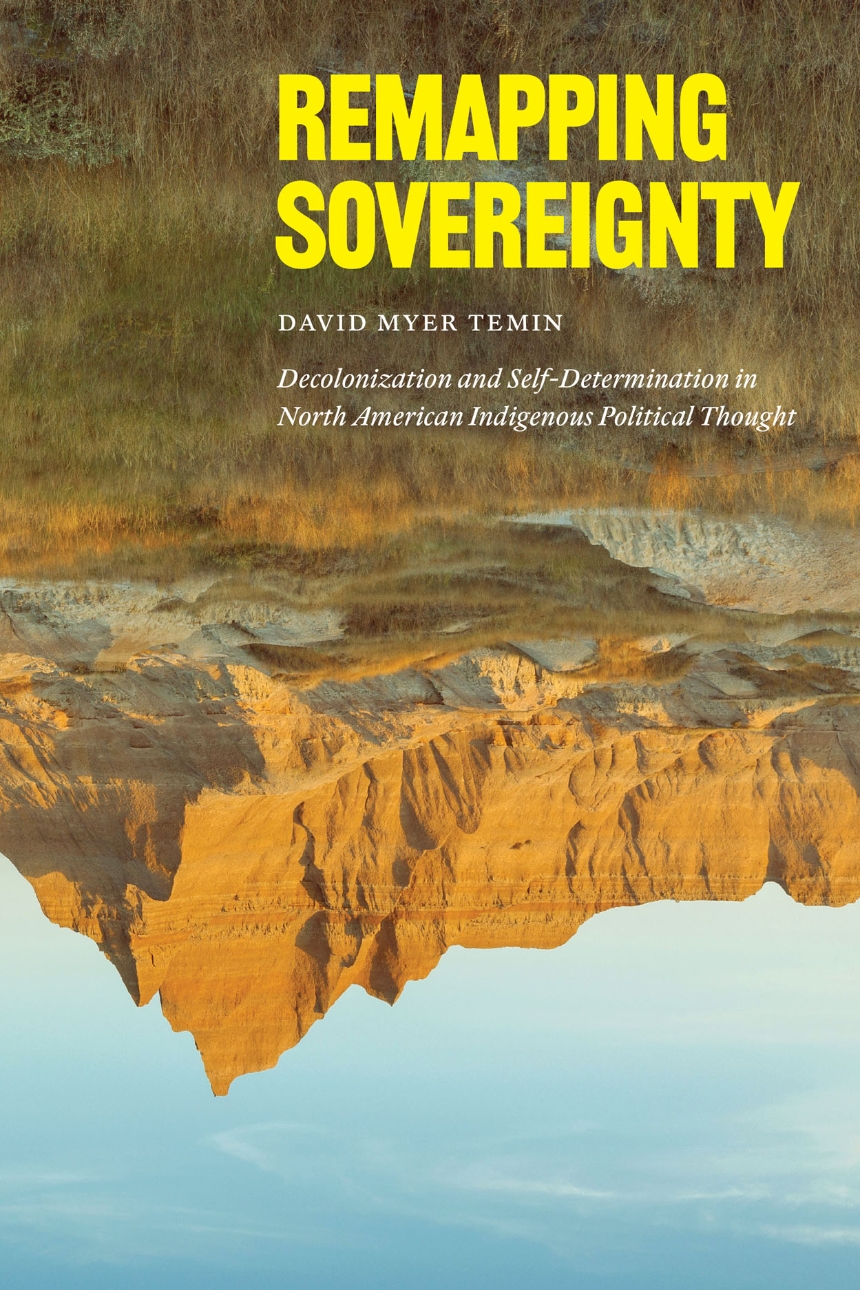
Accounts of decolonization routinely neglect Indigenous societies, yet Native communities have made unique contributions to anticolonial thought and activism. Remapping Sovereignty examines how twentieth-century Indigenous activists in North America debated questions of decolonization and self-determination, developing distinctive conceptual approaches that both resonate with and reformulate key strands in other civil rights and global decolonization movements. In contrast to decolonization projects that envisioned liberation through state sovereignty, Indigenous theorists emphasized the self-determination of peoples against sovereign state supremacy and articulated a visionary politics of decolonization as earthmaking. Temin traces the interplay between anticolonial thought and practice across key thinkers, interweaving history and textual analysis. He shows how these insights broaden the political and intellectual horizons open to us today.
Though Michel Foucault is one of the most important thinkers of the twentieth century, little is known about his early life. Even Foucault’s biographers have neglected this period, preferring instead to start the story when the future philosopher arrives in Paris.
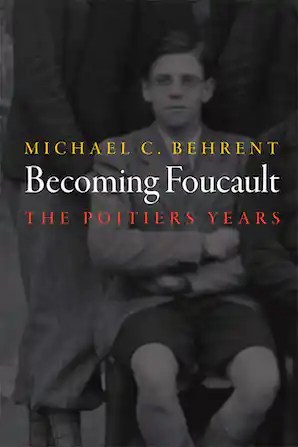
Becoming Foucault is a historical reconstruction of the world in which Foucault grew up: the small city of Poitiers, France, from the 1920s until the end of the Second World War. Beyond exploring previously unexamined aspects of Foucault’s childhood, including his wartime ordeals, it proposes an original interpretation of Foucault’s oeuvre. Michael Behrent argues that Foucault, in addition to being a theorist of power, knowledge, and selfhood, was also a philosopher of experience. He was a thinker intent on making sense of the events that he lived through. Behrent identifies four specific experiences in Foucault’s childhood that exercised a decisive influence on him and that, in various ways, he later made the subject of his philosophy: his family’s deep connections to the medical profession; his upbringing in a bourgeois household; the German Occupation during World War II; and his Catholic education.
Behrent not only reconstructs the specific nature of these experiences but also shows how reference to them surfaces in Foucault’s later work. In this way, the book both sheds light on a formative period in the philosopher’s life and offers a unique interpretation of key aspects of his thought.
Henri Hubert and Marcel Mauss, Correspondance(1897-1927), eds. Rafael Faraco Benthien, Christophe Labaune and Christine Lorre – Classiques Garnier, 2021
This volume significantly increases the corpus of the writings of Marcel Mauss and Henri Hubert, by making public letters exchanged during thirty years, a testimony of a “working twins” relationship crossed by the Dreyfus affair, politics, the Great War and the construction of sociology.
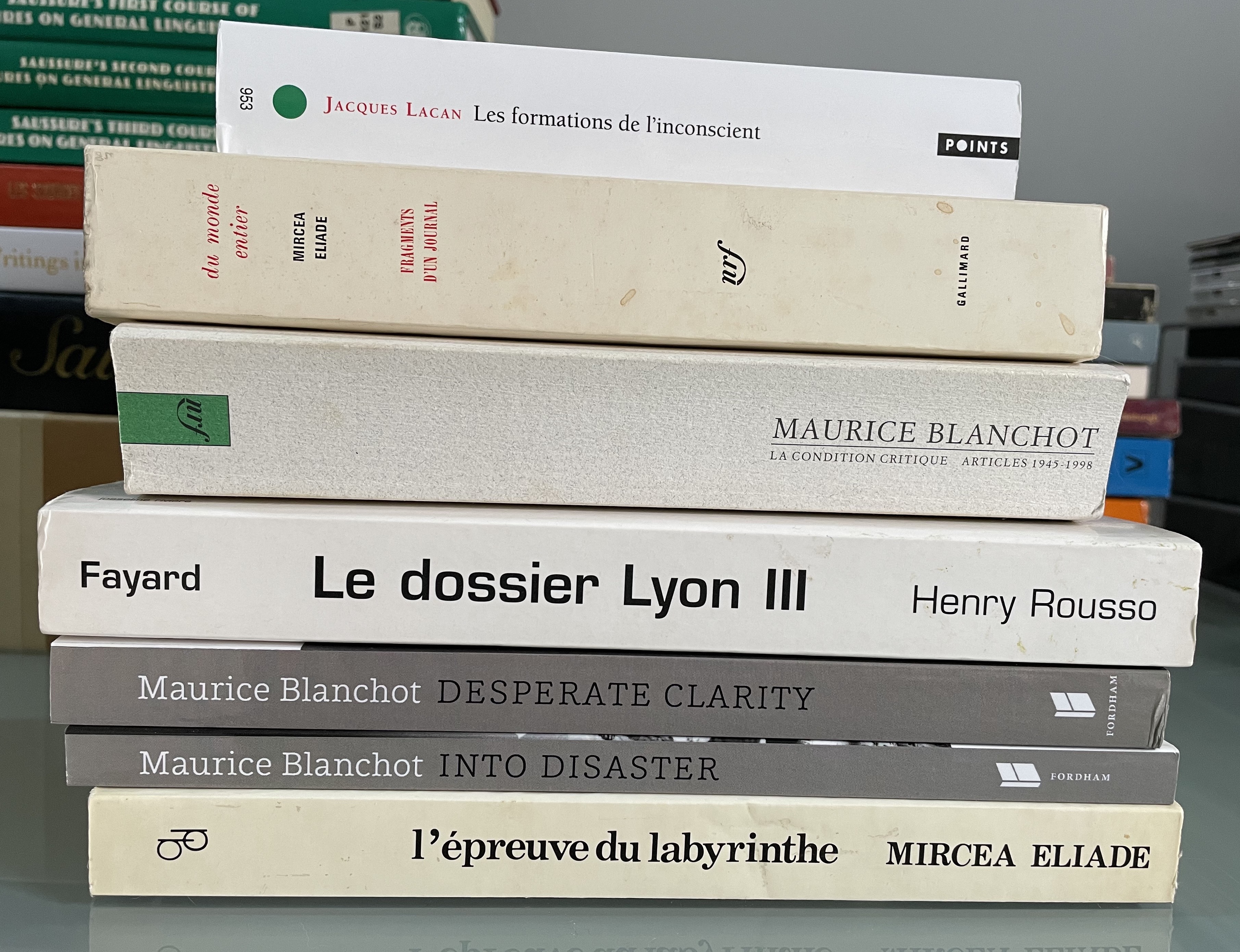
Apart from the most-recent Lacan seminar to appear in the Points series, all bought second-hand. All connected to the Indo-European thought project in some way.
Offers in English for the first time philosopher Cornelius Castoriadis’s earliest surviving lectures on the ancient Greeks
Includes renowned scholar Pierre Vidal-Naquet’s essay, “’Castoriadis and Ancient Greece’” (1999), which provides an introduction and memorial to Castoriadis’s research
Includes Castoriadis’s previously untranslated, substantive essay, “’Political Thought’” (1979), which presages many of the key themes in the seminars
Includes Castoriadis’s thematic reports on his teaching in the 1980-1984 seminars
Includes an “Editors’ Introduction” plus extensive editorial commentary on the seminars and an Analytic Table of Contents provided by the academic editor of the French edition of the volume (from 2004)
Includes a “Foreword” by the translator, which highlights key terms in the seminars
This book collects 12 previously untranslated lectures by Castoriadis from 1982 to 1983. Castoriadis focuses on the interconnection between philosophy and democracy and the way both emerge within a self-critical imaginary already in development in the work of early Greek poets and Presocratic philosophers.
Providing an overview of the political and ethical philosophy of Martha Nussbaum, this book presents the ideas of this significant philosopher and shows how her thought, while rooted in the traditions of classical philosophy, illuminates a number of current, controversial issues. The book takes a chronological approach and aims to show how Nussbaum’s thought has continually grown and developed. It takes the reader through her views on ethics, political philosophy, feminism and women’s rights, LGBT issues, animal rights, religious tolerance and accommodation, contemporary politics, and global justice. It also explores contested areas of her thought, such as the extent to which she is a perfectionist liberal, challenges to her view that religion merits special accommodations, utilitarian objections to the capabilities approach, criticisms of her brand of liberal feminism, and cosmopolitan objections to her nation-state-based liberal conception of global justice. Each chapter focuses on a book from a different stage of her career, starting with her first book, The Fragility of Goodness and ending with her most recent, The Cosmopolitan Tradition.
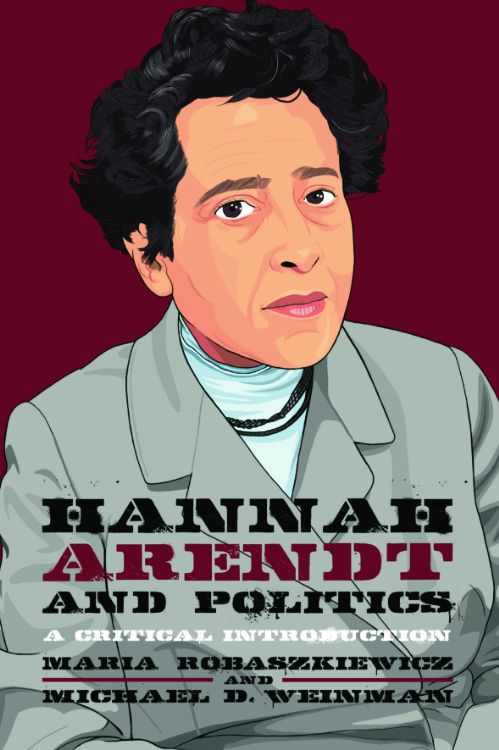
Maria Robaszkiewicz, Michael Weinman, Hannah Arendt and Politics – Edinburgh University Press, January 2023
Hannah Arendt has been classified as a critical theorist, a phenomenologist, an anti-feminist, a feminist ally, a democratic theorist, a republican theorist, a Heidegerrian, and a nostalgic Hellenophile. This book responds to these perspectives in two ways. First, we recognize that one can legitimately derive all these positionings from one or another of her writings; second, we insist nevertheless and precisely because all these approaches play some role in her work that her readers ought to follow her own claim that she ‘does not belong to any club’. Instead, we introduce her works as exercises in political thinking, treating her as a dialogue partner, whose judgments and opinions remain open for reflection and discussion.
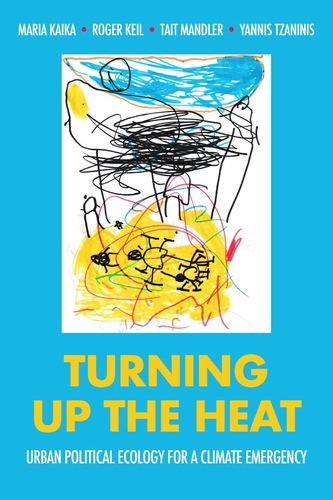
Since its emergence in the 1990s, the field of Urban Political Ecology (UPE) has focused on unsettling traditional understandings of the ‘city’ as entirely distinct from nature, showing instead how cities are metabolically linked with ecological processes and the flow of resources. More recently, a new generation of scholars has turned the focus towards the climate emergency. Turning up the heat seeks to turn UPE’s critical energies towards a politically engaged debate over the role of extensive urbanisation in addressing socio-environmental equality in the context of climate change.
The collection brings together theoretical discussions and rigorous empirical analysis by key scholars spanning three generations, engaging UPE in current debates about urbanisation and climate change. Engaging with cutting edge approaches including feminist political ecology, circular economies, and the Anthropocene, case studies in the book range from Singapore and Amsterdam to Nairobi and Vancouver. Contributors make the case for a UPE better informed by situated knowledges: an embodied UPE that pays equal attention to the role of postcolonial processes and more-than-human ontologies of capital accumulation within the context of the climate emergency. Acknowledging UPE’s rich intellectual history and aiming to enrich rather than split the field, Turning up the heat reveals how UPE is ideally positioned to address contemporary environmental issues in theory and practice.