Participants are welcome to apply for the Theory, Culture & Society inaugural Summer School, taking place 11-16 September 2023 at University of Klagenfurt, Austria. Apply online here.
The Summer School provides a dynamic and inclusive forum for research, aimed at established and early career researchers, and also providing opportunities for postgraduate students. Participants will be able to:
explore contemporary critical debates and perspectives;
enhance skills and literacies for research and publishing;
share in a cultural programme.
Situated in the Austrian Alps, the University of Klagenfurt provides an inspiring location for a diversity of scholars to come together from across disciplines and geographies, to work with the experienced editorial teams of the journals Theory, Culture & Societyand Body & Society, alongside invited speakers and guests, and staff from the University of Klagenfurt from a broad disciplinary spectrum (Media & Communications, Cultural Studies, Sociology, Philosophy, Slavonic Studies and Robert Musil Institute for Literary Research), who will be on hand to discuss your ongoing research projects.
The intensive programme spans 5 days and is divided into four strands (for which 5 ECTS credits can be awarded):
Scholarly Apparatus: The 40-year history of the journal has witnessed many shifts and trends in research. Workshops will explore the current contexts of research, questioning, for example, the post-university condition and the changing ‘scholarly apparatus’, mapping new ways of working and post-media literacies.
Work-in-Progress: A special dedicated series invitesparticipants to present on aspects of their own work, with a view to supporting publication and public engagement. Time is also afforded for writing, giving participants an opportunity for quiet study, but within a shared environment.
Global Public Life: Building on the journal’s dedicated annual section, ‘Global Public Life’, the Summer School presents a cultural strand of film screenings, engagement with artists, media practices and guest speakers. Held during the evenings, these events provide a relaxed atmosphere, allowing for speculative debate and shared reflections. The programme is also supplemented with a day trip into the mountains.
A prohibitively priced hardback only at this point…
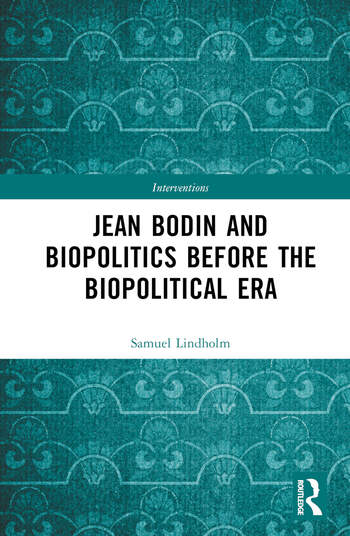
This book offers fresh perspectives on the history of biopolitics and the connection between this and the technology of sovereign power, which disregards or eliminates life.
By analyzing Jean Bodin’s political thought, which acts as a prime example of early modern biopolitics and proves that the two technologies can co-exist while maintaining their conceptual distinction, the author combines Foucauldian genealogy with political theory and intellectual history to argue that Michel Foucault is mistaken in presuming that biopolitics is an explicitly modern occurrence. The book examines Bodin’s work on areas such as populationism; censors; climates, humors, and temperaments; and witch hunts.
This pioneering book is the first English-language volume to focus on the biopolitical aspects of Bodin’s work, with a Foucauldian reading of his political thought. It will appeal to students and scholars of political theory, sovereignty, and governance.
An important piece about how a good idea – that books should be available to a wider audience – can have negative consequences. Given how making journal articles open access led to author processing charges, and the problems this has caused for institutions and libraries, this seems an important warning.
In April 2022 UKRI (UK Research and Innovation) announced that all books must be open access from January 2024 onwards. If the UKRI proposals are formalised as part of the next REF (Research Excellence Framework) exercise, this will have damaging consequences for geography and other disciplines. In this commentary I argue that this is an ill-considered proposal that is already disrupting academic book publishing. There is an urgent need to evaluate alternative open access models that will not entrench existing forms of academic inequality, marginalise the significance of books as a distinctive facet of intellectual life, or threaten the production of rigorous peer-reviewed monographs.
Scuola Normale Superiore, Florence, Italy 9-10 November 2023
Convenors: Francesco Ventura, Jacopo Custodi, Aida Kapetanovic, Manuela Caiani
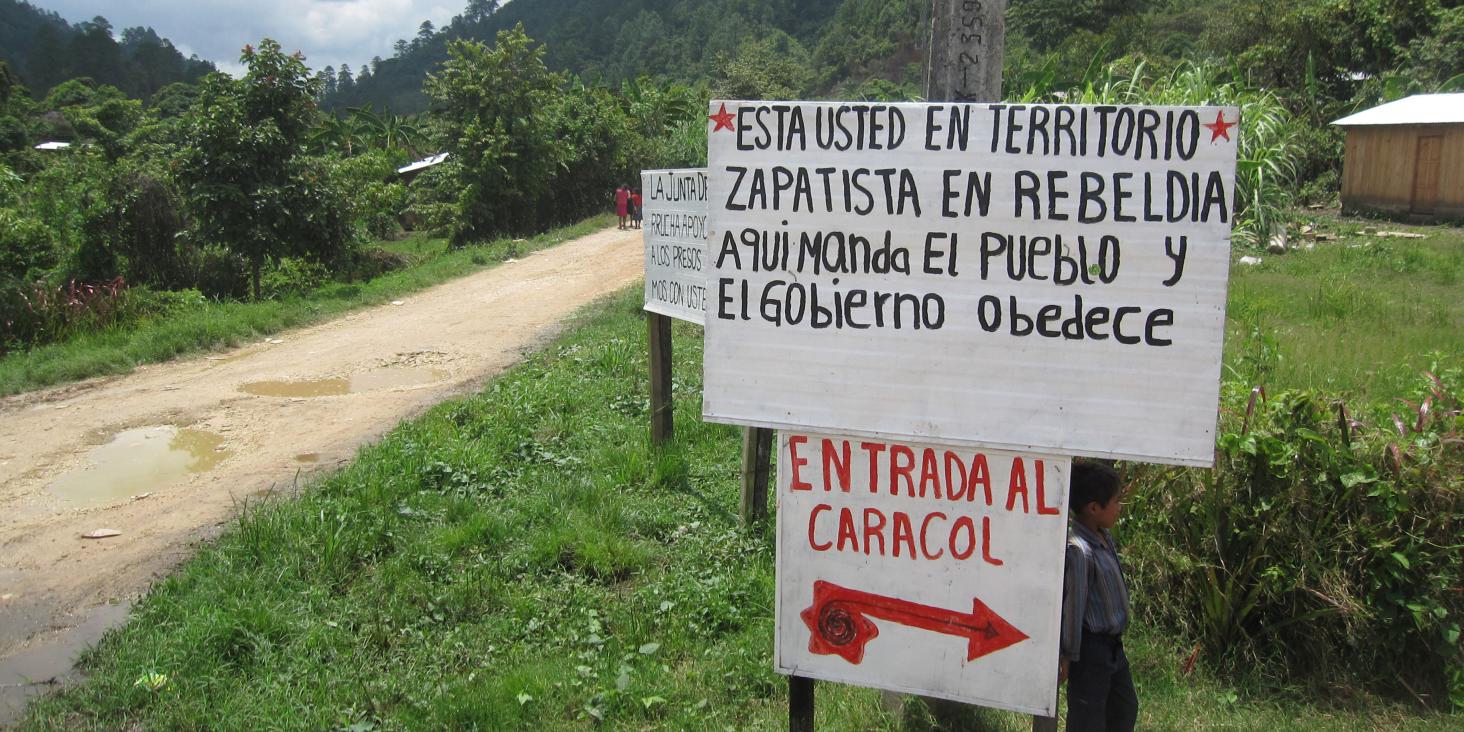
The issue of identity often brings to mind that of territorial affiliation. However, today, the connection between place and identity is increasingly expressed in terms of exclusivity, nationalism, localism, and even xenophobia and aggression. In other words, the question of identity appears to be dominated by right-wing perspectives. Leftist critical and radical thinking often avoids discussing themes of territorial identity, out of fear of slipping into right-wing discourses. However, these themes remain fundamental pillars of many radical social movements around the world, from the No TAV protests in Italy to the resistance of the Standing Rock Sioux in the US, from the defence of urban commons and neighbourhoods in Western metropolises to struggles for autonomy and self-determination in places like Chiapas and Kurdistan.
This conference aims to explore critical perspectives on the relationship between identities and territories, including theories, methodologies, practices, and tools for understanding this complex interplay. We encourage the submission of both theoretical and empirical papers, and we are particularly interested in the following themes:
• Social movements and the importance of place
• Local struggles (environmental, anti-gentrification, etc.) and their relation to local identity
• Left-wing patriotism
• Identity politics and nationalism on the Left
• Strategies for home-making among migrants
• The relationship between local struggles, migration and identities
• Anti-neoliberal glocal movements
• The role of space, place, movement, and belonging in shaping identities
• Grassroots internationalism and its relation to territorial belonging
We welcome papers that examine both European and non-European contexts and encourage early-stage researchers and young scholars to participate.
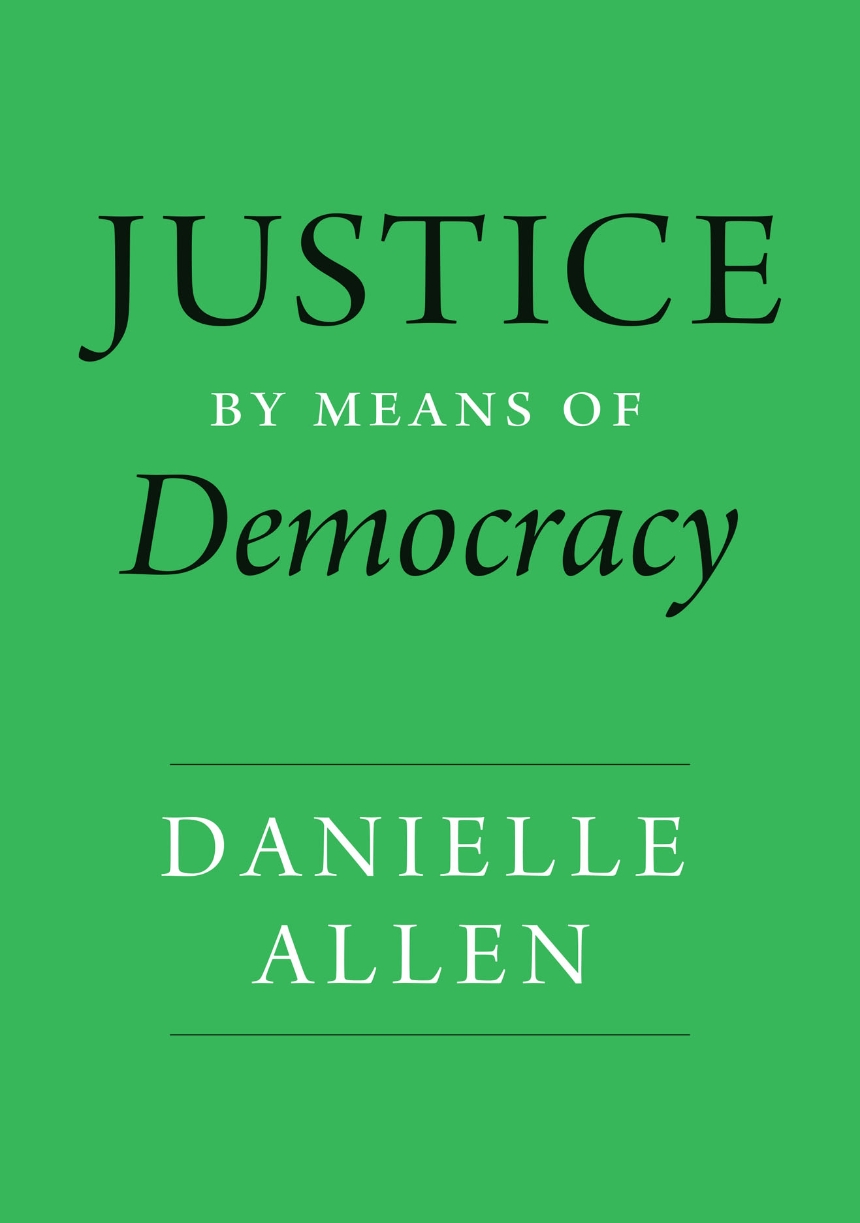
At a time of great social and political turmoil, when many residents of the leading democracies question the ability of their governments to deal fairly and competently with serious public issues, and when power seems more and more to rest with the wealthy few, this book reconsiders the very foundations of democracy and justice. Scholar and writer Danielle Allen argues that the surest path to a just society in which all are given the support necessary to flourish is the protection of political equality; that justice is best achieved by means of democracy; and that the social ideals and organizational design principles that flow from recognizing political equality and democracy as fundamental to human well-being provide an alternative framework not only for justice but also for political economy. Allen identifies this paradigm-changing new framework as “power-sharing liberalism.”
Liberalism more broadly is the philosophical commitment to a government grounded in rights that both protect people in their private lives and empower them to help govern public life. Power-sharing liberalism offers an innovative reconstruction of liberalism based on the principle of full inclusion and non-domination—in which no group has a monopoly on power—in politics, economy, and society. By showing how we all might fully share power and responsibility across all three sectors, Allen advances a culture of civic engagement and empowerment, revealing the universal benefits of an effective government in which all participate on equal terms.
The first 26 pages of the uncorrected proofs to the book are attached to this article.
Le Discours philosophique propose ainsi une nouvelle manière de faire l’histoire de la philosophie, qui la décentre du commentaire des grands philosophes. […]
This book addresses the social, political and economic turbulence in which the UK is embroiled. Drawing on Cultural Studies, it explores proliferating crises and conflicts, from the multiplying varieties of social dissent through the stagnation of rentier capitalism to the looming climate catastrophe.
Examining arguments about Brexit, class and ‘race’, and the changing character of the state, the book is underpinned by a transnational and relational conception of the UK. It traces the entangled dynamics of time and space that have shaped the current conjuncture.
Questioning whether increasingly anti-democratic and authoritarian strategies can provide a resolution to these troubles, it explores how the accumulating crises and conflicts have produced a deepening ‘crisis of authority’ that forms the terrain of the Battle for Britain.
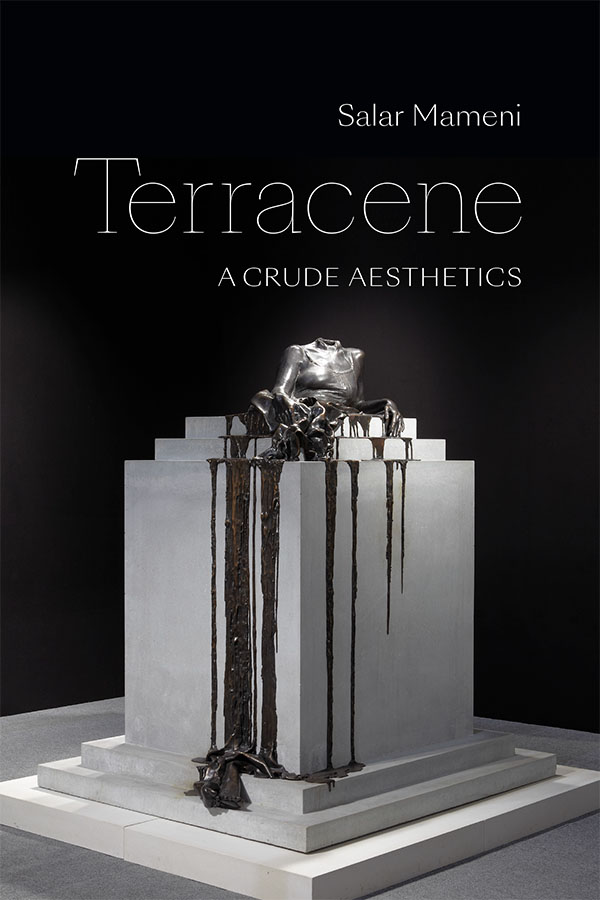
In Terracene Salar Mameni historicizes the popularization of the scientific notion of the Anthropocene alongside the emergence of the global war on terror. Mameni theorizes the Terracene as an epoch marked by a convergence of racialized militarism and environmental destruction. Both the Anthropocene and the war on terror centered the antagonist figures of the Anthropos and the terrorist as responsible for epochal changes in the new geological and geopolitical world orders. In response, Mameni shows how the Terracene requires radically new engagements with terra (the earth), whose intelligence resides in matters such as oil and phenomena like earthquakes and fires. Drawing on the work of artists whose practices interrogate histories of settler-colonial and imperial interests in land and resources in Iran, Iraq, Yemen, Kuwait, Syria, Palestine, and other regions most affected by the war on terror, Mameni offers speculative paths into the aesthetics of the Terracene.
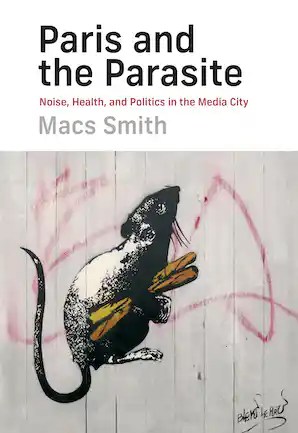
The social consequences of anti-parasitic urbanism, as efforts to expunge noise and biological parasites penalize those viewed as social parasites.
According to French philosopher Michel Serres, ordered systems are founded on the pathologization of parasites, which can never be fully expelled. In Paris and the Parasite, Macs Smith extends Serres’s approach to Paris as a mediatic city, asking what organisms, people, and forms of interference constitute its parasites. Drawing on French poststructuralist theory and philosophy, media theory, the philosophy of science, and an array of literary and cultural sources, he examines Paris and its parasites from the early nineteenth century to today, focusing on the contemporary city. In so doing, he reveals the social consequences of anti-parasitic urbanism.
Smith examines how media shape the design and experience of urban space, as well as how the city passes through layers of mediation. He asks what constitutes noise within a media city. Paris’s municipal government views acoustic noise as a public health threat and calls for its elimination. But the government’s proposals focus on reducing automobile traffic, making it harder for marginalized people to access the city. Thus, a push to eliminate a supposedly biological parasite banishes the so-called social parasites. Questioning the informatic ideologies undergirding modern urbanism, Smith shows both how this anti-parasitic urbanism works and how the banished outsiders noisily intervene, despite their exclusion from the centers of power. The expulsion of social, biological, and mediatic parasites is a governing theme of modern Paris, yet its parasites continually resurge. What is ultimately at stake is how we understand collective life.
There is a discussion at the New Books Network. Thanks to dmf for the link
Now published, though as an expensive hardback and e-book. The front matter, Introduction and first chapter by Daniele Lorenzini are available open access.
My piece in here is entitled “The Yoke of Law and the Lustre of Glory: Foucault and Dumézil on Sovereignty”. It’s the first in a series of pieces exploring the links between Foucault and Dumézil through Foucault’s career. I’m happy to share if you email me.
The Handbook on Governmentality discusses the development of an interdisciplinary field of research, focusing on Michel Foucault’s post-foundationalist concept of governmentality and the ways it has been used to write genealogies of modern states, the governance of societal problems and the governance of the self.
Contributors include: Claudia Aradau, Carol Bacchi, Wendy Brown, Graham Burchell, Partha Chatterjee, Sahil Jai Dutta, Stuart Elden, Ben Golder, Colin Gordon, Jef Huysmans, Jonathan Xavier Inda, Hans-Martin Jaeger, Samuel Knafo, Susanne Krasmann, Clara Lecadet, Emanuele Leonardi, Daniele Lorenzini, Ian Alexander Lovering, Brett Neilson, Luigi Pellizzoni, Cristina Rojas, Nikolas Rose, Srila Roy, Ranabir Samaddar, Maurice Stierl, Martina Tazzioli, Miriam Ticktin, William Walters, Richard Weiskopf, Chenchen Zhang
‘Nearly forty years after his death, governmentality remains Michel Foucault’s most elusive and productive theoretical concept; especially in generating interdisciplinary empirical scholarship. Now with its revelatory introductory chapter and powerhouse collection of leading contemporary scholars, Walters and Tazzioli’s Handbook on Governmentality has demystified the topic and opened governmentality to a new generation of critical researchers across the social sciences and humanities.’ – Jonathan Simon, University of California, Berkeley, US
‘Governmentality has become a ubiquitous term in social and political theory. Stemming from Foucault, the concept has been stretched and even squeezed over the last years. This impressive Handbook lays the basis for a new season in governmentality studies, exploring new geographical and conceptual frontiers. An amazing achievement!’ – Sandro Mezzadra, University of Bologna, Italy
And the abstract for my chapter:
In his 1975-76 course ‘Society Must Be Defended’ Foucault briefly comments on Indo-European sovereignty. His auditors would have recognised a reference to Georges Dumézil, and the editors provide a reference indicating his work. In a series of books, Dumézil proposed his influential tripartite hypothesis, with a division between kings and priests, warriors, and farmers or traders. The first function of sovereignty is itself split between a worldly, juridical form and a magical, supernatural one. It is this distinction, particularly discussed in Mitra-Varuna: An Essay on Two Indo-European Representations of Sovereignty, to which Foucault alludes. Dumézil and Foucault met in the mid-1950s, and Foucault pays tribute to Dumézil in key places, including the History of Madness and his inaugural lecture to the Collège de France. Here the focus is an examination of the sense of sovereignty Foucault develops from Dumézil, and how it relates to the notion of governmentality.