I found this yesterday, while looking for something else. It’s Foucault’s library card for the Bibliothèque nationale de France, found on their images site.
I can’t read and/or decipher it all, but here’s what I can work out. [It’s worth noting little or none of this is Foucault’s own handwriting.]
The photo looks like early 1960s to me, and there is a date of 25.9.1962 in the bottom right. But there are also a series of dates in the top half beginning with 12.IV.69 and then yearly renewals from 1970 through to 1979, though I think missing 1978. We know that Foucault started using the Bibliothèque du Saulchoir as his primary research base in summer 1979.
Under Titres, it first says agregé de philosophie, then Prof Fac en Vincennes (which Foucault joined in 1968) and then Collège de Fr[ance], to which he was elected in 1970.
The first address is 13 rue du Dr Finlay, where Foucault moved in summer 1961, and then 285 ave de Vaugirard, where he moved in January 1971, and where Daniel Defert still lives. [It looks like someone has tried to correct the second address, as it’s actually rue de Vaugirard.]
In the bottom left is Foucault’s date of birth 15.X.26.
I’m not sure what the codes in the Observations section mean. Happy to receive additions or corrections.
Update July 2025: Alessandro Gentilini has suggested that the information in the ‘Observations’ part is for a Carte d’identité [CI no] with number and possibly place of issue. Perhaps the date 25.9.1962 is for that identity card, rather than the first date of this card.
I think Felix Guattari and I have remained Marxists, in our two different ways, perhaps, but both of us.
Control and Becoming Gilles Deleuze in conversation with Antonio Negri
The final book Deleuze was working on before his untimely death, ‘Grandeur de Marx’, has an almost mythical status among followers and readers of Deleuze’s philosophy. Marx occupies a relatively privileged place in Deleuze’s work (perhaps just behind Spinoza, Bergson, and Nietzsche), especially in his two works with Felix Guattari: Anti-Oedipus and A Thousand Plateaus, but which can be found even earlier in his discussion of Marx and revolution in Difference & Repetition. But the exact relationship between Deleuze, and the system of thought he developed, and Marx or Marxism, has remained somewhat ambiguous. I don’t think I’m going to be able to solve that here, but I wanted to collect together some pieces of information which I…
Editing Georges Dumézil’s Mitra-Varuna has taken far longer than I expected, but I think the text of the book is now complete. The major challenge, as I’ve indicated before, was the process of checking, completing and sometimes correcting Dumézil’s references. I’ve been mainly working on the Introduction the past several weeks, which has also taken longer than anticipated. In that Introduction I try to do three main things – provide a background to understand where Dumézil was in his career when the first edition of Mitra-Varuna was published in 1940; discuss the years between the first and second edition in 1948, including the political controversy around his work; and then outline what he did on these topics after 1948.
The Introduction is in fairly good shape now, though there is much more that could be said about many of these issues. I wrote much more on some questions, which I then cut out and replaced with a sentence or two. None of the work was wasted, but some issues which will be important in my wider project are less useful in this Introduction.
[Update: pre-order details of Mitra-Varuna are here]
As ever, the more I read and write the more I realise I need to do, with a long list of references to check. Many could be done in London, but in June I also made a short trip to Paris, where I did a little work with the Foucault archive before the BnF-Richelieu closed for three months for the final stages of the long-running renovation project. I was mainly looking at some of his Collège de France course manuscripts, some of which discuss Dumézil. While the courses are all now published, these were edited on the basis of recordings. Especially with the earliest published courses, the editors didn’t use the manuscripts very much, even if they consulted them. Restrictions on their use was relaxed over time.
For example, «Il faut défendre la société» was the first of Foucault’s Collège de France courses to be published, now 25 years ago. At the time of its publication I was writing my PhD on Nietzsche, Heidegger and Foucault. We knew some things about the course before – the course summary, ‘Two Lectures’ in Power/Knowledge,the final lecture on race and biopolitics – but there were still lots of interesting surprises. The course was edited by Alessandro Fontana and Mauro Bertani, and translated by David Macey as ‘Society Must Be Defended’ in 2003, with François Ewald and Fontana editing the overall series, and Arnold Davidson serving as the English series editor.
It was the first of the courses I read, and so it was great to finally see the manuscript. I wrote an essay on the course in boundary 2 in 2002, after a review essay of Les Anormaux in 2001. Both were enabled by the generous support of Paul Bové. Reading these courses, and writing those pieces, was really the initial work for what became Foucault’s Last Decade in 2016, but to complete that book, I had to wait until all the courses from that period were published. The last of the courses discussed in that book to be published was Subjectivity and Truth. Penal Theories and institutions followed, but that was discussed in Foucault: The Birth of Power.
Given how much other material is in the archive, and that all these courses had been edited to such high standards, I have not spent much time with any of their manuscripts. I used Lectures on the Will to Know manuscript to check some things I discuss in The Archaeology of Foucault, particularly the missing Nietzsche material. I’d also looked at the Punitive Society ms., partly in relation to the use of some of that material elsewhere.
With «Il faut défendre la société» I was looking for one specific thing too, in relation to the discussion of the Indo-European model of sovereignty, with its unstated reference to Dumézil’s work, which I discuss in a forthcoming book chapter. There is quite a lot of expansion in the lecture, but also some interesting points in the manuscript. I did look at more of this course ms., because, as the editors note, there is a whole discussion of repression which was not delivered. Although much of its content is familiar, I hope it is published in the forthcoming Seuil Points re-edition of the course. For those that don’t know, these are the smaller format editions of the texts, based on the initial publications but amended in the light of newly available sources. The first two courses are already republished (here and here). There is some other material in the box for this course which was not delivered in the course, and so is not in the original edition, which should make this re-edition interesting.
But from the other side, we would have missed so much if we’d only had the manuscript of the course, and not recordings of these and other later lectures. Foucault’s notes generally accord well to the spoken material, but there is a lot of elaboration. And some sections, particularly responding to audience comments to him outside of class, or the opening or closing of a lecture, are entirely absent from the manuscript. The discussion of Shakespeare in this course, which I have talked about elsewhere (or here), is a kind of ‘blink and you’ll miss it’ moment in the manuscript. So I’m grateful that Foucault did more in the lecture itself, and that we have the recording and its transcription. I also looked at a couple of later courses with the same kinds of questions in mind.
Conversely, there are some courses where the only surviving material is the manuscript Foucault used, with no recordings, or at least no known surviving ones. This is the case with Lectures on the Will to Know and Penal Theories and Institutions, or the 1960s courses on sexuality, for example. We don’t really know what Foucault did with those notes in the classroom, although there are clues when he lectured on related topics elsewhere, especially in Rio for those early courses. With some courses, such as the just-published anthropology course from the mid 1950s, we have valuable and detailed student notes.
What the editors do in establishing these courses is really important and valuable work. But just as it can be useful to listen to the lectures, as well as read them, it is also good to see the source manuscript. The work of the editors in establishing references is really crucial, and I think largely unacknowledged. Foucault provides very few indications in his ms. (not surprising, since they are lecture notes). Some can be completed by looking at his related reading notes, but even so it is a case of finding, checking, correcting. And not all the allusions are obvious. The work of the translators – above all for the Collège de France courses Graham Burchell who did 12 of 13 – in finding English equivalents is also very substantial, under-recognised and under-compensated work. I’m obviously not suggesting that everyone interested in the courses needs to consult their manuscripts. But they are interesting, and seeing the raw material (tape recordings and manuscripts) which led to the editions really underlines the crucial work of the editors and translators.
I also had some time at the Collège de France, doing some preliminary work with the Dumézil papers. I did look at some specific things, in part for the Introduction to Mitra-Varuna, but really at this early stage I’m getting a feel for the material. This is about the organisation of the archive, how Dumézil wrote his lectures, and the materiality of the papers.
I made a few visits to the BnF-Mitterand, checking a few things which are hard or impossible to locate in the UK and doing some reading around the themes I discuss in the Mitra-Varuna Introduction, and will explore more in the wider project.
I had planned that between the completion of the Foucault work, and the beginning of the new project, on Indo-European thought, I would have a complete break, but it hasn’t quite worked out like that. I had quite a few things I’d been delaying until I completed the final Foucault book, and so working on them has taken some time. The copy-editing of the book is done, and I now have the proofs to complete.
I am now beginning to think more seriously about the new work, with the Mitra-Varuna editing work acting as a good prelude to that. I have a mountain to climb here, just in terms of the reading ahead of me, which will never be finished. One of the appeals of the project is that I will learn so much in the process of trying to write something. I don’t know the answers, have some questions, and imagine I will discover a lot of questions along the way.
The funding was given on the basis I will write a book, of which I know something of the projected content, but not so much about its form. I don’t have a contract, and might well wait until quite late in the process before trying to get one, as I did with The Birth of Territory. Initially, I plan to do a lot of reading, some background work, some reading and rereading of mythologies. While I know something about the Roman histories and the Norse myths, for example, I know much less about the Vedas, and little about Irish and Welsh myths, nothing about the Nart Sagas, and so on. I want to get to a point where I have a sense of what it was that the authors I want to focus on were thinking, doing with this material.
And while I’m reasonably comfortable with the post-war French context, I know much less about the inter-war period, or even intellectual life in the occupation or Vichy France. The wider European context is important too, as all of the people I’m writing about spent time outside of France, and read and thought and sometimes wrote in other languages.
I chose the focus on what was happening in France (rather than just the French) because of both a wish to limit the scope somewhat, to work largely with a language I have the competence to just about manage, but also to exclude some aspects of the problem. In Germany, for example, the Indo-European work seems complicated by Nazism to an overwhelming degree, and perhaps too with Fascism in Italy. It is there as a condition in France too, with Dumézil’s right-wing sympathies in the 1930s discussed in some quite polemical works. Eliade’s own politics were part of the reasons he was in exile in France after the war, rather than able to return to Romania. And there are doubtless complications in England and the United States too. These will be a factor in the wider story. But, my sense, at least so far, is that this isn’t going to overwhelm the work in the way it might if I’d tried to bring in other countries.
So I have the proofs of the Foucault book to complete, the final work on Mitra-Varuna, and a related article to draft. I hope I can spend August and September doing some background reading before the fellowship begins in October.
En 2013, la Bibliothèque nationale de France a acquis les archives de Michel Foucault, désormais réparties dans 117 boîtes de conservation, complétées depuis par quelques dons de ses proches (comprenant par exemple son mémoire de maîtrise sur Hegel). Nul n’avait soupçonné l’étendue de ce cabinet de travail temporel, témoignage de près de quarante ans de recherche, les notes les plus anciennes étant celles des cours suivis à l’École normale supérieure, qu’il intégra en 1946. Recelant à la fois des manuscrits d’œuvres, de cours, d’articles et travaux divers, augmentés de plusieurs milliers de notes de lecture, l’ensemble acquis par la BnF bouleverse notre connaissance de l’œuvre et éclaire le travail silencieux qui l’a préparée. S’il se disait fréquemment que Foucault s’astreignait à des…
Available in hardback, paperback and open access e-book here. 20% off discount before end August 2022 with code ASM06.
One of the chapters comes from the ICE-LAW project run by Phil Steinberg at Durham University, in which I led the Territory sub-project. A short film based on the Introduction is also available.
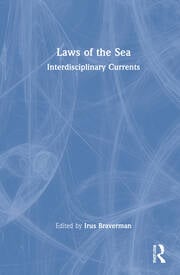
Assembling scholars across multiple orientations – from legal studies, geography, anthropology, cultural and political theory, the environmental humanities, and ocean studies –this book connects law to the broader humanities in order to critically engage contemporary concerns with the fate of the ocean.
Although the United Nations’ monumental ‘Convention on the Law of the Sea’ imagines an all-encompassing constitutional framework for governing the ocean, this collection, Laws of the Sea, approaches law in plural ways, applying the insights that have emerged within various disciplines to consider the possibilities of a critical ocean approach in legal studies. The collection is comprised of twelve chapters that utilize a diverse set of methodological tools to explore a range of intersecting sites: from hydrothermal vents, through the continental shelf and marine genetic resources, to coastal communities in areas including France, Sweden, Florida, and Indonesia. Confronting the longstanding binary of land and sea, these chapters pose a fundamental challenge to law’s terracentrism, and its pervasive influence on juridical modes of knowing and making the world. Together, they ask: is contemporary Eurocentric law – and international law in particular – capable of moving away from its capitalist and colonial legacies, established through myriad oceanic abstractions and classifications, toward more amphibious legalities?
This collection will appeal to sociolegal, international, and environmental law scholars, as well as geographers and anthropologists, cultural and political theorists, and those working in environmental history, political ecology, and animal studies.
Book Description Foucault, Sexuality, Antiquity, published for the first time in English, takes an interdisciplinary approach to exploring how the work of Michel Foucault has influenced studies of ancient Greece and Rome.
Foucault’s The History of Sexuality has had a profound and lasting impact across the humanities and social sciences. In the two volumes dedicated to pagan antiquity, Foucault provided scholars with new questions for addressing ancient Greek and Roman societies, and an original epistemological framework for thinking about eroticism and about the processes by which individuals are led to recognize themselves as the subjects of their desires. Now, decades later, the scholars in this volume explore Foucault’s role in shaping and reorienting discussions of antiquity in the fields of philosophy, gender studies, and psychoanalysis, among others.
A multidisciplinary exploration of Foucault’s work and its relationship to…
Dominique Lecourt, author of the classics of Marxist philosophy of science Marxism and Epistemology Bachelard, Canguilhem, Foucault and Proletarian Science?, among many others, died in Paris on 1 May 2022. Here, Roger-Pol Droit remembers his life and work. Also included [on the Verso page] is a newly translated essay of Lecourt’s on Foucault’s The Archaeology of Knowledge.
Born in Paris on 5 February 1944, the philosopher Dominique Lecourt died at Lariboisière Hospital in Paris on 1 May 2022. He was the author of a copious body of work, with some forty volumes mainly centred on the relationship between philosophy and scientific or medical thought, but also a figure in publishing and cultural institutions who has left his mark on recent decades.
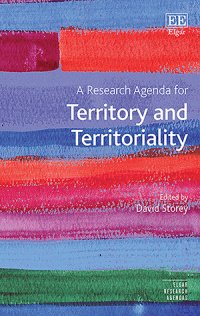
Elgar Research Agendas outline the future of research in a given area. Leading scholars are given the space to explore their subject in provocative ways, and map out the potential directions of travel. They are relevant but also visionary.
This innovative Research Agenda draws together discussions on the conceptualization of territory and the ways in which territory and territorial practices are intimately bound with issues of power and control. Expert contributors provide a critical assessment of key areas of scholarship on territory and territoriality across a wide range of spatial scales and with examples drawn from the global landscape.
After an introduction to shifting ideas of territory, territoriality and sovereignty, the book deals with territory…
Update: the e-book can be accessed open access here.
Currently listed just as hardback, but a paperback and open access e-book will also be available. One of the chapters comes from the ICE-LAW project run by Phil Steinberg at Durham University.
Assembling scholars across multiple orientations – from legal studies, geography, anthropology, cultural and political theory, the environmental humanities, and ocean studies –this book connects law to the broader humanities in order to critically engage contemporary concerns with the fate of the ocean.
Although the United Nations’ monumental ‘Convention on the Law of the Sea’ imagines an all-encompassing constitutional framework for governing the ocean, this collection,Laws of the Sea,approaches law in plural ways, applying the insights that have emerged within various disciplines to consider the possibilities of a critical ocean approach in legal studies…