Special Issue: Michel Foucault and the Historiography of Science (2022)

Special Issue: Michel Foucault and the Historiography of Science, Transversal: International Journal for the Historiography of Science, No. 12 (2022)

Clare O'Farrell's avatarFoucault News

Special Issue: Michel Foucault and the Historiography of Science, Transversal: International Journal for the Historiography of Science, No. 12 (2022)

From the Editors
Michel Foucault and the Historiography of Science
Marlon Salomon

Dossiers (Issue-specific topics)
Number and Things
Foucauldian Contributions to the Work of Ian Hacking
María Laura Martínez

Heterotopia as a Reconstruction of the History of Ideas
Michel Foucault’s Archeology and its Appropriation by Ian Hacking
Débora Bráulio Santos

L’État, C’est Moi?
Towards an Archaeology of Sovereignty in the Western Episteme(s)
Daniel R. Quiroga-Villamarín

Foucault and the “Noble Sciences”
From Aufklärung to “Dignity” in Philosophy
Jorge Alberto Rocha

“The Use of Pleasure” of learning
A Foucauldian Perspective on the Role of Scientific Pedagogy in the Historiography of Science
André Fantin, Ivã Gurgel

Foucault and Starobinski
A Critical Relationship or The Living Eye vs. “Gazing at Death”
Malika Sager

Michel Foucault as a Forerunner of the 20th Century…

View original post 9 more words
Posted in Uncategorized | Leave a comment

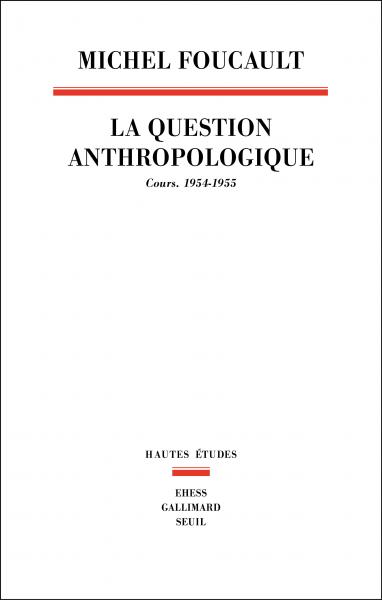
Michel Foucault, La Question Anthropologique, Cours 1954-55, edited by Arianna Sforzini – EHESS/Gallimard/Seuil, June 2022

Michel Foucault, La Question Anthropologique, Cours 1954-55, edited by Arianna Sforzini – EHESS/Gallimard/Seuil, June 2022

Qu’est-ce que l’homme ? Michel Foucault, au mitan des années 1950, consacre une partie de son enseignement, dispensé à l’université de Lille et à l’École normale supérieure, à comprendre comment cette interrogation a traversé et transformé la philosophie. Ces leçons sont rassemblées dans un manuscrit, dont nous proposons ici l’édition complète.
Foucault déroule son parcours en une dramaturgie impeccable. Premier acte : montrer pourquoi la philosophie classique (Descartes, Malebranche, Leibniz) demeurait sourde à cette question. Son idée infinie de « nature » empêchait que l’homme puisse nouer un rapport immédiat à sa propre vérité. Deuxième acte : exposer comment, après le renversement kantien, le point de gravitation de la philosophie moderne, de Feuerbach à Dilthey en passant par Hegel et Marx, devient cet homme vrai qui déploie un monde de significations et de pratiques révélant son essence. Troisième acte : décrire l’éclatement du dispositif anthropologique chez Nietzsche – à travers cette pensée dionysiaque qui, avec la mort de Dieu, proclame l’effacement de l’homme et promet des expériences tragiques de vérité. Pour la première et dernière fois, on trouve sous la plume foucaldienne une présentation longue, précise et percutante de la philosophie de Nietzsche.
Dans ce cours, Foucault lance en même temps des flèches vers son oeuvre à venir. On y discerne déjà l’entreprise critique qui s’épanouit en 1966 dans Les Mots et les Choses : thèse d’une configuration anthropologique de la modernité, annonce d’une mort de l’homme après son invention toute récente, programme d’une archéologie des sciences humaines. Juste avant son départ pour la Suède, Foucault surgit à la verticale de son propre destin philosophique.

Posted in Michel Foucault | Leave a comment

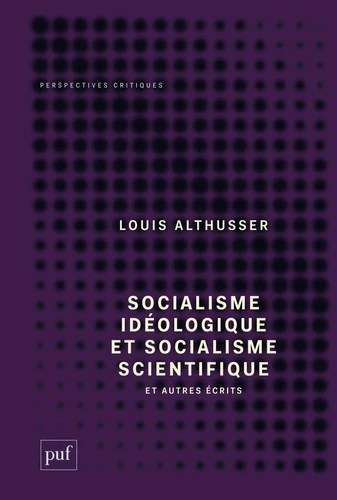
Louis Althusser, Socialisme idéologique et socialisme scientifique et autres textes – edited by G.M. Goshgarian, PUF, August 2022

Louis Althusser, Socialisme idéologique et socialisme scientifique et autres textes – edited by G.M. Goshgarian, PUF, August 2022

En 1966, Louis Althusser a 48 ans. Auréolé de l’énorme succès de Pour Marx et de Lire ” Le Capital “, il se lance dans une vaste recherche sur la possibilité d’une théorisation de l’idéologie. La thèse qu’il avance se résume en une phrase : l’idéologie est une pratique matérielle dont les fondements sont pour l’essentiel inconscients. L’homme étant un ” animal idéologique “, il ne peut pas être question d’échapper à l’idéologie. 
Mais il est possible d’élaborer un savoir scientifique de l’idéologique et du réel, susceptible de nourrir un projet d’émancipation sociale dont le but serait la création d’une société sans classes. Dans Socialisme idéologique et socialisme scientifique et autres textes, le philosophe jette ainsi les linéaments d’une théorie de la pratique politique qui renoue avec l’horizon révolutionnaire alors abandonné par le PCF – un horizon qui devra passer, selon lui, par la lutte idéologique avant toute autre. 
A l’heure où l’idéologie a pris, par la grâce des réseaux sociaux et des médias de masse, un visage ubiquitaire, ses enseignements sont plus vitaux que jamais.

Posted in Louis Althusser, Uncategorized | Leave a comment

Jacques Derrida, Penser, c’est dire non – Seuil, June 2022

Jacques Derrida, Penser, c’est dire non – Seuil, June 2022

Durant l’année scolaire 1960-1961, Jacques Derrida, alors assistant en philosophie générale et logique à La Sorbonne, entreprend une lecture de la phrase d’Alain, « Penser, c’est dire non ». Ce cours magistral en quatre séances donne déjà à lire les marques d’une écriture déconstructrice à venir. Il s’inscrit aussi dans une pensée du « oui non », de ce qu’est fondamentalement la pensée, et de ce qu’elle dit quand elle dit oui, non. Des questions qui servent de points d’appui pédagogiques récurrents à Derrida dans les années 1960 – décennie de pensée effervescente en France.

À la lecture de cette présente édition, ces questions apparaissent aussi comme ayant toujours déjà été fondamentales à la pensée derridienne. Elles gardent aujourd’hui toute leur pertinence, à une époque où il est souvent difficile de dire la différence entre pensée et croyance. Entièrement inédit et rédigé à la main par Derrida pendant la guerre d’indépendance de son pays de naissance, l’Algérie, Penser, c’est dire non est le fruit d’un défi éditorial de plusieurs années qui donne lieu aujourd’hui à la publication d’un des textes les plus anciens du corpus derridien paru à ce jour.

Posted in Jacques Derrida, Uncategorized | Leave a comment

Milton Santos, The Nature of Space and For a New Geography, with a commentary at Progress in Political Economy [and discussion at New Books Network]

Updated with a link to a discussion at New Books Network with Archie Davis. https://newbooksnetwork.com/for-a-new-geography Thanks to dmf for this link.

stuartelden's avatarProgressive Geographies

Milton Santos,The Nature of Space, translated by Brenda Baletti (Duke, 2021).

InThe Nature of Space, pioneering Afro-Brazilian geographer Milton Santos attends to globalization writ large and how local and global orders intersect in the construction of space. Santos offers a theory of human space based on relationships between time and ontology. He argues that when geographers consider the inseparability of time and space, they can then transcend fragmented realities and partial truths without trying to theorize their way around them. Based on these premises, Santos examines the role of space, which he defines as indissoluble systems of objects and systems of actions in social processes, while providing a geographic contribution to the production of a critical social theory.

Milton Santos, For a New Geography, translated by Archie Davis (Minnesota, 2021)

Originally published in 1978 in Portuguese, For a New Geography is a milestone in the history of…

View original post 185 more words

Posted in Uncategorized | Leave a comment

Foucault’s Historical Imaginary – Western Sydney University, 14 June 2022, online

Foucault’s Historical Imaginary – Western Sydney University, 14 June 2022, online. Free, but registration required. 6-8pm AEST; 9-11am BST.

A discussion of Foucault’s historical method with Alison Downham Moore, Mark G. E. Kelly, and Stuart Elden.

Despite the enormous influence of Michel Foucault’s thought in the contemporary humanities and social sciences, including in history, and the clearly historical nature of his most widely read works, Foucault’s historical method remains relatively under-explored. Associate Professor Alison Downham Moore and Associate Professor Mark G. E. Kelly (both of Western Sydney University) and Professor Stuart Elden (Warwick University) invite you to a preliminary public discussion, inaugurating a joint project to map Foucault’s historical imaginary.

Posted in Conferences, Michel Foucault, Uncategorized | 4 Comments

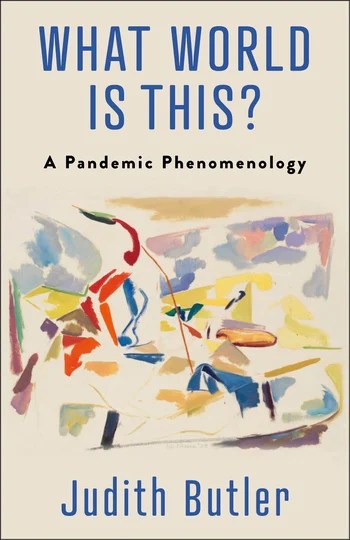
Judith Butler, What World is this? A Pandemic Psychology – Columbia University Press, November 2022

Judith Butler, What World is this? A Pandemic Psychology – Columbia University Press, November 2022

The pandemic compels us to ask fundamental questions about our place in the world: the many ways humans rely on one another, how we vitally and sometimes fatally breathe the same air, share the surfaces of the earth, and exist in proximity to other porous creatures in order to live in a social world. What we require to live can also imperil our lives. How do we think from, and about, this common bind?

Judith Butler shows how COVID-19 and all its consequences—political, social, ecological, economic—have challenged us to reconsider the sense of the world that such disasters bring about. Drawing on the work of Max Scheler, Maurice Merleau-Ponty, and critical feminist phenomenology, Butler illuminates the conditions in which we seek to make sense of our disorientation, precarity, and social bonds. What World Is This? offers a new account of interdependency in which touching and breathing, capacities that amid a viral outbreak can threaten life itself, challenge the boundaries of the body and selfhood. Criticizing notions of unlimited personal liberty and the killing forces of racism, sexism, and classism, this book suggests that the pandemic illuminates the potential of shared vulnerabilities as well as the injustice of pervasive inequalities.

Exposing and opposing forms of injustice that deny the essential interrelationship of living creatures, Butler argues for a radical social equality and advocates modes of resistance that seek to establish new conditions of livability and a new sense of a shared world.

Posted in Judith Butler, Uncategorized | Leave a comment

Philology and Microhistory: A Conversation with Carlo Ginzburg by Islam Dayeh (open access)

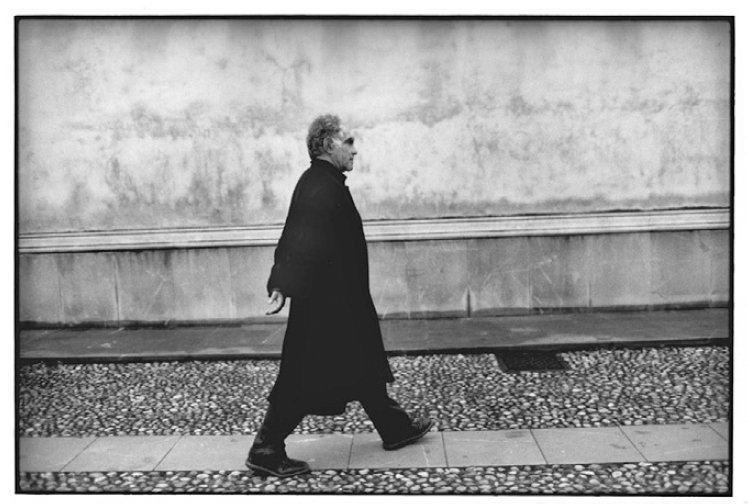
Carlo Ginzburg. Image courtesy of the author. Photo copyright: Danilo De Marco.

Philology and Microhistory: A Conversation with Carlo Ginzburg by Islam Dayeh 

In this Philological Conversation, Carlo Ginzburg reflects on the place of philology in his work and explores the connections between philology, microhistory, and casuistry. We talk about the people who inspired his early thinking, including his father Leone Ginzburg, his mother Natalia, and his grandfather, moving on to Erich Auerbach, Leo Spitzer, and Sebastiano Timpanaro. We discuss the ethical and political implications of his research and reflect on the power of philology to give voice to the marginalized and suppressed. The conversation, which was edited for readability, took place during the Corona pandemic over three meetings via Zoom on July 13, September 10, and September 17, 2021. A preview of the conversation is here, and the full text can be read in the journal Philological Encounters, here.

Posted in Carlo Ginzburg, Uncategorized | Leave a comment

Robert J. Mayhew (ed.), Debating Malthus: A Documentary Reader on Population, Resources and the Environment – University of Washington Press, May 2022

Robert J. Mayhew (ed.), Debating Malthus: A Documentary Reader on Population, Resources and the Environment – University of Washington Press, May 2022

For centuries, thinking about the earth’s increasing human population has been tied to environmental ideas and political action. This highly teachable collection of contextualized primary sources allows students to follow European and North American discussions about intertwined and evolving concepts of population, resources, and the natural environment from early contexts in the sixteenth century right through to the present day.

Edited and introduced by Robert J. Mayhew, a noted biographer of Thomas Robert Malthus—whose Essay on the Principle of Population (1798), excerpted here, is an influential and controversial take on the topic—this volume explores themes including evolution, eugenics, war, social justice, birth control, environmental Armageddon, and climate change. Other responses to the idea of new “population bombs” are represented here by radical feminist work, by Indigenous views of the population-environment nexus, and by intersectional race-gender approaches. By learning the patterns of this discourse, students will be better able to critically evaluate historical conversations as well as contemporary debates.

Posted in Uncategorized | Leave a comment

Patrick Gamsby, Henri Lefebvre, Boredom, and Everyday Life – Lexington Books, September 2022

Patrick Gamsby, Henri Lefebvre, Boredom, and Everyday Life – Lexington Books, September 2022

Just an expensive hardback listed at the moment, unfortunately.

Henri Lefebvre, Boredom, and Everyday Life culls together the scattered fragments of Henri Lefebvre’s (1901–1991) unrealized sociology of boredom. In assembling these fragments, sprinkled through Lefebvre’s vast oeuvre, Patrick Gamsby constructs the core elements of Lefebvre’s latent theory of boredom. Themes of time (modernity, everyday), space (urban, suburban), and mass culture (culture industry, industry culture) are explored throughout the book, unveiling a concealed dialectical movement at work with the experience of boredom. In analyzing at the dialectic of boredom, Gamsby argues that Lefebvre’s project of a critique of everyday life is key for making sense of the linkages between boredom and everyday life in the modern world.

Posted in Henri Lefebvre, Uncategorized | 1 Comment