Books received – Rose, Balibar, Martinet, Lévi-Strauss, Harker, Dumézil

Books for the Foucault research, along with a few in recompense for review work for Verso, and Christopher Harker, Spacing Debt: Obligations, Violence, and Endurance in Ramallah, Palestine, sent by Duke University Press, and the new translation of Claude Lévi-Strauss, Wild Thought.

Posted in Claude Lévi-Strauss, Etienne Balibar, Georges Dumézil, Karl Marx, Michel Foucault, The Archaeology of Foucault, Uncategorized | Leave a comment

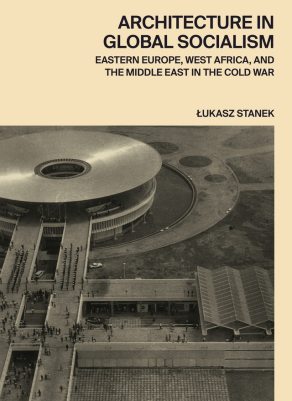
Łukasz Stanek, Architecture in Global Socialism: Eastern Europe, West Africa, and the Middle East in the Cold War – Princeton University Press, January 2020 – discussion at New Books Network

Łukasz Stanek, Architecture in Global Socialism: Eastern Europe, West Africa, and the Middle East in the Cold War – Princeton University Press, January 2020

Discussion at New Books Network with Sharika Crawford

In the course of the Cold War, architects, planners, and construction companies from socialist Eastern Europe engaged in a vibrant collaboration with those in West Africa and the Middle East in order to bring modernization to the developing world. Architecture in Global Socialism: Eastern Europe, West Africa, and the Middle East in the Cold War (Princeton UP, 2020) shows how their collaboration reshaped five cities in the Global South: Accra, Lagos, Baghdad, Abu Dhabi, and Kuwait City.

Łukasz Stanek describes how local authorities and professionals in these cities drew on Soviet prefabrication systems, Hungarian and Polish planning methods, Yugoslav and Bulgarian construction materials, Romanian and East German standard designs, and manual laborers from across Eastern Europe. He explores how the socialist development path was adapted to tropical conditions in Ghana in the 1960s, and how Eastern European architectural traditions were given new life in 1970s Nigeria. He looks at how the differences between socialist foreign trade and the emerging global construction market were exploited in the Middle East in the closing decades of the Cold War. Stanek demonstrates how these and other practices of global cooperation by socialist countries—what he calls socialist worldmaking—left their enduring mark on urban landscapes in the postcolonial world.

Featuring an extensive collection of previously unpublished images, Architecture in Global Socialismdraws on original archival research on four continents and a wealth of in-depth interviews. This incisive book presents a new understanding of global urbanization and its architecture through the lens of socialist internationalism, challenging long-held notions about modernization and development in the Global South.

If you are curious to see some of the architectural projects discussed in Stanek’s award-winning book, please review some images here. 

Sharika Crawford is an associate professor of history at the United States Naval Academy in Annapolis and the author of The Last Turtlemen of the Caribbean: Waterscapes of Labor, Conservation, and Boundary Making (University of North Carolina Press, 2020).

https://megaphone.link/NBN4432033177

Posted in Uncategorized | Leave a comment

Jean Hyppolite’s teaching at the Collège de France – ‘the history of philosophical thought’

The chair Foucault held at the Collège de France was previously occupied by Jean Hyppolite. Hyppolite had been Foucault’s teacher, was supervisor of his diploma thesis on Hegel and rapporteur for his secondary doctoral thesis on Kant’s Anthropology. Hyppolite succeeded Martial Gueroult in this chair, which had been in the history of philosophy [actually ‘History and Technology of Philosophical Systems’], but which was retitled by Hyppolite as a chair in the history of philosophical thought. Foucault would retitle the chair the history of systems of thought.

Hyppolite only held the Collège de France chair for five years, giving his inaugural lecture in December 1963 but dying at just 61 in October 1968. His inaugural lecture was published in 1964 and was reprinted in Figures de la pensée philosophique – a two volume posthumous collection edited by Dina Dreyfus in 1971.

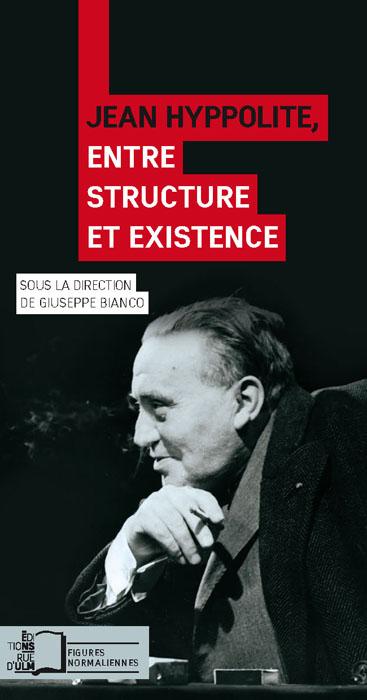
Hyppolite’s own teaching at the Collège de France is not listed on the Collège de France website, which is usually very useful. Summaries of courses are traditionally published in the Annuaire du Collège de France, but I can’t currently get to a library to look at these. Fortunately the summaries are reprinted in Giuseppe Bianco (ed.), Jean Hyppolite: Entre Structure et Existence – a book which has a range of interesting essays on Hyppolite, including by Étienne Balibar, Pierre Macherey, Alain Badiou, Stefanos Geroulanos and others.

All of the reports simply give the name of his chair as the title (which is not uncommon in these listings), but each of them gives an indication of the course titles in the text. Usually he gave two courses a year – Foucault usually gave a single course and a seminar alongside. So here are the details of titles and topics Hyppolite gives, in case anyone else is interested:

1963-64: Sens et existence (mainly on Gaston Bachelard) and Études sur Hegel et Fichte

1964-65: Sens et formes (on Husserl’s Logical Investigations) and a continuation of studies on Hegel and Fichte, though he notes it was mainly on Hegel

1965-66: Sens et temps, which looks at Bergson, Husserl and Heidegger; and a continuation of the study of Hegel and Fichte

1966-67: No title given, but indicates it was “l’étude de la temporalité chez Husserl”; and “une introduction au Discours logique de Hegel”

1967-68: “Un cours sur «le savoir absolu» dans la Phénoménologie de l’esprit de Hegel”, a seminar on “le discours logique de Hegel”, and a course on “l’information et à la communication”.

The seminar from the final year was published posthumously as Hegel et la pensée moderne, edited by Jacques d’Hondt in 1970 and containing contributions by Jacques Derrida and Louis Althusser, among others. But d’Hondt says that Hyppolite’s own contributions on ‘absolute knowledge’ could not be included as the notes were not found.

His teaching is important for giving an indication for what he was working on in his final years, since all Hyppolite’s major works, most of which were on Hegel, precede his appointment to the Collège. I have visited the Hyppolite archive at the École normal supérieure for my Foucault work, though didn’t explore how much of his teaching materials remain. The five annual summaries are interesting in themselves, and only amount to about 30 pages in Bianco’s collection, and as far as I’m aware haven’t appeared in English, so this might be an interesting translation project for someone to take on.

Update March 2024: I’ve corrected the title of Gueroult’s chair to the more accurate ‘History and Technology of Philosophical Systems’. I’m currently interested in this question again as I’m looking into how Gueroult was elected, defeating Alexandre Koyré and Henri Gouhier, who were also being proposed for chairs in 1951.
Posted in Alain Badiou, Etienne Balibar, Gaston Bachelard, Georg Wilhelm Friedrich Hegel, Immanuel Kant, Jacques Derrida, Jean Hyppolite, Louis Althusser, Michel Foucault, Pierre Macherey | 3 Comments

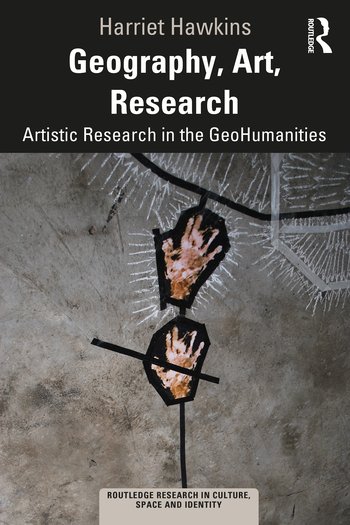
Harriet Hawkins, Geography, Art, Research: Artistic Research in the GeoHumanities – Routledge, 2021

Harriet Hawkins, Geography, Art, Research: Artistic Research in the GeoHumanities – Routledge, 2021

This book explores the intersection of geographical knowledge and artistic research in terms of both creative methods and practice-based research. In doing so it brings together geography’s ‘creative turn’ with the art world’s ‘research turn.’

Based on a decade and a half of ethnographic stories of working at the intersection of creative arts practices and geographical research, this book offers a much-needed critical account of these forms of knowledge production. Adopting a geohumanities approach to investigating how these forms of knowledge are produced, consumed, and circulated, it queries what imaginaries and practices of the key sites of knowledge making (including the field, the artist’s studio, the PhD thesis, and the exhibition) emerge and how these might challenge existing understandings of these locations. Inspired by the geographies of science and knowledge, art history and theory, and accounts of working within and beyond disciplines, this book seeks to understand the geographies of research at the intersection of geography and creative arts practices, how these geographies challenge existing understandings of these disciplines and practices, and what they might contribute to our wider discussions of working beyond disciplines, including through artistic research.

This book offers a timely contribution to the emerging fields of artistic research and geohumanities, and will appeal to undergraduate and postgraduate students and researchers.

Posted in Uncategorized | 1 Comment

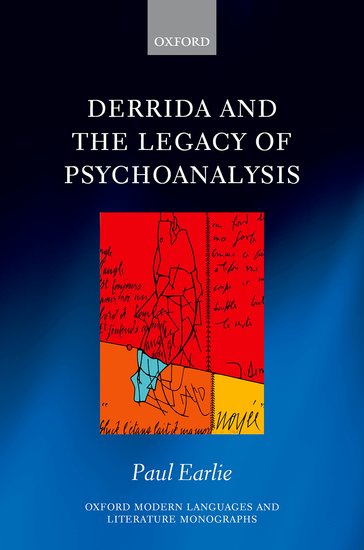
Paul Earlie, Derrida and the Legacy of Psychoanalysis – Oxford University Press, February 2021

Paul Earlie, Derrida and the Legacy of Psychoanalysis – Oxford University Press, February 2021

In Derrida and the Legacy of Psychoanalysis, Paul Earlie offers a detailed account of the importance of psychoanalysis in Derrida’s thought. Based on close readings of texts from the whole of his career, including less well-known and previously unpublished material, the title sheds new light on the crucial role of psychoanalysis in shaping Derrida’s response to a number of key questions. These questions range from the psyche’s relationship to technology to the role of fiction and metaphor in scientific discourse, and from the relationship between memory and the archive to the status of the political in deconstruction. 

Focusing on Freud but proposing new readings of texts by Lacan, Torok and Abraham, Laplanche and Pontalis, amongst other seminal figures in contemporary French thought, Earlie argues that Derrida’s writings on psychoanalysis can also provide an important bridge between deconstruction and the recent materialist turn in the humanities. Challenging a still prevalent ‘textualist’ reading of Derrida’s work, he explores the ongoing contribution of deconstruction and psychoanalysis to pressing issues in critical thought today, from the localizing models of the neurosciences and the omnipresence of digital technology to the politics of affect in an age of terror.

Posted in Uncategorized | Leave a comment

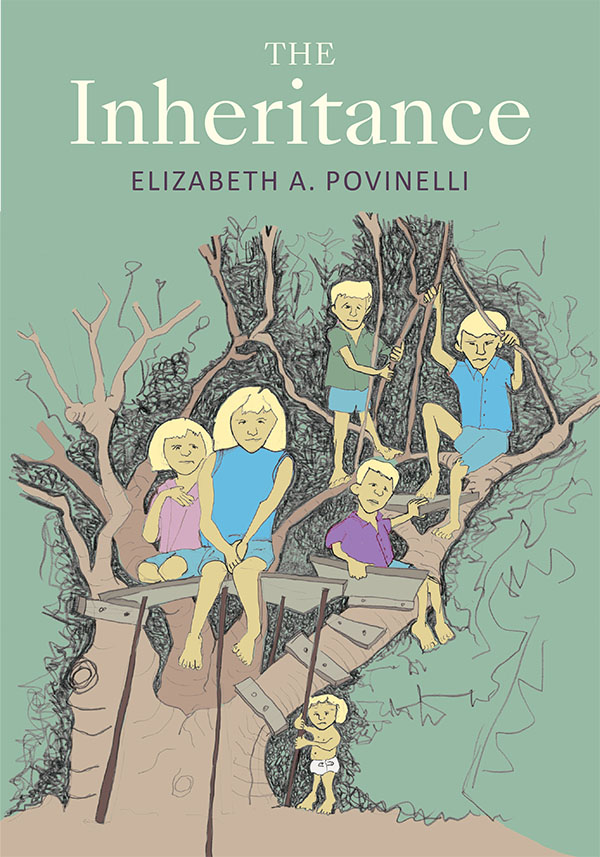
Elizabeth A. Povinelli, The Inheritance – Duke University Press, 2021 (open access Introduction)

Elizabeth A. Povinelli, The Inheritance – Duke University Press, 2021

Elizabeth A. Povinelli’s inheritance was passed down not through blood or soil but through a framed map of Trentino, Alto Adige—the region where family’s ancestral alpine village is found. Far more than a map hanging above the family television, the image featured colors and lines that held in place the memories and values fueling the Povinelli family’s fraught relationships with the village and with each other. In her graphic memoir The Inheritance, Povinelli explores the events, traumas, and powers that divide and define our individual and collective pasts and futures. Weaving together stories of her grandparents’ flight from their village in the early twentieth century to the fortunes of their knife-grinding business in Buffalo, New York, and her own Catholic childhood in a shrinking Louisiana woodlands of the 1960s and 1970s, Povinelli describes the serial patterns of violence, dislocation, racism and structural inequality that have shaped not only her life but the American story. Plumbing the messy relationships among nationality, ethnicity, kinship, religion, and belonging, The Inheritance takes us into the gulf between the facts of history and the stories we tell ourselves to survive and justify them.

“With the understanding of a scholar and the storytelling instincts of a novelist, Elizabeth A. Povinelli has brought a rare degree of scope and insight to the graphic memoir form. Relatively few illustrated works are so complex and insightful, so intricately concerned with families, nationalities, and politics. An extraordinary book.” — Michael Cunningham, author of The Hours

“A melancholy yet often darkly funny reflection on the intersections of biography, geography, kinship, and history, The Inheritance is a genuinely original work that made an impact on this reader and will leave a lasting mark on the field.” — Naisargi N. Dave, author of Queer Activism in India: A Story in the Anthropology of Ethics

The Introduction is available open access here.

Posted in Uncategorized | Leave a comment

Edward Baring, Converts to the Real: Catholicism and the Making of Continental Philosophy – Paris Institute for Critical Thinking Bookaholics #5

Edward Baring, Converts to the Real: Catholicism and the Making of Continental Philosophy – Paris Institute for Critical Thinking Bookaholics #5

Converts to the Real was published by Harvard University Press in 2019.

Our fifth interview is with Edward Baring, intellectual historian (New Jersey, USA) by Kristof K.P. Vanhoutte (Basel, Switzerland) Monday, December 21, 2020

Posted in Uncategorized | Leave a comment

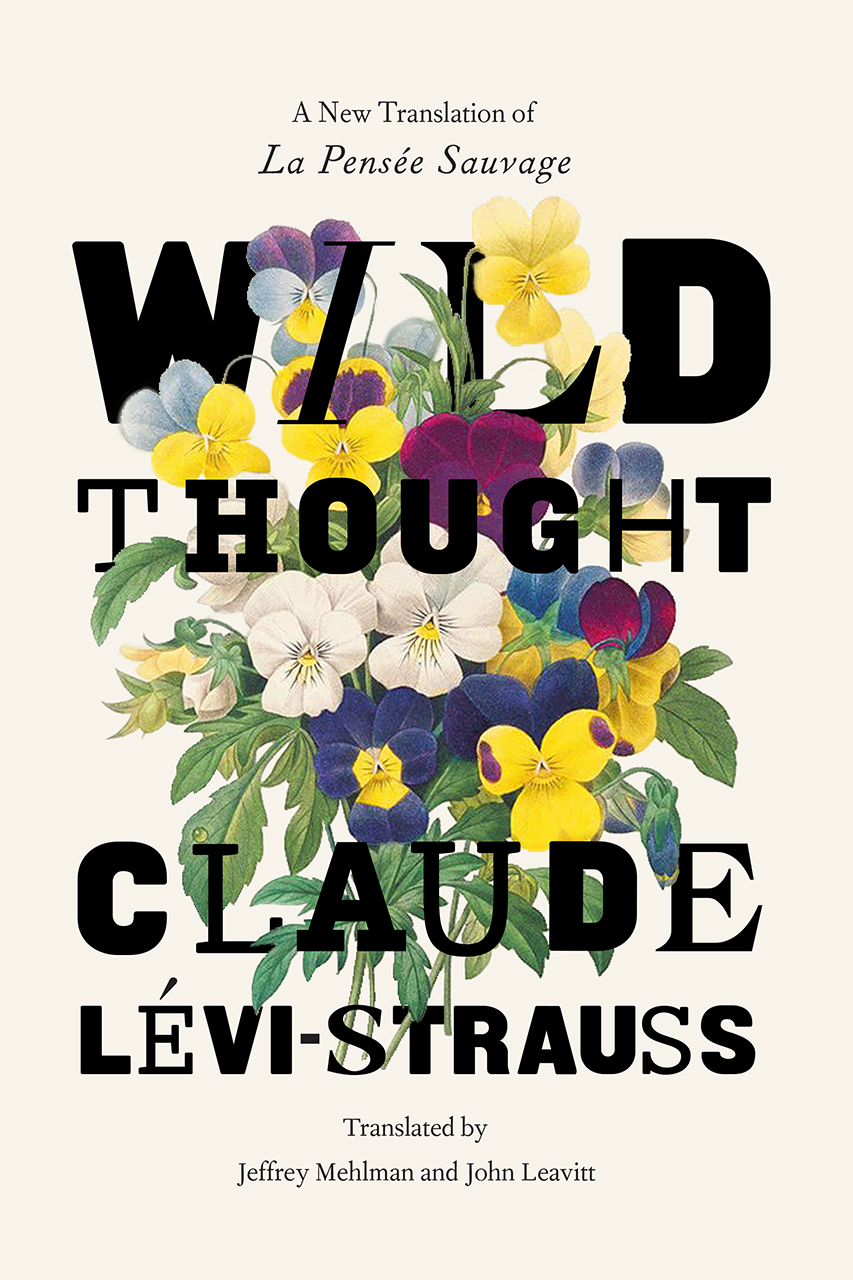
Claude Lévi-Strauss, Wild Thought – a new translation of La pensée sauvage – University of Chicago Press, February 2021 (now published)

Now published – and the translator’s Introduction is available here

stuartelden's avatarProgressive Geographies

9780226413082Claude Lévi-Strauss, Wild Thought – a new translation of La pensée sauvage – translated by Jeffrey Mehlman and John Leavitt, University of Chicago Press, December 2020 [update: now listed as February 2021]

Perhaps the most influential anthropologist of his generation, Claude Lévi-Strauss left a profound mark on the development of twentieth-century thought, equal to that of phenomenology and existentialism. Through a fertile mixture of insights gleaned from linguistics and from sociology and ethnology, Lévi-Strauss elaborated his theory of structural unity in culture and became the preeminent representative of structural anthropology. La Pensée sauvage, published in French in 1962, was his crowning achievement. Ranging over philosophies, historical periods, and human societies, it challenged the prevailing assumption of the superiority of modern Western culture and sought to explain the unity of human intellection.

Unfortunately titled The Savage Mind when it first published in English in 1966, the original translation nevertheless sparked a…

View original post 62 more words

Posted in Uncategorized | Leave a comment

Christopher Harker, Spacing Debt: Obligations, Violence, and Endurance in Ramallah, Palestine – Duke University Press, January 2021 (now published and open access introduction)

Christopher Harker, Spacing Debt: Obligations, Violence, and Endurance in Ramallah, Palestine – Duke University Press, January 2021

In Spacing Debt Christopher Harker demonstrates that financial debt is as much a spatial phenomenon as it is a temporal and social one. Harker traces the emergence of debt in Ramallah after 2008 as part of the financialization of the Palestinian economy under Israeli settler colonialism. Debt contributes to processes through which Palestinians are kept economically unstable and subordinate. He draws extensively on residents’ accounts of living with the explosion of personal debt to highlight the entanglement of consumer credit with other obligatory relations among family, friends, and institutions. Harker offers a new geographical theorization of debt, showing how debt affects urban space, including the movement of bodies through the city, localized economies, and the political violence associated with occupation. Bringing cultural and urban imaginaries into conversation with monetized debt, Harker shows how debt itself becomes a slow violence embedded into the everyday lives of citizens. However, debt is also a means through which Palestinians practice endurance, creatively adapting to life under occupation.

“The first in-depth ethnographic research on debt formation in the contemporary Palestinian context, this groundbreaking work proposes a host of new ways for social geographers to rethink debt at multiple scales. Spacing Debt ambitiously engages theoretical debates across a wide array of disciplinary approaches and effectively links it with fascinating and carefully treated ethnographic cases and interview materials.” — Deborah James, author of Money from Nothing: Indebtedness and Aspiration in South Africa

The Introduction is open access here

Posted in Uncategorized | Leave a comment

Etienne Balibar, “Critical Reflections on the New Definition of the Human Species”, Theory in Crisis seminar, 19 February 2021

Etienne Balibar, “Critical Reflections on the New Definition of the Human Species“, Theory in Crisis seminar, 19 February 2021 , 4:00PM – 6:00PM (CET) 

What is the role of critical theory today and who is it for? What kind of maps can theory provide in the context of entrenched capitalist crisis? These are some of the questions posed by this seminar series. 

In the aftermath of various mutations of twentieth-century ‘critical theory’ (Frankfurt School, ‘French Theory’, etc.), proponents of ‘postcritique’ have argued that critical theory has ‘run out of steam’. Instead, this seminar series starts from the premise that 21st-century crisis has also generated dynamic new ways of reconsidering these questions. A critical theory of the present is necessarily a crisis theory. 

In this session, Etienne Balibar will give a talk entitled ‘Critical Reflections on the New Definition of the Human Species’: 

The pandemic is crystallizing a new understanding of the Human as a “Species-being”, as well as the very category of the “species” itself, which connects biological, medical, anthropological definitions. A new material unity, a new commonality with other species, but also a destructive character and a rising to the extremes of anthropological differences themselves. As a consequence, biopolitics, cosmopolitics, and necropolitics become a single problem, which calls for a genealogy and a critical reflection  

Etienne Balibar teaches at Columbia every Fall semester. He is Professor Emeritus of moral and political philosophy at Université de Paris X – Nanterre and Professor Emeritus of Humanities at the University of California, Irvine. He also holds a part-time Anniversary Chair in Modern European Philosophy at Kingston University, London. He has published widely in the areas of epistemology, Marxist philosophy, and moral and political philosophy in general. His works include Lire le Capital (with Louis Althusser, Pierre Macherey, Jacques Rancière, Roger Establet) (1965); The Philosophy of Marx (1995); Spinoza and politics (1998); Politics and the Other Scene (2002); We, the People of Europe? (2003) ; Equaliberty (2014); Violence and Civility. On the Limits of Political Philosophy (2015); Citizen Subject. Foundations for Philosophical Anthropology (2017); Secularism and Cosmopolitanism (2018).

Part of the Theory in Crisis series – details here

Posted in Etienne Balibar | Leave a comment