
Undisciplined podcast – Nico Buitendag
Episode 7: Politics of Movement interview with Thomas Nail
The other interviews in this series can either be found on the Soundcloud page or Youtube – Simon Springer, Sandro Mezzadra, and others.
Undisciplined podcast – Nico Buitendag
Episode 7: Politics of Movement interview with Thomas Nail
The other interviews in this series can either be found on the Soundcloud page or Youtube – Simon Springer, Sandro Mezzadra, and others.
Historical Materialism Seventeenth Annual Conference
Survival Pending Revolution:
Historical Materialism in a Pandemic Age*
12-15 November 2020
Central LondonDeadline for abstracts: 1 June 2020
https://conference.historicalmaterialism.org/It is a commonplace in the left’s theoretical imaginary that crises have a revelatory function, as hitherto repressed antagonisms and marginalised contradictions come to the fore. With everyday life across most of the planet in conditions of sequester and the circuits of capital rudely halted by the SARS-CoV2/Covid-19 pandemic, the secular damage to social reproduction and human survival wreaked by predatory austerity regimes is daily manifest in harrowing reports from the clinical frontlines. Society’s reliance on the reproductive and repressive capacities of the state is writ large, yet shadowed by the often malevolent incompetence of capitalist governments, as well as the rich opportunities for the consolidation of authoritarianism offered by a global public health emergency. At the same time, many of the social implications of the pandemic – implicating mobility, access to health and social care – long pre-existed the outbreak, as a long tradition of disability studies and struggles has demonstrated. From the sudden discovery of the social centrality of precarious and proletarianized care and service work to the sudden irruption of prisons into public consciousness, from the recrudescence of xenophobic fantasies to the emergence of multiple forms of social solidarity, the pandemic is foregrounding many of the critical dimensions of our present, and eliciting political transformations that still remain radically under-determined.
This year’s annual Historical Materialism Conference invites papers and panels that seek – speculatively, experimentally, concretely – to explore how critical Marxist theory and radical practice can respond to the potentially profound changes that the pandemic is occasioning. While clichéd theoretical wisdom will argue that Marxism has failed to confront the centrality of the ‘politics of life’ to capitalist modernity, that it suffers a kind of biopolitical deficit, we think it is necessary to recover and foreground the rich seams of ecological, epidemiological and feminist Marxisms that have long attended to the nexus of nature, health and capitalist development and its articulation along axes of gender, sexuality, race, ability and class. But it is also imperative to think through and ‘scale up’ the revolutionary insights that have emerged organically out of anti-capitalist practices of, so to speak, biopolitics from below – the experiments in dual biopower through community health programmes which the Black Panthers once crystallised under the resonant slogan ‘survival pending revolution’.* The editorial board of Historical Materialism recognises that the ongoing pandemic has rendered all planning uncertain. It is by no means guaranteed that universities in the UK and elsewhere will be open as usual in the Autumn term, nor can we calculate the personal, financial and material toll of the current public health emergency on comrades’ ability to participate in the conference. We recognise, however, that the conference has become an important point of reference, and a kind of community, for many of us, and hope to be able to hold it in some form. We thus remain flexible in terms of the dates and modality of the conference (for instance, enabling more distanced participation than in the past) and will continuously review the situation and communicate with the HM community.
As in previous years, the conference will incorporate a number of streams in addition to the conference theme (in previous years these have included Marxism and Feminism; Race & Capital; Marxism, Sexuality and Political Economy; Utopia; World Literature; Philosophy, etc. – CFPs to be circulated soon) as well as individual papers on a wide range of subjects – further themes related to the general call about which we welcome papers include:
o Epidemiology and historical materialism
o Formation of the modern state and history of epidemics
o Is a communist biopolitics possible?
o Authoritarianisms and state responses to the pandemic
o Contemporary anti-capitalist movements in a time of ‘social distancing’
o Covid-19 and neoliberal ‘shock doctrines’
o Racism, xenophobia and pandemics
o Class struggles in the pandemic
o The EU austerity regime and conflicts over ‘coronabonds’
o Radical and social histories of movements around health
o Epidemics and states of exception/emergency
o Biogeography and the geography of capital
o Historical materialist theories of ‘spillover’
o Disability, power and the pandemicFor all enquiries, please contact: historicalmaterialism@soas.ac.uk
I’ve done some updating to the list of works in Georges Bataille’s Oeuvres complètes and other French collections and the English translations.
This includes some links to books, a bit of detail on texts in The College of Sociology not in the Oeuvres, and the inclusion of Bataille’s co-translation of Léon Chestov, L’Idée de bien chez Tolstoi et Nietzsche: Philosophie et prédication.
This work is still in progress – I have draft notes on the articles in Volume I, and on the whole of Vols II, XI and XII. I’ll add these soon, hopefully.
There are two texts in English where I’ve not yet been able to identify the French source.
Any help on these, or additions and corrections on the main listing, would be much appreciated.

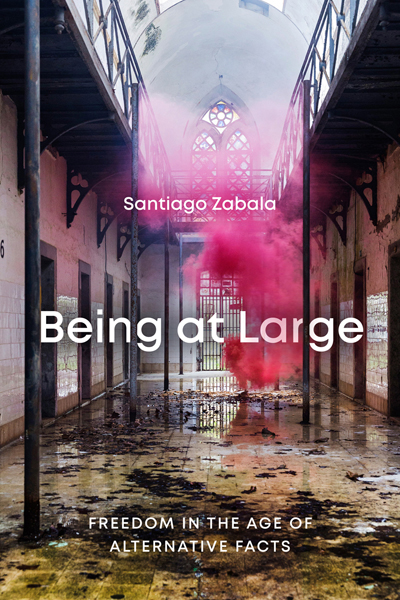 Santiago Zabala, Being at Large: Freedom in the Age of Alternative Facts – McGill-Queen’s University Press, April 2020
Politicians and philosophers presenting themselves as the ultimate bearers of truth and reality have created unprecedented technological, cultural, and political framings. This new order conspires to undermine the interpretive practices of open-ended critique, normalizing a sense of threat to preserve control. The greatest emergency has become the absence of emergencies.
Tracing an intellectual alliance between academics such as Jordan Peterson and Christina Hoff Sommers and right-wing populist politicians such as Donald Trump and Marine Le Pen, this book denounces framings that make a claim to objectivity. With the help of contemporary thinkers including Bruno Latour, Judith Butler, and Giorgio Agamben, as well as discussion of the Cambridge Analytica whistleblower Christopher Wylie and the emergency of biodiversity loss due to climate change, Santiago Zabala illustrates that the twenty-first-century question is not whether we can be free, but how to be at large – unconstrained by the new realist order.
Being at Large demonstrates the anarchic power of hermeneutics, calling for interpretive disruptions of the authoritarian narrative as a way of reclaiming freedom in the age of alternative facts.
Duncan Bell, Dreamworlds of Race: Empire and the Utopian Destiny of Anglo-America – Princeton University Press, August 2020
Between the late nineteenth century and the First World War an ocean-spanning network of prominent individuals advocated the unification of Britain and the United States. They dreamt of the final consolidation of the Angloworld. Scholars, journalists, politicians, businessmen, and science fiction writers invested the “Anglo-Saxons” with extraordinary power. The most ambitious hailed them as a people destined to bring peace and justice to the earth. More modest visions still imagined them as likely to shape the twentieth century. Dreamworlds of Race explores this remarkable moment in the intellectual history of racial domination, political utopianism, and world order.
Focusing on a quartet of extraordinary figures—Andrew Carnegie, W. T. Stead, Cecil J. Rhodes, and H. G. Wells—Duncan Bell shows how unionists on both sides of the Atlantic reimagined citizenship, empire, patriotism, race, war, and peace in their quest to secure global supremacy. Yet even as they dreamt of an Anglo-dominated world, the unionists disagreed over the meaning of race, the legitimacy of imperialism, the nature of political belonging, and the ultimate form and purpose of unification. The racial dreamworld was an object of competing claims and fantasies. Exploring speculative fiction as well as more conventional forms of political writing, Bell reads unionist arguments as expressions of the utopianism circulating through fin-de-siècle Anglo-American culture, and juxtaposes them with pan-Africanist critiques of racial domination and late twentieth-century fictional narratives of Anglo-American empire.
Tracing how intellectual elites promoted an ambitious project of political and racial unification between Britain and the United States, Dreamworlds of Race analyzes ideas of empire and world order that reverberate to this day.“With impeccable scholarship, Dreamworlds of Race is destined to be a primary point of reference for those working in the history of international thought.”—Stuart Jones, University of Manchester
“Thoroughly researched, Dreamworlds of Race illuminates material that has otherwise been ignored but clearly deserves closer attention. This superb book leaves readers with a much clearer picture of the breadth and complexity of transatlantic fin-de-siècle thought.”—Jeanne Morefield, University of Birmingham
Aga Khan Program Lecture: Laleh Khalili – ‘Tankers, Tycoons, and the Making of Modern Regimes of Law, Labour, and Finance‘ – lecture done remotely because of the current situation.
Excellent recent research on the politics of containerisation and the logic of logistics (Levinson; Cowen; Sekula) has shown how these new modalities of trade have transformed not only the form and extent of circulation of goods but also the processes of production. The argument about logistical forms of capital accumulation trace its begging to the 1950s when containers were invented, and especially to the period after the 1960s, when their usage was normalised during the Vietnam war. However, many of the practices we now associate with containerisation – foremost among them the automation of processes of maritime circulation, and the transformation of urban landscapes around the ports – go back at least two decades before the 1950s, to the legal, engineering, and financial innovations around petroleum tankers. By focusing on the tanker terminals of the Arabian Peninsula since the 1930s and the subsequent burgeoning of tanker-ships plying the trade between the Peninsula and the rest of the world, I will illuminate the radical changes in political economy, labour, law and production the specificities of tanker trade has wrought. This includes early instances of automated workplaces; terminals far enough from port-city centres to isolate them from public scrutiny; and disciplining of workers aboard tanker-ships. Further, the shift in ownership structures and financing of tanker trades over the last one-hundred years either foreshadows or dramatically illuminates the transformations in financial capital itself. Finally, much of lex petrolea, the legal and arbitral corpus that sets the parameter of extraction and circulation of oil, itself provides the ground on which late capitalist legal property regimes are founded.
Laleh Khalili is a Professor of International Politics at Queen Mary University of London, and the author of Heroes and Martyrs of Palestine(Cambridge 2007) and Time in the Shadows: Confinement in Counterinsurgencies (Stanford 2013). Her Sinews of War and Trade, on the politics of maritime infrastructures, is published by Verso.
Update the book has a companion website; and Laleh Khalili has revived her blog in the past few days.

Mainly books by Bataille, but also a volume of Mircea Eliade’s journals, the first book in French on Heidegger, originally published in 1942, and Teo Ballvé’s The Frontier Effect: State Formation and Violence in Colombia. Teo kindly sent a copy of his much-anticipated book; the others were bought second-hand.
 Marta Faustino, Gianfranco Ferraro (eds.), The Late Foucault: Ethical and Political Questions – Bloomsbury, December 2020
Michel Foucault is one of the most important and controversial thinkers of the twentieth century and one of the leading figures in contemporary Western intellectual life and debate. The recent publication of his last lecture courses at the Collège de France (1981-1984), together with the short texts, essays, and interviews from the same period, have sparked new interest in his work, allowing for a new understanding of his philosophical trajectory and challenging several interpretations produced over the last few decades.
In this later phase of his thinking, Foucault deepens and expands the course of his preceding works on the genealogy of subjectivity, while at the same time adding a significant ethical and political dimension to it. His focus on the ancient ethics of care of the self and technologies of self-constitution during this period adds important nuances to his previous positions on power, truth, and subjectivity, shedding new light on his philosophical endeavour as a whole and situating his reflections at the centre of current moral debates.
Focusing on the last stage of Foucault’s thought, this book brings together international scholars to relaunch the critical debate on the significance of Foucault’s so-called “ethical turn” and to discuss the ways in which the perspectives offered by Foucault in this period might help us to unravel modernity, giving us the tools to understand and transform our present, ethically and politically.
 Etienne Balibar, Spinoza, the Transindividual, translated by Mark G. E. Kelly, Edinburgh University Press, September 2020
One of the most important books on Spinoza to appear in the last 30 years, written by one of the foremost living French philosophers
- Includes a rare engagement by Balibar with psychoanalysis and Freud’s social thought
- Offers new readings of Spinoza, a canonical figure in the history of philosophy
- Intervenes in a growing discourse around the notion of transindividuality
Étienne Balibar, one of the foremost living French philosophers, builds on his landmark work Spinoza and Politics with this exploration of Spinoza’s ontology. Balibar situates Spinoza in relation to the major figures of Marx and Freud as a precursor to the more recent French thinker Gilbert Simondon’s concept of the transindividual.
Presenting a crucial development in his thought, Balibar takes the concept of transindividuality beyond Spinoza to show it at work at both the individual and the collective level.
Update: there is a review by Dan Taylor at Marx & Philosophy Review of Books
 I’ve made a start with the project of listing the pieces in Georges Bataille’s Oeuvres complètes and other French collections, along with English translations of these pieces. The page is available here.
It’s not complete – I’ve done 8 of the 12 volumes of the Oeuvres, and part of one other, and listed some of the other French collections I have. This work is certainly made harder without access to libraries in present circumstances, so for a few books I don’t own, I’ve used online sources to fill in details which will later need checking. I know there are some other sources I need to check as well.
The key thing I’ve learned in doing this is that while there are some very good translations of his work, and nearly all of his books in English, it’s been largely thematic (or, less charitably, unsystematic) until the work of SUNY Press and Stuart Kendall in including material in the Oeuvres alongside the major works. With shorter works (mainly in volumes I, II, XI and XII) there are two or sometimes three translations/re-publications of some essays, and many others that have never been translated. It’s those shorter works that need to be added to this listing.
I am sure I have missed things, but I hope what is here is helpful as a start. I have more work to do on the other volumes, which I’ve begun but will post here when complete. Comments, additions, corrections welcome.

