The 2019 Antipode AAG Lecture – Kristin Ross on “The Seventh Wonder of the Zad”

Kristin Ross to give the Antipode lecture at the AAG meeting

Antipode Editorial Office's avatarAntipodeFoundation.org

website banner_dec 1650thAnniv_Logo_color_blacktype

Please join us for the 2019 Antipode American Association of Geographers Lecture on Thursday 4th April between 5:00pm and 6:40pm in the Blue Room, Lobby Level, Omni Shoreham Hotel (2500 Calvert Street NW, Washington, DC 20008).

The Lecture will be followed by a drinks reception sponsored by Antipode’s publisher, Wiley. This will see the return of the Antipode Groovefest with our very own DJ Mod to celebrate 50 years of the journal, 1969-2019.

Geography as conceived by the practitioners and theorists who have been recurrent figures in my work (Reclus, Kropotkin, Gracq) is a means of approaching landscapes with a sensitivity to what state boundaries obscure: unexpected natural foundations and modes of life that spring up below the radar of authority. The occupational movement to block an international airport in western France known as the “zad” is one such landscape. Using the zad (zone à défendre)…

View original post 1,964 more words

Posted in Uncategorized | Leave a comment

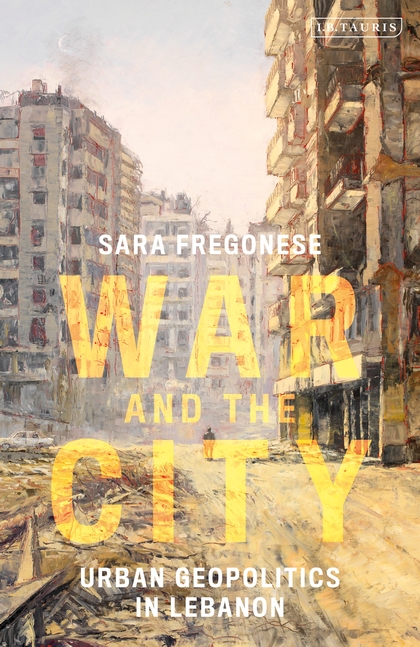
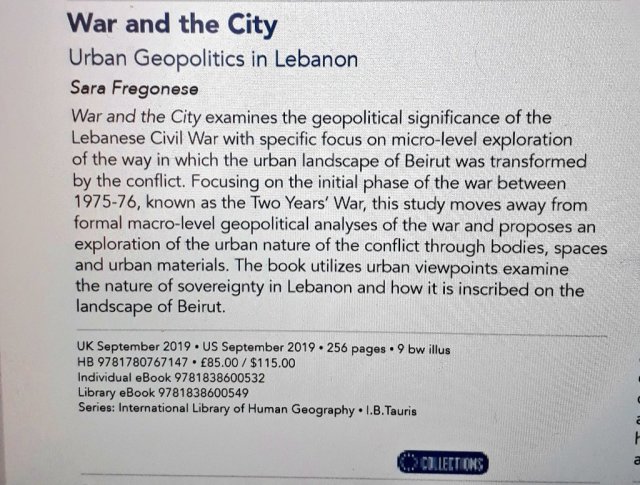
Sara Fregonese, War and the City: Urban Geopolitics in Lebanon – IB Tauris, September 2019

9781780767147Sara Fregonese, War and the City: Urban Geopolitics in Lebanon, IB Tauris, September 2019, afterword by Klaus Dodds

Fregonese.jpg

Posted in Uncategorized | Leave a comment

Keith Jacobs, Neoliberal Housing Policy: An International Perspective – Routledge, May 2019

9781138388468Keith Jacobs, Neoliberal Housing Policy: An International Perspective – Routledge, May 2019

Neoliberal Housing Policy considers some of the most significant housing issues facing the West today, including the increasing commodification of housing; the political economy surrounding homeownership; the role of public housing; the problem of homelessness; the ways that housing accentuates social and economic inequality; and how suburban housing has transformed city life. The empirical focus of the book draws mainly from the US, UK and Australia, with examples to illustrate some of the most important features and trajectories of late capitalism, including the commodification of welfare provision and financialisation, while the examples from other nations serve to highlight the influence of housing policy on more regional- and place-specific processes.

The book shows that developments in housing provision are being shaped by global financial markets and the circuits of capital that transcend the borders of nation states. Whilst considerable differences within nation states exist, many government interventions to improve housing often fall short. Adopting a structuralist approach, the book provides a critical account of the way housing policy accentuates social and economic inequalities and identifies some of the significant convergences in policy across nations states, ultimately offering an explanation as to why so many ‘inequalities’ endure. It will be useful for anyone in professional housing management/social housing programs as well as planning, sociology (social policy), human geography, urban studies and housing studies programs.


Posted in Uncategorized | 1 Comment

Walter Benjamin and Shakespeare symposium, Saturday April 6, 2019, Garrick’s Temple to Shakespeare, Hampton

Benjamin Shakespeare Collage

Walter Benjamin and Shakespeare symposium

Saturday April 6, 2019, Garrick’s Temple to Shakespeare, Hampton

David Garrick built his Shakespeare Temple beside the Thames at Hampton in 1755 as a place where ‘the thinkers of the world’ would meet to reflect on the plays. He hoped Voltaire would come. Now the Kingston Shakespeare Seminar is realising the great actor’s vision, with a series of symposia on Shakespeare in Philosophy.

The first of the 2019 symposia focuses on the German philosopher and cultural critic Walter Benjamin (1892-1940). Confirmed speakers are Hyowon Cho, Julia Ng and Bjorn Quiring.

This event, open to all, will include talks by leading philosophers and Shakespeare scholars, coffee and tea in the riverside garden designed by Capability Brown, and lunch at the historic Bell Inn. Tickets are £20, all profits go to supporting the Temple.

Book your tickets at: benjaminandshakespeare.eventbrite.co.uk

Full programme here

Posted in Uncategorized, Walter Benjamin, William Shakespeare | Leave a comment

Andrew W. Neil, Security as Politics: Beyond the State of Exception – Edinburgh University Press, 2019

9781474450928_1.jpgAndrew W. Neil, Security as Politics: Beyond the State of Exception – Edinburgh University Press, 2019

Uses the perspective of parliamentarians to reassess the relationship between security and politics

Andrew W. Neal argues that while ‘security’ was once an anti-political ‘exception’ in liberal democracies – a black box of secret intelligence and military decision-making at the dark heart of the state – it has now become normalised in professional political life. This represents a direct challenge to critical security studies debates and their core assumption that security is a kind of illiberal and undemocratic ‘anti-politics’.

Using archival research and interviews with politicians, Neal investigates security politics from the 1980s to the present day to show how its meaning and practice have changed over time. In doing so, he develops an original reassessment of the security/politics relationship.

Posted in Uncategorized | Leave a comment

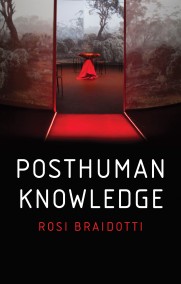
Rosi Braidotti, Posthuman Knowledge – Polity, June 2019

9781509535255-e1538129388919.jpgRosi Braidotti, Posthuman Knowledge – Polity, June 2019

The question of what defines the human, and of what is human about the humanities, have been shaken up by the radical critiques of humanism and the displacement of anthropomorphism that have gained currency in recent years, propelled in part by rapid advances in our knowledge of living systems and of their genetic and algorithmic codes coupled with the global expansion of a knowledge-intensive capitalism.

In Posthuman Knowledge, Rosi Braidotti takes a closer look at the impact of thesedevelopments on three major areas: the constitution of our subjectivity, the general production of knowledge and the practice of the academic humanities. Drawing on feminist, postcolonial and anti-racist theory, she argues that the human was never a neutral category but one always linked to power and privilege. Hence we must move beyond the old dualities in which Man defined himself, beyond the sexualized and racialized others that were excluded from humanity. Posthuman knowledge, as Braidotti understands it, is not so much an alternative form of knowledge as a critical call: a call to build a multi-layered and multi-directional project that displaces anthropocentrism while pursuing the analysis of the discriminatory and violent aspects of human activity and interaction wherever they occur.

Situated between the exhilaration of scientific and technological advances on the one hand and the threat of climate change devastation on the other, the posthuman convergence encourages us to think hard and creatively about what we are in the process of becoming.

Posted in Uncategorized | Leave a comment

Books received – Heidegger, Jazeel and Legg, Duarte, Delay, Lentz, Baganato, Ferrari and Pasqual

books.jpg

The latest volume of the Heidegger Gesamtausgabe, Vier Hefte I und II, Tariq Jazeel and Stephen Legg (eds.), Subaltern Geographies, Fábio Duarte, Space, Place and Territory, Steven Delay, Phenomenology in France, Christian C. Lentz, Contested Territory: Ðien Biên Phu and the Making of Northwest Vietnam, and Andrea Bagnato, Marco Ferrari and Elisa Pasqual, A Moving Border – Alpine Cartographies of Climate Change.

Steve kindly sent a copy of his book, the Routledge ones are recompense for review work, and I endorsed Christian Lentz’s excellent book. I have a chapter in A Moving Border – which is visually stunning.

Posted in Martin Heidegger, terrain, Territory, Uncategorized | 1 Comment

David Farrell Krell, The Cudgel and the Caress: Reflections on Cruelty and Tenderness – SUNY Press, March 2019

63943_cov.jpgDavid Farrell Krell, The Cudgel and the Caress: Reflections on Cruelty and Tenderness – SUNY Press, 2019

I shared news of Krell’s recent The Sea: A Philosophical Encounter a couple of days ago. Thanks to Ron Sexton for commenting that he has another new book out. Currently only in expensive hardback and e-book, but SUNY usually do paperback fairly soon. The first chapter is available here.

Offers philosophical and psychological reflections on cruelty and tenderness.

The Cudgel and the Caress explores the enduring significance of tenderness and cruelty in a range of works across philosophy, psychoanalysis, and literature. Divided into two parts, the book initially focuses on tenderness, with David Farrell Krell delivering original readings of Homer’s Iliad, Sophocles’s Antigone, and writings by Hölderlin, Hegel, Freud, and Derrida that deal with the importance of tenderness and the tragic consequences of its absence. Part One concludes with an extended reading of Robert Musil’s Man Without Qualities, in which Krell analyzes the tender relationship between Ulrich and Agathe. In Part Two, Krell begins by examining Otto Rank’s Birth Trauma, which reflects on the tenderness of gestation in the womb and the cruel necessity of birth. He then turns to an examination of cruelty in general, focusing on Derrida’s challenge to contemporary psychoanalysis, his opposition between Kant and Nietzsche, and his analysis (and indictment) of the death penalty. Groundbreaking and insightful, the book provides a rare philosophical treatment of subjects vital to the world we live in.

“This book offers nuanced readings from a range of texts important to the continental philosophical tradition. David Farrell Krell is an established and brilliant voice in the field, and the individual chapters reflect a lifetime of reflection, a history of successive interpretations, and a philosophical depth and humanity that are difficult to find today.” — Julia Ireland, cotranslator of Martin Heidegger’s Hölderlin’s Hymn “Remembrance”

Posted in Uncategorized | Leave a comment

Jenny Edkins, Change and the Politics of Certainty – Manchester University Press, May 2019

9781526119032.jpgJenny Edkins, Change and the Politics of Certainty – Manchester University Press, 2019

Renowned politics scholar Jenny Edkins explores the imperative for change in a world filled with inequality, violence, persecution, and injustice–and the difficulties of bringing it about. How do we transform the world when we are ourselves inescapably part of it? If we cannot know what makes the world the way it is, or what impact our actions will have, where do we begin? Over the course of ten chapters this book examines our varied responses to questions such as aid in times of famine; opposition to the Iraq War; humanitarian intervention; the memorialisation of 9/11; enforced disappearance; and calls for justice after the Grenfell Tower fire. Drawing on insights from the author’s life and on the work of playwrights and filmmakers, this book interrogates the ideas of thinkers including Lauren Berlant, Judith Butler, Jacques Derrida, Michel Foucault, Stuart Hall, Eric Santner, Elaine Scarry, Carolyn Steedman and Slavoj Zizek. Tackling themes such as the fantasy of security, contemporary notions of time and space, and ideas of humanity and sentience, this accessible book is essential reading for all who strive for a better world.

Posted in Jacques Derrida, Jenny Edkins, Judith Butler, Michel Foucault, Slavoj Zizek, Stuart Hall, Uncategorized | Leave a comment

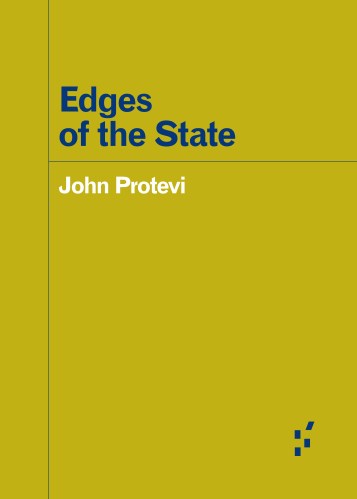
John Protevi, Edges of the State – University of Minnesota Press, Forerunner, April 2019

image.jpgJohn Protevi, Edges of the State – University of Minnesota Press, Forerunner, 2019

This book takes a look at the formation, and edges, of states: their breakdowns and attempts to repair them, and their encounters with non-state peoples. It draws upon anthropology, political philosophy, neuroscience, evolutionary biology, child developmental psychology, and other fields to look at states as projects of constructing “bodies politic,” where the civic and the somatic intersect. John Protevi asserts that humans are predisposed to “prosociality,” or being emotionally invested in social partners and patterns. With readings from Jean-Jacques Rousseau and James C. Scott; a critique of the assumption of widespread pre-state warfare as a selection pressure for the evolution of human prosociality and altruism; and an examination of the different “economies of violence” of state and non-state societies, Edges of the State


Posted in John Protevi, Uncategorized | Leave a comment