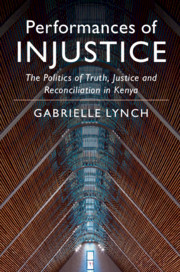
Gabrielle Lynch, Performances of Injustice The Politics of Truth, Justice and Reconciliation in Kenya – CUP, August 2018

9781108444934Gabrielle Lynch, Performances of Injustice The Politics of Truth, Justice and Reconciliation in Kenya – CUP, August 2018

Following unprecedented violence in 2007/8, Kenya introduced two classic transitional justice mechanisms: a truth commission and international criminal proceedings. Both are widely believed to have failed, but why? And what do their performances say about contemporary Kenya; the ways in which violent pasts persist; and the shortcomings of transitional justice? Using the lens of performance, this book analyses how transitional justice efforts are incapable of dealing with how unjust and violent pasts actually persist. Gabrielle Lynch reveals the story of an ongoing political struggle requiring substantive socio-economic and political change that transitional justice mechanisms can theoretically recommend, and which they can sometimes help to initiate and inform, but which they cannot implement or create, and can sometimes unintentionally help to reinforce

Posted in Uncategorized | Leave a comment

Georges Canguilhem, Œuvres complètes Tome V : Histoire des sciences, épistémologie, commémorations 1966-1995 – finally published!

9782711623648.jpgGeorges Canguilhem, Œuvres complètes Tome V : Histoire des sciences, épistémologie, commémorations 1966-1995 was originally due to appear in January 2018. It slipped many times – to March, May, September and finally October. A copy should now be on its way…

Quelque cent vingt écrits publiés de 1966 à 1995 composent ce tome V des Œuvres complètes de Georges Canguilhem.
Une cinquantaine furent de ceux qui établirent sa réputation comme historien des sciences et comme épistémologue. D’autres, souvent passés plutôt inaperçus, éclairent les voies par lesquelles, instruit des avancées de la biologie moléculaire, Canguilhem crut devoir mener le réexamen de sa philosophie biologique. Plusieurs écrits montrent combien Canguilhem, à contre-courant des naturismes en vogue, avait le souci de mener et de poursuivre une réflexion éthique sur les questions de la technique et de la médecine. Dans nombre de notices ou de discours touchant des collègues ou d’amis disparus, nombreux dans ce tome V, il relève les exigences intellectuelles et morales qui animèrent leur vie. Le lecteur reconnaïtra que ces exigences furent également les siennes, loin des facilités de la mondanité philosophique.
Textes édités, introduits et annotés par Camille Limoges


Posted in Georges Canguilhem, Uncategorized | Leave a comment

Teaching Political Economy – notes and links from the Warwick workshop by Ben Richardson and Anika Heckwolf at Progress in Political Economy

Teaching Political Economy – notes and links from the Warwick workshop by Ben Richardson and Anika Heckwolf at Progress in Political Economy

In September 2018, a Teaching Political Economy workshop was held at the University of Warwick, sponsored by the BISA International Political Economy Group and Warwick’s Department of Politics and International Studies. Participants from fifteen different institutions gathered to discuss pedagogy in the discipline, with a particular focus on how to teach political economy in a more inclusive way. This blog post, co-authored with Anika Heckwolf*, provides an overview of the presentations and subsequent discussion, with links to some of the resources mentioned. We hope you find it useful!

Posted in teaching, Uncategorized | Leave a comment

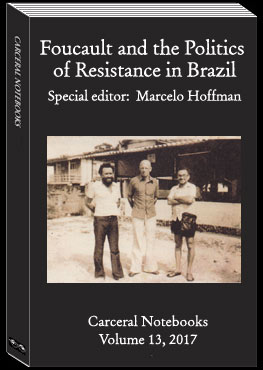
Foucault and the politics of resistance in Brazil. Carceral Notebooks (2018)

The new issue of Carceral Notebooks, which explores Foucault and the Politics of Resistance in Brazil

Clare O'Farrell's avatarFoucault News

Foucault and the politics of resistance in Brazil, Carceral Notebooks, vol. 13, 2017

Bernard E. Harcourt, Preface

Marcelo Hoffman, Special Editor, Introduction

Salma Tannus Muchail and Márcio Alves da Fonseca, Power and Resistance: Foucault’s Laboratory in Brazil

Marcelo Hoffman, From Public Silence to Public Protest: Foucault at the University of São Paulo in 1975

Edson Passetti, Foucault and Resistances in Brazil

Mauricio Pelegrini, Foucault in Iran, Foucault in Brazil: Political Spirituality and Counter-Conducts

Margareth Rago, Foucault, Subjectivity, and Self-Writing in Brazilian Feminism

Priscila Piazentini Vieira, Foucault and the Courage to Radically Transform Existence

Heliana de Barros Conde Rodrigues and Rosimeri de Oliveira Dias, The Tiny Brazilian Press as Resistance: Foucault, the Enemy of the King

Oswaldo Giacoia Junior, Michel Foucault and the Courage of Truth

José Castilho Marques Neto, In the Taxi with Michel Foucault: Memories of a…

View original post 19 more words

Posted in Uncategorized | Leave a comment

Walter Benjamin and Shakespeare, Warburg Institute, 28-29 November 2018

Walter Benjamin and Shakespeare, Warburg Institute, Woburn Square, London WC1H 0AB, 28-29 November 2018

One of the key figures in Walter Benjamin’s Origin of the German Mourning Play is Hamlet; for Benjamin as for Schmitt and Agamben, Shakespeare’s tragedy is emblematic of a political theology as distinctive for the 17th century as for its latter day reception in the 20th century. There are, however, repeated references to Shakespeare throughout Benjamin’s writings. While a central part of the workshop will focus on Hamlet, the Baroque and Benjamin’s theory of the mourning play, the workshop will also seek to offer analyses of the constancy of reference to Shakespeare, both tragic and comic, in translation and in stagecraft. The workshop will open with a discussion of the new Italian translation of Benjamin’s Ursprung des deutschen Trauerspiels, presented by the translators Alice Barale and Fabrizio Desideri.

Speakers include: Alice Barale, Fabrizio Desideri,Julia Reinhard Lupton, Freddie Rokem, Howard Caygill, Julia Ng, Andrew Benjamin, Björn Quiring and Fabrizio Desideri.

This conference is organised by Andrew Benjamin, Professor of Critical Theory and Philosophical Aesthetics at Monash University, Australia and Julia Ng, Lecturer in Critical Theory and Co-Director of the Centre for Philosophy and Critical Thought at Goldsmiths, University of London.

A full programme will be announced shortly. Free and open to all.

Further details and booking form here.

Posted in Uncategorized | Leave a comment

The Body Productive programme – Birkbeck, University of London, 8 December 2018

jhp527b640919e61The Body Productive programme – Birkbeck, University of London, 8 December 2018

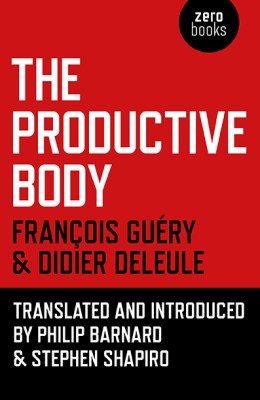
The keynote is by François Guéry – ‘Marx’s Vision of our Future’, and has a closing roundtable on ‘The Productive Body in the 21st Century’. The conference develops themes from François Guéry and Didier Deleule’s The Productive Body (1972), translated in (2014). The conference website has some excerpts and discount codes.

Posted in Uncategorized | 1 Comment

Thinking with Jean-Luc Nancy – Oxford, 28-30 March 2019

Thinking with Jean-Luc Nancy – Oxford, 28-30 March 2019 – details and call for papers (English and French)

Balliol College – University of Oxford (UK)

Keynote Speakers: Jean-Luc Nancy (University of Strasbourg) and Emmanuel Falque (Catholic University of Paris)

Organisers: Marie Chabbert and Nikolaas Deketelaere

Confirmed Participants: Ian James (University of Cambridge), Aukje van Rooden (University of Amsterdam), Gert-Jan van der Heiden (Radboud University), Benjamin Hutchens (Rutgers University), John McKeane (University of Reading), Peter Gratton (Memorial University of Newfoundland), and Irving Goh (National University of Singapore).

Posted in Jean-Luc Nancy, Peter Gratton, Uncategorized | 1 Comment

David Harvey – A Companion to Marx’s Capital, complete edition (Verso, forthcoming November 2018)

Complete edition of David Harvey’s A Companion to Marx’s Capital, forthcoming from Verso

asevillab's avatarmultipliciudades

Verso is publishing a new, complete edition of David Harvey’s A Companion to Marx’s Capital – out next month.

9781788731546In recent years, we have witnessed a surge of interest in Marx’s work in the effort to understand the origins of our current predicament. For nearly forty years, David Harvey has written and lectured on Capital, becoming one of the world’s foremost Marx scholars. Based on his recent lectures, this current volume – finally bringing together his guides to volumes I, II and much of III of Das Kapital – aims to bring this depth of learning to a broader audience, guiding first-time readers through a fascinating and deeply rewarding text.

A Companion to Marx’s Capital offers fresh, original and sometimes
critical interpretations of a book that changed the course of history
and, as Harvey intimates, may do so again.

View original post

Posted in Uncategorized | Leave a comment

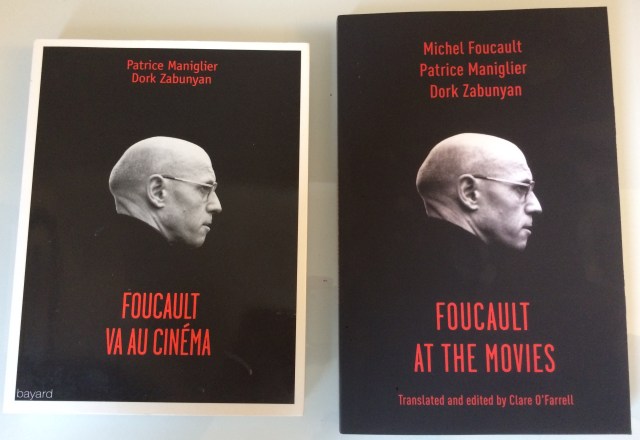
A few thoughts on ‘Foucault at the Movies’ – Columbia University Press 2018

Foucault at the Movies.jpg

When Foucault va au cinéma came out in 2011, I immediately got hold of a copy. It was a collection of excerpts from Foucault’s interviews about and discussions of films, prefaced by two new introductory essays by Patrice Maniglier and Dork Zabunyan. The texts by Foucault, though, were all taken from Dits et écrits, and they were not reprinted in whole, only in short excerpts. In the French, 126 pages were taken up by the essays; less than 40 pages of excerpts from Foucault. So, there was no newly rediscovered Foucault, what there was was torn from context, and the introductory essays, while interesting enough, were not especially helpful to my own concerns.

I was pleased to hear that Clare O’Farrell was translating the book for Columbia University Press though, not least because Clare has a long-standing interest in both Foucault and film. She’s the author of the book Michel Foucault: Historian or Philosopher? (1989), which I read during my PhD, and also of Michel Foucault (2005), which I still think is the best introductory book on Foucault. Along with Alan Rosenberg and me, she was one of the founding editors of Foucault Studies, as well as behind the invaluable Foucault News blog.

A translation of this book would be useful, I thought, because a couple of the texts in it had not previously been translated. While the French Dits et écrits collects nearly all of Foucault’s shorter writings, the English Essential Works is only a selection. Many other collections – Power/Knowledge, Politics, Philosophy, Culture and Foucault: Live among them – have other essays, but all are part-superseded by Essential Works. Some texts have been translated a few different times, some reprinted with variations, many are not translated at all. Richard Lynch’s bibliography of English translations is invaluable, but finding English translations can be very time-consuming – obscure journals, out of print books and so on. Frankly it’s a bit of a mess. Any new translations, especially if thematically linked, are therefore to be welcomed.

What Foucault at the Movies does is to include the whole of each of the texts, rather than the abbreviated versions in Foucault va au cinema. It also includes one relevant piece that was not in Foucault va au cinema, and was not in English before at all. They are all new translations, which is a massive improvement for the ones in Foucault: Live, and a smaller one for the two in Essential Works Volume II.

The texts included are Dits et écrits numbers 140, 159, 162, 164, 171, 180, 185, 201, 284, 308. If you check Lynch’s really helpful bibliography you’ll see that texts 159, 162 and 185 are unique, but I think all the ones here supersede previously published ones, especially the ones in Foucault: Live.

Given the dates of the material, which all come from the last decade of Foucault’s life, I didn’t think it would be much use for my early Foucault work, but there are some useful comments, especially the two pieces on the Histoire de Paul film which are revealing of Foucault’s time working in the asylum and the visits to the fête des fous in Münsterlingen. There are also lots of things said which speak to wider issues – political, historical, literary or other – not just to cinema.

The English also includes the programme for a film festival accompanying the original book, which gives readers a sense of the range of films discussed or otherwise related. It has full and very helpful notes, and a bibliography. Little of that is in the French. In summary, Foucault at the Movies is not just an excellent translation, it is a better book than the French original.

Posted in Michel Foucault, Uncategorized | 3 Comments

François Dosse, La saga des intellectuels français I and II – Gallimard, 2018


François Dosse, La saga des intellectuels français, I: À l’épreuve de l’histoire (1944-1968) and La saga des intellectuels français, II: L’avenir en miettes (1968-1989) – Gallimard, 2018

Nul n’était aussi bien armé que François Dosse pour relever le défi : une histoire panoramique et systématique de l’aventure historique et créatrice des intellectuels français, de la Libération au bicentenaire de la Révolution et à la chute du mur de Berlin.
Son Histoire du structuralisme en deux volumes, son attention à la marche des idées, ses nombreuses biographies (de Michel de Certeau, Paul Ricœur, Pierre Nora, Cornelius Castoriadis) lui ont donné, depuis vingt ou trente ans, une connaissance assez intime de la vie intellectuelle de la seconde moitié du XXe siècle pour lui permettre de couronner son œuvre par une tentative de cette envergure.
Le premier volume, 1944-1968, couvre les années Sartre et Beauvoir et leurs contestations, les rapports contrastés avec le communisme, le choc de 1956, la guerre d’Algérie, les débuts du tiers-mondisme, l’irruption du moment gaullien et sa contestation : un temps dominé par l’épreuve de l’histoire, l’influence du communisme et la progressive désillusion qui a suivi.
Le second volume, 1968-1989, va de l’utopie gauchiste, de Soljenitsyne et du combat contre le totalitarisme, à la «nouvelle philosophie», l’avènement d’une conscience écologique, la désorientation des années 80 : un temps marqué par la crise de l’avenir et qui voit s’installer l’hégémonie des sciences humaines.
Ce ne sont là que quelques-uns des points de repère de cette saga, qui embrasse une des périodes les plus effervescentes et créatrices de l’intelligentsia française, de Sartre à Lévi-Strauss, de Foucault à Lacan.
Le sujet a déjà suscité une énorme bibliographie, mais une fresque de pareille ampleur est appelée à faire date.

Saw this in Paris last month, but thanks to Harvey Shoolman for the links and the prompt to link to it. Hopefully an English translation will follow.

Posted in Uncategorized | Leave a comment