Freud’s papers on technique in English – a summary of the suggestions

Earlier this week I asked this question:

As part of my work on the early Foucault, I’m working through Lacan’s early seminars. I want to read the texts of Freud which Lacan is discussing first. The first extant volume of Lacan’s seminar is on ‘Freud’s Papers on Technique’. I have most of the volumes of the Penguin Freud library, but the papers on technique are largely excluded from that collection. I know the individual papers are in the Standard Edition, but since that is organised chronologically, they are spread between multiple volumes. There is a collection of the technical papers in French, and a volume of them was published in Freud’s lifetime in German. But is there a single English volume that contains them, or most of them?
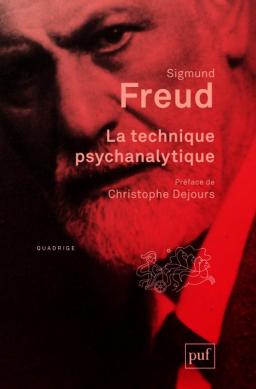
9782130619543_v100I received various suggestions, all of which were appreciated. As I said, the Standard Edition has these, but in multiple volumes. Volume XII has ‘papers on technique’ as part of its title, but there are more papers in other volumes. Steven Ellman’s Freud’s Technique Papers: A Contemporary Perspective includes several along with commentary (the subtitle and authored nature of the book is misleading, I think). There are various ‘complete works’ available online, of variable quality. The 1924 Collected Papers, Vol II (freely available online) comprises two parts – one on ‘Clinical Papers’ and one on ‘Papers on Technique’. That seems the most comprehensive single volume in English. The French La technique psychanalytique (or the German Schriften zur Behandlungstechnik) doesn’t seem to have a simple equivalent.

Update: thanks to John Russell in a comment below, who has pointed out that there is indeed an English volume which covers this material – Therapy or Technique, edited by Philip Rieff, New York: Collier, 1963 (and reprints).

Posted in Michel Foucault, Sigmund Freud, The Early Foucault, Uncategorized | 2 Comments

Books received – Freud, Yates, Wilson, Toal

IMG_2284

Two volumes of Freud for the Foucault work; Julian Yates, Of Sheep, Oranges, and Yeast: A Multi-Species Impression sent by the publisher; Richard Wilson’s Will Power: Essays on Shakespearean Authority; and Gerard Toal’s Near Abroad: Putin, the West and the Contest over Ukraine and the Caucasus in recompense for review work.

Posted in Michel Foucault, Sigmund Freud, The Early Foucault, Uncategorized, William Shakespeare | 2 Comments

A question on Freud’s papers on technique in English

As part of my work on the early Foucault, I’m working through Lacan’s early seminars. I want to read the texts of Freud which Lacan is discussing first. The first extant volume of Lacan’s seminar is on ‘Freud’s Papers on Technique’. I have most of the volumes of the Penguin Freud library, but the papers on technique are largely excluded from that collection. I know the individual papers are in the Standard Edition, but since that is organised chronologically, they are spread between multiple volumes. There is a collection of the technical papers in French, and a volume of them was published in Freud’s lifetime in German. But is there a single English volume that contains them, or most of them?

Update: Thanks to the various suggestions. Yes, the Standard Edition has these, but in multiple volumes. Volume XII has ‘papers on technique’ as part of its title, but there are more in other volumes. Steven Ellman’s Freud’s Technique Papers: A Contemporary Perspective includes several along with commentary. There are various ‘complete works’ available online, of variable quality. The 1924 Collected Papers, Vol II (freely available online) comprises two parts – one on ‘Clinical Papers’ and one on ‘Papers on Technique’. That seems the most comprehensive single volume in English. The French La technique psychanalytique doesn’t seem to have a simple equivalent.

Posted in Michel Foucault, Sigmund Freud, The Early Foucault, Uncategorized | 4 Comments

Marking Up Your Text

Some interesting reflections on editing your own text – on a generally very useful site.

Rachael Cayley's avatarExplorations of Style

The most popular post on this blog is consistently the one on reverse outlines. I’m sure this popularity is driven by the fact that reverse outlining is a powerful act of regaining control over a text. This renewed sense of control comes in part from the way that a reverse outline encourages us to mark up a text. There can be something so powerless about reading a text that we know to be flawed; as we move through the pages, we can end up mesmerized or demoralized rather than energized. This passivity can then impede our ability to revise since, needless to say, revision is essentially active. Doing a reverse outline can give us a sense of agency because we have to overcome our passivity in favour of actively marking up a text. In this post, I would like to discuss two other examples of gaining insight through marking up…

View original post 1,094 more words

Posted in Uncategorized | Leave a comment

Carceral Notebooks Vol 12 now out – Foucault and the Prisons Information Group

book-vol12Carceral Notebooks Vol 12 now out – Foucault and the Prisons Information Group. Edited by Andrew Dilts and Perry Zurn, it includes essays by Bernard Harcourt, Nicolas Drolc, Lisa Guenther, Kevin Thompson, Joy James and others.

All the essays can be downloaded as pdfs, or the whole volume can be ordered as a hardcopy for $10.

Posted in Michel Foucault, Politics, Uncategorized | 1 Comment

Roberto Esposito, The Origin of the Political: Hannah Arendt or Simone Weil?reviewed at Berfrois by Gerardo Muñoz

R9780823276271_9oberto Esposito, The Origin of the Political: Hannah Arendt or Simone Weil? is reviewed at Berfrois by Gerardo Muñoz

Posted in Hannah Arendt, Roberto Esposito, Uncategorized | Leave a comment

Christopher Watkin, Research Hacks 8 and 9 – arguments and knowing when to stop

Christopher Watkin, Research Hacks series continues.

#8: How to know when “good enough” is good enough in academic writing

#9: Building an argument with the “it’s not as simple as that” tool

You can read the rest here.

There are several posts from Progressive Geographies about writing and publishing, and a lot more links, archived here.

Posted in Publishing, Uncategorized, Writing | Leave a comment

Michel Foucault, Dire vrai sur soi-même – 1982 Toronto lectures out from Vrin

2711627497.jpgMichel Foucault, Dire vrai sur soi-même: Conférences prononcées à l’Université Victoria de Toronto from Vrin is now published.

The volume comprises previously unpublished lectures from 1982. There are connections between them and Collège de France lectures, and the Vermont Technologies of the Self seminar, but they are distinct and important.

À la fin du premier semestre 1982, Michel Foucault prononce à l’Université Victoria de Toronto un cycle de conférences intitulé Dire vrai sur soi-même. Le thème de ces conférences, s’inscrivant dans le cadre du projet d’une généalogie du sujet occidental moderne, est la formation historique de l’herméneutique de soi. Après avoir analysé le type très particulier de connaissance de soi et de rapport à soi qui caractérise l’askêsis gréco-romaine, où il s’agit pour le sujet d’établir avec lui-même une relation de possession et de souveraineté, Foucault étudie le renversement qui conduit, aux premiers siècles du christianisme, et tout particulièrement dans les communautés monastiques, à la naissance d’une herméneutique de soi conçue comme l’exploration et le déchiffrement par le sujet de sa propre intériorité. Pour définir ce renversement, Foucault introduit ici une distinction inédite entre deux formes d’ascèse, l’une tournée vers la vérité, l’autre tournée vers la réalité. Parallèlement aux conférences, Foucault conduit à Toronto un séminaire consacré à l’étude détaillée de textes des auteurs anciens sur lesquels s’appuient ses analyses de la culture de soi antique. Il y présente également une esquisse des différentes significations de la notion de parrêsia dans l’Antiquité, qui allait devenir le thème principal de ses derniers travaux.

Ces conférences et ce séminaire sont publiés ici pour la première fois, dans une édition critique.

Posted in Foucault's Last Decade, Michel Foucault, Uncategorized | 1 Comment

Some responses to the post about ‘Why I prioritise writing books over articles, even in an era of research assessment’

Some responses to the post about ‘Why I prioritise writing books over articles, even in an era of research assessment‘. The post got a lot of hits, partly through multiple retweets. While I also replied to the comments I saw on twitter and the blog, I’ve tried to respond to some key questions below:

How about early career researchers?

Everyone needs to find their own way, of course. I tried to say something about the advice I’d had, and the advice I continually hear given to early career researchers in the original post. What I would suggest is that you need to be strategic. Getting an article or two from the PhD in a good journal is a necessary part of most initial careers. It may well be that the expectation is more articles than that. But the risk comes if you publish too many articles from the PhD. I know some very successful academics publish books of their articles, but most presses won’t touch such a book for an unknown academic, and for most known ones too. My rough guide is that more than two articles from a book manuscript will start to worry a publisher. See your PhD as an initial, early, draft of something that may become a book – if you want to be a book writer.

Although I acknowledged the privileged position I am now in within the original post, it wasn’t always that way. I had three one-year contracts before I got a secure job, for which I had to change discipline, and I think having a book on the cv made a huge difference there. I had a contract for a second at the time, and a co-edited book of Lefebvre translations was in press. My third authored book was published before I had my first term of research leave. I’m not trying to say that I had it so tough, just that I balanced writing books with other demands early in my career, including the need to publish articles.

The research assessment makes or breaks careers – I have to work to its demands

The two best pieces of advice I ever had on the RAE/REF:

  1. the census date is an arbitrary line in time: things to the left are in this period; things to the right in the next. Write to your own timeline.
  2. give them a choice, and let them make it.

In other words, it should be one of the things on your mind, not the only one.

What can be done?

I think one thing that established academics can do is when it comes to writing references, evaluating cases for promotion, tenure, etc. This is to stress the importance of the books that have been written or edited by the person you are writing about. Lots of administrators have backgrounds in science, or even not as academics, where books don’t have the same status. Make a point of indicating this.

Another is to help your colleagues with book proposals, initiating contact with editors, giving them advice. Offer to look over their cover letter, to read the contract they are offered, discuss the merits of different publishers. Above all, verbally resist anyone who tells them that articles are all that counts.

Another thing is to review books – both at proposal and manuscript stage for presses, and when published for journals. It’s amazing how many academics are unwilling to do this.

Buy books, read books and talk and write about books.


Posted in Books, Publishing, Uncategorized, Writing | 1 Comment

Books received – review work for Polity and Sage

IMG_2277

A pile of recent books received in recompense for review work, and a couple of others sent by Polity from their Key Contemporary Thinkers series.

Posted in Ash Amin, Axel Honneth, Jacques Lacan, Judith Butler, Luce Irigaray, Martin Heidegger, Nigel Thrift, Uncategorized | Leave a comment