There is a widespread perception that the UK higher education system emphasises quantity over quality in terms of publications, and that there is a constant need to write and submit journal articles. Yet in a six or seven-year research cycle, academics have – until now – needed to submit just their best four pieces. Only four pieces, which for most people is a fraction of what they have actually produced. It is worth noting that there is a possibility, following the Stern review, that the number will change, possibly downwards and perhaps to an average number, which may require some people to submit less, and some more. While there is, and will continue to be, a need to get that right number of pieces, the question of the perceived quality of those pieces is much more significant. Pressure to publish more often comes because of a perception that what has been published is not of sufficient quality.
The pressures of quality have tended to mean that conference proceedings, book chapters, review essays, etc. have not been deemed to be suitable submissions, and so the journal article has become, by default, the ‘gold standard’. This is in part reinforced by the way things are counted – articles are ‘one’, so too are books. The complete insanity of this is supposedly mediated by the idea that a ‘big book’ could, potentially, be submitted as a double-weight piece, counting for two. In any sensible system, a research book would be counted as some multiple of an article by default, and a ‘big book’ a greater multiple. But the current system is stacked against books in this way, and even though I’ve made the case some of my books are suitable for this double-weighting, this was never accepted. Even The Birth of Territory – 500 pages, 200k words, to my mind the best thing I have done in my career, with a major university press and recipient of a couple of prizes – was not deemed to be suitable. To which my reply was: if not this, what would be? It’s even worse with book editing – collections of colleagues’ work are a non-starter, and even the co-edited and co-translated State, Space, World collection of Lefebvre’s work, with a long co-authored introduction, notes etc. was not deemed suitable as a submission at all. Early in my career I was told that the department I was in thought a book was equivalent to an article: my response was to laugh, and say they had clearly never written a book. They hadn’t.
So, by these criteria, it is not surprising that the pressure or incentive is to write articles, and well-meaning advice is given to say these should be the priority. Early career scholars are encouraged to see their PhD thesis as a resource which can be cut up and positioned in multiple journals, rather than as an early draft of a book manuscript; some departments have a strict requirement of one article in a ‘top’ journal per year; career prospects are heavily weighted to these kinds of publications. I am well aware of those kinds of pressures and constraints. Earlier in my career I largely followed this advice, making sure there was a constant stream of articles being written, submitted, revised and published. The books I wrote were alongside these, as parallel projects, or ones that developed out of articles.
But I’ve reached a point in my career where I don’t feel a need or accept the pressure to write articles as a default position. I’m much more interested in writing books, and tend to think much more in terms of book-length projects. So, for a while now, this had been my number one priority. This doesn’t mean that I’ve given up writing articles, just that I don’t see this as the key thing I need to be doing. In the next research assessment, whenever it is, whatever it is called, and whatever the rules are, I see that books will form the bulk of my submission, even if each is counted as ‘one’, and that the balance will be made up of articles. I have enough faith that there will be articles along the way – either a piece I give as a lecture which is committed to the journal or institution which invited it, a side project that doesn’t fit in a book, a chapter cut from a book manuscript, or, in odd occasions, an early version of a part of a book. (Though for the UK research assessment you can’t submit an article if it forms part of a book you intend to submit.)
I am fully aware that this attitude of prioritising books over articles is made possible by the privileged position I am in, in terms of academic role, seniority, institution and so on. I am not looking for promotion, to move institution, or any other advancement. The research assessment is one of the things on my mind, but only one, and other factors, such as what I want to say, the format in which I want to say it, and the contribution I want to make are, for me, much more important. My experience is that books travel between disciplines much more readily, and are much more widely read, as well as being the kinds of research statements that I want to make. I have no wish to chase journal publications in the way that I used to, and in the way I and others are advised to, when the bulk of them are barely read and largely forgotten, as well as not being used for research assessment. I’m certainly not saying that I’ll never write articles again, and I don’t want to suggest that books are objectively better than articles. In some disciplines or sub-disciplines, for certain kinds of work, or certain kinds of people, articles are better or preferred outlets. I edited and then co-edited a journal for several years, and serve on the boards of several journals. This is nothing against journals, those who edit them, write for them or read them. It’s against the constant pressure to turn every thought into an article, every conference presentation into an article, and then move on to the next.
Books are not quick options. Certainly not the kinds of books I write. Perhaps some people look at the frequency of my books and think they must be. I work hard, certainly, but I’m not sure more quickly or effectively than others. I do think I am good at making the most of opportunities which are given to me, which I acknowledge and for which I am grateful. I make writing part of my daily routine, and I make book-writing the priority within that time. It seems to me to be essential to do that – otherwise it is the first thing that gets squeezed out of a busy schedule. Sometimes I might move right from one discrete book to another, completing one before beginning the next. But more often, book projects figure in the background while I am doing something else; projects overlap, with manuscripts being worked on in parallel instead of in sequence; things lie dormant for some time before being picked up and developed further. Often I am constrained by availability of materials, access to texts, archives or libraries; other things get in the way.
I should also say that there are important decisions about where I publish books. I signed my first contract with Athlone, who were bought by Continuum before the book came out. My second book was also with them. When my editor at Continuum left, I felt there were good reasons to go elsewhere. They are now part of Bloomsbury. Other authored books have either been with university presses, or more recently with Polity. I chose these presses, in part, because their books are affordable, and I usually insist on immediate paperback or one within a specified timeframe. I’ve said before about the regret about not insisting on this being in the contract for one book – it was agreed verbally, and then changed. With edited books, I’ve worked with either small publishers like Ashgate (now unfortunately swallowed by a behemoth), Continuum, Polity or University Presses. (The only book I lead-edited with a different remit and pricing was a major-reference work, not intended for an audience beyond a small number of research libraries.) I’ve so far declined working with the major trade publishers, as author or editor, though I do have some chapters in books with them. This was often when I was committed to a project, and its editors, before the press was agreed.
Books are not for everyone – either as readers, or as writers. But they suit me. If I read a good article I go looking for the books the author has written. Most of my ideas seem to take on a book-like shape. Where I am able, I devote other research time to editing a book series, to bringing works into English, either as editor, occasional co-translator, or as advocate with presses.
These are some the reasons why I prioritise writing books over articles, even in an era of research assessment.
Update: as well as the comments and replies below; there are some follow-up responses here.
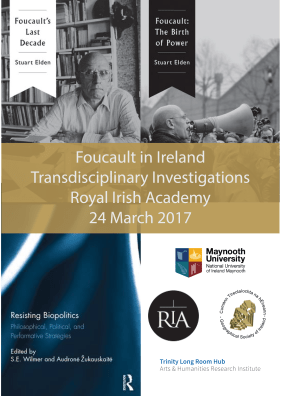 It’s a little difficult to treat today as just another day, after the events in London yesterday, but I’m just about to head to Ireland for a couple of events.
 Alexander Vasudevan,
  Marcelo Hoffman,
 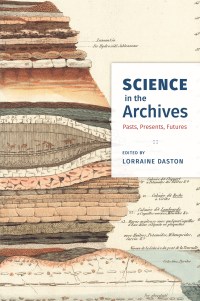 Archives bring to mind rooms filled with old papers and dusty artifacts. But for scientists, the detritus of the past can be a treasure trove of material vital to present and future research: fossils collected by geologists; data banks assembled by geneticists; weather diaries trawled by climate scientists; libraries visited by historians. These are the vital collections, assembled and maintained over decades, centuries, and even millennia, which define the sciences of the archives.

