Why I prioritise writing books over articles, even in an era of research assessment

There is a widespread perception that the UK higher education system emphasises quantity over quality in terms of publications, and that there is a constant need to write and submit journal articles. Yet in a six or seven-year research cycle, academics have – until now – needed to submit just their best four pieces. Only four pieces, which for most people is a fraction of what they have actually produced. It is worth noting that there is a possibility, following the Stern review, that the number will change, possibly downwards and perhaps to an average number, which may require some people to submit less, and some more. While there is, and will continue to be, a need to get that right number of pieces, the question of the perceived quality of those pieces is much more significant. Pressure to publish more often comes because of a perception that what has been published is not of sufficient quality.

The pressures of quality have tended to mean that conference proceedings, book chapters, review essays, etc. have not been deemed to be suitable submissions, and so the journal article has become, by default, the ‘gold standard’. This is in part reinforced by the way things are counted – articles are ‘one’, so too are books. The complete insanity of this is supposedly mediated by the idea that a ‘big book’ could, potentially, be submitted as a double-weight piece, counting for two. In any sensible system, a research book would be counted as some multiple of an article by default, and a ‘big book’ a greater multiple. But the current system is stacked against books in this way, and even though I’ve made the case some of my books are suitable for this double-weighting, this was never accepted. Even The Birth of Territory – 500 pages, 200k words, to my mind the best thing I have done in my career, with a major university press and recipient of a couple of prizes – was not deemed to be suitable. To which my reply was: if not this, what would be? It’s even worse with book editing – collections of colleagues’ work are a non-starter, and even the co-edited and co-translated State, Space, World collection of Lefebvre’s work, with a long co-authored introduction, notes etc. was not deemed suitable as a submission at all. Early in my career I was told that the department I was in thought a book was equivalent to an article: my response was to laugh, and say they had clearly never written a book. They hadn’t.

So, by these criteria, it is not surprising that the pressure or incentive is to write articles, and well-meaning advice is given to say these should be the priority. Early career scholars are encouraged to see their PhD thesis as a resource which can be cut up and positioned in multiple journals, rather than as an early draft of a book manuscript; some departments have a strict requirement of one article in a ‘top’ journal per year; career prospects are heavily weighted to these kinds of publications. I am well aware of those kinds of pressures and constraints. Earlier in my career I largely followed this advice, making sure there was a constant stream of articles being written, submitted, revised and published. The books I wrote were alongside these, as parallel projects, or ones that developed out of articles.

But I’ve reached a point in my career where I don’t feel a need or accept the pressure to write articles as a default position. I’m much more interested in writing books, and tend to think much more in terms of book-length projects. So, for a while now, this had been my number one priority. This doesn’t mean that I’ve given up writing articles, just that I don’t see this as the key thing I need to be doing. In the next research assessment, whenever it is, whatever it is called, and whatever the rules are, I see that books will form the bulk of my submission, even if each is counted as ‘one’, and that the balance will be made up of articles. I have enough faith that there will be articles along the way – either a piece I give as a lecture which is committed to the journal or institution which invited it, a side project that doesn’t fit in a book, a chapter cut from a book manuscript, or, in odd occasions, an early version of a part of a book. (Though for the UK research assessment you can’t submit an article if it forms part of a book you intend to submit.)

I am fully aware that this attitude of prioritising books over articles is made possible by the privileged position I am in, in terms of academic role, seniority, institution and so on. I am not looking for promotion, to move institution, or any other advancement. The research assessment is one of the things on my mind, but only one, and other factors, such as what I want to say, the format in which I want to say it, and the contribution I want to make are, for me, much more important. My experience is that books travel between disciplines much more readily, and are much more widely read, as well as being the kinds of research statements that I want to make. I have no wish to chase journal publications in the way that I used to, and in the way I and others are advised to, when the bulk of them are barely read and largely forgotten, as well as not being used for research assessment. I’m certainly not saying that I’ll never write articles again, and I don’t want to suggest that books are objectively better than articles. In some disciplines or sub-disciplines, for certain kinds of work, or certain kinds of people, articles are better or preferred outlets. I edited and then co-edited a journal for several years, and serve on the boards of several journals. This is nothing against journals, those who edit them, write for them or read them. It’s against the constant pressure to turn every thought into an article, every conference presentation into an article, and then move on to the next.

Books are not quick options. Certainly not the kinds of books I write. Perhaps some people look at the frequency of my books and think they must be. I work hard, certainly, but I’m not sure more quickly or effectively than others. I do think I am good at making the most of opportunities which are given to me, which I acknowledge and for which I am grateful. I make writing part of my daily routine, and I make book-writing the priority within that time. It seems to me to be essential to do that – otherwise it is the first thing that gets squeezed out of a busy schedule. Sometimes I might move right from one discrete book to another, completing one before beginning the next. But more often, book projects figure in the background while I am doing something else; projects overlap, with manuscripts being worked on in parallel instead of in sequence; things lie dormant for some time before being picked up and developed further. Often I am constrained by availability of materials, access to texts, archives or libraries; other things get in the way.

I should also say that there are important decisions about where I publish books. I signed my first contract with Athlone, who were bought by Continuum before the book came out. My second book was also with them. When my editor at Continuum left, I felt there were good reasons to go elsewhere. They are now part of Bloomsbury. Other authored books have either been with university presses, or more recently with Polity. I chose these presses, in part, because their books are affordable, and I usually insist on immediate paperback or one within a specified timeframe. I’ve said before about the regret about not insisting on this being in the contract for one book – it was agreed verbally, and then changed. With edited books, I’ve worked with either small publishers like Ashgate (now unfortunately swallowed by a behemoth), Continuum, Polity or University Presses. (The only book I lead-edited with a different remit and pricing was a major-reference work, not intended for an audience beyond a small number of research libraries.) I’ve so far declined working with the major trade publishers, as author or editor, though I do have some chapters in books with them. This was often when I was committed to a project, and its editors, before the press was agreed.

Books are not for everyone – either as readers, or as writers. But they suit me. If I read a good article I go looking for the books the author has written. Most of my ideas seem to take on a book-like shape. Where I am able, I devote other research time to editing a book series, to bringing works into English, either as editor, occasional co-translator, or as advocate with presses.

These are some the reasons why I prioritise writing books over articles, even in an era of research assessment.


Update: as well as the comments and replies below; there are some follow-up responses here.

Posted in Publishing, Uncategorized, Universities, Writing | 15 Comments

Wyl Menmuir – How to finish a novel: tracking a book’s progress from idea to completion

Although it is a very quantitative model, and suggests quite a linear mode of working, this is an interesting reflection which should be useful beyond just writing fiction.

Wyl Menmuir, ‘How to finish a novel: tracking a book’s progress from idea to completion’, The Guardian. Thanks to Juliet Fall for the link.

Posted in Publishing, Writing | Leave a comment

Research hacks #7: Read everything, but not in the same way – Christopher Watkin

If one thing is non-negotiable about academic research in the arts and humanities, it is that there will be a lot of reading. In fact, there will almost certainly be too much reading, so you’d better have a strategy to cope with the bibliographical tsunami headed your way.

You can’t read every word that has been written about your subject in the same way, or ponder every word with the same depth, so you need to develop different reading strategies for different types of text. Here are four different strategies to get you going.

Continue reading here; for the others in this useful series see here.

Posted in Uncategorized | Leave a comment

Foucault in Ireland, March 24th, Dublin

Foucault in Ireland 1-01.png
Friday March 24th, ‘Foucault in Ireland‘ conference at the Royal Irish Academy in Dublin.

This one-day symposium reviews the engagement of Irish Studies with the work of Michel Foucault. It begins with a roundtable on the recent work of Stuart Elden: Foucault’s last decade (Polity 2016), Foucault: the birth of power (Polity 2017). This is followed by papers on Foucault’s influence in various areas of Irish academic study including: criminology, literary criticism, historical geography, international relations, philosophy, sociology, and others.

Free, but requires a ticket – available here. I’ll  be giving a department seminar on ‘Terrain: The Materiality of Territory‘ at NUI Maynooth the previous evening.

Posted in Foucault's Last Decade, Foucault: The Birth of Power, Michel Foucault, Uncategorized | Leave a comment

Shakespeare’s Roman Tragedies by Toneelgroep Amsterdam at the Barbican

19668romantragediesleadlgfmt.jpgYesterday I attended one of the best theatrical experiences of my life – Shakespeare’s Roman Tragedies at the Barbican by Toneelgroep Amsterdam, directed by Ivo van Hove. In the last couple of weeks I’d already seen the first two instalments of the RSC’s Rome season – Julius Caesar and Antony and Cleopatra. Both were good performances, classic dress with a range of intelligent performances and an impressive stage design.

But Roman Tragedies was something else entirely. The concept is to compress Coriolanus, Julius Caesar and Antony and Cleopatra together, for a performance that lasts six hours. There are several short breaks of three to five minutes, and one of ten minutes. It is in Dutch, with surtitles in English. It sounds brutal, but it wasn’t, and the time went by quickly. I only started to get tired in the last long act of Antony and Cleopatra, but that was far more to do with me than the performance.

19668romantragedies4lgfmt.jpg

This was a revival of a 2009 production, which I’d missed but of which I’d heard great things. The same group did Kings of War at the Barbican last year – Henry V, Henry VI and Richard III – which I’d really liked (some thoughts here). It was only on for three nights this time, and I’m glad I got to see it.

It was an outstanding evening – the quickest, spontaneous standing ovation I’ve been part of. Many highlights, but Hans Kesting’s Antony was excellent, especially in Julius Caesar. Bart Slegers was very good in two supporting roles as Aufidius and Enobarbus. Enobarbus ran outside the theatre at one point, into the service road outside the Barbican – handheld camera followed and the feed came back to the auditorium. I can imagine this works better on a less quiet street. Chris Nietvelt was a powerful Cleopatra; and there were several other excellent performances. Cassius and Octavius were both converted into female roles, which worked very well. The absence of the servant Lucius was an intriguing way into Brutus’ conflicted character; the use of video and music was excellent. Although the audience was encouraged to move about the theatre and join the actors on stage, I mainly stayed in the same place, in part because I had a good seat and I wanted to be able to see as much as possible – live action, video screen, surtitles, news feed – rather than have a restricted view. If I was to see it again, then I’d be more inclined to get closer; and if it was on again tonight, I’d be there.

Peter Kirwan has a much fuller review at The Bardathon – he saw the first run too, so compares the productions a little. Steve Mentz has a good discussion of the version he saw in Brooklyn at The Bookfish. There are mainstream reviews at The Stage and The Guardian.

Posted in Uncategorized, William Shakespeare | Leave a comment

Impact of Social Sciences – Google Scholar is a serious alternative to Web of Science

Impact of Social Sciences – ‘Google Scholar is a serious alternative to Web of Science’

An interesting piece, challenging some of assumptions about Google Scholar (some of which doubts I share). Of course, deciding which of the alternative ways to count publications and citations is a bit like deciding how to be measured for your coffin.

Many bibliometricians and university administrators remain wary of Google Scholar citation data, preferring “the gold standard” of Web of Science instead. Anne-Wil Harzing, who developed the Publish or Perish software that uses Google Scholar data, here sets out to challenge some of the misconceptions about this data source and explain why it offers a serious alternative to Web of Science. In addition to its flaws having been overstated, Google Scholar’s coverage of high-quality publications is more comprehensive in many areas, including in the social sciences and humanities, books and book chapters, conference proceedings and non-English language publications.

Posted in Uncategorized | 5 Comments

Raul Pacheco-Vega’s research resources

I’ve linked to Raul Pacheco-Vega’s research and writing technique posts several times. He had now got a page which collects these – grouped into categories.

I have blogged a lot about a broad variety of different topics. Many people ask me if I can point them out to specific blog posts in a certain area, and it’s hard for me to remember or to have them handy. To that end, I have decided to create a Resources page. Here, you will find a list of topics, and a series of sub-pages with blog posts in that specific subject area.

For example, if you are looking for resources to help you improve your academic writing (how to conduct literature reviews, how to get out of a writing rut), you may want to check the resources under “Academic Writing”. If you are looking for stuff I have written on how to use social networking sites to improve your teaching, research, to communicate with students, you may want to look under “Social Media”.

Each Resources page is independent, but I have cross-linked them all here. I listed a couple of blog posts under each category, but you can find all the blog posts associated with the topic in its separate page.

Well worth a look – though of course, not everything that works for him will work for all.

Posted in Publishing, Uncategorized, Writing | Leave a comment

The geography of AibBnB listings

Another analysis of Airbnb – thanks to Sung-Yueh Perng for this link.

Posted in Uncategorized | Leave a comment

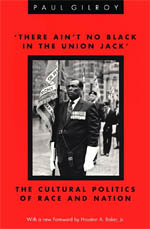
Paul Gilroy interview on ‘There Ain’t No Black in the Union Jack’ 30 years on

0226294277.jpg30 years ago There Ain’t No Black in the Union Jack: The Cultural Politics of Race and Nation was published. Philip Dodd talks to the author Professor Paul Gilroy about its impact and whether discussions about race and culture in Britain have moved on or not.

BBC podcast – thanks to dmf for the link.

Posted in Uncategorized | Leave a comment

Airbnb and gentrification in New York

A fascinating analysis of the effects of Airbnb rentals in New York City.

David Wachsmuth's avatarDavid Wachsmuth

6 vulnerability index

For the last several months I’ve been working with Alexander Weisler (a recent MUP graduate from the School of Urban Planning at McGill) on a paper which explores the connection between short-term rentals and gentrification. We use a case study of Airbnb in New York City, based on a lot of number crunching, GIS, and interviews with community organizations and policymakers. The paper is nearly finished, and I’ll upload it here once it’s ready. But in the meantime (and recognizing that it will be a year or more before the paper makes it through peer review and the publishing process), I wanted to provide a quick tour of the arguments and evidence, using the near-final maps I’ve spent the last several weeks making.

The thesis of the paper is that Airbnb is systematically creating a new kind of rent gap. Following Neil Smith’s original argument, we normally think of rent gaps as emerging…

View original post 2,289 more words

Posted in Uncategorized | 1 Comment