Forthcoming in Antipode…

Antipode Editorial Office's avatarAntipodeFoundation.org

As the summer comes to an end and a new semester begins, we’re looking forward to 2017 and the papers forthcoming in Antipode 49(1) in January–all of which are available online now (and will be freely available in the new year).

The Editorial Collective, September 2016

Energy Colonialism and the Role of the Global in Local Responses to New Energy Infrastructures in the UK: A Critical and Exploratory Empirical Analysis

Susana Batel and Patrick Devine-Wright

Susana and Patrick argue that their paper on public responses to large-scale low-carbon energy infrastructures offers lessons for people engaging with other matters of concern, including immigration, contemporary populist politics, and the future of the EU. What role do intergroup relations, collective narratives, and geographical imaginaries play in these phenomena?

Conveyer-Belt Justice: Precarity, Access to Justice, and Uneven Geographies of Legal Aid in UK Asylum Appeals

Andrew Burridge and Nick Gill

Andrew and Nick’s discussion of the frames of “luck”, “uncertainty”, and “dislocation” explores a…

View original post 610 more words

Posted in Uncategorized | 1 Comment

Society and Space 34(5) out now – including free to access forum on area studies and geography

Posted in Uncategorized | Leave a comment

Foucault and Shakespeare, Terrain and forthcoming talks

SpindelI’ve been fairly quiet on this blog recently. That isn’t to say I haven’t been busy – mainly on the Shakespeare project. (More on this project can be found here). Unlike the work for the Foucault books, I haven’t felt I had much to say that didn’t blur the line between writing about the project and sharing writing from the project. While I have regularly written about the process of research and writing, sharing draft material is something I’ve always tended to avoid in the past.

With Foucault, I felt I was genuinely discovering new things in the research – texts, documents, material in the archive, translation issues, comparison of variant texts, dating of material and so on. That was fundamental work – both in the sense of important and preparing the ground for my own interpretative labour. I could write about the project rather than share parts of it. I thought that much of what I was discovering would be useful to other people working on, or using, Foucault. It was for that reason that I put together a number of Foucault Resources. With Shakespeare it feels different: I’m not pretending to have discovered anything new about Shakespeare and I’m much more dependent on the interpretative labour of multiple editors of his texts. What will, I hope, be novel about my reading is much more in terms of the juxtaposition of different texts; reading some passages usually taken as comedy very seriously; textual work on word-meanings and resonances; the interpretative lens of territory; the historical-political context in which I will try to embed the readings, and so on. That, at least, makes sense to me as to why my recent work has not been so conducive to this blog.

In the six-plus years of this blog I’ve felt there are moments when it predominantly becomes a noticeboard for things, a kind of public set of bookmarks, rather than genuinely about my own work. In a sense that’s fine, and I’m well aware the vast majority of visitors come here because they find that useful, rather than because they are interested in my own work. This then has been another moment where the specific nature of the blog – my own work – has again taken something of a backseat.


I’m now on my way to Memphis to present at the ‘Critical Histories of the Present‘ conference. My talk is under the title of ‘Foucault and Shakespeare: Ceremony, Theatre, Politics’, which is substantially developed from a version I gave at King’s College London last year. It will get one more outing at the Political Thought and Intellectual History seminar, University of Cambridge on 7 November 2016. This paper is separate from either the Foucault books or the Shakespeare manuscript, but is a reading of Foucault and Shakespeare together that intersects with some of the books’ themes. I understand that papers from Memphis will be published in the Southern Journal of Philosophy in due course.

When I get back to the UK I’m planning on going into ‘writing lockdown’ mode for about a week, with a view of getting the rough draft of the Shakespeare manuscript to a point where it can be left. I’ll then get ready for the new term, and as time allows over the autumn begin thinking about the question of ‘terrain’, which is shaping up to be the next main project.

I will be talking about terrain in Gießen in December, Durham and London in February, and Maynooth in March. I’m certainly hoping that it won’t be just one paper repeated four times. I’ll also be speaking on Hamlet at the Early Modern Literary Geographies conference in October; at a public event linked to the new British Library exhibition on Maps and the 20th Century: Drawing the Line on 31 January; and on research blogs and social media to Royal Holloway’s Landscape Surgery seminar on 21 February. All the details I have on forthcoming talks can be found here. I’m still deciding what, if anything, I will present at the AAG meeting in Boston. There will also be some events linked to the ICE-LAW project in the spring. I also have a trip to Paris booked for December, to work through a little more of the Foucault archive. So, a lot of things coming up over the next several months. This is the reason why I need to get the Shakespeare material to a point where, although it’s not finished, I can leave it for a while.



Posted in Conferences, Foucault's Last Decade, Foucault: The Birth of Power, Michel Foucault, Shakespearean Territories, Territory, Uncategorized, William Shakespeare | 3 Comments

Derrida’s Seminars: Writing Before Writing Before the Letter

derrida-768x585Derrida’s Seminars: Writing Before Writing Before the Letter – 3am Magazine

After beginning with the end, we have ended up at the beginning. The newest of Jacques Derrida’s seminars is the oldest yet published, Heidegger: The Question of Being & History, which pre-dates the philosopher’s 1967 debut, the year he published three of the twentieth century’s most influential works of philosophy. Derrida died in 2004 and left behind more than 14,000 pages of lectures and notes from a half-century of teaching. Thanks to the critical work of the editors of the French editions and the Derrida Seminar Translation Project, five of his seminars have now appeared in book form in French and four in English translation. The editors began with the last seminars before his death, The Beast and the Sovereign and The Death Penalty, courses taught from 1999-2003, before returning to 1964-5, to a young scholar’s inchoate reflections on Heidegger, who would endure as a focus of Derrida’s career and the frequent subject of his close reading practice, which came to be known as deconstruction.

Posted in Jacques Derrida, Martin Heidegger, Uncategorized | 1 Comment

Pléyade: Biopolitics Special Issue (2016)

A special issue of Pléyade on biopolitics – papers in English and Spanish.

Clare O'Farrell's avatarFoucault News

New Issue of Pléyade: Biopolitics, number 17, launched in June 2016

Full PDF of issue available

Pléyade is an international peer reviewed journal dedicated to the Humanities and Social Sciences funded the year 2008 by the Centre for Political Analysis and Research in Santiago, Chile. The journal is an independent publication since 2016. This publication encourages intellectual and academic discussion of political phenomena, from a variety of disciplinary and interdisciplinary perspectives including political science, sociology, philosophy, and cultural studies. Pléyade is aimed at an international scientific audience and receives contributions such as articles, book reviews, interviews and interventions, written in Spanish or English. The journal is published biannually (June-December) in print and electronic versions.

Edición especial
Biopolitica

Vanessa Lemm Introducción

Artículos
Ottavio Marzocca Vida desnuda, multitud y carne del mundo: la biopolitica como destino
Bare Life, Multitude, Flesh of the World: The Biopolitics as Destiny

Carlo Salzani Nudity: Agamben…

View original post 224 more words

Posted in Uncategorized | 1 Comment

8 Critical Theory books that came out in August 2016

Another useful roundup from critical-theoryaugust-2016-critical-theory-books-672x372.png

Posted in Uncategorized | 1 Comment

Books received – Krell, Whyte, Minca & Giacarra, Bouzarovski

img_1760

Two books from SUNY Press in recompense for review work, the edited collection Hitler’s Geographies (in which I have a piece reprinted), Stefan Bouzarovski’s Retrofitting the City, sent by the publisher, and the most recent issues of Area, Radical Philosophy and Annals of the AAG.

Posted in David Farrell Krell, Giorgio Agamben, Martin Heidegger, Uncategorized | Leave a comment

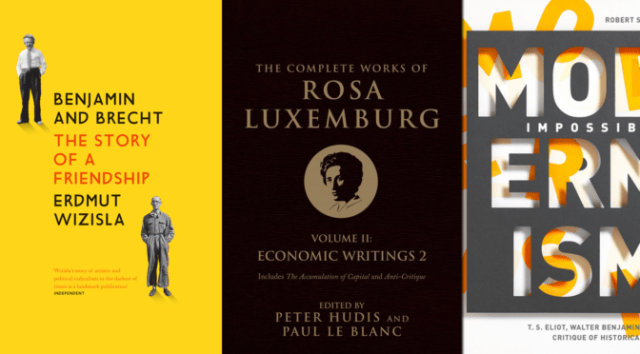
Verso e-book sale – 90% off – and my five picks

FlashSaleFeaturePanel-max_462-8a5ab448b8fe63d91c2514667b58d82f

Verso have a massive e-book sale with 90% off a huge range of their books until the end of today (Friday 2 September 2016). You could pick up the new translation of Henri Lefebvre’s Metaphilosophy for just £2, and all three volumes of the Critique of Everyday Life for £2.50.

Verso asked me to come up with my five picks from the list. This is hard because there is a lot of choice, and also because I have so many already… But here are the five I’ve just bought.

Posted in Henri Lefebvre, Raymond Williams, Uncategorized, Walter Benjamin | 2 Comments

Shakespeare productions in London and Stratford (late 2016-early 2017)

An updated list of some of the productions I’m looking forward to seeing over the next few months…

The Two Noble Kinsmen at the RSC.

Cymbeline ‘reclaimed and renamed’ as Imogen at the Globe

King Lear – Antony Sher at the RSC and Glenda Jackson at the Old Vic

Two Gentlemen of Verona at the Globe.

The Tempest, Henry IV and Julius Caesar – all-female casts at the Donmar King’s Cross

Simon Russell Beale as Prospero in The Tempest at the RSC

Othello in the indoor theatre at the Globe in early 2017.

Ivo van Hove’s Roman Tragedies – Coriolanus, Julius Caesar, and Anthony and Cleopatra in a six hour epic in Dutch at the Barbican in 2017; and hopefully Hamlet at the Almeida.

What have I missed? Time-Out has a useful, though frequently incomplete, list here.

Posted in Shakespearean Territories, Uncategorized, William Shakespeare | 1 Comment

Foucault: The Birth of Power cover and description (forthcoming early 2017)

FBP cover.jpgHere is the cover for Foucault: The Birth of Power. The book is forthcoming in early 2017 with Polity, and the design fits with Foucault’s Last Decade which came out earlier this year. There is a lot about Foucault’s political activism in this second book, so the covers make a nice contrasting pair. More information on the two books here.

Michel Foucault’s The Archaeology of Knowledge was published in March 1969; Discipline and Punish in February 1975. Although only separated in time by six years, the difference in tone is stark: the former is a methodological treatise, the latter a call to arms. What accounts for the radical shift in Foucault s approach?

Several transitions took place during this period. Foucault returned to France from Tunisia, first to the experimental University of Vincennes and then to a prestigious chair at the Collège de France. Tunisia was a political awakening for him, and he returned to a France much changed by the turmoil of 1968. He quickly became involved in activist work, particularly concerning prisons but also around health issues such as abortion rights, and in his seminars he built research teams to conduct collaborative work, often around issues related to his lectures and activism.

Foucault: The Birth of Power makes use of his Collège de France courses, newly available documents at the Bibliothèque Nationale de France, as well as archival material relating to his activism and collaborative research, to provide a detailed intellectual history of Foucault as writer, researcher, lecturer and activist. Through a careful reconstruction of Foucault s work and preoccupations, Elden shows that, while Discipline and Punish may be the major published output of this period, it rests on a much wider range of concerns and projects. This is an essential companion to Foucault’s Last Decade (Polity, 2016).

Posted in Foucault's Last Decade, Foucault: The Birth of Power, Jean-Paul Sartre, Michel Foucault | 2 Comments