Two questions about Georges Canguilhem – biography and archives

Two questions about Georges Canguilhem – does a biography exist in English or French? And are all his papers archived at CAPHÉS at the ENS? That looks quite extensive, but what I am looking for isn’t listed, so I wondered if there might, possibly, be another source?

Update Jan 11: many thanks for the various answers I’ve received. The consensus seems to be that there is no full biography, though there are biographical elements in some of the books about him. There is a Centre Georges Canguilhem at Paris-VII, but this has no archives. I’ve been told that if it isn’t at CAPHÉS it was likely destroyed.

Posted in Georges Canguilhem, Uncategorized | 3 Comments

A new page of Writing and Publishing posts and links

I’ve added a new page to this blog’s ‘resources‘, which is a list of some of the posts about writing and publishing. It’s followed by some links I’ve previously shared which may still be useful. If I say something about someone else’s advice, or aggregate a number of links, I’ve linked to my post, but others take you direct to the original.

At the moment I’ve only gone back through the blog archive to early 2013, but may go further back at some point.

The standard disclaimer – people work in different ways, and no one system or suggestion will suit everyone. But there might be some things in here which are useful for others.

Posted in Uncategorized | Leave a comment

Ernst Kantorowicz: A Life reviewed in New York Times

k10842.gifErnst Kantorowicz: A Life, by Robert E Lerner, is reviewed in The New York Times by George Prochnik. Thanks to Sebastian Budgen for the link.

Posted in Ernst Kantorowicz, Uncategorized | Leave a comment

Notes on Academic Productivity at OrgTheory

Some notes on Academic Productivity at OrgTheory – via The Sociological Imagination.

I’ve had the opportunity to meet a number of scholars who, by any conventional standard, are very productive and they aren’t stuffing the CV with obscure publications. And I’ve asked them, how do you manage to pull this off? Here are the answers that I get:

  • Team work: Almost every star I’ve asked works in large groups. If you look at the CV’s, they have tons of co-authors.
  • Division of Labor: A lot of them have told me that they are very good at assigning tasks. One of them told me he *never* does fund raising. He works with another prof who in a medical school who has access to funds.
  • Shamelessness: Most academics sulk over rejections. These folks don’t. Soon as a paper gets rejected, they send it out ASAP.
  • Recognizing diminishing marginal returns: A paper will improve between first and second drafts. These folks understand that obsession over the 2oth and 21st version is pointless.
  • Attitude: Sounds corny, but every single one of these folks has an amazing forward looking attitude. They love what they do and they see the future as bright.
  • Minimizing junk work: Some probably shirk teaching or admin work, but what I have observed is that they are ruthlessly efficient. They reuse course materials, borrow syllabi, and use teaching to deepen their knowledge of a topic.
  • Recognizing the randomness of reviews: Most people complain about the randomness of reviewers. The star publishers draw the logical conclusion. If you can get random negatives, you get random positives. So just keep submitting until it you randomly pull positive reviews.

Bottom line: Sure, some people are geniuses, but a lot of productive people simply very good at time management and they don’t let the little things get to them.

I think some of this might depend on different disciplines, such as collaboration/division of labour, and ‘productivity’ shouldn’t be the end in itself. But if being ‘productive’ means getting the work you want to write written, accepted and out there, there might be some good ideas in here. The comments on the original post are worth a look for some dissenting voices.

Posted in Publishing, Uncategorized, Universities, Writing | 2 Comments

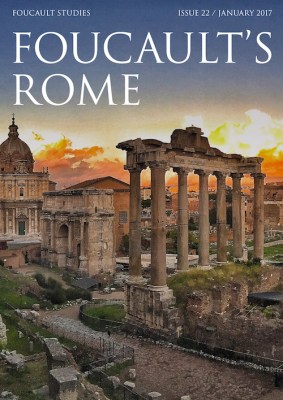
Foucault Studies 22 – ‘Foucault and Rome’, interview with me, and review of Foucault’s Last Decade

cover_issue_703_en_US.jpgThe new issue of Foucault Studies is now out – the bulk is a theme section on ‘Foucault and Roman Antiquity: Foucault and Rome’, edited by Richard Alston and Shreyaa Bhatt.

The issue also includes separate articles, a translation of Foucault’s ‘Cuvier’s Situation in the History of Biology’; an interview with me conducted by Antoinette Koleva, one with Julian Reid, and a very kind review of Foucault’s Last Decade by Kurt Borg. All open access.

The interview with me will also appear in Bulgarian in a special issue of the journal Sociological Problems {Социологически проблеми}, a publication of the Bulgarian Academy of Sciences, dedicated to the 90th anniversary of Michel Foucault.

Here’s one especially nice paragraph from Kurt Borg’s review:

Foucault’s Last Decade has various merits. It is cogently argued: Elden’s contention that the question of confession is key to understanding the transformations that The History of Sexuality underwent is convincing. It is extensively researched: Elden’s eye for detail and accuracy is painstaking but never pedantic. Indeed, the book contains various references to sources which are familiar and to others that were unearthed and compiled by Elden as “The Uncollected Foucault” in Foucault Studies. The major contribution of this book is its well-informed study of the history of The History of Sexuality in Foucault’s last decade, which Elden does excellently by considering together the books Foucault actually published, his various lecture courses and interviews, and biographical details. Regarding the latter, Elden claims that Foucault’s “wider life is discussed only in relation to how it impacts on his work.” (5) In so doing, Elden avoids the pitfalls of implausible speculations drawn out of Foucault’s private life. The book exhibits the virtues of meticulous and careful scholarship in their richness.

Posted in Foucault's Last Decade, Michel Foucault, Uncategorized | Leave a comment

Books received – Lacan and Binswanger

books received.png

The French originals of Lacan’s first two published seminars, and some French and English translations of Binswanger’s work. More preparatory reading for the project on the early Foucault.

Posted in Jacques Lacan, Ludwig Binswanger, Michel Foucault, The Early Foucault, Uncategorized | 1 Comment

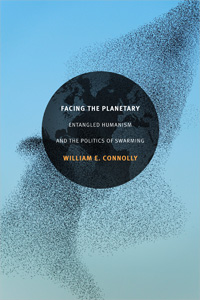
William E. Connolly, Facing the Planetary – forthcoming and open access preview

978-0-8223-6341-5_pr.jpgWilliam E. Connolly, Facing the Planetary: Entangled Humanism and the Politics of Swarming is forthcoming from Duke University Press shortly. There is an open access preview available here.

In Facing the Planetary William E. Connolly expands his influential work on the politics of pluralization, capitalism, fragility, and secularism to address the complexities of climate change and to complicate notions of the Anthropocene. Focusing on planetary processes—including the ocean conveyor, glacier flows, tectonic plates, and species evolution—he combines a critical understanding of capitalism with an appreciation of how such nonhuman systems periodically change on their own. Drawing upon scientists and intellectuals such as Lynn Margulis, Michael Benton, Alfred North Whitehead, Anna Tsing, Mahatma Gandhi, Wangari Maathai, Pope Francis, Bruno Latour, and Naomi Klein, Connolly focuses on the gap between those regions creating the most climate change and those suffering most from it. He addresses the creative potential of a “politics of swarming” by which people in different regions and social positions coalesce to reshape dominant priorities. He also explores how those displaying spiritual affinities across differences in creed can energize a militant assemblage that is already underway.
Posted in Uncategorized, William E Connolly | 1 Comment

‘Foucault in Ireland’ – 24 March 2017, Royal Irish Academy, Dublin

cropped-foucault2

On 23 March I’ll be visiting National University of Ireland Maynooth to give a seminar. The following day I’ll be one of the participants in a symposium at the Royal Irish Academy – ‘Foucault and Ireland’.

This one-day symposium reviews the engagement of Irish Studies with the work of Michel Foucault. It begins with a roundtable on the recent work of Stuart Elden: Foucault’s last decade (Polity 2016), Foucault: the birth of power (Polity 2017). This is followed by papers on Foucault’s influence in various areas of Irish academic study including: criminology, literary criticism, historical geography, international relations, philosophy, sociology, and others.

If you are engaging with any of the ideas of Michel Foucault in your research and you would like to give a brief presentation of your work as part of the one-day symposium Foucault in Ireland, Royal Irish Academy, Friday 24 March 2017, then please contact Prof. Gerry Kearns, gerry.kearns@nuim.ie

The event is free, but pre-registration is required. More details here.

Posted in Foucault's Last Decade, Foucault: The Birth of Power, Michel Foucault, Uncategorized | Leave a comment

Ludwig Binswanger – a bibliography of major German works and available French or English translations

As part of my work on the early Foucault, I’ve been doing some work on Ludwig Binswanger, including finding several of his works. For my own purposes I compiled a bibliography of his major German works, and all the work translated into French and English. I was getting confused by different references to the same essays, and making a bibliography was the best way I could find to keep track of things. There is a major collection in German, Ausgewählte Werke in 4 Bänden (Roland Asanger, Heidelberg, 1992–1994), which collects many, but not all, of his writings. There are two earlier collections of essays and lectures in German. There are several books translated into French, as well as three collections of essays – Analyse existentielle, psychiatrie clinique et psychanalyse: Discours, parcours, et Freud, translated by Roger Lewinter, Introduction à l’analyse existentielle, translated by Jacqueline Verdeaux, and the more recent Phénomenologie, psychologie, psychiatrie. There is much less in English, with the key collection Being-In-The-World: Selected Papers of Ludwig Binswanger, though that is long out of print and it was hard to find. The first of the French collections has a good bibliography, and the definitive one is Germaine Sneessens, “Bibliographie de Ludwig Binswanger” from 1966, but both are very out-of-date concerning translations.

The bibliography is available here, and will be updated as and when I find other sources. I am quite sure that it is incomplete, and I would welcome additions or corrections – though I don’t need to be told of additional German essays which are untranslated, unless they do not appear in Snessens. I hope someone finds it useful.

Posted in Ludwig Binswanger, Michel Foucault, The Early Foucault, Uncategorized | Leave a comment

By Heart: A Year in Writing Advice – The Atlantic

Writing advice from The Atlantic.

Peter Gratton's avatarPHILOSOPHY IN A TIME OF ERROR

Highlights from 12 months of interviews with writers about their craft and the authors they love

Source: By Heart: A Year in Writing Advice – The Atlantic

View original post

Posted in Uncategorized | Leave a comment