Foucault’s Last Decade – now available worldwide

0745683924Foucault’s Last Decade is now available worldwide – I’ve been getting a few messages to say that copies in North America are now being received. You can order direct from Polity’s distributor Wiley and, of course, other online retailers. Thank you to everyone who has followed this project from its inception to completion.

Foucault: The Birth of Power, which looks at the work from 1969-75, and so acts as a kind of prequel, will be out in January 2017. I have reader reports on the full manuscript and just a little final editing to do before it goes into production.

Posted in Foucault's Last Decade, Foucault: The Birth of Power, Michel Foucault, Uncategorized | 5 Comments

Between Deleuze and Foucault

This looks like it will be an interesting collection.

Keith Harris's avatarMy Desiring-Machines

From Nicolae Morar’s academia.edu page:

Table of Contents:
Introduction – Nicolae Morar, Thomas Nail, and Daniel Smith

Part I Encounters
1. Deleuze and Foucault: A Philosophical Friendship – François Dosse
2. Theatrum Philosophicum – Michel Foucault
3. Michel Foucault’s Main Concepts – Gilles Deleuze
4. When and How I’ve read Foucault – Toni Negri (translated by Kristopher Klotz)

Part II Method and Critique
5. Philosophy as Cultural Critique in Foucault and Deleuze – Colin Koopman
6. Foucault’s Deleuzean Methodology of the Late 1970s – John Protevi
7. Deleuze’s Foucault: A Metaphysical Fiction – Frédéric Gros (translated by Samantha Bankston)

Part III Convergence and Divergence
8. Speaking Out For Others: Philosophy’s Activity in Deleuze and Foucault (and Heidegger) – Len Lawlor and Janae Scholtz
9. Philosophy and History in Deleuze and Foucault – Paul Patton
10. Becoming and History: Deleuze’s Reading of Foucault – Anne Sauvagnargues (translated by Alex Feldman)
11…

View original post 91 more words

Posted in Uncategorized | Leave a comment

A Foucauldian Take on Border Violence and Mediterranean Acts of Escape (2016)

Maurice Stierl’s recent talk at UC Berkeley.

Clare O'Farrell's avatarFoucault News

A Foucauldian Take on Border Violence and Mediterranean Acts of Escape, Maurice Stierl, 04/25/16
CIR/UC Berkeley
Consortium for Interdisciplinary Research (CIR) / UC Berkeley
Berkeley, United States

Audio Lecture on Soundcast
https://soundcloud.com/cirucberkeley/a-foucauldian-take-on-border-violence-and-mediterranean-acts-of-escape-maurice-stierl-042516

View original post

Posted in Uncategorized | 1 Comment

Call for Assistant Editors: Journal of Urban Cultural Studies

Assistant editor posts at Journal of Urban Cultural Studies.

urbanculturalstudies's avatarurbanculturalstudies

CALL FOR
ASSISTANT EDITORS (2017 & 2018)

APPLICATION DEADLINE IS 20 NOVEMBER 2016

The Journal of Urban Cultural Studies is a peer-reviewed interdisciplinary journal exploring the cultures of cities and blending humanities and social science approaches to the urban phenomenon. The journal publishes research articles (subject to peer review) of 7,000-10,000 words and short-form articles (subject to editorial review) of 2,500-4,000 words.

We seek assistant editors to serve two-year terms beginning 1 Jan 2017 and ending 31 Dec 2018. Junior scholars and recent PhDs are encouraged to apply.

Assistant Editors will:

• work collaboratively with journal editors to recruit, vet, edit and publish short-form articles, interviews, reflections, and reviews meeting the journal’s scope. (www.intellectbooks.co.uk/journals/view-Journal,id=225/)

• author and submit one short-form article yearly.

• contribute monthly to the journal’s blog.

(urbanculturalstudies.wordpress.com)

Scholars from all relevant fields and geographical areas interested in these unpaid/volunteer assistant editor positions should send 1) a cover…

View original post 28 more words

Posted in Uncategorized | Leave a comment

Teaching Fellow in International Security at University of Warwick

A Teaching Fellow in International Security post is available at the University of Warwick – details  here.

Full-time, 2 year Fixed Term Contract from June 2016 or as soon as possible thereafter.

You will be joining one of the UK’s leading Politics departments – in REF2014 PAIS ranked 1st for research environment and 4th overall on research intensity.

You will balance your time supporting Professor Nick Vaughan-Williams’ Philip Leverhulme Prize funded project, ‘Everyday Narratives of European Border Security and Insecurity’ (PLP-2015-081), and teaching modules in International Relations and Security. In addition, there will be an opportunity for you to develop your own research trajectory in the context of this role.

The Leverhulme project investigates how European citizens narrate their own understandings of border security and insecurity against the backdrop of the Mediterranean migration and refugee crisis. You will help to coordinate focus group discussions in European cities affected by the crisis, with groups varied according to age, ethnicity, socio-economic background, religion, and gender. There will also be some desk-based data collection and analysis work as well as related administrative duties.

The other part of the role involves delivering advanced undergraduate-level modules in support of the International Relations and Security teaching and learning pathway, and the supervision of BA and MA dissertations.

You will possess an honours degree or equivalent; a PhD or equivalent (awarded or near completion) in Politics and International Studies or a relevant discipline is essential. You will have advanced training in qualitative analysis – ideally focus group research and transcript analysis, using appropriate software – and experience of teaching at undergraduate and/or postgraduate levels. An academic background in one or more of the following sub-fields is also required for the position: EU border security and migration management; critical security studies; narratives and global politics.

This position is ideal for early career scholars who have either recently finished or are about to submit their PhD in the field of International Relations and Security. Strong mentoring and professional development will be offered.

For an informal discussion about the role please contact Professor Nick Vaughan-Williams via Ms Jade Perkins (J.M.Perkins@Warwick.ac.uk).

Posted in Uncategorized | 1 Comment

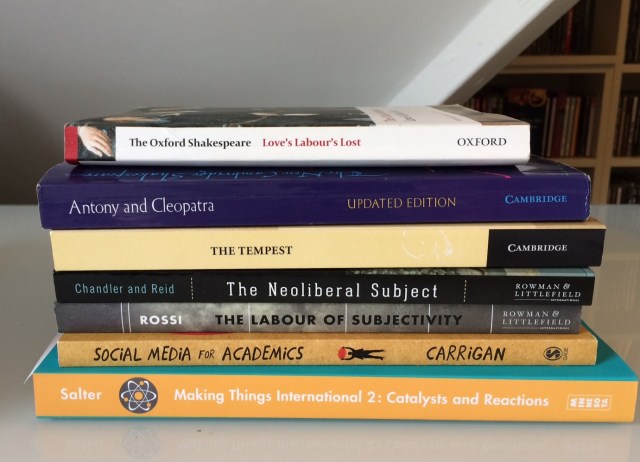
Books received – Salter, Carrigan, Rossi, Chandler & Reid, and Shakespeare

A pile of recently received books – Mark Salter’s Making Things International 2, Mark Carrigan’s Social Media for Academics, Andrea Rossi’s The Labour of Subjectivity, David Chandler & Julian Reid’s The Neoliberal Subject, and three second-hand books for the Shakespeare work. The Shakespeare books were bought, The Labour of Subjectivity and The Neoliberal Subject were in recompense for review work, Social Media for Academics was kindly sent by Mark – I am one of the people interviewed in the book, and University of Minnesota Press sent Making Things International 2.

IMG_1428

Posted in Books, William Shakespeare | 1 Comment

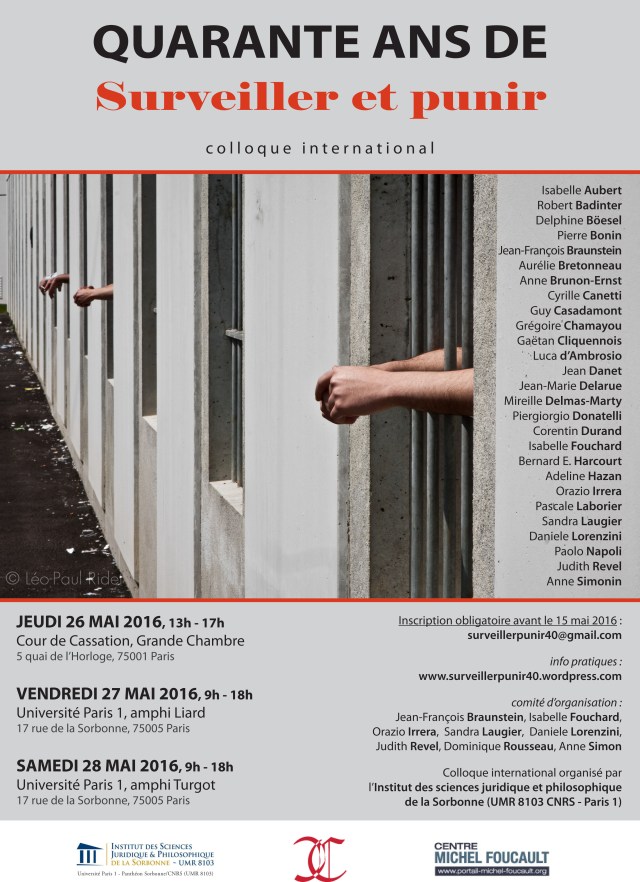
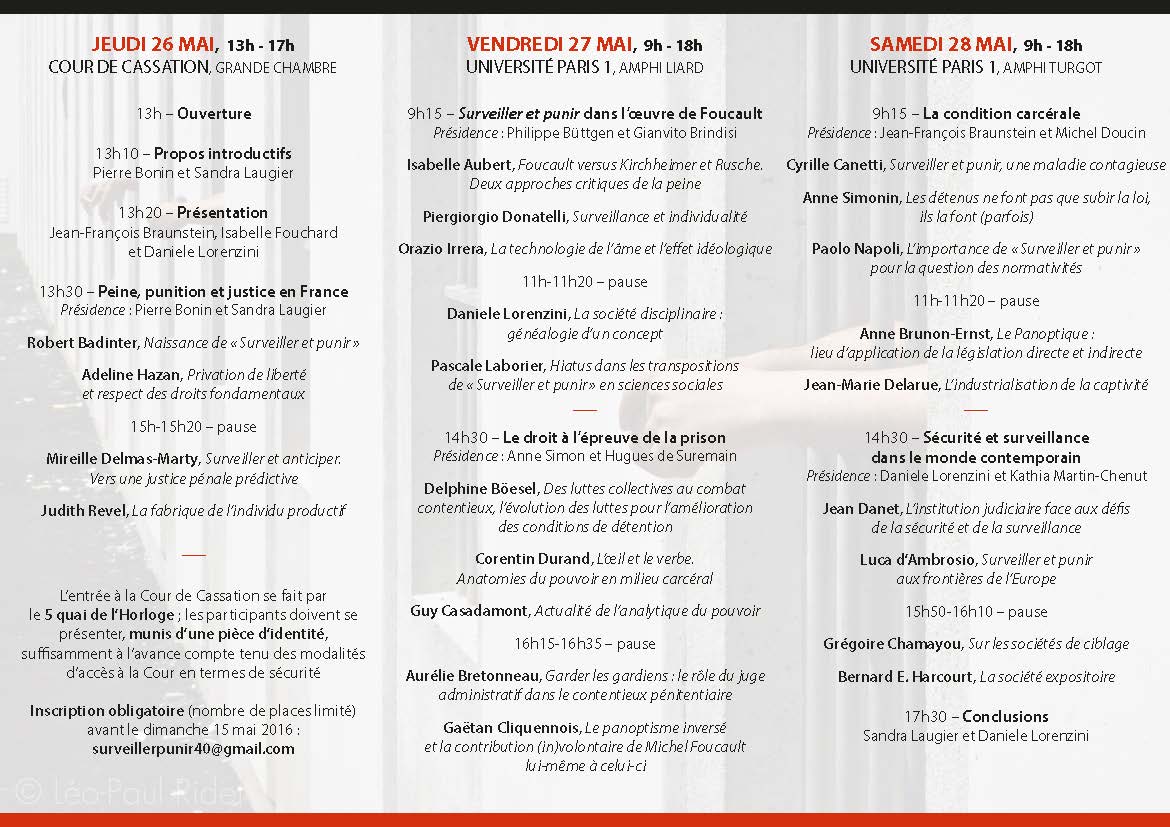
Quarante ans de Surveiller et punir (2016)

Details of a conference in May on Foucault’s Surveiller et punir.

Clare O'Farrell's avatarFoucault News

View original post

Posted in Uncategorized | Leave a comment

Elizabeth Povinelli: New Book on Geontopower

Details of Elizabeth Povinelli’s new book and a talk based on it.

Jeremy Schmidt's avatarJeremy J Schmidt

978-0-8223-6233-3_prElizabeth Povinelli has a new book forthcoming with Duke, details here. The write up on the book is below, followed by a recent presentation on “Toxic Sovereignties in Late Settler Liberalism” from last October. The talk comes from the book (but you’ll need to fast forward a couple of hours in, to 2:32ish, to get to her talk).

In Geontologies Elizabeth A. Povinelli continues her project of mapping the current conditions of late liberalism by offering a bold retheorization of power. Finding Foucauldian biopolitics unable to adequately reveal contemporary mechanisms of power and governance, Povinelli describes a mode of power she calls geontopower, which operates through the regulation of the distinction between life and nonlife and the figures of the desert, the animist, and the virus. Geontologies examines this formation of power from the perspective of Indigenous Australian maneuvers against the settler state. And it probes how our contemporary…

View original post 84 more words

Posted in Uncategorized | 1 Comment

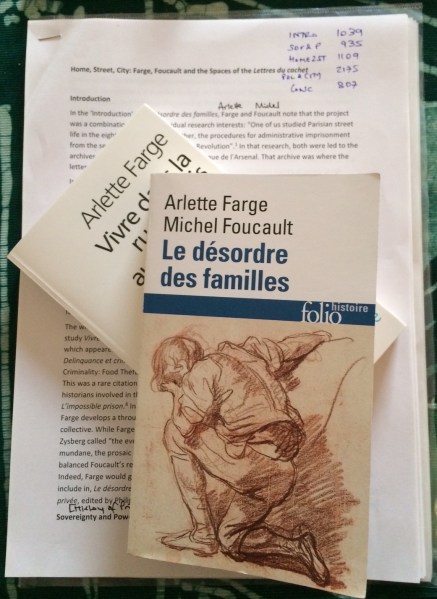
Foucault: The Birth of Power Update 14 – receiving the reader reports, and working on Farge and Foucault, Le désordre des familles

DF working.jpeg

I now have the two reader reports on Foucault: The Birth of Power, which are overwhelmingly positive about the manuscript. But I still have a bit of work to do revising it. I aim to complete the revisions in the next few weeks, with the book now formally scheduled for publication in January 2017. I’ll doubtless post something on the final work in a subsequent update.

The Polity website for this book should be up in a month or two. In the meantime, here’s the back cover description:

Michel Foucault’s The Archaeology of Knowledge was published in March 1969; Discipline and Punish in February 1975. The differences between the books are stark: a methodological treatise and a call to arms.

Several transitions took place in the intervening years. Foucault returned to France from Tunisia, first to the experimental University of Vincennes and then to a prestigious chair at the Collège de France. Tunisia was a political awakening for Foucault, and he returned to France in the post-1968 turmoil. He quickly became involved in activist work, particularly concerning prisons but also around health issues such as abortion rights. In his seminars he built research teams to conduct collaborative research, often around related issues to his lectures and activism.

Foucault’s early Collège de France courses have now all been published and provide invaluable insights into his changing preoccupations. He worked almost daily at the Bibliothèque Nationale de France, taking extensive notes which are now available to researchers. Archival material relating to his activism and collaborative research has also been used to provide a detailed study of Foucault in multiple registers – writer, researcher, lecturer and activist. Discipline and Punish may be the major published output of this period, but it rests on a much wider range of concerns and projects.

A work of intellectual history, Foucault: The Birth of Power is a detailed study of mid-career Foucault that provides an essential companion to Foucault’s Last Decade.

Meanwhile, as I mentioned in the last update, though continuing to work on Hamlet and now Macbeth, I have also been writing a piece on Foucault’s collaborative book with Arlette Farge, Le Désordre des Familles: Lettres de cachet des Archives de la Bastille au XVIIIe siècle. This 1982 book has been long neglected, in both French and English, it was reissued in France in 2014 and will soon appear in translation with University of Minnesota Press. The book comprises an introduction, and three chapters, though it would probably make sense to think of the third as a conclusion of sorts. The two substantive chapters are mainly a collection of lettres de cachet, on a range of cases from the mid 18th century, each with an introduction by Farge and Foucault. No text is individually signed, but we know from Farge’s subsequent comments that she took the lead on the first, on husband-wife relations; while Foucault did with the second on parent-children relations. The lettres de cachet were letters sealed by the King – ‘cachet’ means seal – which could imprison someone, exile them, or force them into another kind of behavior like marriage. Readers of Foucault’s lecture courses will recall discussions of them in various places – there is a lecture on them in The Punitive Society, for example, and a case is explored in The Abnormals. Foucault’s interest in these letters, held in the Arsenal library from the former Bastille archive, stretches back to his research for History of Madness, and he signed a contract with Gallimard for a volume looking at the letters in the early 1960s. I discuss his interest in these letters, and the book with Farge, in Foucault’s Last Decade, pp. 192-4, but it’s not a substantial analysis of the book itself.

This is why I was especially pleased to receive an email from Nancy Luxon, who is editing the translation, inviting me to contribute to a companion volume, entitled Archives of Infamy. Nancy suggested that I look at the themes of space, circulation, the out-of-place and the police control of public areas. Rereading Le Désordre des Familles with these questions in mind was revealing, and it made me realise that these geographical issues really are crucial to what they do. But not at the scale of (state) territory which has so often been my focus. It is the smaller scale, the immediate and proximate, which is crucial to these letters and their interpretation by Farge and Foucault.

Prompted by this reading, I went to some of Farge’s other works. Some of these I already knew – her wonderful book The Allure of the Archives, for example – and others I’d consulted for Foucault’s Last Decade, such as her early work on food thefts (the out-of-print Delinquance et criminalité: Le vol d’aliments a Paris au XVIIIe siècle) and life in the Parisian street (Vivre dans la rue à Paris au XVIIIe siècle). But I also went to a number of her other works, and it was striking how much of her work exhibits a profound spatial sensibility. These are very much spatial histories – space not just as an object of analysis, but a tool of it. I was actually surprised that some of her work was already available in English – I hadn’t realized that Fragile Lives and Subversive Words were translated – though there are plenty of important works that haven’t been, including Les lieux pour l’histoire, which has her most extensive discussion of Foucault.

My draft chapter has just been sent off for comments, and is entitled ‘Home, Street, City: Farge, Foucault and the Spaces of the Lettres du cachet’. Part of my argument is that if we want to understand the context of the work, we should look at Farge’s wider work; and in terms of Foucault, it is the research conducted alongside his major works that is most important – his Collège de France seminars, the work with CERFI and CORDA, and so on. Despite the fifteen age difference between Farge and Foucault, and his already senior position compared to her being toward the beginning of her career, this was clearly a meeting of equals. Foucault had, unusually for him, referenced her work on food thefts in Discipline and Punish; and he asked for her advice on the letters before they agreed to work on this project. Nonetheless, Farge recognises in a number of interviews how important this work with him was for her own career profile. I end my chapter by saying that I hope that this long-overdue translation and attention leads more Anglophone readers to her own remarkable work. While she seems to be reasonably well known by Anglophone historians of France, I think she deserves a wider reading, and perhaps especially by those people interested in questions of space and geography.

Foucault’s Last Decade is now available in most places, though it seems not yet in North America. For more information on these two books, see the descriptions here.

Audio and video recordings relating to them are here; and a full list of the updates I’ve been posting on the process of writing here. Some translations, bibliographies, scans and links are available at Foucault Resources

An excerpt from Chapter Six of the manuscript of Foucault: The Birth of Power has been published by Viewpoint: The Biopolitics of Birth: Michel Foucault, the Groupe Information Santé and the Abortion Rights Struggle” (open access).

Posted in Arlette Farge, Foucault's Last Decade, Foucault: The Birth of Power, Michel Foucault, Uncategorized | 2 Comments

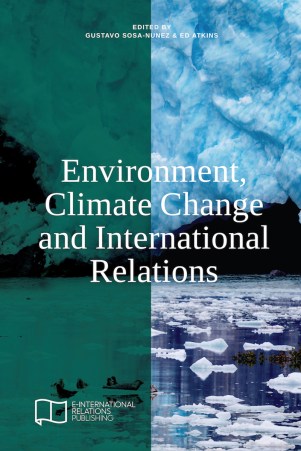
Environment, Climate Change and International Relations – ebook from E-IR

Front-Cover-Climate.jpgEnvironment, Climate Change and International Relations – an E-IR Edited Collection. Edited by Gustavo Sosa-Nunez & Ed Atkins.

To state that climate change and environment issues are important to International Relations is an understatement. Mitigation and adaptation debates, strategies and mechanisms are all developed at the international level, often demonstrating the nuances of international politics and governance. Furthermore, the complexities of climate change make it a difficult phenomenon for international governance. Yet, actions at the international level provide the most effective route to tackle climate change.

In the wake of the 2015 Paris conference, this edited collection details current tendencies of study, explores the most important routes of assessing environmental issues as an issue of international governance, and provides perspectives on the route forward. Each contribution demonstrates that the Paris agreement is only the start of global efforts.

Posted in Uncategorized | 2 Comments