Hamlet: three productions and three texts

I’ve now seen Hamlet five times in the last year, and three times in the last five weeks. Last year I saw Peter Sarsgaard in New York and Benedict Cumberbatch at the Barbican in London (my thoughts here and here). The last two were the RSC version with Paapa Essiedu, and one of the final performances of the Globe-to-Globe version – a touring production that was played in 197 countries over the last two years. And then last night I saw the ‘first Hamlet’ at The Cockpit.

hamlet-feature-trailer-social.tmb-img-820The current RSC version is set in contemporary African present, with a majority black cast. Hamlet is shown graduating from Wittenberg university, which might be in the US, and then returning home. The ghost is a figure from a tribal history; the new King and Queen modern rulers. This works quite well for the ‘geopolitical’ aspects of the plot I’m most interested in for my own work.

The Globe version was with a small cast, lots of doubling of roles, minimal set and fast-paced – clearly all planned for the road. Much of the wider frame of the story was cut, though not all – Hamlet did encounter the Norwegian army, for example. It was a decent, though I thought unremarkable production – the special aspect was the global scope, and being part of it must have been an unforgettable journey. It would have been interesting to have seen an early London show, two years ago, and compare to the final ones. After those two, quite different, but both good productions, I wasn’t sure that I needed to see another for a while.

Image.ashxBut then I chanced on a link to a very different version that was playing in The Cockpit, a small theatre near Marylebone station. This version uses the first Quarto text, a much shorter play that is variously understood to be a first version, a pirate edition constructed by actors with faulty memories, or a the script of a dramatically cut touring production (or a combination of these). It’s sometimes known as a ‘bad quarto’.

Most editions of the play use either the second Quarto or the version from the first Folio as their basis, or combine the texts; and most productions one or other, perhaps with the texts conflated. The second quarto has about 200 lines that are not in the Folio; the Folio about 70 lines which are not in the second Quarto. The first Quarto is much shorter – about 2000 lines compared to 3900 in the second Quarto. The Arden third series has two volumes – the second Quarto as the main one, and the first Quarto and first Folio in a companion volume. There is also a very useful triple-columned The Three-Text Hamlet, which I’ve used quite a bit for my work – it’s unfortunately out-of-print and second-hand copies are expensive.

The first Quarto is an interesting text, with a number of unique elements. Polonius is called Corambis and some of the other names are changed. Some of the famous speeches are different – ‘To be, or not to be, ay, there’s the point’, for example, which is also moved to earlier in the text. There are several important aspects. One of the best is the unique scene in which Horatio apprises Gertred of the King’s English plot against Hamlet, and fills in quite a bit of background detail (though, no pirates) before Hamlet’s return for the grave scene. Hamlet never meets the Norwegian army, and the soliloquy that follows (“O, from this time forth/My thoughts be bloody, or be nothing worth!) is missing from the text, just as it is from the Folio. Laertes appears as a personally aggrieved son and brother, not at the head of a crowd with political intentions. Even if parts of the script are badly misremembered by one of the actors (probably the one who played Marcellus and other small roles) many of the cuts are likely the result of performance decisions, so it is an important historical document.

The most striking thing is the length – a 7.30pm start, and out before 10pm, even with an interval. It’s about the same length as Macbeth, and almost as fast-paced. I read somewhere – though can’t now recall where – that the RSC version from a few years ago with David Tennant was originally going to use the first Quarto text, but for some reason decided against it. (Gregory Doran’s diary of directing the play mentions that text, but not the choice of which one was used.)

Charles-Ward-3648Nicholas Limm was a good Hamlet, establishing a good contrast between the introspective and ‘antic disposition’ moods, although he hurried some lines. Maryam Grace was a strong but not especially mad Ofelia; Christopher Laishley one of the better Horatios I’ve seen. I thought Alex Scrivens was better as the Ghost than as his brother, the King, and I wasn’t convinced there was much passion between him and Gertred. Other parts were shared by the remaining cast – only 11 actors in total. I actually found it hard to concentrate on the performances alone, because I was so interested in the different script – it was like watching, if not quite a different play, a translation of an abridged version: some familiar, some strikingly different. (A fuller review of the performance, with some photographs, is at The Stage.)

Overall I enjoyed this very much, and it only runs for a few more days, but tickets are still available. While I’ve been working on Hamlet recently, and so was fascinated by the textual variations, I think this is a strong version on its own terms, and worth seeing.
Posted in Shakespearean Territories, Uncategorized, William Shakespeare | Tagged | 1 Comment

Inaugural Issue of Continental Thought and Theory is now out | An und für sich

Continental Thought and Theory – new journal launched…

Peter Gratton's avatarPHILOSOPHY IN A TIME OF ERROR

Via An un für sich, the inaugural issue of the new journal Continental Thought and Theory, edited by Mike Grimshaw and Cindy Zeiher, is available. Contributors include Thomas J.J. Altizer, Adam Kotsko, Gianni Vatimo, and so on.

Source: Inaugural Issue of Continental Thought and Theory is now out | An und für sich

View original post

Posted in Uncategorized | Leave a comment

A weekend of Shakespeare – the Globe-to-Globe Hamlet and Kings of War

Most people will have noticed, especially those in the UK, that last weekend was a celebration of the work of Shakespeare – 400 years since his death (and 452 since his birth if the dates do indeed coincide). Many thanks for all those who have sent me links to things commemorating the anniversary – too many to link to all, but I’ve appreciated them.

Although it’s hardly unusual for me to see one or more Shakespeare plays in a week – between the Coventry and London dual life I currently have, I am 30 minutes drive from Stratford-upon-Avon and less than that walking from the Globe – I was pleased to see two productions last week. One was the the Globe-to-Globe Hamlet – a touring production that was played in 197 countries over the last two years. and the second was Kings of War at the Barbican. I may say a little about the Hamlet production in a subsequent post.

Kings of War is an epic production – condensing Henry V, the three parts of Henry VI, and Richard III into a whole (with a little bit of Henry IV, Part Two in there too). Directed by Ivo van Hove, and performed by the Tonelgroep Amsterdam, it’s four and a half hours long, and it’s in Dutch, with English surtitles. A trailer is below:

The first half is Henry V, and some of Henry VI. The second half has some more parts from the Henry VI plays, and Richard III. I thought Henry V was really good, and while there were substantial cuts, the bunker-setting and obvious nods to more recent wars of dubious legality worked well. I don’t know Henry VI as well as I do the other two, but it suffered most from cutting – no Joan of Arc, Talbot or Jack Cade. In part the performances of the leads shaped the reaction I had, and I think I preferred Alex Waldmann in Trevor Nunn’s The Wars of the Roses (using the old Peter Hall/John Barton script), which I saw last year, to Eelco Smits.

Richard III was really good though, with Hans Kesting in the lead role, and as in The Wars of the Roses it really does help to see it follow Henry VI, Part Three, rather than as a separate play. Kesting had a large facial birthmark, and didn’t so much limp as walk like a man who had just shat himself. His calling world-leaders when he became king was a great, non-shakespearean, interlude. The absence of a horse was resolved in a very odd way, one which I’m not sure worked, but was certainly different.

henry-v-kings-of-war.jpg

All the plays made very creative use of the space, both physical and virtual, with a large video screen showing some off-stage action – some live-filmed in corridors leading off the set, and some pre-recorded. This made for a lot to keep an eye on – the main, wide stage, the screen, the surtitles above, and the movement on and off, some shown on the screen. Sometimes the camera came on stage, and you had two angles of a character at the same time – highly choreographed and much more immersive than a simple staging.

A lot to take in – both visually and textually. At present, the only one of these plays I plan to discuss in the projected Shakespeare book is Henry V, but I may go back, again, to Henry VI. It’s an epic evening, and I’m sorry the run ends on 1 May, as I’d quite like to see it again.

Update: a much fuller and better review is at The Bardathon.


Posted in Shakespearean Territories, Uncategorized, William Shakespeare | 3 Comments

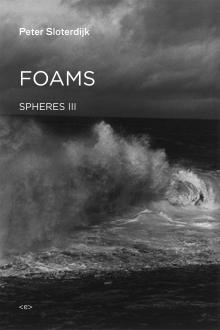
Peter Sloterdijk, Spheres III: Foams – forthcoming in September 2016

9781584351870The third and final volume of Peter Sloterdijk’s SpheresFoams, is forthcoming in September 2016 from Semiotext(e).

Foams completes Peter Sloterdijk’s celebrated Spheres trilogy: his 2,500-page “grand narrative” retelling of the history of humanity, as related through the anthropological concept of the “Sphere.” For Sloterdijk, life is a matter of form, and in life, sphere formation and thought are two different labels for the same thing. The trilogy also together offers his corrective answer to Martin Heidegger’s Being and Time, reformulating it into a lengthy meditation of Being and Space—a shifting of the question of who we are to a more fundamental question of where we are.

In this final volume, Sloterdijk’s “plural spherology” moves from the historical perspective on humanity of the preceding two volumes to a philosophical theory of our contemporary era, offering a view of life through a multifocal lens. If Bubbles was Sloterdijk’s phenomenology of intimacy, and Globes his phenomenology of globalization, Foams could be described as his phenomenology of spatial plurality: how the bubbles that we form in our duality bind together to form what sociological tradition calls “society.” Foams is an exploration of capsules, islands, and hothouses that leads to the discovery of the foam city.

The Spheres trilogy ultimately presents a theology without a God—a spatial theology that requires no God, whose death therefore need not be of concern.

As with the two preceding volumes, Foams can be read on its own or in relation to the rest of the trilogy.

Thanks to Chathan Vemuri for the link. I’ve updated my reading guide to Sloterdijk with a link to this work. (Incidentally, I’m not sure why ‘foams’, since ‘foam’ is already plural…)

Posted in Peter Sloterdijk, Uncategorized | 1 Comment

Kanthropology – CRMEP Graduate Conference 19-20 May 2016

Kanthropology – CRMEP Graduate Conference, Kingston University, 19-20 May 2016

“The mainstream marginalization of Kant’s anthropological writings, in part due to their racist content, arguably makes philosophy ill-equipped to think some of today’s most pressing concerns, notably with regard to ableism, racism, classism and sexism in philosophical discourse.”

The 2016 Graduate Student Conference of the Centre for Research in Modern European Philosophy (CRMEP; Kingston University) will focus on Kant’s anthropological works and their legacy. An associated reading group shall precede it.

Stella Sandford and Lewis Gordon as keynotes. Looks good, though clashes with the Political Geography conference at Warwick. But what a shame that no papers seem to connect the Anthropology to the Physical Geography

Posted in Conferences, Immanuel Kant, Uncategorized | 3 Comments

Peter Sloterdijk, Not Saved: Essays after Heidegger – forthcoming in late 2016 from Polity

Not Saved: Essays after Heidegger, translation by Ian Alexander Moore and Christopher Turner, Cambridge, Polity Press, forthcoming November 2016.

Posted in Martin Heidegger, Peter Sloterdijk, Uncategorized | Leave a comment

Duke University Press Launches New Series Collecting Writings of Stuart Hall

Stuart Hall, Collected Writings forthcoming from Duke University Press.

Laura Sell's avatarDuke University Press News

downloadStuart Hall (1932–2014) is widely acknowledged as one of the foremost cultural theorists and public intellectuals of the late twentieth century. Though circulated, read, and taught for decades, Hall’s seminal essays are widely dispersed, with many pieces out of print or difficult to find. A new Duke University Press book series Stuart Hall: Selected Writings brings together Hall’s well-known works with previously unpublished ones to create a portrait of his wide-ranging intellectual and political investments. The series will include the North American edition of Hall’s memoir, Displacements: Lives and Ideas in Two Black Diasporas.
The editors of the series are Stuart Hall’s widow Catherine Hall, of University College, London; and Bill Schwarz of Queen Mary, University of London. As the literary executors of Stuart Hall’s estate, they have engaged many of Hall’s students and colleagues—often major figures in themselves— to produce the series volumes.

“Stuart Hall was one of…

View original post 398 more words

Posted in Uncategorized | 1 Comment

Jacques Bidet, Foucault with Marx

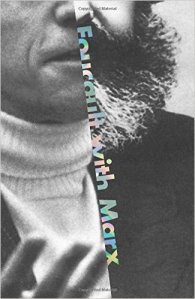
513OUC4jIzL._SX323_BO1,204,203,200_Jacques Bidet, Foucault with Marx is now out with Zed books. While I confess to being a bit disappointed with this, the book has some good advance praise from Etienne Balibar and Bob Jessop…

‘The ongoing confrontation between Marx and Foucault is a primary theoretical issue implicit in every political struggle today, whether domestic or international.  Bidet’s careful and detailed staging of the intersections of these two quite different bodies of theory is an indispensable exercise.’ Fredric Jameson, author of The Political Unconscious and Marxism and Form  ‘In the growing literature confronting and combining the legacies of Marx and Foucault, Jacques Bidet’s contribution will stand out with exceptional relevance. It is both firmly anchored in the author’s doctrine of the “dual” nature of capitalist domination (capital as property and capital as knowledge) and full of imaginative readings of the texts.’

Etienne Balibar, co-author of Reading Capital

‘In this important work, Jacques Bidet shows with patient and piercing insight why it is necessary to think Foucault with Marx (and Marx with Foucault) in order to make sense of the contemporary world. It will undoubtedly become an essential work for anyone seeking to think through the productive relations between the two thinkers.’ Nick Srnicek, co-author of Inventing the Future: Postcapitalism and a World Without Work ‘Bidet creatively interrogates Marx’s critique of property and class relations and Foucault’s critique of knowledge-power relations to produce an original synthesis that informs a novel approach to resistance and struggles for counter-hegemony in the present neoliberal conjuncture.’

Robert Jessop, author of The Future of the Capitalist State

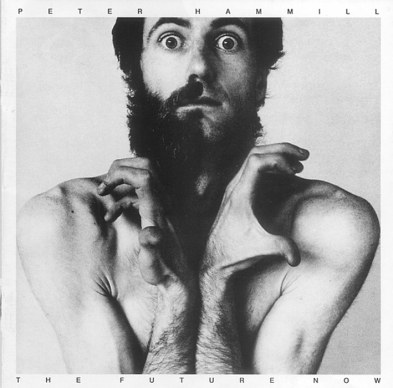
Peter_Hammill_The_Future_NowGood cover, though it does remind me of Peter Hammill’s album The Future Now from 1978…

Posted in Karl Marx, Michel Foucault, Uncategorized | Leave a comment

Foucault, Subjectivity and Truth course due in English in October 2016

Foucault’s 1980-81 course, Subjectivity and Truth, is due for publication in English in October/November 2016. Thanks to Chathan Vemuri for alerting me to this. At the moment details are few, but the price is high at £82 or $119. I hope this isn’t a sign of how Palgrave, now part of Springer, will be pricing from now on. As previously mentioned, this is the last of the courses translated by Graham Burchell – he has done all but the first (‘Society Must Be Defended‘) and the last to be translated, Penal Theories and Institutions.

Update: I now understand that Graham Burchell is translating Penal Theories and Institutions.

Posted in Foucault's Last Decade, Michel Foucault, Uncategorized | Leave a comment

Ian Kline on “On Schmitt and Space” by Claudio Minca and Rory Rowan

Claudio Minca and Rory Rowan’s book on Schmitt reviewed on the Society and Space open site.

Posted in Uncategorized | Leave a comment