Foucault: the Birth of Power Update 9 – restructuring the drafts of Chapters Four and Six

Foucault: The Birth of Power is taking shape. The first half of this book is comprised of three chapters: Measure, Inquiry, Examination. These treat, in order, Lectures on the Will to Know, Théories et Institutions Pénales, and The Punitive Society, along with related publications. If those courses, and analyses, can be seen as the progressive development of concepts and tools, the second half of the book looks at how they were put into practice, in analyses of Madness, Discipline and Health. The idea is that each of these chapters looks at lectures, publications and activism together around those themes.

IMG_0123.JPG

GIS, CERFI and related documents and reports on health and mental illness

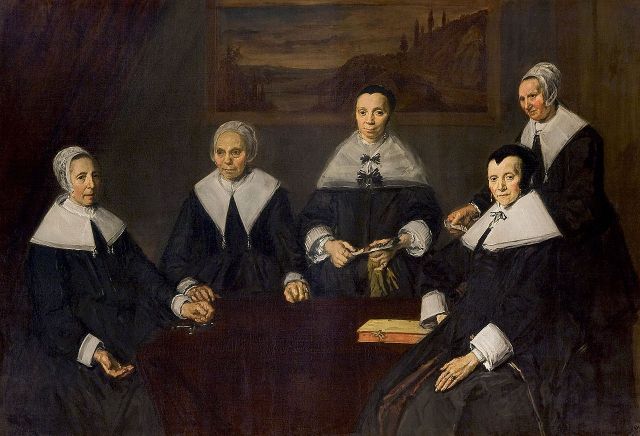
Chapter Six, which discussed Foucault’s work with the Groupe Information Santé (GIS), collaborative research projects at the Collège de France and with CERFI, and the 1974 lectures on medicine in Rio, was becoming much too long. Some major restructuring was needed. This became easier as I started to edit Chapter Four into shape. Chapter Four was mainly a discussion of the Psychiatric Power course, but now it is much more generally about the early 1970s work on psychiatry, of which that course is only one part. I ended up moving the whole discussion of Foucault’s early Collège de France seminars to this chapter, as well as the brief discussion of the Groupe Information Asiles (GIA). The early seminars are on penal psychiatry, and result in the I, Pierre Rivière volume. I’d initially used the discussion of the seminars to lead into a broader discussion of collaborative research, but I think the theme fits better with the treatment of psychiatric power in Chapter Four. I also added a brief discussion of a 1973 lecture on antipsychiatry, published in the Cahier L’Herne; and posted a little here on Frans Hals, The Regents and the History of Madness – a painting added to the 1972 edition of the book.

Foucault was one of the founders and major participants in the Groupe d’Information sur les prisons (GIP), played a lesser but significant role in the GIS, and had limited involvement with the GIA. David Macey claims the GIA “was founded and functioned without any help from Foucault”, though I think there is a little more to say than that. Foucault only had peripheral direct involvement with the GIA, but they worked with the GIS and with the Comité d’action prisonniers (CAP) – a kind of successor group to the GIP.  Ideally I’d talk about the GIP first, then the GIA as the first group that based itself on the model, and then the GIS. But the order I want to discuss the substantive topics of psychiatry, prisons and health mean that the GIA discussion will need to come before the GIP part. The alternative would be to talk about Discipline and Punish before Psychiatric Power, but that doesn’t work for more important reasons; or to separate the activist work from the academic treatment of the related issues, which I want to resist. So a brief discussion of the GIA before the GIP seems the least bad option. I’ll keep thinking about this.

Sorting out Chapter Four, and incorporating the material from Chapter Six meant that both chapters now exist in pretty good draft form. Chapter Six works much better with the parts removed. Chapter Five on prison activism and Discipline and Punish will be the next, and final, chapter to draft. I’ve already collected lots of documentary material for this chapter, and spent some more time in the British Library newsroom recently, mainly tracking down petitions Foucault signed in Le Monde and news reports on activities of the GIP and related groups. So I think I have most of the raw material and resources I need, but now have to shape it into some order.


As I’ve said before, Foucault’s Last Decade is now available to pre-order. For more information on these two books, see the descriptions here. Audio and video recordings relating to them are here; and a full list of the updates I’ve been posting on the process of writing here. Some translations, bibliographies, scans and links are available at Foucault Resources.

Posted in Foucault's Last Decade, Foucault: The Birth of Power, Michel Foucault | 2 Comments

Theory, Culture & Society E-Special Issue: Fiction & Social Theory – edited by David Beer

Fiction_coverTheory, Culture & Society E-Special Issue: Fiction & Social Theory – edited by David Beer
This special issue brings together a range of articles from the Theory, Culture & Society archive that directly explore the relations between fiction and social theory. Each article develops a different perspective on these relations yet they all share a common interest in probing at the different ways in which fiction can enrich and provoke our conceptual imaginations. These articles ask how theory can be used to understand or illuminate fiction, whilst also considering how theory can be extended, challenged or informed by fictional resources. The selected articles can be viewed in terms of three overlapping approaches. First, there are those that use fiction to extend the imagination of social theory. Second, are the articles that use fiction as a documentary resource and platform for theorizing. And, finally, there are those articles that use theory to reanimate and re-examine fictional forms. In exploring these three intersecting branches this e-special issue helps illustrate the different ways in which fiction and social theory might interweave in our thinking. The articles gathered here provide frameworks, ideas and resources through which the reader can continue to think imaginatively and creatively about the social world.

Posted in Theory, Culture and Society, Uncategorized | Tagged | 1 Comment

Shiloh Krupar, ‘Operational Banality: medical geographies of administration and the biopolitical grotesque’ – Neil Smith lecture video

Shiloh Krupar, ‘Operational Banality: medical geographies of administration and the biopolitical grotesque’ – second Neil Smith lecture video. Thanks to Derek Gregory for the link.

Neil Smith Lecture Nov 2015 from University of St Andrews on Vimeo.

Posted in Uncategorized | Tagged , | 1 Comment

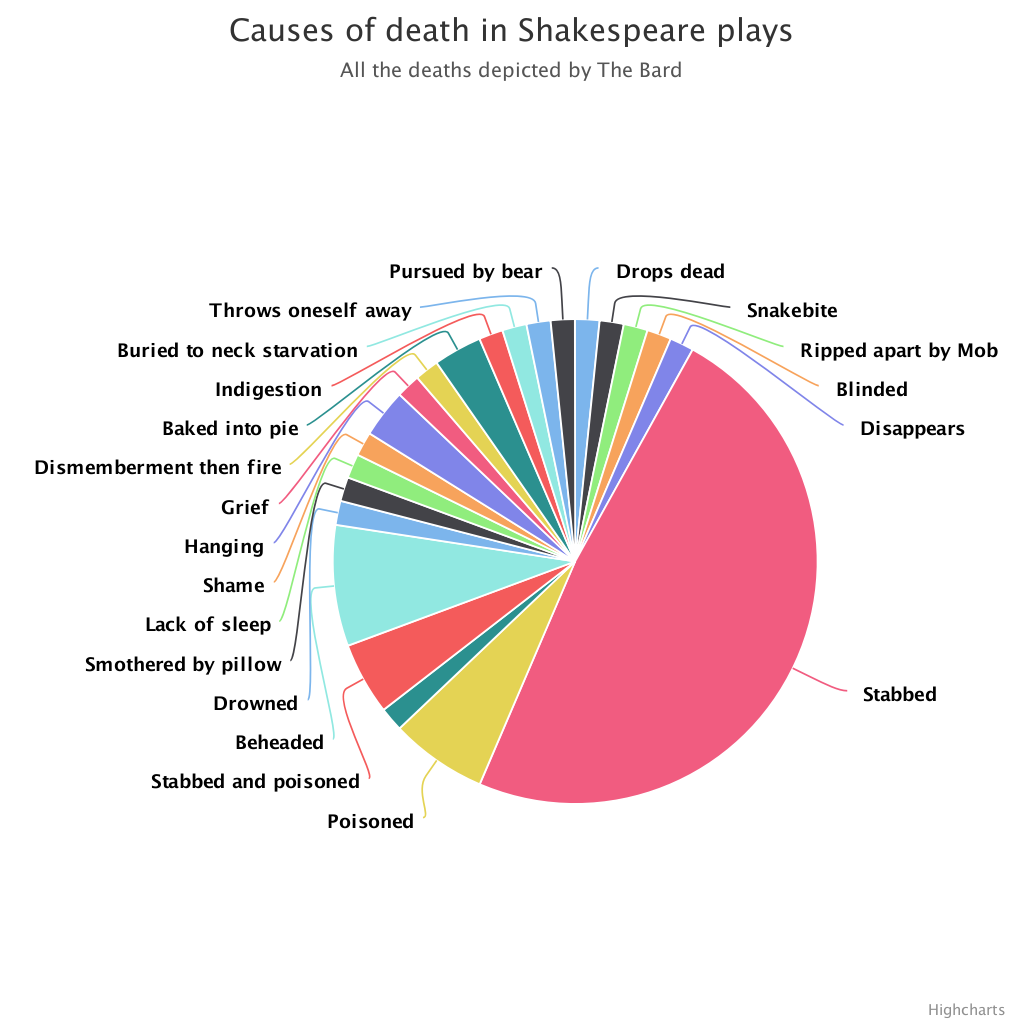
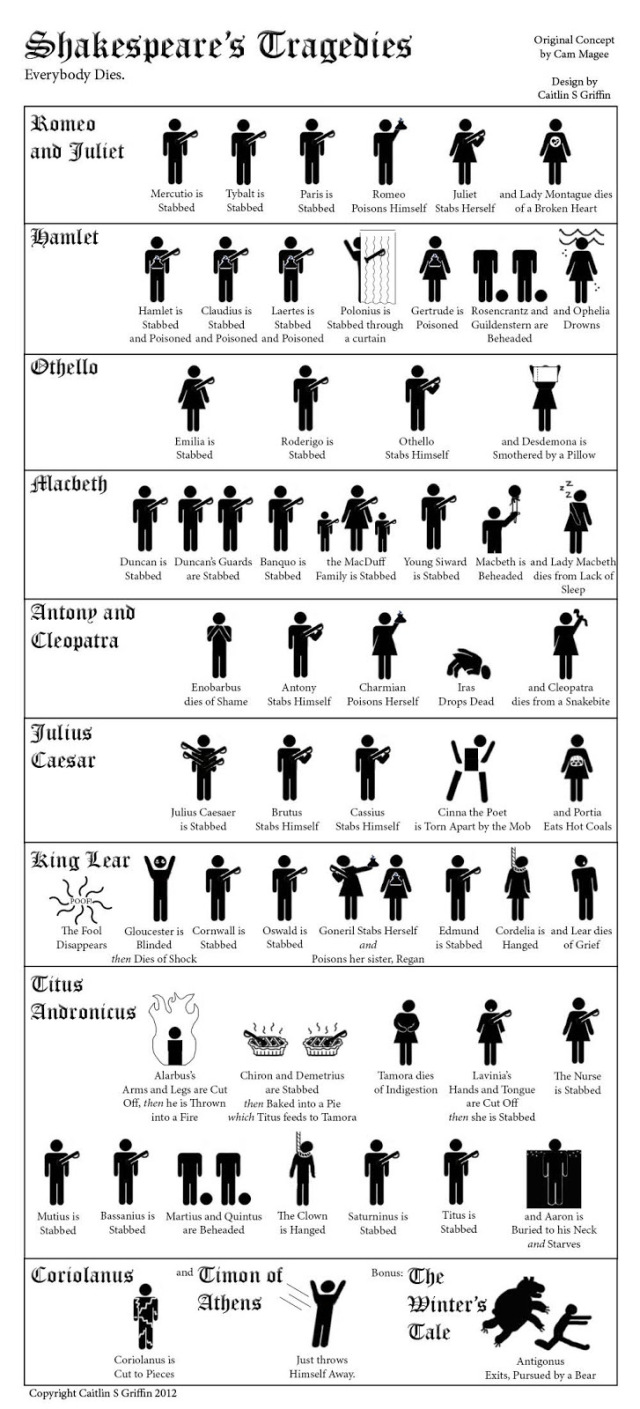
Causes of deaths in Shakespeare’s plays visualised

Thanks to Murray Low for sharing this graphic

Attachment-1

Here’s another one, which I’ve shared on the blog before (from Biblioklept)…

tragedies-2

Posted in Uncategorized, William Shakespeare | 1 Comment

Álvaro Reyes (2015) Zapatismo: other geographies circa “the end of the world” Spanish translation

Spanish translation of a piece in Society and Space – English original is currently open access.

Posted in Uncategorized | Leave a comment

Foucault on Frans Hals, The Regents and the History of Madness

In his 1971 interview with Fons Elders, rediscovered and then padded out to form a small book entitled Freedom and Knowledge, Foucault says that publishers have tended to illustrate his work on madness with Bruegel, Bosch and Goya. But he has another painting in mind: Frans Hals, The Regents.

In the above, edited, video there is a brief discussion around 2 minutes in.

The painting is found, in a fairly poor quality black and white reproduction, in the 1972 Gallimard edition of Histoire de la folie. As far as I’m aware it is not in any other French or English editions, and it is not discussed in the book.

1280px-Frans_Hals_-_De_regentessen_van_het_oudemannenhuis

Frans Hals – De regentessen van het oudemannenhuis” by Frans Hals (1582/1583–1666) – licensed under Public Domain via Commons.

Here’s what Foucault says in the published interview with Elders:

So from here, well, if I were asked to illustrate with visual art the history of madness, I would not choose what my publishers ordinarily choose for the covers of my books. In general they pick Bruegel, Bosch, sometimes they choose Goya. That is not what I would choose. The problem basically is to show the transition from Bruegel to Goya; that is, how we moved from a certain experience of madness, which was, as it were, an objective experience. Madness was characterized with bizarre and imaginary figures that traveled the world, passed through it, and swarmed there; such was the experience of madness in the 16th century. And in the 19th century we see the emergence with Goya, with Fuseli, with Blake, of the subjective expression, as if it were from within madness, of what the mad feel, which Bruegel did not know.

Having come now into broad daylight, it’s as if we could finally see, hear, know, what was inside of madness. How did such passage from Bruegel or Bosch to Goya, Fuseli and Blake happen? I would say that it is through an experience that found its pictorial expression in one of the most famous paintings of Dutch art, by Frans Hals, that is to say, in “The Regents”. It is in “The Regents” of the hospital that my historical research on madness is illustrated best. There around a table are these five old women whose job it is to hold, to run this house of imprisonment, where during the 17th and later during the 18th century, all socially worthless people, the troublemakers were imprisoned. These women are actually the expression of our society’s rationalization that sets madness apart.

At the center of the painting we see a closed hand-held fan. This is the symbol of all pleasures, of society’s futility folded up on itself, excluded. Looking at both sides [of the painting], we can also see on the right a woman holding her big register under her hand; that’s the accounting of life, of things. And on the left, we see a woman holding coins in her hand; that is, basically the West’s accounting economy. Together they hold back the experience of madness. And it is from here on that the science of madness was able to develop. My history of madness is indeed best illustrated from that Frans Hals painting.

As far as I’m aware, the only other (very brief) mention of Frans Hals by Foucault is in a 1972 interview ‘Le grande enfermement’, text 105 in Dits et ecrits. There is no published English translation, though one is forthcoming. There, Foucault describes it as ‘one of the most disturbing [bouleversants] pieces ever painted in the West’ (II, p. 296).

The only discussion I know is in the introduction to Gary Shapiro’s 2003 book Archaeologies of Vision. Shapiro rightly notes that the 1972 interview is around the time of the publication of the new edition of the book; the 1971 one is presumably around the time he was deciding on the material to be included and excised. Shapiro was writing before the publication of the Elders’ interview, so he had less Foucault on Hals to draw upon, but elaborates an interesting reading. Further references to secondary literature would be welcome – as well as corrections if I’ve missed any discussion by Foucault.

Posted in Foucault: The Birth of Power, Michel Foucault, Uncategorized | Tagged , , | 12 Comments

Benedict Anderson tributes

Benedict Anderson has died aged 79. Tariq Ali writes and links to some tributes at Verso‘s site, and an archive of his articles can be found at the London Review of Books.

Posted in Uncategorized | 1 Comment

Top posts on Progressive Geographies this week

Posted in Uncategorized | 1 Comment

Steve Mentz, Shipwreck Modernity: Ecologies of Globalization, 1550–1719

image (1)Steve Mentz, Shipwreck Modernity: Ecologies of Globalization, 1550–1719 now out.

The familiar story of shipwreck revealed as an allegory of ecological catastrophe.

Traces of shipwreck ecology appear in canonical literature from Shakespeare to Donne and also in sermons, tales of survival, and diaries of seventeenth-century English sailors. Offering the first ecocritical account of early modern shipwreck narratives, Shipwreck Modernity reveals the surprisingly modern truths to be found in these early stories of ecological collapse.

Posted in Uncategorized | Leave a comment

Slavoj Žižek – Hegelian Battles – 3 Lectures

Slavoj Žižek – Hegelian Battles – audio recordings of Birkbeck lectures from December 2015.

The battle for Hegel goes on – new interpretations are emerging which perhaps pose an even greater threat to Hegel’s legacy than the usual rejections of Hegel. This series of lectures will provide a cognitive mapping of this twisted terrain, with the aim to redeem Hegel for the radical thought.

2 December 2015 Lecture 1:  Against recognition: a critique of the liberal reading of Hegel (Pippin, Brandom)

3 December 2015 Lecture 2: What is reconciliation? Hegel against Schiller

4 December 2015 Lecture 3: Hegel in Athens: what would Hegel have said about our predicament?

Posted in Georg Wilhelm Friedrich Hegel, Slavoj Zizek, Uncategorized | 1 Comment