Geography and Politics Redux? – open access virtual theme issue of Transactions, edited by Richard Powell (including essay by me)

Screen Shot 2015-09-10 at 16.57.08Geography and Politics Redux?‘ – open access virtual theme issue of Transactions of the Institute of British Geographers, edited by Richard Powell.

It includes my 2005 piece ‘Missing the point: globalization, deterritorialization and the space of the world‘.

That piece took a long time to come together, and I gave talks on the topic some years before. It also, as I recall, took a while to appear in print after acceptance. It was one of the first places that I tried to develop a theory of territory, and set the scene for much of what I went on to do since. As Richard generously says in a note to his introduction, “This paper forms the embryonic outline of the argument that was recently used in Elden’s magnum opus, The birth of territory (2013)”.

There are several great papers in this issue, all freely available for the next twelve months.

Posted in My Publications, Politics, Territory | 1 Comment

Foucault on Prisons (and Elden on Schmitt) in Radical Philosophy open access to link to Nottingham conference

From the good people at Radical Philosophy, in relation to tomorrow’s conference:

A free two-day conference, ‘Time Served: Discipline and Punish Forty Years On,’ begins tomorrow at Nottingham Trent University, rethinking the legacy of Foucault’s text today and RP contributor Stuart Elden will be giving the first plenary. We’ve therefore opened up this interview with Foucault from 1977 (‘Prison Talk’ in rp16) as well as Stuart’s article on ‘Reading Schmitt geopolitically’ from rp161 (2010).

Foucault Interview

Reading Schmitt geopolitically:

Details of the Foucault conference are available here:

Posted in Carl Schmitt, Conferences, Michel Foucault, My Publications | 1 Comment

Preparing for the ‘Time Served: Discipline and Punish Forty Years On’ conference

174160Tomorrow I’ll be giving the opening plenary lecture to the ‘Time Served: Discipline and Punish Forty Years On‘ conference, organised by Sophie Fuggle and held at the Galleries of Justice in Nottingham.

My talk is entitled “Before the Punitive Society: The Inquiry of Théories et institutions pénales” (abstract).

The talk is drawn from a longer piece, actually a first draft of Chapter Two of Foucault: The Birth of Power, which I’ve been working on the past few weeks. The first part of the chapter looks at Foucault’s analysis of the Nu-Pieds revolts of the seventeenth century, and especially how his work sits between the analyses of Boris Porchnev and Roland Mousnier. I’ll be speaking about that at the Historical Materialism conference in November. In the present talk I’m hoping to relate the analysis of Théories et institutions pénales, and its ‘course summary’, to the ‘Truth and Juridical Forms’ lectures from Rio in 1973. Both the summary and the Rio lectures extend the analysis of this course in important ways. To fill out some of the detail I’m going to say a bit about the work I’ve been doing over the past couple of months in Paris going through Foucault’s preparatory notes. The talk is currently too long, so one of the tasks today is to find some things to edit out, and to practice it again.

I’m travelling up this afternoon, as this evening there is a screening of the Sur les toits film about French prisons in the early 1970s. I’ve not seen this before, so looking forward to that.

Posted in Conferences, Foucault: The Birth of Power, Michel Foucault | Leave a comment

LSE has digitized Fabian society archives from 1884-2000

This sounds like a useful resource.

Jeremy Schmidt's avatarJeremy J Schmidt

Some really interesting historical tracts from the Fabian society on all sorts of topics–poverty, property, labour and so on–are now available in digital format here.

View original post

Posted in Uncategorized | Leave a comment

Open access collection from E-IR – Nations under God: The Geopolitics of Faith in the 21st Century

Open access collection from E-IR –  Nations under God: The Geopolitics of Faith in the 21st Century.

NuG-front-cover

This edited collection presents a balanced analysis of the multifaceted roles taken on by religions, and religious actors, in global politics. The volume brings together over thirty leading scholars from a variety of disciplines such as political science, IR theory, sociology, theology, anthropology, and geography.

Utilising case studies, empirical investigations, and theoretical examinations, this book focuses on the complex roles that religions play in world affairs. It seeks to move beyond the simplistic narratives and overly impassioned polemics which swamp the discourse on the subject in the media, on the internet, and in popular nonfiction.

Posted in Uncategorized | Leave a comment

RSC new season announced – Hamlet, Cymbeline, A Midsummer Night’s Dream, Dr Faustus, The Alchemist, Don Quixote – but no King Lear

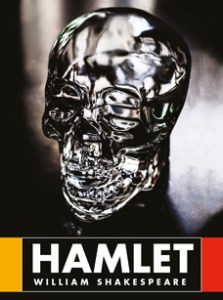
hamletThe RSC’s new season for summer 2016 has been announced – Hamlet, Cymbeline, A Midsummer Night’s Dream, Dr Faustus, The Alchemist and Don Quixote…  The first three are in the main theatre; the non-Shakespeare plays in the Swan. I hope to get to all of them.

I saw Hamlet at the RSC in 2013 (as well as other productions this year – see here and here), and the RSC’s A Midsummer Night’s Dream with Mendelssohn’s music at the Queen Elizabeth Hall earlier this year, but these are different productions. Paapa Essiedu is Hamlet. It was reported earlier this year that Antony Sher would be doing King Lear in summer 2016, so I guess that’s postponed until the second season?

Posted in William Shakespeare | Leave a comment

Does Anyone Have English Translations of GIP Intolerable docs?

A few links to documents relating to the Group d’Information sur les Prisons and a question about further material. Here’s what I know –

Marcelo Hoffman’s Foucault and Power has a translation of the ‘Inquiry into Twenty Prisons’ as an appendix; and there is a collection of documents on and by the GIP, including from the Intolérable collection and the earlier (and out-of-print) IMEC volume Archives d’une lutte, forthcoming from University of Minnesota Press.

Update: Marcelo has pointed out there is also a translation of ‘The Masked Assassination of George Jackson’ in Joy James’s Warfare in the American Homeland. There is a pdf of it here.

dmf's avatarDeterritorial Investigations

View original post

Posted in Uncategorized | 1 Comment

Volume 33 Issue 4 out now – currently open access

New issue of Society and Space published, all currently open access.

Posted in Uncategorized | 1 Comment

Boris Porchnev/Porshnev on feudalism – were any of his works translated from Russian?

I mentioned Boris Porchnev/Porshnev in a previous post today, looking at the two editions of his work on peasant uprisings in seventeenth century France. Foucault uses his work in his reading of the Nu-Pieds revolts in Théories et institutions pénales. In Claude-Oliver Doron’s essay on Foucault’s use of historians in that volume, there is a brief mention of Porshnev’s work on feudalism (TIP 293 n. 6).

Doron notes two books and an article in French on this theme, but provides no bibliographical references. The titles appear to be translations of the titles of Russian texts, taken from Igor Filippov, “Boris Porchnev et l’économie politique du féodalisme”, in Serge Aberdam and Alexandre Tchoudinov, Ecrire l’histoire par temps de guerre froide: Soviétiques et Français autour de la crise de l’Ancien régime, Paris: Société des études robespierristes, 2014, pp. 149-76, p. 150 (available online at academia.edu).

So, the question:  were any of his works on feudalism actually translated from Russian?

I’ve found a few references to one of the books as Essai d’économie politique du féodalisme, Paris: Éditions du Progrès, 1979, but I can’t find a copy in any online second-hand book stores, and worldcat.org suggests only one library in the world (in Canada) has a copy. That seems unusually few copies in circulation given the publisher – I believe it was the French equivalent of Progress Publishers, based in the USSR which did lots of translations of Marxist and other works during the Cold War.

Anyone shed any further light on this? (I know other works of his are in French – it’s the work on feudalism I’m interested in…)

Posted in Boris Porshnev, Foucault: The Birth of Power, Michel Foucault | 1 Comment

The Barbican’s production of Hamlet, with Benedict Cumberbatch

HamletLast Friday I went to see the Barbican’s production of Hamlet, directed by Lyndsey Turner, and starring Benedict Cumberbatch, Ciarán Hinds, Anastasia Hille, and Siân Brooke. Tickets sold out very quickly, but occasionally returns become available and a bit of persistence paid off. There are some available on the day, and I saw quite a few people pick up returns. It’s also being broadcast live-to-cinema on 15 October.

When I’ve talked about Hamlet for the Shakespeare project, I’ve said that one of the reasons I like the Kenneth Branagh film is its ability to give a sense of the much broader scale of the story, outside the claustrophobic court of Elsinore. This is so often sacrificed in stage productions, because of the difficulty in portraying some of those concerns. I said a bit more about that in a brief review of the Classic Stage Company version starring Peter Sarsgaard I saw in New York earlier this year.

As many reviews have noted, Cumberbatch himself was excellent, and I’m very pleased I saw it. The production of Hamlet though has had some criticisms. I didn’t find these a major distraction, and was intrigued by the staging. The Barbican doesn’t have a curtain, but a shutter. The scene opens on a single small room for the opening scene of Hamlet and Horatio (the appearance of the ghost just implied by a ‘who’s there?’), but then the back wall lifted up to open onto a huge set of a palace interior, but with a balcony and stairs down; and doorways to larger spaces beyond. I’ve seen productions at the Barbican before, but never felt the size of the stage in this way. After the interval, the shutter opened but to the same scene covered in rubble, dust and ashes. For the initial scene of the second half – Fortinbras’s camp and Hamlet’s encounter with the soldier as he is led away to England – this worked well. Without mass of numbers, it did give the sense of an army on the move. It was convincing, and must be quite a job to unload all this and then clean it up again during and after performances. The only downside was that there was clearly foam or something similar underneath the bigger piles, and so the cast moved a bit up-and-down on the spongy bits.

For the rest of the play though, the devastated landscape remained, and of course, much of the action is back in the castle or palace. It worked well for the burial scene, but less well for other parts, and they had to clear a path for the fencing bout. Fortinbras’s return right at the end worked nicely though, as the devastated court now matched the war outside as he clambered down the rubble to take the crown. The back-story of the King Hamlet-King Fortinbras duel, on the day of Hamlet’s birth, was quite substantially cut in this version, but enough was provided to make sense of the wider framing of the events. (That’s my focus in the reading I’m developing, so of course I’m especially interested in that aspect.)

Overall I thought it was very good, and I’d be going to see the live-to-cinema version too, if it didn’t clash with a Franco Moretti lecture at Queen Mary, but perhaps there will be encore screenings. The clash is ironic, in that Moretti’s analysis of Hamlet was one of the first things of his read.

Earlier last week I’d seen Christopher Marlowe’s Tamburlaine the Great at the small Tristan Bates theatre, and there they had managed to portray the vast geopolitical scale of the events with lighting, choreography and music. Heavily cut – the two plays in just over two hours – but well done. Tickets for that are still available, and much cheaper, though it’s only on for another few days.

Posted in Franco Moretti, Shakespearean Territories, William Shakespeare | Tagged , , | 4 Comments