Philippe Sabot, Le Même et l’Ordre: Michel Foucault et le savoir à l’âge classique

This looks interesting. Thanks to Graham Burchell for the link: Philippe Sabot, Le Même et l’Ordre: Michel Foucault et le savoir à l’âge classique.

29021100169610LDans Les mots et les choses (1966), Michel Foucault accorde une place centrale à l’analyse de la disposition archéologique du savoir classique. Le présent ouvrage s’attache à expliciter les principaux enjeux de cette analyse, en montrant qu’elle renvoie au fond à une double interrogation. De quelle pensée du Même l’épistémè de l’âge classique relève-t-elle ? Et comment cette pensée du Même en vient-elle à organiser la mise en ordre des choses dans des savoirs positifs (grammaire générale, histoire naturelle, analyse des richesses) qui s’élaborent eux-mêmes suivant les contraintes épistémologiques fortes d’une nomenclature et d’une taxinomie ? La première interrogation engage clairement le statut philosophique d’une archéologie du savoir de l’âge classique. La seconde implique en outre, pour l’archéologue, une manière de travailler et de penser à partir de l’archive discursive d’une époque.

Le livre de Philippe Sabot s’efforce ainsi de rendre compte de cette double dimension de l’analyse archéologique de Foucault en attirant l’attention à la fois sur l’effort de systématisation dont relève une telle analyse et sur le traitement particulier qu’elle propose des archives du savoir.

Posted in Michel Foucault | Tagged | Leave a comment

Foucault, Œuvres I, II – forthcoming in the Pléiade series with Gallimard

Foucault, Œuvres I, II – forthcoming in the Pléiade series with Gallimard. Now has a page on the Gallimard site, with publication scheduled for November. On earlier reports, see here.

Posted in Michel Foucault | Leave a comment

My sabbatical rules for writing

I’m hoping to complete the manuscript for Foucault: The Birth of Power over the next 12 months – a sabbatical year and summer. I’ll be based in London most of the time. I’m also hoping to make considerable progress on the Shakespeare project. So, based on some previous experience – the Leverhulme fellowship which I had for The Birth of Territory, for example – I’m going to try to stick to the following plan.

  1. No email in the morning.
  2. Use the morning to write.
  3. Use afternoon (and frequently evening) for email, admin, editing, and reading.
  4. Facebook, Twitter, Feedly, etc. are not to be used on main computer; you have an iPad (kept in a different room) for that.
  5. Go to the British Library regularly, even if you don’t need to consult things. The Rare Books room is a place you’ve done a lot of good work before. Renew your ticket to the Warburg Institute for the same reason.
  6. Concentrate on the primary literature; the secondary literature can come later.
  7. Try to only agree to do talks that move the writing forward.
  8. You really can’t take on any other writing or editing projects.
  9. Going to see Shakespeare in the theatre counts as research. Make the most of being in London.
  10. Get to Paris regularly.
  11. Long bike rides help with coming up with ideas. This is not easy to do in London, where cycling requires constant concentration. So try to get out of the city at least once a week.
  12. Analogue Sunday – or at least, no work.
Posted in Books, Conferences, Cycling, Foucault's Last Decade, Foucault: The Birth of Power, Michel Foucault, Shakespearean Territories, Universities, William Shakespeare, Writing | 11 Comments

The 2015 Antipode RGS-IBG Lecture – “Offshore Humanism” by Paul Gilroy

Paul Gilroy to give the Antipode lecture at this week’s RGS-IBG conference.

Antipode Editorial Office's avatarAntipodeFoundation.org

On Wednesday 2 September Prof. Paul Gilroy (Department of English, King’s College London) will be presenting the 2015 Antipode RGS-IBG Lecture, “Offshore Humanism”.

After EmpireThe lecture will interrogate the contemporary attractions of post-humanism and ask questions about what a “reparative humanism” might alternatively entail. Prof. Gilroy will use a brief engagement with the conference theme — “geographies of the Anthropocene” — to frame his remarks and try to explain why antiracist politics and ethics not only require consideration of nature and time but also promote a timely obligation to roam into humanism’s forbidden zones.

The lecture will take place in the University of Exeter Forum’s Alumni Auditorium in Session 4 (from 16:50 to 18:30), and be followed by a drinks reception sponsored by the journal’s publisher Wiley.

Darker than BlueOur speaker is Professor of American and English Literature at King’s College London, having previously been Giddens Professor of Social Theory at the London School of Economics (2005-2012), Charlotte…

View original post 155 more words

Posted in Uncategorized | 2 Comments

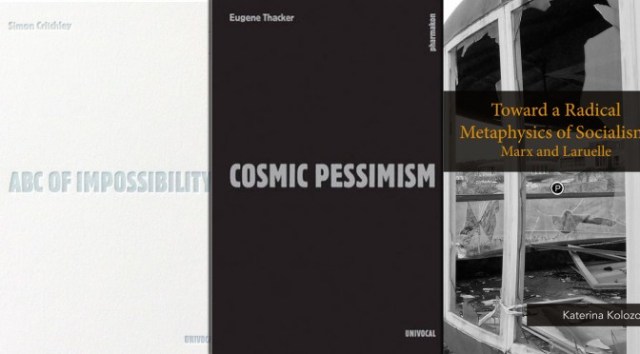
7 critical theory books that came out in August from critical-theory.com – Critchley, Thacker, Alcoff, Krell, et. al.

august-2015-critical-theory-books-672x3727 critical theory books that came out in August from critical-theory.com

Posted in Uncategorized | 1 Comment

10 Steps to PhD Success – a response to the THE post on ‘failure’

10 Steps to PhD Success – a response to the THE post on ‘failure’ by Fiona Whelan. Thanks to Jeffrey Jerome Cohen for the link to this

Posted in Uncategorized | 1 Comment

Top posts on Progressive Geographies this week

A quiet week on the blog – I was in Paris most of the week doing work in the BNF (see no 4 below), which doesn’t have internet in the manuscripts room, so no distractions…

Posted in Uncategorized | Leave a comment

Geopoliticus Child: Drone Workshop in Neuchatel

A report on the recent drones conference in Neuchâtel.

Posted in Uncategorized | Leave a comment

Spatial Justice and the Irish Crisis reviewed

Spatial Justice and the Irish Crisis, edited by Gerry Kearns, David Meredith and John Morrissey, reviewed at the Society and Space open site.

Posted in Uncategorized | Leave a comment

“Future Fossils” Exhibition by Beth Greenhough, Jamie Lorimer and Kathryn Yusoff

A Society and Space open site forum on the notion of ‘Future Fossils’.

Posted in Uncategorized | Leave a comment