The Fabric of Space: Matthew Gandy’s new book on water, modernity and the urban imagination

News of a forthcoming book from Matthew Gandy

Jeremy Schmidt's avatarJeremy J Schmidt

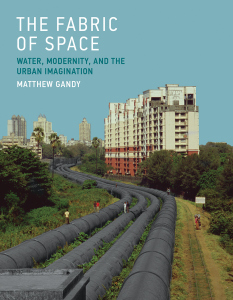
9780262028257This looks like a really interesting new title from MIT Press from Matthew Gandy. From the publisher’s website:

“Water lies at the intersection of landscape and infrastructure, crossing between visible and invisible domains of urban space, in the tanks and buckets of the global South and the vast subterranean technological networks of the global North. In this book, Matthew Gandy considers the cultural and material significance of water through the experiences of six cities: Paris, Berlin, Lagos, Mumbai, Los Angeles, and London. Tracing the evolving relationships among modernity, nature, and the urban imagination, from different vantage points and through different periods, Gandy uses water as a lens through which to observe both the ambiguities and the limits of nature as conventionally understood.

Gandy begins with the Parisian sewers of the nineteenth century, captured in the photographs of Nadar, and the reconstruction of subterranean Paris. He moves on to Weimar-era Berlin…

View original post 98 more words

Posted in Uncategorized | 1 Comment

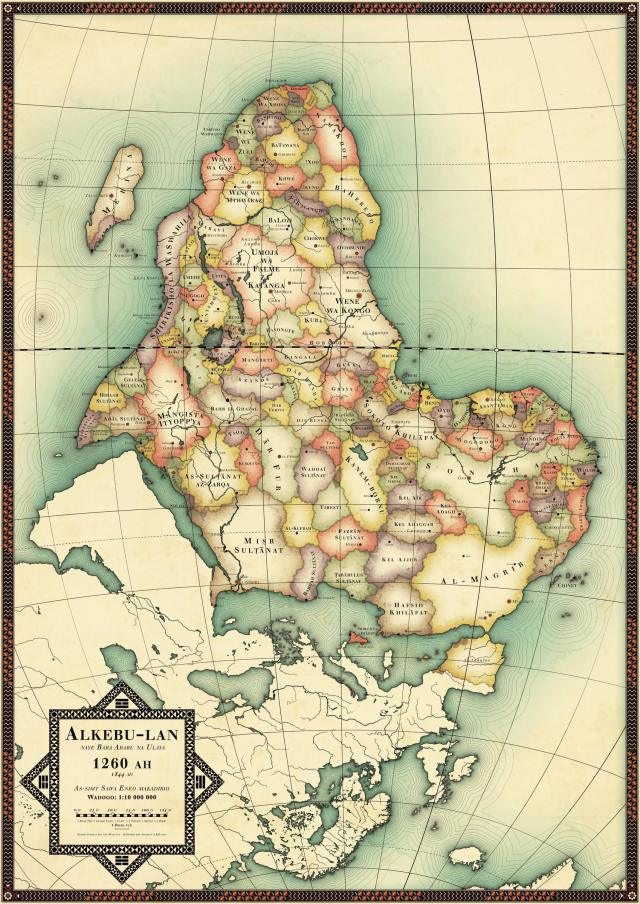
An alternative map of Africa – reimagining the continent without colonisation

I posted this map earlier in the year. The original source is here, made by Nikolaj Cyon, and it is discussed here 

stuartelden's avatarProgressive Geographies

An intriguing map of Africa, imaging how it might have looked had it not been colonised. This might be a good spur to class discussion, though one thing that should immediately be noted is that it’s not just that boundaries would have been in different places but that there may not have been boundaries at all, or at least not ones in our modern sense. Thanks to Nitasha Kaul for the link.

Africa

View original post

Posted in Uncategorized | 1 Comment

“Foucault’s Risks” by Anna Shechtman, Peter Raccuglia & Susan Morrow in LA Review of Books

Editor’s note: On October 17–18, 2014, Yale University hosted a conference exploring the intellectual and political legacy of Michel Foucault. The Los Angeles Review of Books asked three Yale graduate students to respond to this conference by focusing on what Foucault means for them, as scholars and theorists beginning their careers.

Read the piece here.


Posted in Michel Foucault | Leave a comment

The Natures of War

Derek Gregory shares the text of his Neil Smith lecture – ‘The Natures of War’ – the text itself is available here

Derek Gregory's avatargeographical imaginations

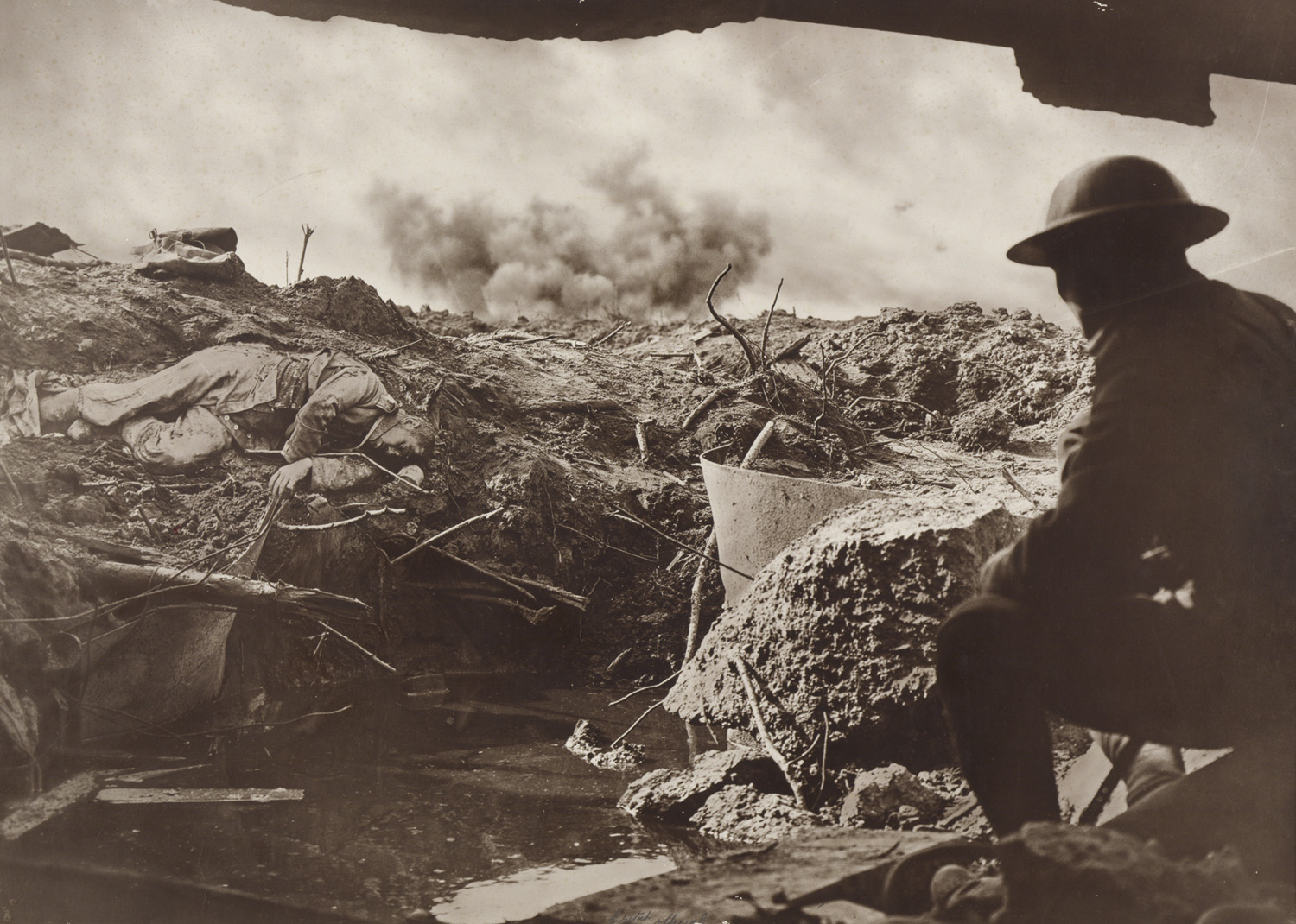
Frank-Hurley-2008-Photographing-the-First-World-War-Hurley-Document-Name-06-copy sm

I have – at last – uploaded what I hope is the final version of ‘The Natures of War’ (DOWNLOADS tab).  It’s the long-form version of the first Neil Smith Lecture I gave at St Andrew’s (Neil’s alma mater) almost exactly a year ago (you can access the online video here).  The basic argument remains the same, but the written version is substantively different (and much longer).  If you do have any comments or suggestions, or you spot any egregious errors, please let me know.  Here’s the introduction:

***

In his too short life, Neil Smith had much to say about both nature and war: from his seminal discussion of ‘the production of nature’ in his first book, Uneven development, to his dissections of war in the twentieth and early twenty-first centuries in American Empire – where he identified the end of the First World World and the end…

View original post 987 more words

Posted in Derek Gregory, Neil Smith, Politics, Territory | Leave a comment

“The geopolitics of Boko Haram and Nigeria’s ‘war on terror’” – now published in The Geographical Journal

Military Presence in Maitama, Abuja

Military Presence in Maitama, Abuja

My paper on Boko Haram is now published in The Geographical Journal. The paper requires subscription, but if you can’t get it another way, please feel free to ask me for a copy. Here’s the abstract.

The April 2014 kidnapping of the schoolgirls at Chibok, north-eastern Nigeria, has meant that Boko Haram is now widely discussed by Western governments and in Western media. Yet within Nigeria the group has been well known for several years. Boko Haram’s activities, or actions attributed to the group, have developed in a range of ways, many contradictory, including bombings, kidnappings of Europeans within Nigeria and neighbouring Cameroon, killing of medical personnel, and overtures for dialogue with the Federal Government. There are recurrent reports of links to Al Qaeda in the Islamic Maghreb, and in the past few years the United States has taken a much more active role in the region. Some of the wider geopolitical issues relate to the French-led intervention in Mali; a country to which Nigeria has also sent troops. This article tries to disentangle these different questions. It looks first at who Boko Haram are, and their history. It situates the group within the wider context of Nigerian politics, and to discuss the biopolitical and geopolitical elements of their operations and of the actions of the Nigerian security services and other actors towards them. It ends by relating what is happening within and beyond Nigeria to the wider context of the ‘war on terror’.

While writing this piece I compiled a long, annotated bibliography which is available here.

This issue of GJ also marks the end of Klaus Dodds tenure as editor – congratulations on a job well done.

Posted in My Publications, Politics, Publishing, Territory | Tagged , , , | 1 Comment

Public Funding for berfrois.com – please consider donating

I’ve now published five pieces on the www.berfrois.com website – the latest, with links to the others, is here. But I’m also a reader of the material they publish – very wide ranging, regularly interesting, and an important alternative to other, perhaps more commercial, outlets. There is, for example, a new interview with Danny Dorling on the 1% just posted. Berfrois have launched a funding campaign to keep going for another year, importantly to be advert-free. I’ve just donated a little – please do the same and share widely.

k70jcdfcrqpk6d08ocls

What is Berfrois?

Berfrois is a literary-intellectual online magazine featuring essays, poems and curiosities. It is published daily.

What We Need

We need $30,000 of funding to continue publication for another year.

The Results

Berfrois will remain publicly funded and free of advertisements.

Other Ways You Can Help

Tell your friends, tell your family, tell your lovers, tell-tale hearts.

Posted in Uncategorized | Leave a comment

Video of my ‘Foucault, Subjectivity and Truth’ lecture at Nottingham Contemporary

Video of my ‘Foucault, Subjectivity and Truth‘ lecture and the discussion following it, at Nottingham Contemporary gallery last night. The introduction is by Emma Moore, the discussion is with Colin Wright, Sophie Fuggle and Alex Vasudevan.

This was a really useful experience for me – it provided a non-negotiable deadline for me to work out what I wanted to say about this 1981 lecture course; but also provided a chance to talk about, and to some extent reinvigorate my enthusiasm for, the project as a whole. The first fifteen minutes or so are probably the best overview of the Foucault’s Last Decade book project I’ve yet delivered; and much of the discussion following the lecture is about the book as a whole, rather than just this lecture course.

Posted in Conferences, Foucault's Last Decade, Michel Foucault | 3 Comments

Peter Singer, ‘The Ethics of Fighting Ebola’

Peter Singer, ‘The Ethics of Fighting Ebola’ – also added to the long reading list here.

Posted in Ebola | Leave a comment

The quick death of slow scholarship?

An interesting piece from Innes Keighren on the process of writing and publishing a book, especially in the context of research assessment. I’m broadly sympathetic to this, and certainly to the idea of book writing. But I also wonder if one of the ways to ‘resist’ the dominance of research assessment exercises is to treat them as one of multiple constraints/factors/frames around our publishing, rather than the only one. For many other things – promotion, personal career and life satisfaction, a feeling of contribution to the discipline and debates, of having something to say that demands a particular form as a book, etc. – other factors are in play. The particular chronologies of the REF are there, undoubtedly, but other professional temporalities are too. One of the best pieces of advice I had was to think of the REF deadlines as a line drawn in your career, where things to the left of the line were in one REF; and to the right in another. Within that constraint, freedom can be found for other ways of working.

landscapesurgery's avatarLandscape Surgery

"Travels into Print". First manuscript draft (February, 2013).

Travels into Print. First manuscript draft (February, 2013).

Since joining Landscape Surgery in 2010, I have had a seemingly every-present item of business on which to offer updates during our fortnightly “newsrounds”: the progress made (or, more often, not made) in the production of a co-authored research monograph, Travels into Print: Exploration, Writing, and Publishing with John Murray, 1773–1859. With its origins lying in an 2008 AHRC-funded project, the book has (in one form of another) occupied me and my co-authors (the historical geographer Charles W. J. Withers and book historian Bill Bell) for much of the last six years—a literal and figurative example of what Eric Sheppard has called “slow geography”. Having completed the book’s index last month, Travels into Print is (at least as far as its writing is concerned) now finished. All that remains are the relatively fun tasks—approving the cover design, soliciting…

View original post 595 more words

Posted in Uncategorized | Leave a comment

The politics of speed

New Commentary at the Warwick Politics Reconsidered blog, this time on High Speed 2 and the politics of speed.

politicsreconsidered's avatarPolitics Reconsidered

stop hs2 large

By Philippe Blanchard

The territory of the University of Warwick should be split in a few years by the HS2, a High speed train that will join London to Birmingham, Manchester and Leeds. Political, economic and media elites at national level widely support the project. “The new railway will be an engine for economic growth. HS2 will generate jobs and help rebalance the economy between north and south”. An analogous quasi-consensus enabled the French TGV to join Lyon, Marseille, Nantes and Strasbourg to Paris since the 1980s. Similarly, the main oppositions to high speed in France came from future neighbours of the new rail track, afraid of losing their view and quietness. This is what the central platform of opponents, supported by the Labor Party, translated into the formula: “No business case, No environmental case, No money to pay for it”. Opponents make themselves more relevant and acceptable…

View original post 718 more words

Posted in Uncategorized | Leave a comment