Bradley Garrett receives conditional discharge – ‘a qualified victory for academic freedom’

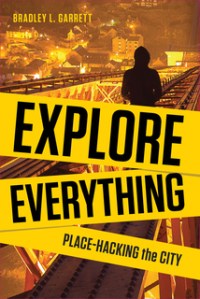
Explore_Everything_CMYK_300dpi-max_221-fb27ee2de94df07db9665c238cbf330fBradley Garrett, whose work I’ve praised on this site before, was yesterday given a ‘conditional discharge’ in relation to charges of ‘conspiring to commit criminal damage’. I exchanged some emails with Brad yesterday so knew about it, but there were some limits on reporting. The story has just been released by The Guardian, so it’s now clearly okay to talk about this.

It’s not a complete victory, as he still has a fine to pay, and it does raise a lot of important questions about academic freedom, especially for ethnography. But it’s still good news – the worst possible outcome was imprisonment. One way to celebrate, and support Brad, is to read some of his work – perhaps beginning with picking up a copy of the excellent Explore Everything: Place-Hacking the City or visiting his stunning website.

[Update: a piece on the case and the wider implications at The Conversation.]

Posted in Politics, Publishing, urban/urbanisation | Leave a comment

Sensing War: war, violence, militarism, bodies, sensation – 12-13 June 2014, London

Sensing War: war, violence, militarism, bodies, sensation

International Interdisciplinary Conference. 12 – 13th June 2014. London, UK

War is a crucible of sensory experience and its lived affects radically transform ways of being in the world.  It is prosecuted, lived and reproduced through a panoply of sensory apprehensions, practices and ‘sensate regimes of war’ (Butler 2012) – from the tightly choreographed rhythms of patrol to the hallucinatory suspicions of night vision; from the ominous mosquito buzz of drones to the invasive scrape of force-feeding tubes; from the remediation of visceral helmetcam footage to the anxious tremors of the IED detector; from the desperate urgencies of triage to the precarious intimacies of care; from the playful grasp of children’s war-toys to the feel of cold sweat on a veteran’s skin.

Recognising the recent growth of ground-breaking work on the senses across the humanities and social sciences, SensingWar aims to bring together researchers from a wide variety of disciplines to foster creative dialogue and critical exploration of the multiple and shifting relationships between war and sensation.  What concepts, resources and methods does the sensuous turn in scholarship offer to further our understandings of the myriad experiences of war and militarism?  How is war sensed by and for the drone operator, the occupied population, the female engagement team, the insurgent, the medic, the refugee, the veteran, the military family, the arms fair delegate, the war tourist, the video-gamer, the artist?  As war continuously shape-shifts, bleeding across the global flows of late modernity, how might attentiveness to sensory experience help us to rethink its genealogy and ontology?  How might we enable innovative and critical sensory engagements with war that allow us to see, hear, sense and understand it anew?

Full details here.

Posted in Conferences | Leave a comment

An interview with Elizabeth Grosz “Ontogenesis and the Ethics of Becoming” by Kathryn Yusoff

Kathryn Yusoff interviews Elizabeth Grosz on the Society and Space open site.

Posted in Uncategorized | Leave a comment

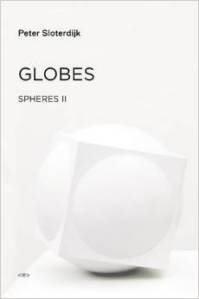
Peter Sloterdijk’s Globes: Spheres II forthcoming in October 2014

Now with a link to the MIT page for the book.

stuartelden's avatarProgressive Geographies

Unknown  Peter Sloterdijk’s  Globes –  Spheres II: Macrospherology listed on Amazon . It’s not on the Semiotext(e) page yet, but is on the MIT Press page (they distribute the books). It will be published in October 2014, and comes in at 1048 pages. Thanks to Chathan Vemuri for spotting this.

View original post

Posted in Uncategorized | Leave a comment

Herbert Marcuse, Collected Papers – sixth and final volume published

9780415137850Earlier this year, the sixth and final volume of Herbert Marcuse’s Collected Papers was published. The series was begun back in 1998, and they were edited by Douglas Kellner, joined by Clayton Pierce for the final two volumes. They are expensive –  £65 or $105 each, and even the earliest is not available in paperback, with even the e-books the same price. Maybe something to consider the next time I do review work for Routledge.

Thanks to Noir Ecologies for the link – worth a read for some reflections on Marcuse’s changing status as thinker and activist.

Posted in Herbert Marcuse, Publishing | Leave a comment

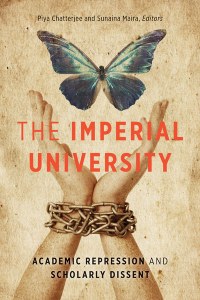
The Imperial University: Academic Repression and Scholarly Dissent

The Imperial University: Academic Repression and Scholarly Dissent – edited by Piya Chatterjee and Sunaina Maira and published by University of Minnesota Press.

image_mini

From the front lines of the war on academic freedom, linking the policing of knowledge to the relationship between universities, militarism, and neoliberalism

The Imperial University brings together scholars to explore the policing of knowledge by explicitly linking the academy to the broader politics of militarism, racism, nationalism, and neoliberalism that define the contemporary imperial state. Based on multidisciplinary research, autobiographical accounts, and even performance scripts, this urgent analysis offers sobering insights into varied manifestations of “the imperial university.” 


Posted in Books, Politics, Universities | Leave a comment

This Land is Your Land: Remaking Property After Neoliberalism – videos of a 2014 conference

“This Land is Your Land: Remaking Property After Neoliberalism” – videos of a 2014 conference at Harvard, organised by the Unbound: Harvard Journal of the Legal Left.

Other sessions here – via Mark Purcell at Path to the Possible.

Posted in Conferences | Leave a comment

Rare film of Le Corbusier in his Paris home and studio

Thanks to dmfant for the link.

Posted in Uncategorized | 1 Comment

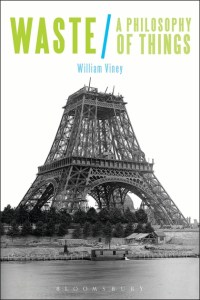
Will Viney, Waste: A Philosophy of Things – forthcoming in July

Will Viney, Waste: A Philosophy of Things – out now in July with Bloomsbury. 35% discount with code GLR D3D.

Will kindly gave me a proof copy. It provides a very interesting approach to the topic, including an intriguing reading of King Lear, substantial discussion of T.S. Eliot’s The Waste Land and James Joyce’s Ulysses, works of art and ruins, and engagement with speculative realism, Heidegger, Latour, Mary Douglas, anthropology and urban studies. It should be of wide interest.

9781472525536

Why are people so interested in what they and others throw away? This book shows how this interest in what we discard is far from new — it is integral to how we make, build and describe our lived environment. As this wide-ranging new study reveals, waste has been a polarizing topic for millennia and has been treated as a rich resource by artists, writers, philosophers and architects. Drawing on the works of Giorgio Agamben, T.S. Eliot, Jacques Derrida, Martin Heidegger, James Joyce, Bruno Latour and many others, Waste: A Philosophy of Things investigates the complexities of waste in sculpture, literature and architecture. It traces a new philosophy of things from the ancient to the modern and will be of interest to those working in cultural and literary studies, archaeology, architecture and continental philosophy.

Posted in Bruno Latour, Giorgio Agamben, Jacques Derrida, Martin Heidegger, urban/urbanisation, William Shakespeare | Leave a comment

Historical Materialism conference deadline extended until 1 June 2014

imageAbstracts are being accepted until 1 June 2014 for the London Historical Materialism conference 6-9 November 2014.

The theme of the conference is ‘How capitalism survives’…

Posted in Conferences | 1 Comment