
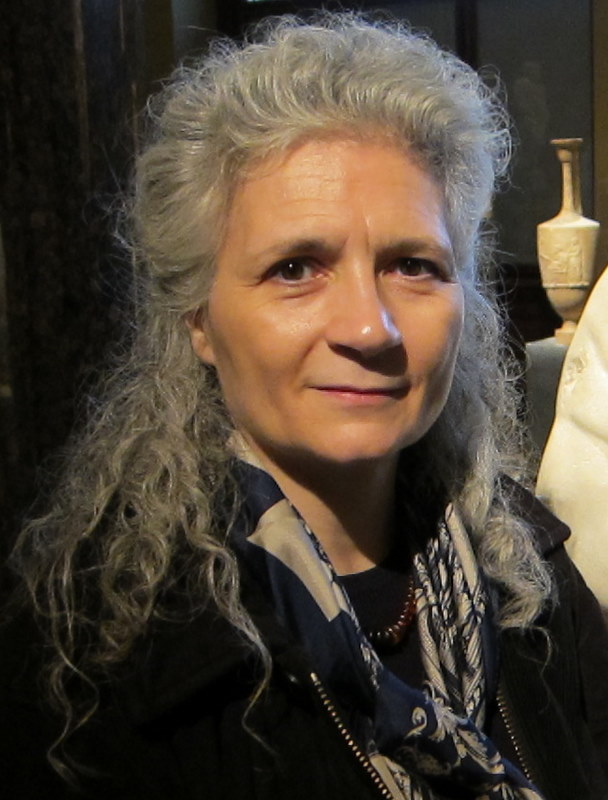
 Gary Shapiro in conversation with Babette Babich – watch it here.
The discussion ranges from Nietzsche to Hobbes, the nature of analytic philosophy, publishing, boundary 2, St. Paul, etc.
Gary Shapiro in conversation with Babette Babich – watch it here.
The discussion ranges from Nietzsche to Hobbes, the nature of analytic philosophy, publishing, boundary 2, St. Paul, etc.
Initial details of the first Governing Emergencies workshop.
We’re exicted about the first Governing Emergencies workshop which is now taking shape – 23/24 September at the RGS in London. We’re going to trace some of the ways in which emergencies are governed today, around four themes: ‘Transformations in the Government of Emergency’, ‘Contemporary Logics and Techniques’, ‘Events and Non-Events’ and ‘Emergency Topologies’. Keynotes from Melinda Cooper and Janet Roitman, and other confirmed attendees/speakers include a bunch of interesting people, with more to follow …: Peter Adey, Louise Amoore, Claudia Aradau, Stephen Collier, Mick Dillon, Aurora Fredriksen, Marieke de Goede, Joe Deville, Stefan Elbe, Micheal Guggenheim, Kevin Grove, Paul Langley, Natrhaniel O’Grady, Stephanie Simon.
Further details to follow …
I’ve linked before to the discussion that recently took place in New York between the editor of the ‘Black Notebooks‘, Peter Trawny, Roger Berkowitz and Babette Babich. Berkowitz reflects further on the implications in a thoughtful piece in The American Interest. It provides some translations of crucial passages from the books in question – both Heidegger’s, and Peter Trawny’s own study Heidegger und der Mythos der Jüdischen Weltverschworung. Worth having to hand when you watch the videos.
Heidegger’s Black Notebooks: A discussion with Peter Trawny and Roger Berkowitz from Hannah Arendt Center on Vimeo.
Heidegger’s Black Notebooks: A Panel Discussion with Peter Trawny and Babette Babich, moderated by Roger Berkowitz from Hannah Arendt Center on Vimeo.
Now available in paperback – a collection of essays on the Grundrisse. There is a good review at Marx & Philosophy.
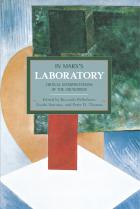
In Marx’s Laboratory provides a critical analysis of the Grundrisse as a crucial stage in the development of Marx’s critique of political economy. Stressing both the achievements and limitations of this much-debated text, this volume attempts to re-read Marx’s 1857–58 manuscripts against the background of Capital as a “laboratory” in which Marx first began to clarify central elements of his mature ideas.
With chapters by a range of international authors from different traditions of interpretation, this volume provides an in-depth analysis of the key themes and concepts in Marx’s 1857–58 manuscripts.
 Michael Dillon, IR and Political theorist, has a blog – early posts have descriptions of some forthcoming lectures. One to watch. People may know him for his books, including Politics of Security; The Liberal Way of War (with Julian Reid); Deconstructing International Politics; and the forthcoming Biopolitics of Security in the 21st Century.
A collection of striking images and powerful graphics from Visualizing Palestine; collected and commented upon by The Rival Room.

 The translation is not good, but the images are striking – a collection of photographs of ‘peace walls’ across the world. Some in divided cities, some on disputed territory, some between states. The original Italian article is here.
The new issue of the Kentucky social theory journal disClosure, on Mappings, including an interview with Derek Gregory among other things.

Last spring (2013) I had the honor and privilege to co-teach the annual Social Theory seminar, with three colleagues, Jenny Rice, Jeff Peters, and Susan Larson. The seminar is a long-standing feature of the Committee on Social Theory, which was founded at UKY in the spring of 1989 by JP Jones, Ted Schatzki, and Wolfgang Natter (see Postmodern Contentions, 1993).
The topic we proposed, “Mapping,” attracted a superb and diverse group of graduate students. Another tradition of the CST is the production of a journal, disClosure, which is totally written and produced by graduate students in CST and the seminar. There is a nice story on this year’s editors, Rachel Hoy and Christina Williams, here.
Issue 23 of disClosure on “Mapping” (2014) is now out. It contains a great selection of content, including poetry, interviews and articles from authors near (Transylvania University, Lexington)…
View original post 97 more words
A review of Shiloh Krupar’s excellent Hot Spotter’s Report at the Society and Space open site – plus a link to the interview I conducted with Shiloh.


