Crisis-Scapes: Athens and Beyond – a conference publication, which includes interventions by critical geographers, anthropologists and others interested in Athens’ crisis condition. This is available online under a CC license.
Four years and four days. The exact amount of time, that is, that has lapsed since the day the greek state would sign its ‘memorandum of agreement’ with its lenders (the IMF, the EU and the ECB), on May 5, 2010—officially making its own way into the era of global austerity and crisis. An entering that would come with a bang, and very much stay so: from that moment on, the social tension playing out at the greek territory would feature—constantly, it seems—in discussions, analyses and reports the world over.
But what is life like in a city that finds itself in the eye of the crisis-storm, how does the everyday reality here compare to Athens’ global media portrait? What kind of lessons might our city be able to learn from the outbreaks of capitalism’s crises elsewhere, and what lessons might the Athenian example be able to offer, in return? The volume that you hold in your hands acts as an accompaniment to a conference that tried to answer some of these questions. ‘Crisis-scapes: Athens and beyond’ took place in the city of Athens on May 9&10, 2014. Over the two days, the conference tried to explore an array of the facets of the crisis in the city, divided between five axes/panels, which are in turn mirrored in the structure of this book: 1. Flows, infrastructures and networks, 2. Mapping spaces of racist violence, 3. Between invisibility and precarity, 4. The right to the city in crisis and 5. Devaluing labour, depreciating land.
 With Henri Lefebvre’s

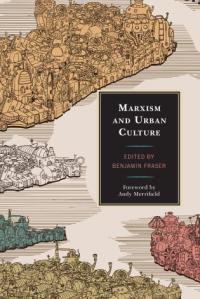 Marxism and Urban Culture is the first volume to reconcile social science and humanities perspectives on culture. Covering a range of global cities—Bologna, Buenos Aires, Guatemala City, Liverpool, London, Los Angeles, Madrid, Mahalla al-Kubra, Mexico City, Montreal, Osaka, Strasbourg, Vienna—the contributions fuse political and theoretical concerns with analyses of urban cultural practices and historical movements, as well as urban-themed literary and filmic art. Conceived as a response to the persistent rift between disciplinary Marxist approaches to culture, this book prioritizes the urban problematic and builds implicitly and explicitly on work by numerous thinkers: not only Karl Marx but also David Harvey, Henri Lefebvre, Friedrich Engels and Antonio Gramsci, among others. Rather than reanimate reductive views either of Marx or of urban theory, the chapters in Marxism and Urban Culture speak broadly to the interdisciplinary connections that are increasingly the concern of cultural scholars working across and beyond the boundaries of geography, sociology, history, political science, language and literature fields, film studies, and more. A foreword written by Andy Merrifield (the author of Metromarxism) and an introduction by Benjamin Fraser (the author of Henri Lefebvre and the Spanish Urban Experience) situate the book’s chapters firmly in interdisciplinary terrain.

 Gary Shapiro