The problem with Facebook for pages like Progressive Geographies

Screenshot 2014-03-11 08.05.22There is a fundamental problem with Facebook for pages like Progressive Geographies. Almost 2,000 people have liked the page that is fed directly from the blog. That’s great. Presumably those people want to see the things I post here. And yet, the vast majority of those people do not see posts, or they only see a fraction of them.

In recent days, the most popular posts have been seen by 500 or 600 people, and these are ones that have been shared by people on Facebook with their friends, most of whom do not subscribe to Progressive Geographies. Most posts get seen by 2-300 people. If I wanted more exposure I could ‘promote’ the page, which means paying for it to be seen by people who have initially already said they want to see the page; and incrementally to more and more people outside that group.

The reason is that Facebook only puts a fraction of the things it could put into your newsfeed. There are good reasons for this. Most of us have signed up to too many pages or have too many ‘friends’. Having everything would soon overwhelm us. So it puts up pages that it thinks we will like, partly based on how others have reacted to a page. So liking a page, or commenting on it, means it is more likely to appear in other feeds. But they also fill it with more and more paid posts – either advertisements or promoted posts by pages you’ve already said you like.

In other words, if you like (as in appreciate) this blog then you shouldn’t rely on Facebook to get its posts. Subscribing by email (perhaps by weekly or daily digest), adding it to an rss reader like Feedly, or Twitter (@stuartelden) is a much better option. Twitter and Facebook are automatically fed material from this WordPress site, so the material is the same, except if I comment or retweet. Facebook isn’t doing what I want it to do, and this for sites I follow. I suspect it is the same for many readers.

Posted in Uncategorized | 2 Comments

Peggy Kamuf interviewed on Jacques Derrida’s Death Penalty Seminars

The-Death-Penalty-243x366At the Los Angeles Review of Books, translator Peggy Kamuf is interviewed about Jacques Derrida’s The Death Penalty Volume I. This is a companion piece to the review by Jan Mieszkowski I linked to a few days ago.

Posted in Jacques Derrida | Leave a comment

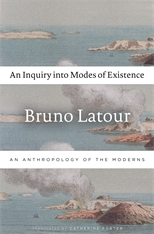
Bruno Latour, An Inquiry into Modes of Existence reviewed at NDPR

9780674724990Bruno Latour, An Inquiry into Modes of Existence: An Anthropology of the Moderns is reviewed at NDPR.

Posted in Bruno Latour | Leave a comment

Gouvernementalité et biopolitique : les historiens et Michel Foucault (2013)

Historians discuss Foucault’s work of the mid to late 1970s.

Clare O'Farrell's avatarFoucault News

Gouvernementalité et biopolitique : les historiens et Michel Foucault
Revue d’histoire moderne et contemporaine, 2013/4-5 (n° 60-4/4 bis). 208 pages.

Further info

Sommaire
Foucault historien ?

Michael C. Behrent
Penser le XXe siècle avec Michel Foucault

Paolo Napoli
Foucault et l’histoire des normativités

Luca Paltrinieri
Biopouvoir, les sources historiennes d’une fiction politique

Des outils pour l’histoire

Sezin Topçu
Technosciences, pouvoirs et résistances : une approche par la gouvernementalité

Luc Berlivet
Les ressorts de la « biopolitique » : « dispositifs de sécurité » et processus de « subjectivation » au prisme de l’histoire de la santé

Jean-Baptiste Fressoz
Biopouvoir et désinhibitions modernes : la fabrication du consentement technologique au tournant des XVIIIe et XIXe siècles

Parcours foucaldiens en histoire

Vincent Denis
L’histoire de la police après Foucault. Un parcours historien

Philippe Artières
Un historien foucaldien ?

View original post

Posted in Uncategorized | Leave a comment

Onto-Cartography Now Available

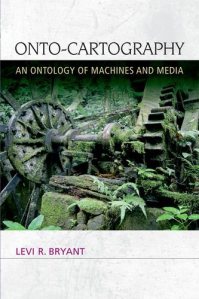
Levi Bryant’s new book Onto-Cartography is now out.

larvalsubjects's avatarLarval Subjects .

51Muy3NeWxL I’m pleased to announce that Onto-Cartography:  An Ontology of Machines and Media is now available.  Here’s the blurb:

Onto-Cartography gives an unapologetic defense of naturalism and materialism, transforming these familiar positions and showing how culture itself is formed by nature. Bryant endorses a pan-ecological theory of being, arguing that societies are ecosystems that can only be understood by considering nonhuman material agencies such as rivers and mountain ranges alongside signifying agencies such as discourses, narratives, and ideologies. In this way, Bryant lays the foundations for a new machine-oriented ontology.

This theoretically omnivorous work draws on disciplines as diverse as deconstruction, psychoanalysis, Marxism, media studies, object-oriented ontology, the new materialist feminisms, actor-network theory, biology, and sociology. Through its fresh attention to nonhumans and material being, it also provides a framework for integrating the most valuable findings of critical theory and social constructivism.

View original post

Posted in Uncategorized | Leave a comment

Helen Tartar, Editorial Director, Fordham University Press, 1951-2014

Several friends have shared stories of working with Helen Tartar, editor with Stanford University Press and Fordham University Press. I never met nor worked with Helen, but it’s clear I’ve read several books she worked on with authors, editors and translators. There is a nice tribute here; and Stanford have a piece here.

Posted in Books, Publishing | Leave a comment

Andy Doolen, Territories of Empire – forthcoming OUP book

Andy Doolen’s Territories of Empire: U.S. Writing from the Louisiana Purchase to Mexican Independence is forthcoming later this year. I read the book in manuscript for the press to write an endorsement. It’s a really interesting work that looks at the interrelation of geography and literature in the making of US territory.

51nc492MA9L._SY445_

Practically speaking, nineteenth-century American literary history really refers to writings from the East seaboard of the United States. In fact, no author from the West prior to Mark Twain has been admitted into the canon of American literature, a longstanding bias that continues to define the narrative arc of U.S. literary nationalism. Western authors are absent from the canon and classroom largely because their “regional writings” are assumed to be second-rate in comparison with the ostensibly more complex literary cultures of the eastern states. Andy Doolen’s monograph reorients literary history, turning to the neglected Western writings that shaped the distinctive process of U.S. expansionism in the years following the Louisiana Purchase. As Doolen shows, these “cartographic texts” legitimated U.S. occupancy of contested border zones and justified the nation’s move westward. In five chapters, Territories of Empire surveys an under-studied archive of these texts, ranging from exploration narratives, novels, oratory, and natural histories, to autobiographies, travel narratives, poetry, and periodical literature. In writings as dissimilar as protest petitions from white Louisianans, Kentucky newspaper accounts of the Burr conspiracy, the explorer Zebulon Pike’s 1810 account of the upper Rio Grande, and Timothy Flint’s 1826 novel about a young New Englander who fights in the Mexican independence struggle, Americans were expanding the national imagination into new continental dimensions. Ultimately, these texts show how literature reflected and fed the expansionist ideology of the U.S. by linking national greatness to the urgent necessity of territorial and commercial growth.

Posted in Politics, Territory | Leave a comment

Foucault’s Last Decade – Tenth update

Update 10I’m now about to leave Melbourne. Since the last update on this book, I’ve completed a draft of Chapter Five – which now includes the material from the old Chapter Six – and as a consequence is much too long. But splitting it in two doesn’t work, as I’ve seen through trying that before; and the topics it covers are so important that it’s hard to see where to cut. In a sense this is the mid-point of the book (though not quite half-way chronologically) and it may need to remain as the longest chapter. Apart from the length, and some quotations that I plan to cut down, it’s now in reasonable shape. In the last several days I’ve added in a section on the dispositif, plus brief discussions of and references to various mid-1970s lectures (New York, Rio, Montreal, Japan, etc). When I return I will need to reread his little book of interviews with Roger Pol-Droit and see if there are things that need to be incorporated here, plus a few other smaller references I was unable resolve here.

I then did a little work on two further lecture courses, Du gouvernement des vivants (January-March 1980) and Mal faire, dire vrai (April-May 1981). I read both these when they first came out, but unlike most other courses neither published a review nor discussion, or even took extensive notes. As I now turn to them I’m aware the English translations are coming out this year as On the Government of the Living and Wrong-Doing, Truth-Telling. There isn’t therefore the need to worry overly about some translation choices at this stage, so my initial notes alternate between English summaries and English/French quotations. I can fix the exact wording at a later date when I have both texts to hand. I should say that with this project generally I am always referencing English translations where they exist, but frequently modify their versions. I do this least often, by far, when they are Graham Burchell’s versions; much more with the books published in Foucault’s lifetime and the work of other translators. With Subjectivité et vérité, delivered between these two courses, down to be published soon there is also a good reason to wait a little longer to work on this chapter. It is, however, becoming increasingly clear to me that we should read Du gouvernement des vivants as much as the effective third course on governmentality as the first course on antiquity. (Or, perhaps, a stronger claim: what Foucault calls governmentality never really goes away.)

I had thought I would do more work on this chapter in Melbourne, and leave Chapter Six on governmentality until I returned, but I’ve changed my mind a bit – and not just because I’ve run out of time here. I think it now makes sense to work on governmentality next. I’ve published quite a bit on this topic already, albeit with a different focus, and have some quite extensive notes files on the lectures. But I’ll read them again in the way I’ve worked up until now and see what develops. There is a bit of work to be done on Foucault’s sabbatical year too. As I currently plan it, the chapter on governmentality will also have an extensive discussion of Foucault’s collaborative projects.

Talking about Foucault again at Monash University and University of Melbourne was also good. Even though the focus was on a single course, in discussion I was able to link backwards and forwards from that single moment. Some of the overall arguments and claims I’m making in this project are starting to emerge more clearly.

You can read more about the Foucault’s Last Decade project, along with links to previous updates, here.

Posted in Books, Foucault's Last Decade, Michel Foucault | Leave a comment

Bradley Garrett interview on writing and publishing his book Explore Everything

7283468_origVery interesting interview with Bradley Garrett on writing and publishing his book Explore Everything: Place-Hacking the City.

Posted in Publishing, urban/urbanisation, Writing | Leave a comment

Some good advice for academic interviews

Some good advice for academic interviews in The Guardian.

Posted in Universities | 1 Comment