Antipode Foundation funding opportunities, 2014/15

Deadline for Antipode foundation funding at the end of March.

Antipode Editorial Office's avatarAntipodeFoundation.org

The deadline for 2014/15′s Antipode Foundation International Workshop and Scholar-Activist Project Awards is looming large: get your applications to us before 31 March 2014.

International Workshop Awards are intended to support radical geographers holding events (including conferences, workshops, seminar series, summer schools and action research meetings) that further radical analyses of geographical issues and engender the development of a new and better society. They make capacity-building possible by enabling the development of a community of scholars.

Scholar-Activist Project Awards are intended to support collaborations between academics, non-academics and activists (from NGOs, think tanks, social movements, or community grassroots organisations, among other places). They promote programmes of participation and engagement, cooperation and co-enquiry, and more publicly-focused forms of geographical investigation, offering opportunities for scholars to relate to civil society and make mutually beneficial connections.

For more information, including updates from last year’s awardees, see here and here; please get…

View original post 24 more words

Posted in Uncategorized | Leave a comment

Authority & Political Technologies 2014 conference at Warwick – announcement and call for papers

Reposting this call for papers as the deadline is fast approaching and because there are four travel and accommodation bursaries to support the attendance of PhD students or financially insecure post-docs. Apply for a bursary by Monday March 10th.

stuartelden's avatarProgressive Geographies

Authority & Political Technologies 2014                                                  

Power in a World of Becoming, Entanglement & Attachment                          

‘In every era the attempt must be made anew to rescue tradition from a conformism that is about to overpower it’ (Walter Benjamin) 

June 2-3, 2014. University of Warwick

Confirmed Speakers:

  • William Connolly (Johns Hopkins)
  • Christian Borch (CBS, Copenhagen)
  • Costas Douzinas (Birkbeck)
  • Amade M’charek (Amsterdam)
  • Luciana Parisi (Goldsmiths)
  • AbdouMaliq Simone (Goldsmiths) 

Conference Organisers:

Claire Blencowe & Illan rua Wall – Authority & Political Technologies (APT) Warwick

Suggested Themes:

  • Biopolitics and Political Spirituality/Religion
  • Materialism and the Political Meaning of Entanglement
  • Authority, Sovereignty and Becoming in the (Post) Colony
  • Process and New Forms of Society(ism), Association and Being in Common
  • Necropolitics and Human Rights

Recently, there have been various calls for a move beyond ‘post-structuralism’ (i.e. Foucault, Deleuze, cultural/critical theory), which had…

View original post 338 more words

Posted in Uncategorized | 1 Comment

Three historical perspectives on the Crimean crisis

Posted in Politics, Territory | 1 Comment

University of Minnesota Press – forerunners series launched

In 2014, the University of Minnesota Press will launch its Forerunners series, which marks our foray into gray literature publishing. Other university presses have recently (or not so recently) begun publishing short digital works. Most of these are focused on books already published—taking sections out that may appeal to a wider audience, trying to solicit attention for backlist titles. At Minnesota, our goal is to move beyond that model and really focus on the fresh ideas that often don’t have a traditional publishing outlet. [more here]

Posted in Publishing | Leave a comment

Philosophy Bites – short interviews arranged by theme

Philosophy Bites – short interviews arranged by theme. Lots of famous names in there – a useful resource. Thanks to Peter Gratton at Philosophy in a Time of Error for the link.

Posted in Uncategorized | Leave a comment

The journal article as genre – some good publishing advice

Kyle Grayson at Chasing Dragons discusses the expectations of the journal article. As one of the editors of Politics he is well-placed to offer some good advice. This is the draft text for the Political Studies Association’s ‘Publishing in Politics Guide’.

Posted in Publishing | Leave a comment

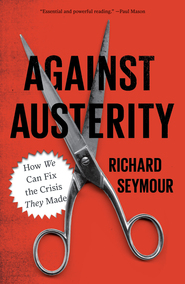
Richard Seymour, Against Austerity – preface available online

The two-page Preface to Richard Seymour’s latest book, Against Austerity is available to read online. Gloriously splenetic…

9780745333281

Five years into capitalism’s deepest crisis, which has led to cuts and economic pain across the world, Against Austerity addresses a puzzling aspect of the current conjuncture: why are the rich still getting away with it? Why is protest so ephemeral? Why does the left appear to be marginal to political life?

In an analysis which challenges our understanding of capitalism, class and ideology, Richard Seymour shows how ‘austerity’ is just one part of a wider elite plan to radically re-engineer society and everyday life in the interests of profit, consumerism and speculative finance.

But Against Austerity is not a gospel of despair. Seymour argues that once we turn to face the headwinds of this new reality, dispensing with reassuring dogmas, we can forge new collective resistance and alternatives to the current system. Following Brecht, Against Austerity argues that the good old things are over, it’s time to confront the bad new ones.

Posted in Politics | Leave a comment

Mental health issues in academia – a challenging piece in The Guardian

There is a challenging piece in The Guardian about the culture of acceptance around mental health issues in academia, especially around the expectations of PhD students. Important and worth reading and discussing. For once – and this really is a shock given the usual standard at The Guardian – the comments below the post are generally thoughtful and worth reading too.

Posted in Universities | 2 Comments

“The territorial integrity of Ukraine must be respected” – what is territorial integrity?

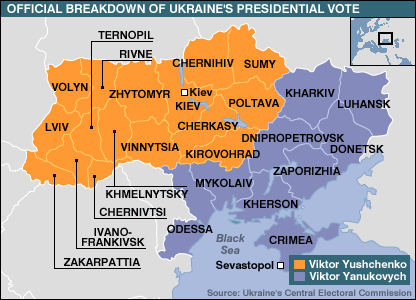
Like most people I’ve been following the news of developments in Ukraine with fascination and alarm. I certainly don’t know enough about the country to venture any specific opinions on the situation there. What I would say, though, is there are some resonances in one particular aspect with work I’ve done before. This is with regard to the notion of territorial integrity – which we are continually told must be preserved or respected. Many diplomats and politicians have made this claim. The phrase comes up regularly with regard to Ukraine – see the news reports from a simple Google search. I’ve made the argument before that territorial integrity does not simply mean territorial preservation, i.e. the fixing of existing borders and the maintenance of the territorial status quo. It also means territorial sovereignty, that is the exercise of power within those borders, within that territory. These two meanings have distinct historical lineages, which come together in the early twentieth century, and are enshrined in the United Nations charter. Most people invoking territorial integrity in relation to Ukraine can only mean the first of those; or at least, only the first with any degree of honesty, given what has happened over the past several weeks and further back.
_40563403_ukraine_election2_map416

I make a historical argument about the different conceptions that we have within the notion of territory in The Birth of Territory, and discuss the contemporary importance of understanding these different meanings in Terror and Territory, where I suggest there is a profound tension between territorial preservation and territorial sovereignty today. But I worked through some of the contemporary political issues in  series of articles leading up to the book, and then in a co-authored paper with Alison Williams on the specific case of Iraq. The most relevant of these pieces can be freely downloaded here – the first of which has a very brief mention of the 2004 election results, shown in the map above. Perhaps some will find them useful. The point is not that there is a direct relation between what is happening in Ukraine and these other places; but that the notion of territorial integrity is a complicated and contested notion, and understanding something of that might be of some use in making sense of the complexities at stake today.

Elden, S. Territorial integrity and the war on terror. Environment and Planning A. 2005; 37:2083-2104.

Elden, S. Contingent Sovereignty, Territorial Integrity and the Sanctity of Borders. SAIS Review of International Affairs. 2006; 29:11-24.

Elden, S. Blair, Neo-Conservatism and The War on Territorial Integrity. International Politics. 2007; 44:37-57.

Elden, S. & Williams, A. The Territorial Integrity of Iraq, 2003-2007: Invocation, Violation, Viability. Geoforum. 2009; 40:407-417.

Posted in Boundaries, Politics, Territory, Terror and Territory, The Birth of Territory | 3 Comments

“About the Concept of the ‘Dangerous Individual’ in Legal Psychiatry of the 19th Century” – details of variant English and French texts

A couple of months ago [update: in January 2014], I asked three minor questions concerning Foucault’s ‘About the Concept of the Dangerous Individual’ lecture in Toronto in 1977.

  • is the version in Dits et écrits the original French, or a re-translation with an uncredited translator?
  • was the conference at the Clark Institute or York University, or a joint event?
  • why is the paragraph from the course summary discussing the seminar omitted from «Il faut défendre la société» and the subsequent English translation Society Must Be Defended?

Following a useful exchange of comments with Javier Velásquez, it is clear that we have the answer to the first. The text in Dits et écrits is not a translation; but nor is it the entirety of the original French. It is an edited version of the original.

We have constructed a clear chronology of the publication history of this text to help explain this. Richard Lynch’s bibliography provides some useful detail, though it is slightly inaccurate, and Dits et écrits is both inaccurate in detail and incomplete. This text, like the introduction to the Herculine Barbin memoir, should have been printed there with critical apparatus to show the reorganisation and excision; or, like ‘The Politics of Health in the Eighteenth Century’ appeared twice in its two variant forms.

The key point: there is no published French version of the full, original text. [Update: a photocopy of a 36pp. typescript of this text is available at IMEC: reference FCL 1.10: “A propos de la notion d’individu dangereux dans la psychiatrie légale au XIXe siècle”. This copy breaks off very slightly incomplete. The final sentence ends ‘… alors’; there is no French text according to ‘the judicial machine ceases to function’. It looks like the photocopy missed this line at the foot of the page] However, we do have Foucault’s final, preferred version of the text published in French.

Here’s the chronology, noting publication status.

  1. Original French text – 1977? Unpublished; available at IMEC FCL 1.10.
  2. First English translation, by Carol Brown, of text 1, used as the basis for Foucault’s presentation at a conference in Toronto held on 24-28 October 1977. In text 3, this is described as “an initial translation of this paper for public reading, under extreme pressure of time”. Unpublished.
  3. ‘About the Concept of the ‘Dangerous Individual’, International Journal of Law and Psychiatry, Vol 1 No 1, 1978, pp, 1-18, translation of text 1, translated by Alain Boudot and Jane Couchman, with some reference to earlier translation (text 2). Also available here. [Richard Lynch’s bibliography erroneously attributes this translation to Carol Brown. Given the poorly phrased note in text 5 it is understandable why.]
  4. French version, “L’évolution de la notion d’«individu dangereux» dans la psychiatrie légale du XIXe siècle“, Déviance et société, Vol 5 No 4, 1981. This text has some reorganization and excision of some material.
  5. “The dangerous individual” in Lawrence Kritzman (ed.) Politics, philosophy, culture: interviews and other writings, 1977-1984 (New York, Routledge, 1988), pp. 125-151. Reprint of 3 [Lynch suggests this is a different translation. Again, given the editor’s note in this text it is understandable why].
  6. Reprint of 4 in Dits et ecrits as text 220. Although this references the text at 3, and does not reference 4, it only provides the text of 4. But it appears as a 1978 publication. Strictly speaking, according to the editors’ normal practice, there should be a text in sequence in 1981 that points to this one. There is therefore no extant French version of how it appears in text 3.
  7. “About the concept of the ‘dangerous individual’ in Nineteenth-century legal psychiatry” James Faubion (ed.) Power (New York: New Press, 2000), pp. 176-200.
Reprint of 3.
  8. “About the concept of the ‘dangerous individual in nineteenth-century legal psychiatry” Paul Rabinow and Nikolas Rose (eds.) The essential Foucault (New York: New Press, 2003), pp. 208-228. Reprint of 3.

My thanks to Javier for his textual detective work. This matters because there are parts of 3 that are not available in French.

I’d still be grateful for answers to the other two questions.

Posted in Foucault's Last Decade, Michel Foucault, Publishing | 2 Comments