Heidegger’s Schwarze Hefte (Black Notebooks) publishing details

I’ve done a bit of hunting around for details of the publication of the Schwarze Hefte (Black Notebooks). They are due out in March 2014, and comprise Volumes 94-96 of the Gesamtausgabe. Their overall title is Überlegungen – considerations or observations. Volume 94 is notebooks II-VI, from 1931-38; 95 is VII-XI (1938-39); and 96 is XII-XV (1939-41). (I remember reading somewhere, years ago, that notebook I was lost.) The Klostermann Editionsplan lists them, but there are no pages on that site for each volume as yet.

Amazon.de have them listed, and say they are, respectively, 600, 460 and 290 pages. That’s an awful lot of material to digest. Here’s the description from that site, which also discusses subsequent volumes of notebooks:

Die von Heidegger sogenannten »Schwarzen Hefte« bilden ein in der deutschen Geistesgeschichte nicht nur des letzten Jahrhunderts einzigartiges Manuskript. Von 1931 bis zum Anfang der siebziger Jahre zeichnet Heidegger in vierunddreißig Wachstuchheften Gedanken und Gedankengefüge auf. Zuweilen – wie in den »Überlegungen« (GA 94–96) der dreißiger Jahre – stellen sie eine unmittelbare Auseinandersetzung mit der Zeit dar. Dann – wie in den »Vier Heften« (GA 99) vom Ende der vierziger Jahre – erweisen sie sich als philosophische Versuche, so dass die »Schwarzen Hefte« sich am ehesten als »Denktagebücher« bezeichnen lassen. Weil die Aufzeichnungen sich immer wieder der Nähe der Tagesereignisse aussetzen, zeigen sie sich in einem unverwechselbaren Stil. In den »Schwarzen Heften« scheint der Leser dem Denker so nah zu sein wie sonst nie. Er kann spüren, wie sehr sich das Denken auf sein Gedachtes einlässt. Das bringt mit sich, dass die »Schwarzen Hefte«, wie kein anderes Manuskript des ohnehin leidenschaftlich diskutierten Denkers, umstritten sein werden. Die Härte der Auseinandersetzung mit zeitgeschichtlichen Vorgängen wird mitunter dem Besprochenen nicht gerecht. Manche Hefte enthalten in vielerlei Hinsicht Problematisches. Dann wieder trifft der Angriff das Richtige. Alles gehört zum Eigentümlichen dieser Schriften, deren Veröffentlichung einen besonderen Moment in der Geschichte der Gesamtausgabe darstellt. Die seinsgeschichtliche Deutung des Weltkriegs samt mit ihm verknüpfter Phänomene wie der Totalisierung der Technik in allen Lebensbereichen erreicht in diesem Band 96 ihren Höhepunkt. Alltäglichstes erscheint als »Zeichen« der »Machenschaft«. Dabei verschärft sich der Ton. Nichts bietet dem Denker einen Hinweis auf das »Seyn«. Alles ist besetzt vom »Seienden«. In dieser Stimmung einer vollkommenen Verhinderung des »anderen Anfangs« erreichen Heideggers Angriffe auch das Judentum. Es wird als ein der »Machenschaft« besonders geschickt dienendes »Weltjudentum« bestimmt. So trübt Heidegger das seinsgeschichtliche Denken unheilvoll durch antijüdische Klischees.


Any further details on their publication, etc. would be welcome – but I suggest comments on what they contain wait until people have actually read them.

Posted in Martin Heidegger, Publishing | 1 Comment

More on Heidegger’s ‘Black Notebooks’ and anti-semitism

heidegger-2-540x304

Another piece in Die Zeit, and an English discussion in Prospect by Jonathan Derbyshire. Thanks to Enowning and Peter Gratton for the links. This one is going to run and run…

Posted in Martin Heidegger, Politics, Publishing | 2 Comments

Critical-Theory.com’s list of books that came out in January

Some good titles here.

575x350xcritical-theory-books-january-2014-575x350.jpg.pagespeed.ic.kvfxqBSE51

Posted in Uncategorized | 1 Comment

“Medieval rules for sex in an easy to use flowchart”

“Medieval rules for sex in an easy to use flowchart created by James A Brundage as posted in the @TheAtlantic“, via @MedievalArchive. Having spent the day working on Foucault’s History of Sexuality, this is certainly appropriate.

BfNF_48CQAApYS2

Posted in Michel Foucault | 5 Comments

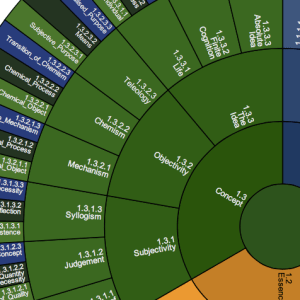
The Structure of Hegel’s Logic – in visual form

An interactive visualisation of the structure of Hegel’s Logic. Thanks to Sebastian Budgen for the link.

Posted in Georg Wilhelm Friedrich Hegel | 7 Comments

Carlo Natali, Aristotle: His Life and School reviewed at NDPR

k10010Carlo Natali, Aristotle: His Life and School, D. S. Hutchinson (ed.), Princeton University Press, 2013, reviewed by Michael J. Griffin at NDPR.

Posted in Uncategorized | Leave a comment

Philippe Theophanidis on Foucault and the Problem of War

Some useful bibliographical pointers to places where Foucault discusses the question of war from Philippe Theophanidis, beginning from this 1981 quotation.

Therefore, if you like, I never stop getting into the issue of law and rights without taking it as a particular object. And if God grant me life, after madness, illness, crime, sexuality, the last thing I would like to study would be the problem of war and the institution of war in what one could call the military dimension of society. There again, I would have to cross into the problem of law, the rights of people and international law, etc… as well as the question of military justice: what makes a Nation entitled to ask someone to die for it.

As Philippe notes, Foucault’s discussion of (civil) war is not just in ‘Society must be Defended’, but also in the newly published La Société punitive. The indications are that there will be further discussion in Théories et institutions pénales, which has extensive treatment of popular revolts. See the full post at Aphelis for all the references. 

Posted in Foucault's Last Decade, Michel Foucault | Leave a comment

“Interview with Stuart Elden” at Groundwork

Another interview with me, conducted by Jordan Skinner, has been published at the Groundwork site – a blog run by past and present students of the Centre for Research in Modern European Philosophy at Kingston University. It ranges widely across my work and interests – disciplinary boundaries, philosophy and geography, territory, space, Sloterdijk, Heidegger, Shakespeare, Foucault, Harman, Meillassoux, fossils, blogging etc.

It was conducted some time back, and at some time distance from the recently published interview at Polis, though there is a little overlap, especially on Sloterdijk.

Posted in Books, Boundaries, Fossils, Foucault's Last Decade, Graham Harman, Martin Heidegger, Medieval Studies, Michel Foucault, My Publications, Peter Sloterdijk, Publishing, Quentin Meillassoux, Shakespearean Territories, Society and Space, Territory, The Birth of Territory, The Space of the World, Universities, William Shakespeare, Writing | 1 Comment

A review of Punk Sociology

David Beer’s Punk Sociology reviewed by Deborah Lupton.

Deborah Lupton's avatarThis Sociological Life

ShowJacketSociology in the Anglophone world has been in the doldrums for some time. Since the heady days of poststructuralism and postmodernism, until very recently few advances had been made in theory or method. British sociology, however, is seeing a renewed impetus and vigour, with several sociologists beginning to talk about a move from ‘zombie sociology’ to ‘live sociology’ (Back, 2012) or ‘inventive methods’ (Lury and Wakeford, 2012), in which creative approaches and different ways of communicating are suggested to move the discipline out of its doldrums.

Punk Sociology, by British sociologist Dave Beer, is a welcome contribution to this new and exciting approach. As its title suggests, Beer attempts in this short book (part of the Palgrave Pivot series, itself an innovative approach to academic publishing) to show how sociology might be shaken up and re-energised. Punk sociology looks outward, is subversive and willing to try new approaches and…

View original post 643 more words

Posted in Uncategorized | Leave a comment

Thompson and Zizek (ed.) The Privatization of Hope: Ernst Bloch and the Future of Utopia

Bloch

Interesting looking new collection just out with Duke University Press.

The concept of hope is central to the work of the German philosopher Ernst Bloch (1885–1977), especially in his magnum opus, The Principle of Hope (1959). The “speculative materialism” that he first developed in the 1930s asserts a commitment to humanity’s potential that continued through his later work. In The Privatization of Hope, leading thinkers in utopian studies explore the insights that Bloch’s ideas provide in understanding the present. Mired in the excesses and disaffections of contemporary capitalist society, hope in the Blochian sense has become atomized, desocialized, and privatized. From myriad perspectives, the contributors clearly delineate the renewed value of Bloch’s theories in this age of hopelessness. Bringing Bloch’s “ontology of Not Yet Being” into conversation with twenty-first-century concerns, this collection is intended to help revive and revitalize philosophy’s commitment to the generative force of hope.

Contributors. Roland Boer, Frances Daly, Henk de Berg, Vincent Geoghegan, Wayne Hudson, Ruth Levitas, David Miller, Catherine Moir, Caitríona Ní Dhúill, Welf Schröter, Johan Siebers, Peter Thompson, Francesca Vidal, Rainer Ernst Zimmermann, Slavoj Žižek

Posted in Slavoj Zizek | Tagged , , , | 1 Comment