Giorgio Agamben – From the State of Control to a Praxis of Destituent Power

Post image for From the State of Control to a Praxis of Destituent Power

Faced with absolute state control and the rapid eradication of political society, only a theory and praxis of destituent power can reclaim democracy.

This is the transcript of a public lecture by Italian philosopher Giorgio Agamben delivered to a packed auditorium in Athens on November 16, 2013 and recently published by Chronos.

Read it either at Chronos or Roarmag.org – thanks to Jaewon Lee for the link.

Posted in Giorgio Agamben, Politics | Leave a comment

Simon Critchley and Philip Seymour Hoffman – video recording of discussion at Rubin Museum of Art

PSH

In Memoriam: Philip Seymour Hoffman
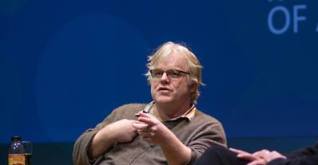
Just over a year ago philosopher Simon Critchley met with Philip Seymour Hoffman for the final in a series of on-stage conversations called Happy Talk. In a searching dialogue that in hindsight seems prescient, the actor wrestles with the concepts of happiness, love, and death with the same courage and compelling insight that he brought to his roles. Recorded at the Rubin Museum of Art on December 17, 2012

Thanks to Verso (images) and George Souvlis (video) for the links.

Posted in Simon Critchley | Tagged | Leave a comment

Authority & Political Technologies 2014 conference at Warwick – announcement and call for papers

Authority & Political Technologies 2014                                                  

Power in a World of Becoming, Entanglement & Attachment                          

‘In every era the attempt must be made anew to rescue tradition from a conformism that is about to overpower it’ (Walter Benjamin) 

June 2-3, 2014. University of Warwick

Confirmed Speakers:

  • William Connolly (Johns Hopkins)
  • Christian Borch (CBS, Copenhagen)
  • Costas Douzinas (Birkbeck)
  • Amade M’charek (Amsterdam)
  • Luciana Parisi (Goldsmiths)
  • AbdouMaliq Simone (Goldsmiths) 

Conference Organisers:

Claire Blencowe & Illan rua Wall – Authority & Political Technologies (APT) Warwick

Suggested Themes:

  • Biopolitics and Political Spirituality/Religion
  • Materialism and the Political Meaning of Entanglement
  • Authority, Sovereignty and Becoming in the (Post) Colony
  • Process and New Forms of Society(ism), Association and Being in Common
  • Necropolitics and Human Rights

Recently, there have been various calls for a move beyond ‘post-structuralism’ (i.e. Foucault, Deleuze, cultural/critical theory), which had long been seen as the radical edge of the critical social sciences. Such calls are motivated in part by the sense that post-structuralist philosophies – which were forged against a backdrop of totalitarian rule and burgeoning welfare states in Europe – fail to offer moral or political purchase in the contemporary governmental landscape. Moreover, there is a sense that various concepts and theories have become reified and constraining – closing down the possibilities of critical thought. However, the issues that post-structuralist theory placed on the critical social science agenda have become more vital than ever – be that the concern for the complex and dispersed nature of power and agency; the imbrication of power and economics with knowledge and science; rethinking the relation between equality and difference; the political/contested/changing nature of embodiment, biology and ecology; or the efforts of states and others to establish and exercise power over life itself. We maintain that now is the time, not to reject post-structuralist perspectives, but to reinvigorate and transform those traditions through empirical and political work that is creatively engaged with current problems. The Authority & Political Technologies group at Warwick will host a series of annual events that bring together world leading, emerging and postgraduate scholars from across the social sciences whose work promises to renew post-structuralist critical thought through empirical scholarship. This year we invite papers on the theme ‘Power in a World of Becoming, Entanglement & Attachment’. Topics may include, but are not limited to, the suggested themes above.

Deadline for abstract submission March 10th 2014.

For further information and updates see the conference website

APT Warwick:

Claire Blencowe; Miguel Beistegui; Will Davies; Stuart Elden; Nick Gane; Olga Goriunova; Amy Hinterberger; Hannah Jones; Cath Lambert; Nick Lee; Celia Lury; Alice Mah; Goldie Osuri; Maria Do Mar Pereira; Lynne Pettinger; Shirin Rai; John Solomos; Vicky Squire; Nathanial Tkacz; Emma Uprichard; Nick Vaughan-Williams; Illan rua Wall; Chiara Livia Bernardi; Sam Burgum; Rogan Collins; Esteban Damiani; Kathryn Medien; Marijn Nieuwenhuis; Hidefumi Nishiyama; Maurice Stierl; Lauren Tooker; Lorenzo Vianelli

Posted in Conferences, Politics, William E Connolly | 2 Comments

14,000 Images of the French Revolution Released Online

An amazing collection of images at the French Revolution Digital Archive – a collaboration of the Stanford University Libraries and the Bibliothèque nationale de France (via Hyperallergic – thanks to Daniel Hoffman-Schwartz and Sebastian Budgen for the link).

frenchrevolutionarchive15

frenchrevolutionarchive4

Posted in Politics, Publishing | 2 Comments

Introducing: The b2 Review

boundary 2 – an endlessly interesting journal that was very supportive of my early work on Foucault – launches The b2 Review online.

Paul A Bové's avatarboundary 2

L'anarchie_(1907)

The print edition of b2 carries only article length reviews. We are starting an initiative to publish shorter reviews and notices of books, new and old, to which we want to draw our readers’ attention.

We will also publish lists of books. We enthusiastically invite our readers to send us short reviews or notices that might be included on this site as part of the community around b2′s research agenda.

update: In upcoming weeks, we will have much more posted here, including our review series on GLBT curated by Petra Dierkes-Thrun.

The b2 Review welcomes recommendations of reviews and reviewers. We decided to develop longer review essays for the copyrighted edition of the journal from the best of the online reviews.

View original post

Posted in Uncategorized | Leave a comment

Origins of Truth: Foucault’s Lectures on the Will to Know (2014)

News of an important conference in New York on Foucault’s first lecture course.

Clare O'Farrell's avatarFoucault News

will-to-know-book-jacketOrigins of Truth: Foucault’s Lectures on the Will to Know

February 21-22, 2014
Stony Brook Manhattan
387 Park Avenue South
New York, NY 10016

A conference presented by The Foucault Society and the Department of Philosophy at Stony Brook University

In celebration of the publication of Michel Foucault’s Lectures on the Will to Know: Lectures at the Collège de France, 1970-1971 (Palgrave Macmillan, 2013), we invite participants to a conference in New York City.

As the first of Foucault’s annual courses, Lectures on the Will to Know set an agenda for his intellectual journey of the 1970s and 1980s. Its publication in English translation opens up new directions for research into power, knowledge and the “formation of discourses.”

This conference gathers a group of established and emerging scholars to analyze Lectures on the Will to Know – its sources, themes and intellectual, historical or political contexts. What are the multiple…

View original post 261 more words

Posted in Uncategorized | Leave a comment

Joanna Hodge reviews Walter Benjamin: A Critical Life

Joanna Hodge reviews the recent biography of Walter Benjamin. Update: there is also a review in New Republic.

Posted in Uncategorized | Leave a comment

The new/old international law (journal)

News of an interesting journal, just launched…

jonescraig's avatarWar Law Space

Screen Shot 2014-02-03 at 10.38.13 AM

Somehow I  missed the release of the new Oxford University Press London Review of International Law journal last September (Thanks Frédéric Mégret for the heads-up). I’m very excited about this and from the journals’ blurb here’s the first reason why:

The London Review of International Law publishes highest-quality scholarship on international law from around the world. Reflecting the pace and reach of developments in the field, the London Review seeks to capture the ways in which received ideas are being challenged and reshaped by new subject-matters, new participants, new conceptual apparatuses and new cross-disciplinary connections. Central aims of the London Review are to encourage imaginative thinking, inspire innovative analysis, and promote excellence in writing. While no area of international legal interest is excluded, the London Review prioritises non-doctrinal scholarship, including theory, history and socio-legal studies.

There are many great international law journals. The American Journal of International Law, European Journal International…

View original post 1,122 more words

Posted in Uncategorized | Leave a comment

Eyal Weizman – The Architecture of Ariel Sharon

Eyal Weizman discusses Sharon’s architectural and spatial legacy at Al Jazeera.

Whether in military uniform or in politics, Ariel Sharon’s time in power was characterised by construction and destruction frenzies that decisively shaped the physical realities in which both Israelis and Palestinians still struggle to live.

His legacy is not only that of a military man and a politician, but also that of an architect. Sharon, more than anyone else, has shaped the spatial realities of Israel’s occupation of Palestine…


Posted in Boundaries, Eyal Weizman, Politics, Territory, urban/urbanisation | Leave a comment

The Productive Body by Didier Deleule and François Guéry

An important 1972 book, mentioned by Foucault in Discipline and Punish, is finally coming out in English translation in March 2014, with an excellent introduction by the translators.

Productive BodyThe Productive Body asks how the human body and its labor have been expropriated and re-engineered through successive stages of capitalism; and how capitalism’s transformation of the body is related to the rise of scientific psychology and social science disciplines complicit with modern regimes of control. In Discipline and Punish, Foucault cited Guéry and Deleule in order to link Marx’s diagnosis of capitalism with his own critique of power/knowledge. The Productive Body brings together Marxism and theories of the body-machine for the goal of political revolution.

  • Very interesting analysis… The technological mutations of the apparatus of production, the division of labour and the elaboration of the disciplinary techniques sustained an ensemble of very close relations (cf. Marx, Capital,  vol. i, chapter XIII and the very interesting analysis in Guerry and Deleule). Each makes the other possible and necessary; each provides a model for the other. ~ Michel Foucault
Posted in Michel Foucault, Politics | 4 Comments