
Learn to Write Badly

Michael Billig offers some cautionary advice – Learn to Write Badly: How to Succeed in the Social Sciences.

BilligModern academia is increasingly competitive yet the writing style of social scientists is routinely poor and continues to deteriorate. Are social science postgraduates being taught to write poorly? What conditions adversely affect the way they write? And which linguistic features contribute towards this bad writing? Michael Billig’s witty and entertaining book analyses these questions in a quest to pinpoint exactly what is going wrong with the way social scientists write. Using examples from diverse fields such as linguistics, sociology and experimental social psychology, Billig shows how technical terminology is regularly less precise than simpler language. He demonstrates that there are linguistic problems with the noun-based terminology that social scientists habitually use – ‘reification’ or ‘nominalization’ rather than the corresponding verbs ‘reify’ or ‘nominalize’. According to Billig, social scientists not only use their terminology to exaggerate and to conceal, but also to promote themselves and their work.
Posted in Publishing, Universities, Writing | 4 Comments

Rejected philosophers

Some of these mock-rejections are good – thanks to Clare O’Farrell for the link.

Posted in Publishing | Leave a comment

Ian Bogost on University Presses

Some interesting reflections on academic publishing here.

Posted in Publishing | Leave a comment

Ecologies of the Moving Image

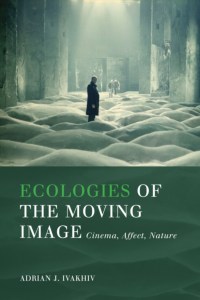
Adrian Ivakhiv’s new book, Ecologies of the Moving Image, is out next month.

ivakhivMoving images take us on mental and emotional journeys, over the course of which we and our worlds undergo change. This is the premise of Ecologies of the Moving Image, which accounts for the ways cinematic moving images move viewers in ways that reshape our understanding of ourselves, of life, and of the Earth and universe.

This book presents an ecophilosophy of the cinema: an account of the moving image in relation to its lived ecologies—the material, social, and perceptual relations within which movies are produced, consumed, and incorporated into cultural life. Cinema, Adrian Ivakhiv argues, lures us into its worlds, but those worlds are grounded in a material and communicative Earth that supports them, even if that supporting materiality withdraws from visibility. Ivakhiv examines the geographies, visualities, and anthropologies—relations of here and there, seer and seen, us and them, human and inhuman—found across a range of styles and genres, from ethnographic and wildlife documentaries to westerns and road movies, and from sci-fi blockbusters and eco-disaster films to the experimental and art films of Tarkovsky, Herzog, Greenaway, Malick, Dash, and Brakhage as well as YouTube’s expanding audiovisual universe.

Through its process-relational account of cinema, drawn from philosophers such as Whitehead, Peirce, and Deleuze, the book boldly enriches our understanding of film and visual media.

Posted in Uncategorized | 1 Comment

Marie-Eve Morin’s book on Jean-Luc Nancy reviewed

At NDPR by Christopher Watkin.

Posted in Jean-Luc Nancy | Leave a comment

Radical Philosophy 180 out

Radical Philosophy 180, July/August 2013

Martin Marinos, `Hugo Chavez and Populist Leadership’

Alberto Toscano, `Politics in a Tragic Key’

David Cunningham, `Deadwood and the Historiography of Capitalism’

Simon Morgan Wortham, `The Nietzschean Origins of Lazzarato’s Indebted Man’

J’annine Jobling, `Gillian Howe, 1965-2013′

Esther Leslie on Yvonne Sherratt’s Hitler’s Philosophers

Lynne Segal on History and Psyche: Culture, Psychoanalysis and the Past

Ron Broglio on new books by Michel Serres

Todd Cronan on David Joselit’s After Art

Yaiza Hernandez Velazquez on Christoph Menke’s Force

Garin Dowd on Robert Sinnerbrink’s New Philosophies of Film

Tom Eyers on David Webb’s Foucault’s Archaeology

Christopher Ruth on Hemming’s Heidegger and Marx

Douglas Spencer on Cederstrom and Fleming’s Dead Man Working

Posted in Uncategorized | Leave a comment

Geography Speaks reviewed by Michael Glass

new review at the Society and Space open site

Posted in Uncategorized | Leave a comment

Ron Johnston on Robert Kaplan

Ron Johnston’s devastating review of Robert Kaplan’s The Revenge of Geography is now available in the new AAG Review of Books – one of their two open access samples of this new journal.

Posted in Uncategorized | 1 Comment

Intervention – ‘Whose City? The Parasites’, of course…’

Andy Merrifield on cities and parasites at the Antipode foundation.

Antipode Editorial Office's avatarAntipodeFoundation.org

by Andy Merrifield

Andy MerrifieldIn 1970, the English sociologist Ray Pahl published a collection of essays under a simple yet disarming title, Whose City? The question was more original than it sounded, even if its answer was fairly obvious; and Pahl knew it: “One doesn’t have to be very astute now”, he said in an introduction to the second edition of the text, “in order to answer the question ‘Whose City?’: quite evidently the capitalists own British cities and up to 1973 they grew fat on their rents and the revaluations of their portfolios”. What interested Pahl and other critical urban scholars of that era – many of whom like Pahl and Manuel Castells went on to found the International Journal of Urban and Regional Research (in 1977) – was how come it was their city? What were the mechanisms whereby capitalists – increasingly finance capitalists – commandeered the city in…

View original post 4,335 more words

Posted in Uncategorized | Leave a comment

Iraq body count info-graphic for Media Lens poll

Counting body counts at the Pluto Press blog. There is something wrong about reducing all those lives lost to a number, summed and calcuated, and then represented like this. But the ignorance of the likely scale of deaths is doubtless even more disturbing.

Posted in Uncategorized | 1 Comment