Globalisation: What is it all about? PhD course in Copenhagen

This course aims to give research students an advanced introduction to globalisation and discuss the various aspects most commonly associated with globalisation. The course aims to present a broad understanding of globalisation covering the way that the phenomenon is discussed in a number of different disciplines across the social sciences and humanities. In particular, the course will stress theoretical and methodological aspects of the globalisation phenomenon.

Jeppe Strandsbjerg (CBS) and Lars Bo Kaspersen (KU, Political Science) will be the core faculty. In addition, a range of visiting scholars will lecture. Last year we had contributions from John Hall (McGill), Ben Rosamond (PolSci Copenhagen Uni), Hans Lucht (Anthropology, Copenhagen Uni), Grahame F. Thompson (CBS/Open University), Anker Brink Lund (CBS), Anders Blok (Sociology, Copenhagen Uni), and Morten Ougaard (CBS).

May 27-31 2013. More details here.

Posted in Uncategorized | Leave a comment

New Formations issue on Bernard Stiegler

The introduction and an interview with Stiegler are open access. more details here.

20130320-105229.jpg

Posted in Uncategorized | Leave a comment

The end of Google Reader

If, like me, you use Google Reader as a way of keeping on top of various blogs, news feeds, email lists, etc., then the news it is to close down in the next few months was annoying. Lifehacker has a list of five recommended replacements here.

Posted in Uncategorized | Leave a comment

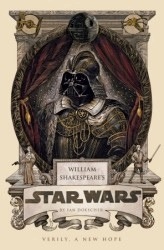
William Shakespeare’s Star Wars

If Shakespeare wrote the script to Star Wars – thanks to Ben Obi-Wan Rosamond for the link.

20130319-214804.jpg

Posted in Uncategorized | Leave a comment

Maps reveal how Japan’s cities were destroyed during World War II

The Journal of Historical Geography 2012 prize was awarded to a paper by David Fedman on how maps can show the bombing of Japan in World War II. Full details and some striking images here.

20130319-212248.jpg Thanks to Felix Driver for the alert.

Posted in Uncategorized | 2 Comments

Parisi’s Contagious Architecture now out.

Posted in Uncategorized | Leave a comment

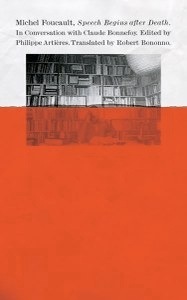
Michel Foucault, Speech begins after Death

Michel Foucault – Speech begins after Death. A book of interviews with Claude Bonnefoy.

20130317-231100.jpg

Posted in Michel Foucault, Writing | 5 Comments

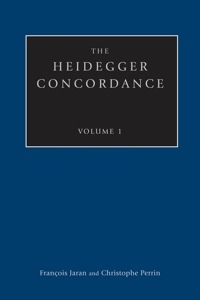
The Heidegger Concordance

20130317-194132.jpgThe Heidegger Concordance – coming later this year with Bloomsbury Academic. Expensive, but I can only imagine the work that went into compiling this. Kisiel’s introduction should be interesting. But the concordance will be quickly out of date, as there are still around twenty volumes of the Gesamtausgabe to come. I wonder whether book formats are really right for this kind of project.

Posted in Martin Heidegger, Uncategorized | Leave a comment

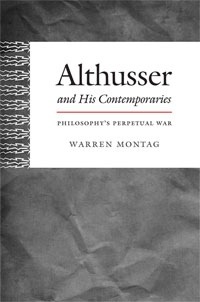
Warren Montag – Althusser and His Contemporaries

Coming soon from Duke University Press.

20130317-193700.jpg

Posted in Louis Althusser, Michel Foucault, Uncategorized | Leave a comment

Call for Papers Rethinking Governance in a World of Complexity

Call for Papers
Rethinking Governance in a World of Complexity
Two-day Workshop on June 27th-28th, 2013, in Duisburg, Germany

The Käte Hamburger Kolleg / Centre for Global Cooperation Research is a new and independent research institution of the University of Duisburg‐Essen which hosts 15-20 international fellows per year. It is located at Duisburg’s Inner Harbour, which combines industrial heritage with modern office buildings and a vibrant urban culture. The Centre focuses on the cultural premises and dynamics of emergent governance structures in current world society and analyses the possibilities for global cooperation.

Within its research cluster on “Paradoxes and Perspectives of Democratisation”, the Centre will hold a workshop “Rethinking Governance in a World of Complexity” on June 27th-28th, 2013. We are calling for both theoretically sophisticated and empirically driven papers around the central themes of the workshop:

1. Process and Governance
· Do governments govern today or does society govern?
· How does governance cope with complexity? What does it mean to govern through complexity?

2. The Implications for Democracy
· What role does democracy play in the governance of complexity?
· Can democracy still involve representative legitimacy?
· How are legitimacy claims articulated?

3. Complexity and Market Rationalities
· Does the rationality of the market stand external to societal interaction?
· Is complexity governed ‘for’ the market or ‘through’ the market?
· Is Marx relevant as a theorist of markets as complex adaptive systems with emergent causality?

4. Space and Complexity
· Does governance displace territorial conceptions of government?
· What does it mean to assert that the public is constituted through its problems?
· Is temporality displacing spatiality in International Relations and Geography?

5. Governance Beyond Resilience?
· Is resilience the solution to governing complexity?
· What role do the concepts of vulnerability and adaptation play in discourses of complexity?
· Has there been a shift beyond neoliberal constructions of resilience?

The Käte Hamburger Kolleg / Centre for Global Cooperation Research has invited Prof. Robert Jessop (University of Lancaster) to hold a keynote lecture Beyond the Regulation Approach: Rethinking State Power and Governance in a World of Complexity on June 27th. Prof. Jessop’s participation, though, is still to be confirmed.

The workshop will be hosted by Prof. David Chandler, University of Westminster and Senior Fellow of the Centre for Global Cooperation Research, and Prof. Tobias Debiel, University of Duisburg-Essen and Director of the Centre. We welcome abstracts of 250 to 400 words. They should be sent to Jan Schablitzki <Jan.Schablitzki@uni-due.de> by April 8th. We will notify on paper acceptance by April 15th. The papers (4,000 to 7,000 word) should be submitted one week before the workshop and can have a draft character.

The Centre will provide accomodation and domestic travel. With regard to travel from abroad, the Centre has limited funds at its disposal and will approach international participants after the acceptance of the abstract accordingly.

Posted in Conferences, Politics, Uncategorized | Leave a comment