Biblioklept links to a new short story by Teju Cole.

Biblioklept's avatarBiblioklept

Here’s the first paragraph of Teju Cole’s new short story “Farewell Tour” —

Frank Low told me this one Friday night in Times Square. He said he’d been transfixed by “Lavoisier and His Wife” at the Metropolitan Museum that past Wednesday afternoon, and in telling me about it, he had the hesitant manner of someone trying to remember the precise wording of a poem. When his words came, they came complete. He had read the wall label next to the painting and noted that 222 years had passed since it was made. The text read: “Antoine-Laurent Lavoisier (1743-1794) and His Wife (Marie-Anne-Pierrette Paulze, 1758-1836)”. The picture was, historically speaking, an intake of breath, a preparation for what was to come. Within a year after David painted it the Bastille was stormed. When it came to revolutions Low himself would rather there were none. He preferred order, lived as he liked…

View original post 69 more words

Posted in Uncategorized | Leave a comment

A map of Mars discovered by All Things Geography.

Posted in Uncategorized | Leave a comment

Another lecture from Catherine Malabou on Biopolitics.

Clare O'Farrell's avatarFoucault News

See earlier post for details as well as this additional lecture on biopolitics and sovereignty.

With thanks to Dirk Felleman for this link

View original post

Posted in Uncategorized | Leave a comment

Joshua J. Kurz discusses my 2009 book Terror and Territory at his blog Being-in-Exodus.

Posted in Boundaries, My Publications, Politics, Territory, Terror and Territory | Leave a comment

A New Way to Peer Review

BioMed Central discusses a new way to peer review, the community peer-review initiative Peerage of Science. There is some relation to the editorial I wrote for Society and Space a few years back on “The Exchange Economy of Peer Review” (open access). Thanks to Noel Castree for sending this to me.

Much has been made recently of the imperfections of the traditional peer-review process as a way to evaluate scientific knowledge. Despite quibbles about process, the current system still represents the gold standard which—to paraphrase Winston Churchill on democracy—might be said to be the worst form of scientific assessment, except all those other forms that have been tried from time to time.

A key problem for journals and journal editors is balancing efficiency, rigour and fairness. All three are crucial, and interwoven with each other to affect the scientist as author, editor, reviewer and reader.

To address this, a little under year ago a new initiative called Peerage of Science was launched aiming to tackle some of these underlying issues and to reward reviewers in the process.

The basic idea behind the initiative lies in the creation of a “community of peers”, each signed up to submit and review manuscripts in a transparent format. Any scientist who has a publication record is free to join the community, and those without can only become members if their manuscript is favourably reviewed. Manuscripts are submitted anonymously to a central pool, and any peer can then choose to review it. Submitting a manuscript creates a “peer review debt” of -2 reviews, which is shared among all authors. Writing a review increases this personal balance by +1, with subsequent submissions only being possible if the balance is positive– the aim being to ensure reciprocal participation in the review process. [continues]

Posted in My Publications, Publishing, Society and Space | 4 Comments

Education, Conflict and Development reviewed on the Society and Space open site.

Posted in Uncategorized | Leave a comment

A short illustrated guide to the EU financial crisis.

E's avatarGreek Left Review

By ROAR Collective

roarmag.org

Post image for Austerity explained: a pocket guide to the EU crisisBy blaming the crisis on public spending, politicians’ and bankers’ only solution was to impose austerity. This has predictably worsened the debt crisis.

 

Excerpt via the Transnational Institute in Amsterdam.

“We are punishing the innocent through austerity, and we are rewarding the guilty because the banks are continuing to receive huge privileges and subsidies from our governments. That is why we must defeat this austerity treaty, and all the measures that come with it unless we want Europe to be retrograded to, shall we say, the 19th century.”

Susan George, President of the Board of the Transnational Institute, author of Whose Crisis, Whose Future?

Austerity measures have never worked, and have led growth to collapse across the EU. Greece witnessed its battered economy shrinking by 6.2% in the second quarter of 2012, and is forecast to enter its sixth straight year of recession in 2013. Austerity…

View original post 119 more words

Posted in Uncategorized | Leave a comment

The Lance Armstrong Network

Another remarkable map – the connections between Lance Armstrong, business and the cycling world. It’s a huge image but clicking on the compressed version below will take you to the original location.

ArmstrongBusinessConnections1707

Posted in Cycling | Leave a comment

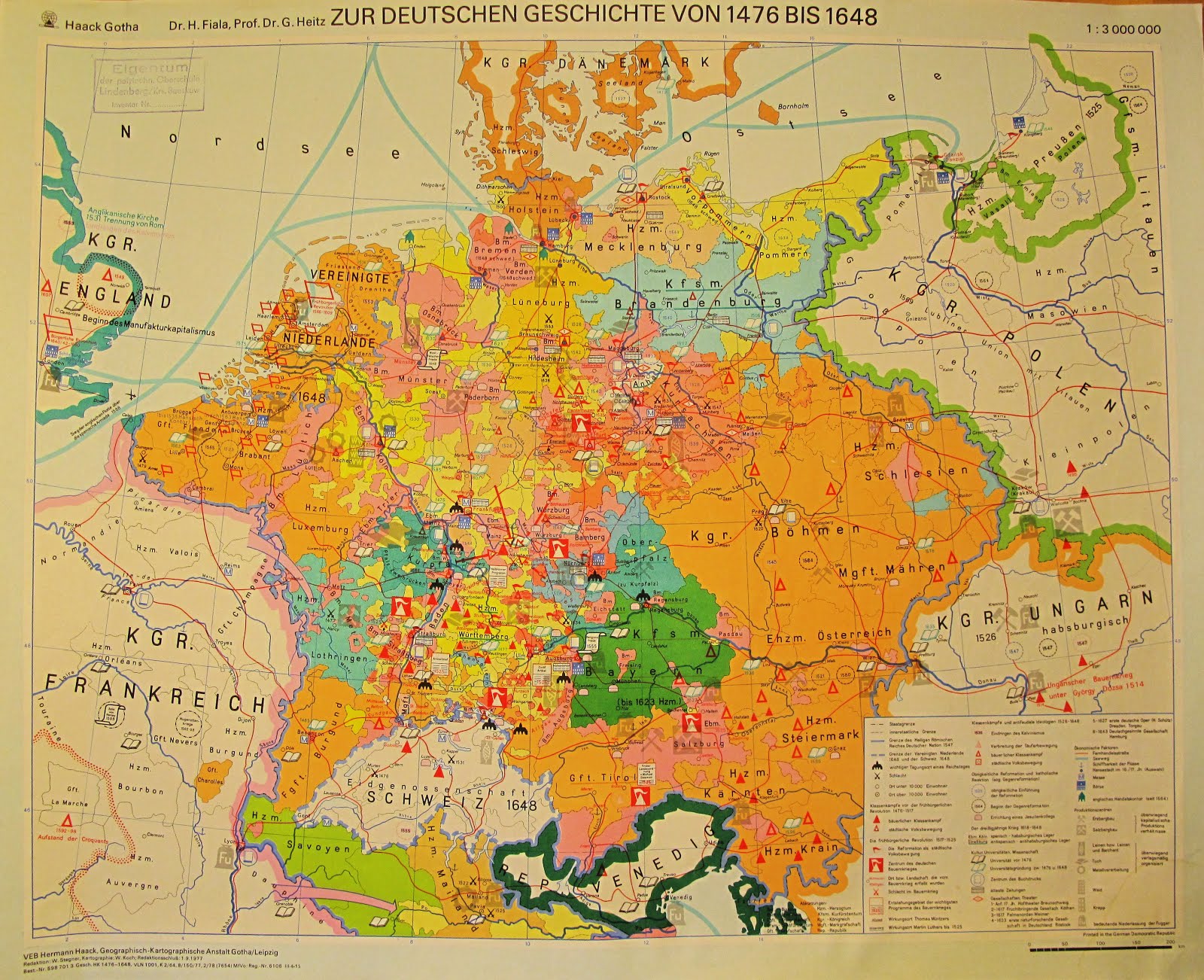
A Marxist Map of History

Marxist Map 01

Roland Boer has discovered a map of European (mainly German) history between 1476 and 1648 – from the perspective of class struggle.

You can also download them – Version 1 and Version 2 (thanks to Christina Petterson via Stalin’s Moustache).

Posted in Politics, Territory | Leave a comment

Derek Gregory links to the new issue of Political Concepts, and discusses the project and publishing more generally.

Derek Gregory's avatargeographical imaginations

A new edition (in fact the second) of Political concepts, an online magazine, includes – among many other fine things – essays by Susan Buck-Morsson Civilization, Ariella Azoulay on Revolution, Hagar Kotefon Movement and Uday Mehta on Violence.

The first edition included Ann Laura Stoler on Colony (a must-read, dazzling combination of economy and brilliance) and Adi Ophiron Concept (a characteristically artful, original and lapidary contribution).

Buck-Morss Civilization

The editors explain the project like this:

Political Concepts: A Critical Lexicon is a multidisciplinary, web-based journal that seeks to be a forum for engaged scholarship. Each lexical entry will focus on a single concept with the express intention of resituating it in the field of political discourse by addressing what has remained unquestioned or unthought in that concept. Each entry will serve as a short defining essay for a concept. Through their argumentative strategies and employment…

View original post 344 more words

Posted in Uncategorized | Leave a comment