Sovereignty, Territorial Integrity and the Falklands/Las Malvinas

Today’s Argentine letter on the Falkland/Las Malvinas islands makes for interesting reading.

Buenos Aires, January 3rd, 2013

Mr Prime Minister David Cameron,

One hundred and eighty years ago on the same date, January 3rd, in a blatant exercise of 19th-century colonialism, Argentina was forcibly stripped of the Malvinas Islands, which are situated 14,000km (8700 miles) away from London.

The Argentines on the Islands were expelled by the Royal Navy and the United Kingdom subsequently began a population implantation process similar to that applied to other territories under colonial rule.

Since then, Britain, the colonial power, has refused to return the territories to the Argentine Republic, thus preventing it from restoring its territorial integrity.

The Question of the Malvinas Islands is also a cause embraced by Latin America and by a vast majority of peoples and governments around the world that reject colonialism.

In 1960, the United Nations proclaimed the necessity of “bringing to an end colonialism in all its forms and manifestations”. In 1965, the General Assembly adopted, with no votes against (not even by the United Kingdom), a resolution considering the Malvinas Islands a colonial case and inviting the two countries to negotiate a solution to the sovereignty dispute between them.

This was followed by many other resolutions to that effect.

In the name of the Argentine people, I reiterate our invitation for us to abide by the resolutions of the United Nations.

Cristina Fernández de Kirchner
President of the Argentine Republic

Cc: Ban Ki-moon, Secretary-General of the United Nations

The invocation of territorial integrity is interesting here, as is the use of territory to describe the islands. The idea that there were Argentine civilians there in 1833 is disputed, with the UK claiming that there was only a small military garrison there. In terms of self determination, it’s clear that the existing population wants to remain part of the UK, and the UK government response is naturally to say it will defend their wishes. But while moving populations into occupied land is now illegal in international law – look at Israel’s settlements, and Western Sahara, for instance – as far as I know there was no provision against it 180 years ago. And while the United Provinces had declared independence from Spain earlier in the 19th century, what Argentina was as a state, and its territory, wasn’t decided until later. So, as with many declarations of the importance of territorial integrity, it depends what the territorial integrity is of, as well as how the writer understands territorial integrity. I’ve argued elsewhere – in Terror and Territory and shorter writings – that the term has two main meanings: territorial preservation and territorial sovereignty. Territorial preservation here clearly depends on the side – Argentina claims they are, and have been, part of Argentina, and that for 180 years the UK has violated this territorial arrangement. The UK claims that they are part of it, as a British Overseas Territory, and that the invasion of 1982 was a violation of territorial integrity. In terms of territorial sovereignty it concerns the exercise of political authority, without limits and interference, within that territory. At the Royal Holloway Geopolitics and Security blog, Phil Steinberg discusses Thatcher, sovereignty and the Falklands/Las Malvinas. This is useful in tracking the ways sovereignty has been understood in relation to the islands.

For Argentina’s claim to have validity, it would need to be clearly demonstrated that the islands were part of Argentina in 1833, that they were part of the Spanish colony before, and that at the time of its independence, by the rule of uti possidetis, they should have become part of the newly independent state. But it is not clear that this is indeed the case. Invoking territorial integrity is an interesting one, given the term doesn’t take on importance in international law until after the first World War. The use of the proximity argument is also dubious. 14,000 km seems an awfully long way away, but then they are over 300 miles from Argentina, which renders the Argentine claim somewhat vague – they lie well outside of Argentina’s exclusive economic zone, let alone its territorial sea.

None of this defends the UK government, present or past. It continues to enact the awkward legacy of an unpleasant history. The UK’s recent rather silly declaration of Queen Elizabeth land in the Antarctic shows that a colonial mindset is far from only historical. But from a legal perspective, it is not clear to me what basis the Argentine claim has. None of the above should be taken to say that it wasn’t an act of colonialism. But had the Spanish, French or Argentine claims to the islands in the late eighteenth and early 19th century ended up being the status quo, a similar description of that could undoubtedly be made.

Posted in Boundaries, Politics, Territory, Terror and Territory | 1 Comment

Bentham’s Panopticon Letters available online

Jeremy Bentham’s Panopticon Letters are available online (via Heterotopian Studies).

Posted in Jeremy Bentham, Michel Foucault | Leave a comment

Shakespearean Territories in York

The York Sociology department have posted details of my seminar there on January 16th.

Posted in Uncategorized | Leave a comment

Radical Philosophy 177 out now

Imre Szeman, `What the Frack? Combustible Water and Other
Late Capitalist Novelties’
John Roberts, `The Two Names of Communism’
Peter Osborne, `More than Everything: Zizek’s Badiouian Hegel’
Nicolas Vieillescazes, `Strategies of Distinction: Ranciere’s Aisthesis’
Kate Soper, `John Mepham, 1938-2012′
Nik Heynen, `Neil Smith, 1954-2012′

Nina Power on Tiqqun’s Theory of the Young-Girl
Philip Derbyshire on Bruno
Bosteels’s Marx and Freud in Latin America
Jon Goodbun on Eden Medina’s Cybernetic Revolutionaries
Hannah Proctor on new books by Catherine Malabou
Jason E Smith on Frank Ruda’s Hegel’s Rabble
Chris Wilbert on new books on Animal Studies
Shannon W Sullivan on new books on the philosophy of race
Kostas Maronitis on Ash Amin’s Land of Strangers
Nik Heynen on Alex Loftus’s Everyday Environmentalism
Todd Cronan on Lisa Siraganian’s Modernism’s Other Work

Available £6 / $13 from all good booksellers, including
Waterstones, Tate, LRB.

Selected content from RP177 free at www.radicalphilosophy.com

Posted in Uncategorized | Leave a comment

Kant in Atlanta

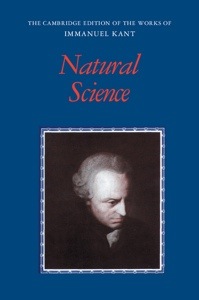
62189_covBetween Christmas and New Year I attended a couple of days of the American Philosophical Association Eastern Division meeting in Atlanta. The main reason was for an invited session on the Reading Kant’s Geography book I co-edited with Eduardo Mendieta a couple of years ago. There were three papers, from myself, Robert Bernasconi and Robert Louden.

20130103-123738.jpg

I spoke about the new Natural Science volume of Kant’s writings that includes a translation of the Physical Geography in the problematic 1802 edition;about the work that has been done on the lecture transcripts by Werner Stark; and said a bit about how these lectures helped to understand shifts in Kant’s understanding of ideas of time and space. I also said something about how Eduardo and I came to edit the volume and about the way the contributors helped to write something we’d like to see as a book of many hands, rather than simply a collection of essays. I plan to make the audio recording of my talk available soon. [Update – now available here]

Robert Bernasconi gave a paper about race in the lectures, and especially the way that the recently published Volume 26.1 of the Akademie edition helps to understand shifts in Kant’s thinking. Robert Louden spoke about why the lectures had been neglected in mainstream Kant scholarship, and why philosophers should today take them seriously.

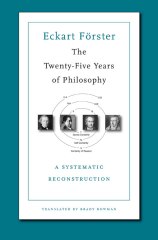
EFThere was also a good session organised by the North American Kant Society on Eckhart Förster‘s recent book The Twenty-Five Years of Philosophy. The book looks at the years between the first edition of Kant’s Critique of Pure Reason and the completion of Hegel’s Phenomenology of Spirit. The commentators were Robert Hanna and Michelle Kosch, and Förster gave a spirited response. The book looks a must read – a really interesting work in the history of philosophy.

Kant and the Concept of RaceI also discovered that there is a new book of Kant’s (and his contemporaries’) writings on race coming out with SUNY Press in 2013 – Kant and the Concept of Race. I’ve read the introduction in proof form, and this is going to be a very useful text to have alongside the Natural Science.

Posted in Conferences, Eduardo Mendieta, Georg Wilhelm Friedrich Hegel, Immanuel Kant, My Publications | 1 Comment

Happy New Year and 2012 in review

I’m not yet back at work, but spending a little time today dealing with the most pressing emails. I’ll post about the Kant sessions at the APA Eastern as well as some links to other things.

For those that care about such things, WordPress have prepared a 2012 annual report for this blog.

Here’s an excerpt:

About 55,000 tourists visit Liechtenstein every year. This blog was viewed about 240,000 times in 2012. If it were Liechtenstein, it would take about 4 years for that many people to see it. Your blog had more visits than a small country in Europe!

Click here to see the complete report.

Posted in Uncategorized | Leave a comment

More novels read in 2012

At the end of June I posted a list of the novels I’d read so far in 2012. Here are those I read between July and today the end of the year- not all are novels, as there are a few books about cycling too, though given events this year some of these surely count as fiction… I have a few that I expect I’ll read over the holidays too.

Novels 001

It was a year when I rediscovered Sebastian Faulks and Ian McEwan; discovered a host of new (for me) writers including several from Africa, Kamila Shamsie and Roberto Bolaño; and grudgingly realised that Umberto Eco just isn’t going to write anything as good as Foucault’s Pendulum or The Name of the Rose again.

  1. David Millar, Racing through the Dark (true story)
  2. E.M. Forster, The Machine Stops (short story)
  3. Gustave Flaubert, Salammbo
  4. Teju Cole, Open City
  5. Aminatta Forna, The Memory of Love
  6. Rob Kitchin, The White Gallows
  7. H.G. Wells, The Time Machine
  8. H.G. Wells, The Island of Doctor Moreau
  9. Margaret Atwood, Oryx and Crake
  10. Amos Oz, To Know a Woman
  11. Thomas Hardy, Tess of the D’Urbervilles
  12. Jonathan Franzen, Freedom
  13. Herman Melville, Moby Dick  – for perhaps the fourth time
  14. Sebastian Faulks, The Fool’s Alphabet
  15. Roberto Bolaño, Amulet
  16. Umberto Eco, The Prague Cemetery
  17. Flann O’Brien, At Swim-Two-Birds
  18. Djuna Barnes, Nightwood
  19. Haruki Murakami, What I Talk About When I Talk About Running (non-fiction)
  20. Chimamanda Ngozi Adichie, Half of a Yellow Sun
  21. Ian McEwan, Amsterdam
  22. Iain Sinclair, Lights out for the Territory: 9 Excursions into the Secret History of London (non-fiction)
  23. Daniel Coyle, Lance Armstrong: Tour de Force (also known as Lance Armstrong’s War)
  24. Lance Armstrong, It’s Not About the Bike 
  25. Barbara Kingsolver, The Lacuna
  26. Haruki Murakami, Sputnik Sweetheart
  27. Philip Roth, The Human Stain
  28. Jed Rubenfeld, The Interpretation of Murder
  29. Michael Cunningham, The Hours
  30. Graham Swift, Last Orders
  31. Thomas Meyer, Beowulf – open access from Punctum books
  32. David Mitchell, Cloud Atlas
  33. Don DeLillo, Cosmopolis
  34. Giles Foden, The Last King of Scotland – I was surprised how different the film was from this, as large parts of the story were completely changed.
  35. Ian McEwan, Solar
  36. Imre Kertész, Faultless
  37. Chinua Achebe, Things Fall Apart
  38. Matt Rendell, The Death of Marco Pantani
  39. Jeffrey Eugenides, The Marriage Plot
  40. John Fowles, A Maggot
  41. Cormac McCarthy, No Country for Old Men
  42. Italo Calvino, The Castle of Crossed Destinies
  43. Nanni Balestrini, Sandokan
  44. Joshua Ferris, Then we Came to the End
  45. Ian McEwan, On Chesil Beach
  46. W.G. Sebald, Vertigo
  47. Max Apple, The Oranging of America
  48. Madeline Miller, The Song of Achilles
  49. Lars Iyer, Spurious
  50. Ian McEwan, Enduring Love
  51. Sebastian Faulks, On Green Dolphin Street
  52. Michael McCormick, Across the Pond
  53. Kate Walbert, The Gardens of Kyoto
  54. Philip Roth, Goodbye, Columbus
  55. Saul Bellow,  Seize the Day
  56. John Steinbeck, Of Mice and Men
Posted in Books, Cycling, Novels read, Umberto Eco | 5 Comments

Albums of the year

Cds 001

Well, my favourite ones… in no particular order

  1. North Atlantic Oscillation, Fog Electric
  2. Anathema, Weather Systems
  3. Steven Wilson, Get All You Deserve (live)
  4. Scott Walker, Bish Bosch
  5. Somnarium, Voices in the Dust
  6. Flying Colors, Flying Colors
  7. Storm Corrosion, Storm Corrosion
  8. Neal Morse, Momentum
  9. Godspeed You! Black Emperor, Allelujah! Don’t Bend, Ascend!
  10. Sigur Rós, Valtari 
  11. Black Country Communion, Afterglow
  12. Muse, The Second Law
  13. O.S.I., Fire Make Thunder
  14. Adrian Benavides, Same Time Next Life
  15. Lo-fi Resistance, Chalk Lines
  16. It Bites, Map of the Past
  17. Trent Reznor & Atticus Ross, The Girl with the Dragon Tattoo soundtrack
  18. Crippled Black Phoenix, (Mankind) The Crafty Ape
  19. King Crimson, Lark’s Tongues in Aspic (40th Anniversary reissue)
  20. The Pineapple Thief, All the Wars

Honorable mentions to The Dear Hunter, The Colour Spectrum (Complete Collection); Tom Waits, Bad as Me and Bass Communion, Cenotaph which all came out in 2011 but I got in 2012. Miles Davis Quintet, 1965-68 box set was another purchase this year, plus the magisterial Bitches Brew Complete Sessions. And I did get the new albums by The Mars Volta, Rush, Marillion, Peter Hammill and some other old favourites, but they didn’t really work for me as much as the ones above, or their own past glories.

Posted in Music | 14 Comments

Writing tasks

When term finished last Friday, I was at last able to get to some writing tasks that I hadn’t been able to clear the time to complete before. First up was a short reply to two responses to my ‘Secure the Volume’ paper coming out in Political Geography. Peter Adey and Gavin Bridge wrote some very interesting things, and the reply, which was limited to 2,000 words, could only do a little to respond to them. But the comments will be very helpful as I take this work forward. The article, the responses and the reply are due out in an early issue next year.

The second was to write a review of the Immanuel Kant, Natural Science volume for Berfrois. That should be out mid January. I then used that, the introduction to the Reading Kant’s Geography book I co-edited, and my 2009 paper ‘Reassessing Kant’s Geography’, to write my paper for the American Philosophical Association Eastern division conference in Atlanta between Christmas and New Year.

Finally I wrote a report on the translation of Peter Sloterdijk, In the World Interior of Capital, forthcoming with Polity next year.

I’ve ploughed through then remaining emails and dealt with lots of other things. I’m planning on two weeks proper break from work and email, and this blog. Well, apart from the two days at the APA Eastern. Two last posts on novels read in the second half of 2012 and my favourite music of the year, and the computer gets turned off. Thank you all for reading, happy holidays, and more in 2013.

Posted in Immanuel Kant, My Publications, Peter Sloterdijk, Politics, Territory | Leave a comment

Dark Chaucer – now out from Punctum Books

DCThe new collection from Punctum Books, Dark Chaucer is now available as a download or to order in print. Eileen Joy writes about the book at the Punctum blog.

Posted in Uncategorized | Leave a comment