Digital Humanities conference

DH13LogoGeorge Washington University, Friday January 25 – Saturday January 26, 2013 – details here.

Digital humanities is a vibrant field that uses digital technologies to study the interactions between cultural artifacts and the society. In our second decade of the twenty-first century, we face a number of questions about the values, methods, and goals of humanistic inquiries at the intersection of digital media and theory.

Posted in Conferences | Leave a comment

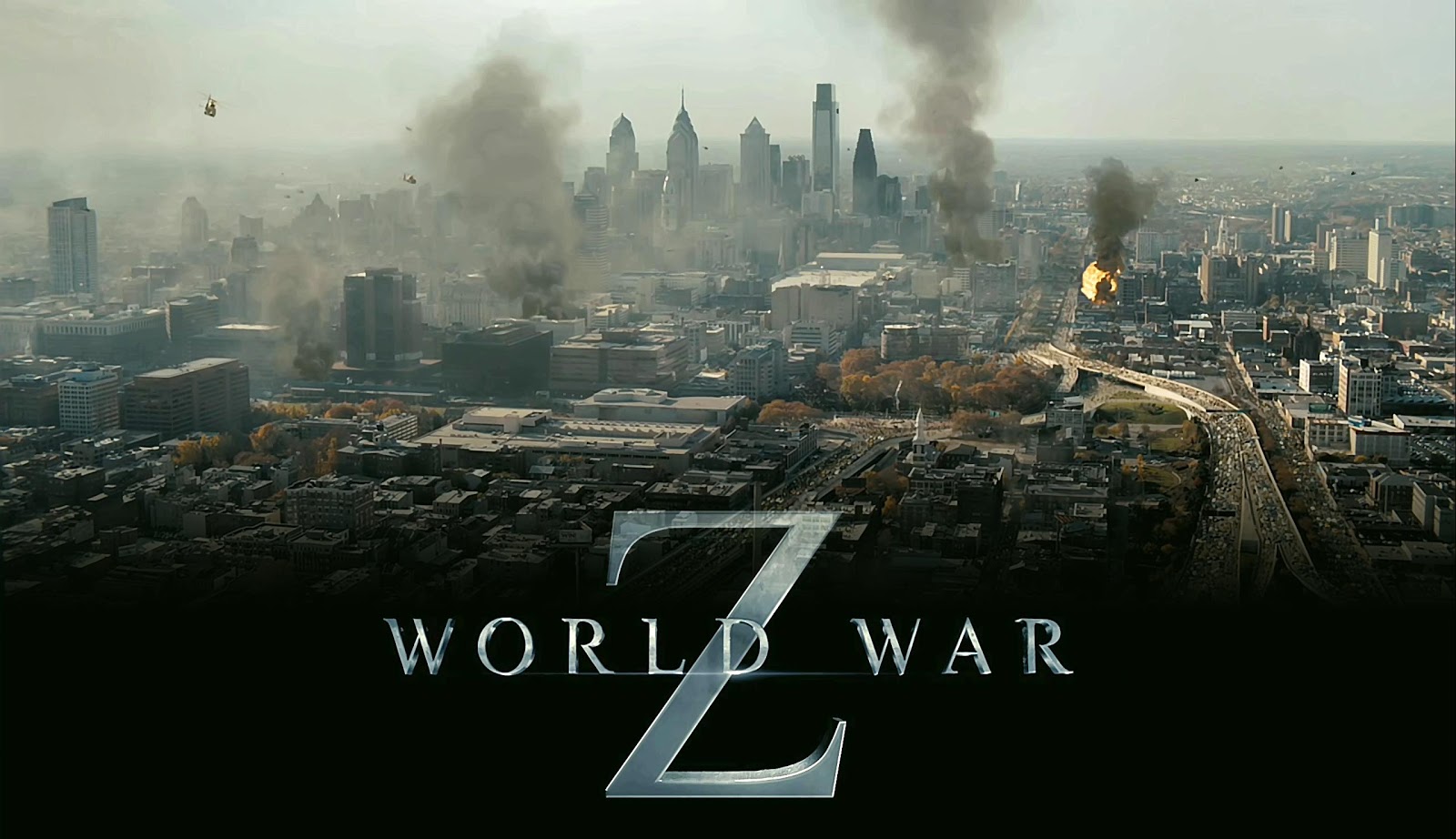
Gastón Gordillo on World War Z

WWZGastón Gordillo provides a good analysis of the forthcoming movie World War Z, which is especially interesting concerning the spatial and territorial issues.

Posted in Gaston Gordillo, Territory | Tagged | Leave a comment

Interview with Michel Sennelart on Du gouvernement des vivants.

Clare O'Farrell's avatarFoucault News

Interview on Radio France Culture, 24 Nov 2012.
Cours de Michel Foucault (édition de Michel Senellart)

Update: August 2025. Link is no longer available

Invité : Michel Senellart, Professeur de Philosophie politique à l’ENS de Lyon à propos de l’édition du Cours de Michel Foucault “Du gouvernement des vivants“, cours  au Collège de France en 1979-1980 – sous la direction de François Ewald, Alessandro Fontana – Edition établie par Michel Senellart – ( Ecole des Hautes Etudes en Sciences Sociales / Editions du Seuil, / Editions Gallimard –  8 nov 2012).

“Prenant ses distances, dans ce cours, avec la problématique du pouvoir-savoir, développée dans les années 70, Michel Foucault se propose d’étudier la question du gouvernement par la vérité. Comment se constitue le sujet dans le jeu du pouvoir et de la vérité ? Et, plus précisément, comme se noue, dans la culture occidentale, le rapport…


View original post 86 more words

Posted in Uncategorized | Leave a comment

Mapping the 2012 Gaza attacks

range-israeli-rockets1nyt-gaza-mapRather late linking to these, but Derek Gregory has a good discussion of the mapping of the 2012 Gaza attacks here.

Craig Jones has been producing an excellent sequence of posts on this conflict. See, especially, one on the range of the weapons; Gaza in Perspective I and II; and Where is Palestine?palestine-islands

Un monde à l'enversThe last post reproduces the remarkable image created by Le monde diplomatique of the Palestinian archipelago, from their alternative atlas Un monde à l’envers. There are a number of other maps available online here (French) and here (English).

Posted in Politics, Territory | Leave a comment

Mapping the London Blitz

website_screenshot_Fascinating website on the London Blitz – an interactive map and photos, plus an Android app.

The Bomb Sight project is mapping the London WW2 bomb census between 7/10/1940 and 06/06/1941. Previously available only by viewing in the Reading Room at The National Archives, Bomb Sight is making the maps available to citizen researchers, academics and students. They will be able to explore where the bombs fell and to discover memories and photographs from the period.

The project has scanned original 1940s bomb census maps , geo-referenced the maps and digitally captured the geographical locations of all the falling bombs recorded on the original map…

Various people linked to this; but there is a detailed discussion by Derek Gregory at Geographical Imaginations. Derek links to this video demonstrating what the site is capable of showing.

Posted in Uncategorized | Leave a comment

Call for Papers – ‘Urban Theory: States of the Art’

Urban — New Series, 6

Call for Papers — ‘Urban Theory: States of the Art’

There will never be good urban planning without a consistent urban theory. This controversial aphorism could serve to open the debate proposed by the journal in a forthcoming special issue. Urban theory (the theory of the city and urbanisation processes) has had a complex historic relationship with planning practice and urban policies: anticipation of more or less happy worlds, expert dissection of already materialised urban phenomena, critical interpretation that re-imagines the past and the present of cities and territories, opening up a new horizon for them… The state of theoretical work is without a doubt an effective index of the health and the perspectives of the planning field, but could it also be a weapon loaded with future? Can we still devise theories that are able to change the facts of an increasingly complex and variegated urban world, oblivious to any hint of rationality? Or on the other hand, should theory be satisfied with a ‘modest witness’ attitude, and look for productions of meaning in the fissures of prevailing urban discourses? What theoretical perspectives should we pursue, using what conceptual tools and within what intellectual frameworks? How should theory be articulated with practice? What sort of theory is our urban world asking for in the context of the global crisis? To what extent can attempts to understand the crisis help to broaden the theoretical field of the urban phenomenon?

This special issue of Urban aims to highlight international contributions that systematically and critically explore the state of the art in the various fields of urban theory, and link them to the broader trends of contemporary social theory — from planning to geography, from sociology to history and beyond, in the general perspective of technical knowledge, social sciences and humanities. Contributions that analyse current ideas about the intersections of the city, the economy, society, politics, culture, technology, nature, environment, design, institutions, etc. are especially welcome. Authors are expected to consider and problematise the link between planning theory and practice, remembering that ‘experience without theory is blind, but theory without experience is mere intellectual play’. Ultimately, how can urban theory contribute to bring about change not only in knowledge and discourse about the city, but also in the actual processes that sustain and transform it? Is urbanism faced with a panorama doomed to a generalised ‘poverty of theory’ or on the contrary, can we imagine a flourishing future in which urban theory occupies a place of its own in the broader field of social theory?

Deadline for submissions: 15 March 2013

More information: http://www.aq.upm.es/Departamentos/Urbanismo/publicaciones/urban.html

Posted in Publishing, urban/urbanisation | 2 Comments

Making the Geologic Now

GeoNow_Front-Cover_web-713x1024Punctum Books have published a new interesting collection, Making the Geologic Now: Responses to Material Conditions of Contemporary Life. Details of the print edition and free download link here.

Making the Geologic Now announces shifts in cultural sensibilities and practices. It offers early sightings of an increasingly widespread turn toward the geologic as source of explanation, motivation, and inspiration for creative responses to conditions of the present moment. In the spirit of a broadside, this edited collection circulates images and short essays from over 40 artists, designers, architects, scholars, and journalists who are actively exploring and creatively responding to the geologic depth of “now.” Contributors’ ideas and works are drawn from architecture, design, contemporary philosophy and art.  They are offered as test sites for what might become thinkable or possible if humans were to collectively take up the geologic as our instructive co-designer—as a partner in designing thoughts, objects, systems, and experiences.


Posted in Books, Publishing | Leave a comment

Two reviews of Karen Tongson’s Relocations at the Society and Space open site.

Posted in Uncategorized | Leave a comment

Steve Mentz on Greenblatt’s The Swerve

Further to yesterday’s post, here’s Steve Mentz on Stephen Greenblatt’s The Swerve.

Posted in Stephen Greenblatt | Leave a comment

Video recordings of talks at the Deleuze and Foucault conference.

Posted in Uncategorized | Leave a comment