Heidegger and Nietzsche

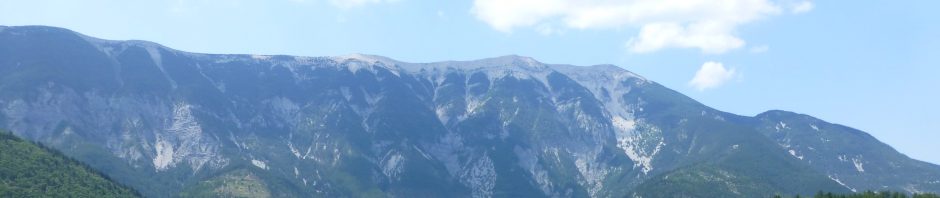
In 2004 I attended a conference in Heidegger’s hometown of Meßkirch. The conference was held in the town’s Schloß which had a Heidegger-museum in the basement, his grave was in the local cemetery and there were signs for the Martin-Heidegger-Weg that would take you on the route he used to walk out into the surrounding countryside. Much of this had become housing, but if you walked far enough you came to a tree with a bench that said this was where Heidegger used to sit as a young man and read the great philosophers. Heidegger’s critique of objects for consumption by the tourist industry clearly hasn’t been heeded.

The conference itself was on Heidegger and Nietzsche, and was very good. It was tri-lingual between English, French and German. A conference proceedings has long been promised, and it is now, finally listed. I have a piece in there entitled ‘A Thousand Year Conclusion? Machination and Calculation in the Nietzsche lectures’, which feels like a piece from a really different time in my career. It was written around the same time as Speaking Against Number, and there is some overlap of material. The delays in publication made me think this wasn’t actually ever going to appear, but it seems I was wrong. Amazon has it listed for today’s date. Shame about the prohibitive price.

Posted in Friedrich Nietzsche, Martin Heidegger, My Publications | 1 Comment

Between Deleuze and Foucault conference

Purdue University, College of Liberal Arts

November 30 – December 1, 2012

An international conference exploring the relations between the work of Gilles Deleuze (1925-1995) and Michel Foucault (1926-1984).

Plenary Speaker: William Connolly, Johns Hopkins University

Participants:

Marco Altamirano, Purdue University; Alain Beaulieu, Laurentian University; Thomas Flynn, Emory University; Colin Koopman, University of Oregon; Leonard Lawlor, Penn State University; Nicolae Morar, University of Oregon; Thomas Nail, University of Denver; Roberto Nigro, Université de Paris; Chris Penfield, Purdue University; John Protevi, Louisiana State University; Anne Sauvagnargues, Université Paris Ouest Nanterre; Janae Scholtz, Alvernia University; Daniel W. Smith, Purdue University; Dianna Taylor, John Carroll University; Kevin Thompson, DePaul University

Roundtable Discussion:

Gary Gutting, Notre Dame University

Todd May, Clemson University

Ladelle McWhorter, University of Richmond

Alan Schrift, Grinnell College

Moderated by: Alan Rosenberg, Queens College, CUNY

The conference is free and open to the public.

Location: West Faculty Lounge, Purdue Memorial Union

For further information: http://www.cla.purdue.edu/research/deleuze/

Organizers: Daniel W. Smith (smith132@purdue.edu), Nicolae Morar (nmorar@uoregon.edu), and Thomas Nail (thomas.nail@du.edu).

The conference is made possible through the generous support of a Global Synergy Grant for Faculty and an Enhancing Research in the Humanities and Arts Grant from the College of Liberal Arts at Purdue University.

Posted in Conferences, Gilles Deleuze, John Protevi, Michel Foucault, William E Connolly | 3 Comments

2 new reviews at the Society and Space open site

Posted in Uncategorized | Leave a comment

Shakespearean Territories – Durham and Oxford

Last week I talked about the Shakespearean Territories project at the Politicised Literary Geographies workshop in Durham. Angharad Closs Stephens, Carolyn Pedwell and James Kneale were the other speakers. The whole event was recorded and we hope to make that available soon.

In that talk I spoke about the project as a whole. Today I head down to Oxford to talk to the 1887 Society at Mansfield College. It’s a fairly brief talk of about 30 minutes, but as well as outlining the idea behind the project in general terms I’m going to talk about Henry V, particularly the opening two scenes, for the first time.

Posted in Conferences, Shakespearean Territories, William Shakespeare | Leave a comment

Everyday Geopolitics

Sara Fregonese and Adam Ramadan have a blog entitled Everyday Geopolitics; and Craig Jones has just started one called War Law & Space. Derek Gregory has linked to both from his own blog, in apost that also provides a good background reading list on Gaza.

Posted in Derek Gregory, Politics | Leave a comment

Latour, An Inquiry into Modes of Existence – first chapter

A draft translation of the first chapter of Latour’s new book is available at his website (via ANTHEM).

Posted in Bruno Latour | Leave a comment

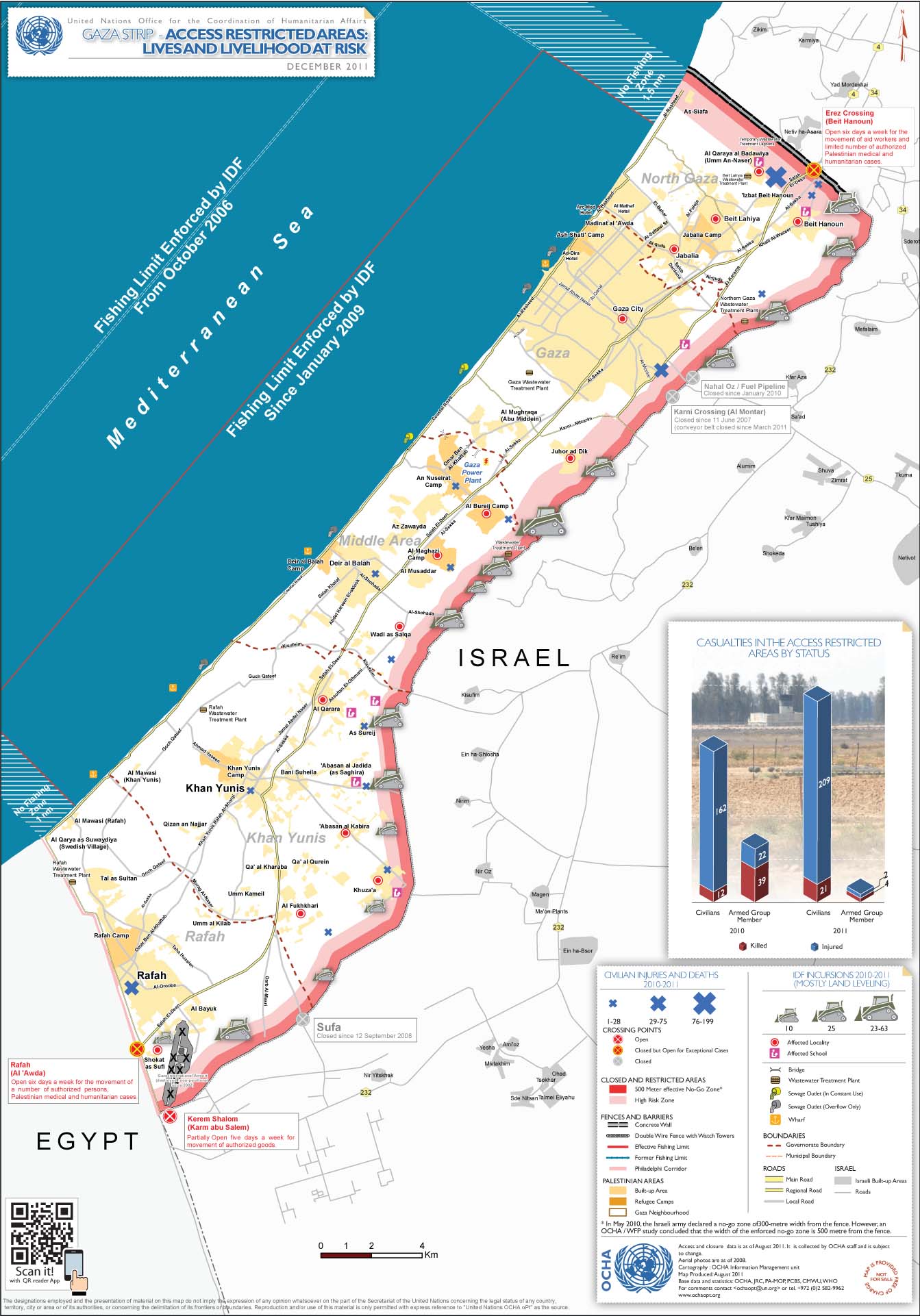
Some interesting maps of Gaza as the Israeli war continues.

Léopold Lambert's avatarThe Funambulist

Map of the Gaza Strip (Dec 2011) /// United Nations Office for the Coordination of Human Affairs in Occupied Palestinian Territory

I think that many of us are infuriated in front of the unfolding new siege over Gaza by the Israeli army. As horrifying as those images of children and entire families being  struck by the bombs sent by aircraft, battleships, drones or other remote controlled machine guns, it is extremely important to also insist on the daily oppression that the people of the Gaza strip have to face even when they are not being bombed. Since 2006 and the Israeli disengagement of its settlement within the strip, the situation is different from the one in the West Bank -which I have to say, I am more familiar with. When the West Bank has to suffer from multiple colonial apparatuses, Gaza functions pretty much as a gigantic prison from which…

View original post 845 more words

Posted in Uncategorized | Leave a comment

Seminar with Catherine Malabou in Edinburgh.

groundworkphilosophy's avatarGroundwork

The Bodies in Movement Seminar organisers together with Michael O’Rourke (Independent Colleges, Dublin) and the Institute for Advanced Studies in the Humanities (Edinburgh) are pleased to announce that we will be holding an intimate, one-day seminar with Catherine Malabou at the University of Edinburgh on Monday, 21 January 2013.

Malabou is currently tenured at Kingston University, London and also teaches at the European Graduate School. She is renowned for moving across the fields of neuroscience, anthropology, biology, feminism, politics, literature, psychoanalysis and philosophy, as well as bringing medical and biological science and philosophy into conversation. Her philosophy has created the foundation for a wide range of current research which focuses on the intersections between medicine, (neuro- and biological) science and the humanities.
Held at the Institute for Advanced Studies in the Humanities, 2 Hope Park Square, Edinburgh EH8 9NW. For further information, see the Bodies in Movement Seminar Series page. If…

View original post 57 more words

Posted in Uncategorized | Leave a comment

Books received

People seem to like these posts, so here’s another pile of books received – the most recent volume from Heidegger’s Gesamtausgabe (volume 83), which is seminars on Plato, Aristotle and Augustine; some books by Jean Gottmann and a Festschrift on his work; Gaston Gordillo’s Landscapes of Devils and Giacomo Marramao’s The Passage West; plus a couple of journals.

Posted in Gaston Gordillo, Giacomo Marramao, Jean Gottmann, Martin Heidegger | Leave a comment

Amos Nascimento on Reading Kant’s Geography

Amos Nascimento has a detailed review of Reading Kant’s Geography in Radical Philosophy Review.

Reading Kant’s Geography is a groundbreaking colleciton of important interdisciplinary authors who present Immanuel Kant’s views on issues neglected for too long in Kantian scholarship. This pioneering initiative assesses not only Kant’s four decades of lectures on geography but also the problems regarding his manuscripts and their publication, the appropriation of his ideas by later generations, and the contemporary impact of such ideas in philosophy, geography, anthropology and politics. One of the greatest merits of this book is that it is not simply celebratory. While it does a great service rescuing Kant’s lectures and performing an archeological work to explain the importance of geography to Kant’s philosophy as a whole, this collection reveals many of Kant’s shortcoming, especially his controversial views on race, gender, geopolitics, and biology… For all the reasons above, this collection is definitely unique. It shall be mandatory reading for anyone interested in Kant, geography, and the question about humanity.

Posted in Uncategorized | Leave a comment