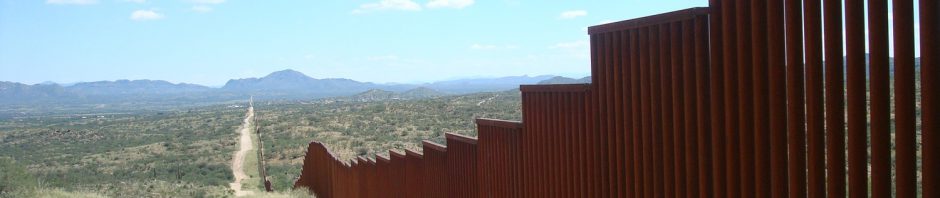
Tasmania and Territory

Just about to leave to go to Tasmania. I am giving a talk on The Birth of Territory on Monday, but have the weekend there first. I spent three very happy months as a visiting scholar at the University of Tasmania in early 2006, and it’s great to be going back. Once again my co-hosts are the School of Geography & Environmental Studies and the School of Philosophy. While I was there in 2006 I did a lot of thinking and reading about territory. I went out there without a particular agenda, and was clear that I was not aiming to write, but rather to try to work out what sort of project I had and how I was going to do it. I left with a huge file of notes.

Although I’d been working on territory on and off for some time before, it was really only there that I started to get a sense of what kind of book this might turn out to be. While there I did a lot of reading on the Medieval period, and what had originally been intended to be a single chapter began to grow beyond that. In the current book manuscript there are four or five chapters – depending on dates – that look at the Middle Ages. That’s about half the book. It was in Tasmania that I had what I think was one of the most important break-throughs in the project, which was when I realised the importance of notions of temporal power.

On my return from Tasmania, I wrote the application for the Leverhulme major research fellowship. I think one of the reasons behind the success of that application was that, by then, I had a really clear idea of the problem I was trying to deal with. I think I was able to articulate that fairly well, and also make a convincing argument for the scale of this project and why I needed time to complete it. Much has changed since, inevitably, but the articulation of the problem and its broad scope remains.

So there is a nice symmetry to going back to Tasmania on the day I wrote the final report for Leverhulme, and to give what I suspect will be one of the last talks on this book. Or, at least, one of the last talks while the book is still ‘live’. Almost inevitably I will talk about the book while it is in press, and perhaps even after publication, but there is a definite shift between giving a talk on something where you could still change things and when you can’t.

Posted in Medieval Studies, The Birth of Territory, Travel | Leave a comment

Libya, the UN and airstrikes

Now that the UN has voted for ‘all necessary measures’ short of an invasion, airstrikes cannot be far away. The UN website still doesn’t have resolution 1973 up, but it is available here. OP4 is the crucial one:

4. Authorizes Member States that have notified the Secretary-General, acting nationally or through regional organizations or arrangements, and acting in cooperation with the Secretary-General, to take all necessary measures, notwithstanding paragraph 9 of resolution 1970 (2011), to protect civilians and civilian populated areas under threat of attack in the Libyan Arab Jamahiriya, including Benghazi, while excluding a foreign occupation force of any form on any part of Libyan territory, and requests the Member States concerned to inform the Secretary-General immediately of the measures they take pursuant to the authorization conferred by this paragraph which shall be immediately reported to the Security Council;

I posted some comments about this issue here back in late February when such measures were first being proposed by Cameron. I remain very skeptical about this, but it is staggering that it has taken almost three weeks for them to get to this stage. In that time, Gaddafi has gained so much ground that it’s hard to see what a no fly zone can achieve on its own. It also seems very unclear what the purpose actually is: regime change is supposed to be illegal, so the use of force cannot be to remove Gaddafi, although it seems clear that is the intention. To protect civilians is a noble aim, sure, but how this will be done and where this leaves the country generally is very uncertain. And lots of civilians will die as a result – that seems inevitable.

Also note the standard formulation in the resolution:

Reaffirming its strong commitment to the sovereignty, independence, territorial integrity and national unity of the Libyan Arab Jamahiriya,

In the earlier post, referring to resolution 1970 which said exactly the same, I raised some questions about all of those. Those four things can be of the state or of the government. Gaddafi’s sovereignty is being challenged; Libya’s independence is compromised; its territorial integrity is at risk; and there is no national unity – this is a civil war. It will be interesting to see how a belief in all those things plays out. They all seem to be threatened by OP4. See also the argument here at Lenin’s Tomb.

Posted in Politics, Territory | Leave a comment

Harman on Leibniz and Heidegger

In the Cultural Studies Review here.

Posted in Gottfried Leibniz, Graham Harman, Martin Heidegger | Leave a comment

More on the history of philosophy and geography

Justin Smith (author of the Divine Machines book on Leibniz that is keenly anticipated) has a very interesting response to the Pasnau letter on the history of philosophy here (via New APPS). There are further responses at the Leiter Reports blog to his original post; and a couple of interesting comments to my own post here. This is, as Dean says in comments, a theme for further discussion: a future AAG or RGS session perhaps?

(I’ve posted about Smith and the Leibniz book before here and here.)

Posted in Gottfried Leibniz | Leave a comment

Animal, Vegetable, Mineral

Over at In the Middle, a couple of interesting reports on the Animal, Vegetable, Mineral: Ethics and Objects in the Medieval and Early Modern Periods conference.

Eileen Joy on Jane Bennett’s keynote here – The audio of the lecture “Powers of the Hoard: Notes on Material Agency” can be found here as (audiofile – stream or download).

And Jeffrey Jerome Cohen on the conference as a whole – here. Jonathan Gil Harris’s concluding comments are posted here.

Sounds like a good one. Great that the audio of at least Jane’s lecture is available.

Posted in Conferences, Jane Bennett, Medieval Studies | 1 Comment

Rudwick and Geohistory

I’ve mentioned Martin Rudwick’s work before, in the context of his Bursting the Limits of Time: The Reconstruction of Geohistory in the Age of Revolution and his Worlds before Adam: the Reconstruction of Geohistory in the Age of Reform. He is perhaps worth another mention given the discussion I started on the history of geography. Rudwick has posts as an emeritus at San Diego and is affiliated to Cambridge. He was a palaeontologist who reinvented himself as a historian (his own description in Worlds Before Adam, p. 555).  There is a brief overview of his career and contribution here.

Rudwick seems to me to be interested in not simply the history of ideas, in a very abstract sense, but the history of practices. He’s good with primary sources – both written and illustrative. I’ve scanned several images from his books for my ‘Fossils’ lecture. There is an interesting interview with him here.

Bursting the Limits of Time and Worlds Before Adam are both terrific, and probably his best. They are both pretty forbidding though. His earlier The Meaning of Fossils covers some of the same ground but is rather shorter. But I’d also mention Georges Cuvier, Fossil Bones and Geological Catastrophes, which includes translations of many of Cuvier’s papers, plenty of illustrations, and interpretations. Cuvier has become quite important to the story I’m trying to trace, and Rudwick’s work was very helpful.

Posted in Fossils | Leave a comment

Books on the boil

There has been a bit of a collision between different book projects recently…

We received the revised final proofs of Reading Kant’s Geography, which still had mistakes, including some that had been pointed out on the original final proofs. We now have final final proofs. This one has taken an age, but June is apparently still the aim.

Reviews back on the Sloterdijk Now manuscript. Generally very positive, but a few things for me to do, and a few for some of the contributors. It now looks almost certain that the book will include a newly translated piece by Sloterdijk – “Tatzeit des Ungeheuren: Zur philosophischen Rechtfertigung des Künstlichen”, from Nicht gerettet: Versuche nach Heidegger, pp. 367-87. The book still should be out this year. By any standards, but especially compared to other academic publishers, Polity are organised, efficient and fast – highly recommended.

Also some work on the running order and blurb for the Environment and Planning collection Sage are publishing, plus contracts, design issues, etc.

At the same time I am working on fossils for the paper here in a couple of weeks, which I think will in time form the basis for a chapter in the next book… And then of course there is The Birth of Territory. I’m hoping for more news soon.

Posted in Books, Fossils, Immanuel Kant, Peter Sloterdijk, The Birth of Territory, The Space of the World | 3 Comments

Pop Theory on Sloterdijk

Clive Barnett at Pop Theory says a bit about Sloterdijk here. His suggestion that Sloterdijk is “all the rage in spatial-theory-land” at the moment seems a bit strong, given that his two references are to a journal issue I co-edited and a book I’ve edited. Actually I think he has been barely discussed by geographers, with the exception of Nigel Thrift, and Nigel and I are the only two people in geography departments who feature in the journal issue or book. As monolingual as most geographers seem to be, that isn’t going to change until Spheres is translated, if then.

Actually, one of the purposes of the journal issue and the book was to have the spatial angle on Sloterdijk at the forefront of his Anglophone reception, albeit a second-wave reception after the late 1980s one that fizzled out. I wanted it to be different with him, despite the many problems I have with his politics. Usually the geography model is to take a thinker who has been translated, introduced, appropriated and discussed by other disciplines… and then discover the spatial aspects. It happened with Foucault, Deleuze, Derrida, Agamben, Badiou, etc. Some of the early Geography appropriations are good; some are pretty shoddy. What would change if Geography was at the forefront, actually doing some of the intellectual labour – the translations, the introductions, beginning or being at the forefront on the appropriation, etc. That was at least some of my thinking. We shall see what impact the edited Sloterdijk Now book has in and beyond Geography when it comes out.

What I can say is that two of the chapters do discuss the Honneth/Sloterdijk dispute in detail – one as a sociology of knowledge type piece on his role as a public intellectual (by political theorist Jean-Pierre Couture) and one as part of a broader argument about his stylistic strategies (by the translator and composer Wieland Hoban).

Posted in Nigel Thrift, Peter Sloterdijk | 2 Comments

History of Philosophy, History of Ideas, History of Geography

Brian Leiter links to an interesting open letter on why graduate students should seriously consider studying the history of philosophy. The Leiter page also has some interesting discussion.

The discussion appears, largely, to be framed within a more ‘analytic’ discourse, and my sense is that the ‘continental’ tradition has tended not to see the distinction between philosophy and the history of philosophy in such a strict manner. Indeed, some of what’s being said, especially in the comments, doesn’t fit with the Philosophy departments I know, journals I read or the conferences I go to, but I am almost certain they are in a minority.

It also got me thinking of my own adoptive discipline, Geography. I still don’t quite self-identify as a geographer, and think that basically I remain, for the most part, someone who does the history of ideas. I used to do this in a Politics department; now I do it in Geography. It’s one of the reasons I like the approaches of Medieval Studies, and why thinkers like Quentin Skinner, J.G.A. Pocock, and Reinhard Koselleck, despite methodological and political differences, are inspirational.

But back to Geography. As a discipline, it doesn’t seem to have a very clear sense of its own history. There are exceptions, of course, of whom David N. Livingstone and Charles Withers are two of the most remarkable current exponents. Denis Cosgrove, who sadly died in 2008, was a major figure in this regard. The history of cartography project led by Brian Harley and David Woodward, and continued after their deaths is one of the most important projects in this vein. When I was working on Kant, and his Physische Geographie, there were relatively few geographers who could have been asked to contribute. Charlie ended up writing the contextual essay on Kant in relation to human geography; and Michael Church wrote the one on physical geography. David wrote one of the endorsements. Alongside this work I sent a paper on Kant’s geography to the Journal of Historical Geography. One of the referees said that it wasn’t really historical geography, but rather history of geography, and suggested it didn’t fit the journal. Fortunately the other referees were more positive, and the editor, Felix Driver, supported its publication. But if not that journal, where else could you send something on the history of geography?

Historical geography is sometimes claimed to be a threatened field, but there are plenty of good people doing work in that regard – too many to name. But where are the historians of geography, as a subfield within the history of ideas or the history of science? Apart from those I’ve already mentioned, I can’t think of many more. Some of the work of Miles Ogborn, Felix Driver and Chris Philo; some good works in the history of geology, earth sciences, physical geography. So I suppose if you were to draw parallels to the open letter, you’d need to say that this isn’t where the jobs are, and not necessarily a good career move at any stage. But a sense of the discipline’s history – even its very recent history – is often lacking.

What is being said in the letter is closer to my sense of Politics departments, where political theory (especially contemporary ‘John Rawls and after’ justice debates) is often privileged over the history of political thought. This is despite the way almost all degrees seem to have some component of the Hobbes-Marx type canon as a compulsory element. Also worth mentioning the language issue, which puts people off working on anything that can’t be read in a modern, English, critical edition. The last line of the letter is reductive – translation is only ever rarely one-to-one equivalence – but the general sentiment seems a good one.

[update – interesting response at the APPS blog here]

Posted in David N. Livingstone, J.G.A. Pocock, Medieval Studies, Quentin Skinnner, Reinhart Koselleck | 12 Comments

Lukasz Stanek on Lefebvre

Details of Lukasz Stanek’s book on Lefebvre are now up online ahead of a July publication.

Shows how Lefebvre’s theory of space developed out of direct engagement with architecture, urbanism, and urban sociology

In this innovative work, Lukasz Stanek frames a uniquely contextual appreciation of Henri Lefebvre’s idea that space is a social product. Stanek explicitly confronts both the philosophical and the empirical foundations of Lefebvre’s oeuvre, especially his direct involvement in the fields of urban development, planning, and architecture.

Countering the prevailing view, which reduces Lefebvre’s theory of space to a projection of his philosophical positions, Stanek argues that Lefebvre’s work grew out of his concrete, empirical engagement with everyday practices of dwelling in postwar France and his exchanges with architects and planners. Stanek focuses on the interaction between architecture, urbanism, sociology, and philosophy that occurred in France in the 1960s and 1970s, which was marked by a shift in the processes of urbanization at all scales, from the neighborhood to the global level. Lefebvre’s thinking was central to this encounter, which informed both his theory of space and the concept of urbanization becoming global.

Stanek offers a deeper and clearer understanding of Lefebvre’s thought and its implications for the present day. At a time when cities are increasingly important to our political, spatial, and architectural world, this reassessment proposes a new empirical, and practical, interpretation of Lefebvre’s ideas on urbanism.

This book has been awaited for a while, and I’m looking forward to seeing it.

Posted in Henri Lefebvre | Leave a comment