
Silvia Federici, The Development of Lukacs’ Realism – Minor Compositions, April 2027 (print and open access)
Thanks to Adam David Morton for the link. Open access pdf available now.
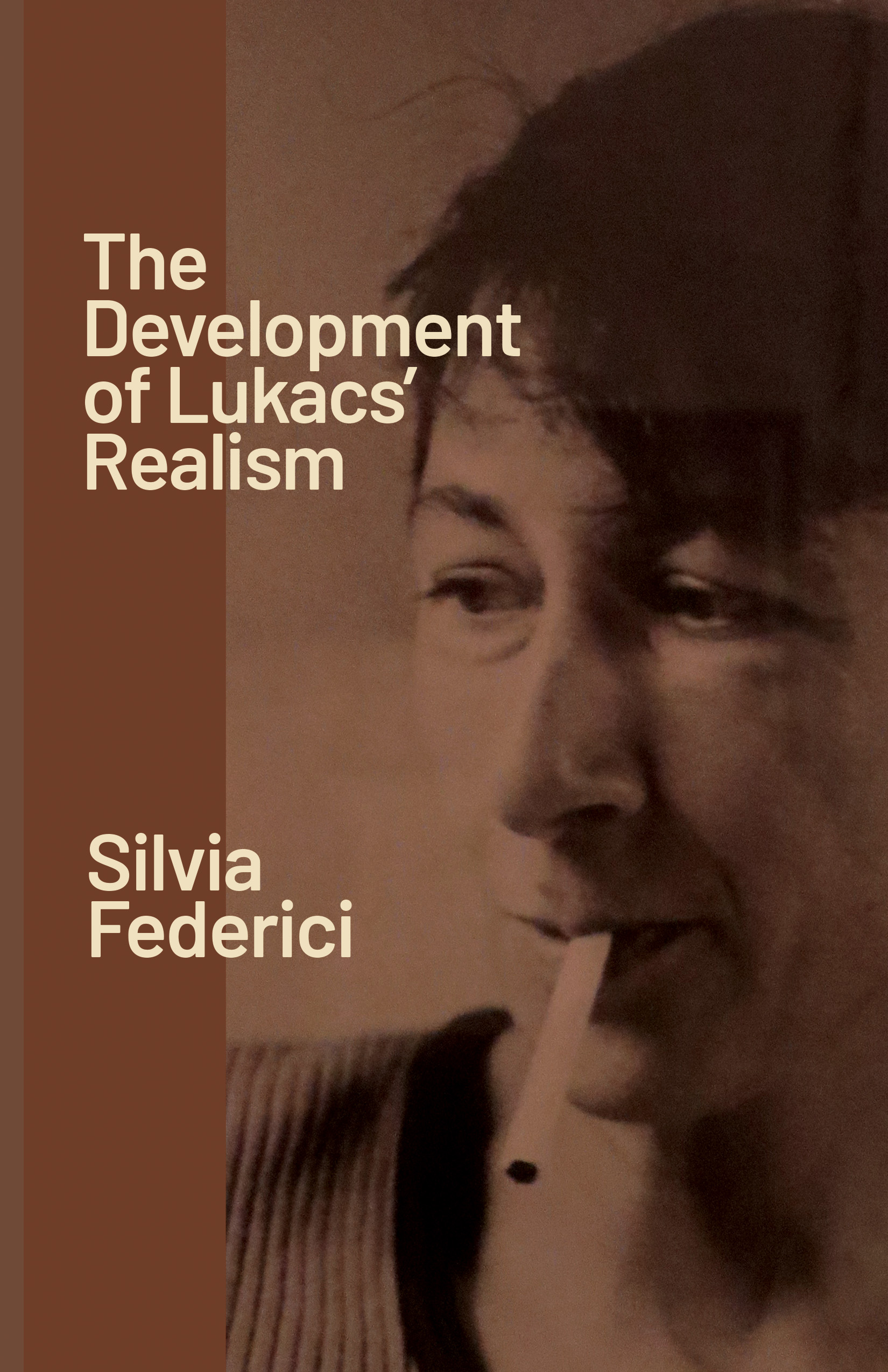
An unpublished early text that shows Silvia Federici working through questions of realism, art, and aesthetics.
Written in 1980 and never published, The Development of Lukács’ Realism reveals a lesser known early chapter in the intellectual trajectory of Silvia Federici. Best known for her groundbreaking feminist analyses of capitalism, reproduction, and social struggle, Federici appears here as a young philosopher engaging deeply with the traditions of Marxism, German idealism, and aesthetic theory. Taking György Lukács as her central figure, Federici challenges the standard narrative that divides his work into sharply opposed phases: early idealism, revolutionary Marxism, and later aesthetic realism. Against this account, she argues for a striking continuity across Lukács’ career, tracing how his commitment to realism persists through shifting philosophical vocabularies and political commitments. What emerges is a rigorous and unsparing critique of Lukács’ realism as an unresolved attempt to reconcile absolute values, historical meaning, and the role of consciousness within modern capitalist society.
Moving from early literary essays to History and Class Consciousness and the late aesthetic writings, Federici situates Lukács within the broader crisis of bourgeois culture in the twentieth century: the fragmentation of life, the loss of totality, and the search for meaning in art, philosophy, and revolution. Her analysis foregrounds the metaphysical tensions that haunt Lukács’ thought – between subjectivity and objectivity, form and content, ethics and history – while raising broader questions about Marxist philosophy, aesthetics, and the legacy of Western Marxism itself. At once a study of Lukács and a diagnosis of a wider intellectual tradition, The Development of Lukács’ Realism invites readers to reconsider the foundations of Marxist aesthetics and the unresolved contradictions that continue to shape critical theory today.
Discover more from Progressive Geographies
Subscribe to get the latest posts sent to your email.


