
I am sometimes contacted by people who want advice about working with Michel Foucault’s archives. Although I’m generally happy to try to help, and there are others who are better placed to advise on specifics, I thought it might be useful to set out some basic information in one place.
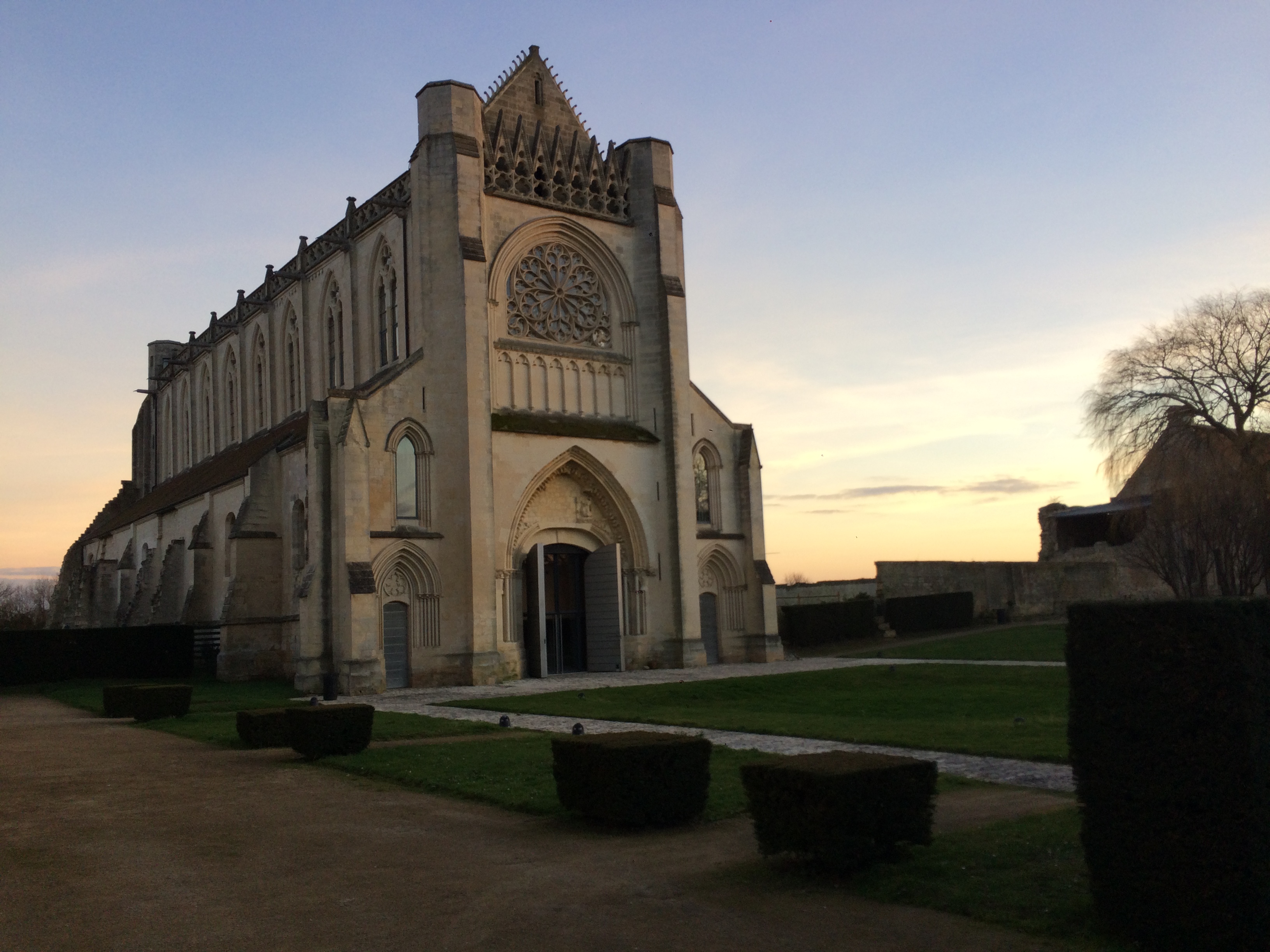
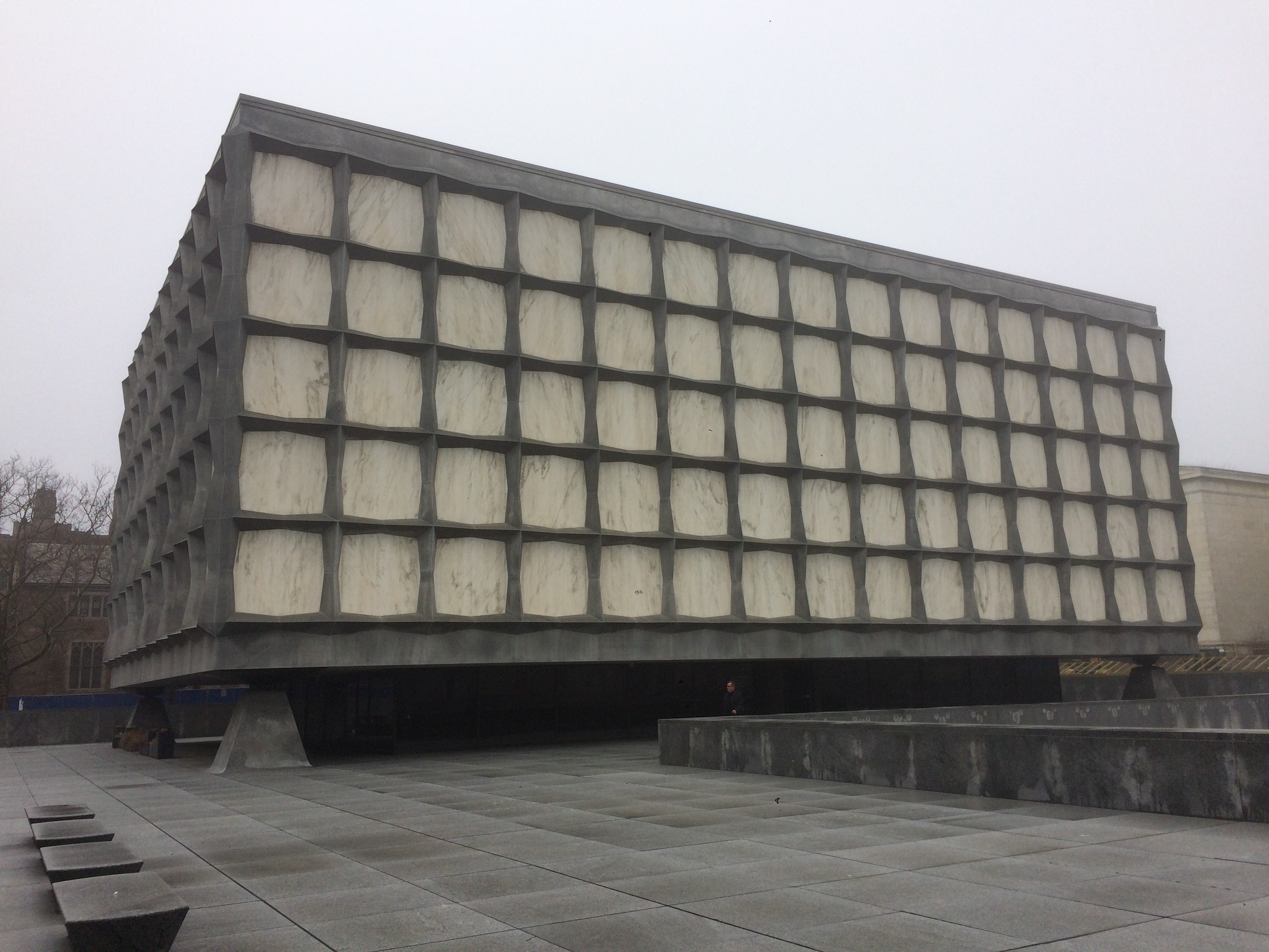
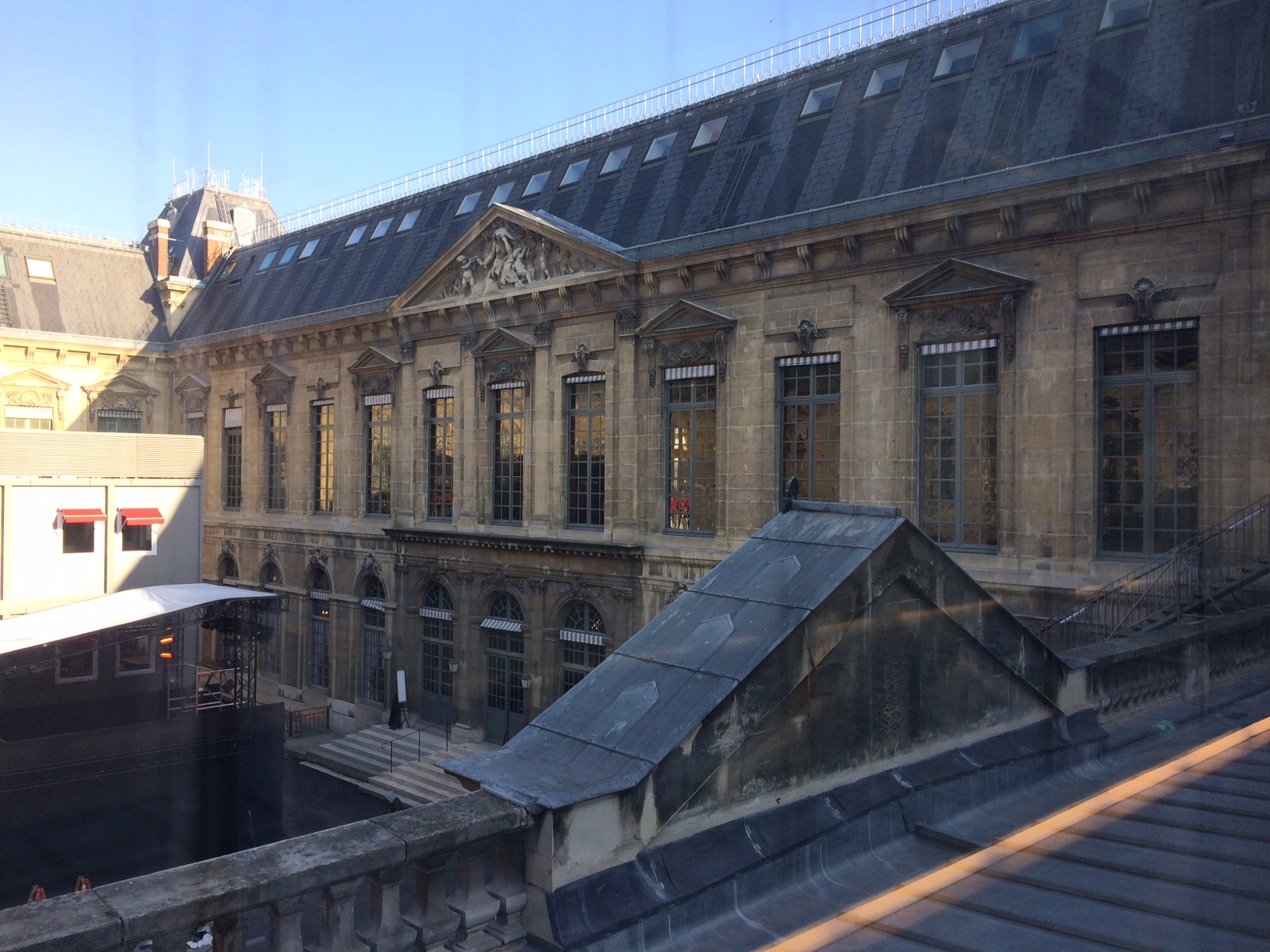
[Photographs of the IMEC abbey building; the Beinecke library at Yale; and the Bibliothèque nationale]
The most substantial archive of Foucault’s papers is at the Bibliothèque nationale de France, in the Archives et manuscrits department which is at the Richelieu site in central Paris, not the modern Mitterrand site a few miles to the southeast. The main fonds is the collection of papers from Foucault’s apartment, deposited in 2013, in 117 boxes. This has the code NAF 28730. (NAF stands for Nouvelles acquisitions françaises, though it’s not commonly spelt out anymore.) This collection was sold by Daniel Defert after the French government had declared it a national treasure to avoid it going outside France. It comprises the notes from Foucault’s lecture courses, reading notes from the 1960s to his death, manuscripts of some of his books, works he did not publish himself, including Les Aveux de la chair, lectures and other talks. Much of this collection has been edited and published in the past couple of decades. The inventory online is not very detailed – there is a much more detailed inventory which can be accessed in the reading room.
Foucault rarely dated things. He filed his notes thematically rather than chronologically, so material from quite different periods can sometimes be found in one place. Many of Foucault’s reading notes from this fonds, which were often written in the Richelieu reading rooms, have been digitised. They are available at the Fiches de Lecture site, which is searchable.
There are several other collections of Foucault papers at the Bibliothèque nationale. NAF 28824 has the first material deposited, in 1994. It has five boxes which include a manuscript of an early version of L’Archéologie du savoir, and multiple draft versions of the second and third volumes of the Histoire de la sexualité.
A collection of papers which were in Foucault’s mother’s house were deposited by Foucault’s nephew, Henri-Paul Fruchaud in 2015. It has the code NAF 28803. This has 14 boxes and comprises papers from the 1940s and 1950s, and includes his diploma thesis on Hegel, now published.
There are letters in three main fonds. Two are entirely comprised of correspondence, NAF 28804 (one box) and NAF 29070 (two boxes), deposited in 2015 and 2022. The archivist now in charge of the collections, Philippe Chevallier, has done valuable work in cataloguing them. NAF 29005 is the “Archives personnelles et professionnelles Michel Foucault-Daniel Defert”, and contains more correspondence, some material collected by Daniel Defert after Foucault’s death, and photographs, across 18 boxes.
To use these collections you need a BnF reader card, and I always try to request boxes about a week in advance.
Before this huge amount of material became available, researchers often worked at IMEC and in Berkeley. Some of the materials there are now in Paris too but these collections retain value. IMEC (Institut Mémoires de l’Edition Contemporaine) used to be based in Paris, but has been located at a residential site in Normandy for many years – a converted abbey, with a magnificent reading room. It holds the papers of the Centre Michel Foucault. For many years these papers were crucial source of information and while much of its material is now published or at the BNF, not all of it. IMEC also has a lot of material relating to the Groupe information sur les prisons and some of Foucault’s other political activism, including the Groupe Information Santé, and papers relating to his collaborative research with Félix Guattari’s CERFI group. IMEC also has recordings of many Foucault lecture courses – now transcribed and published. IMEC has the archives of many other interesting French theorists including Jacques Derrida and Louis Althusser, and of journals and publishers. It’s a wonderful place to stay, board includes great food and it is always filled with interesting people. You can order things in advance, but material is stored on site so is usually brought quickly if you order while there.
UC Berkeley’s Bancroft library has a smaller collection of Foucault materials, relating to Foucault’s time not just in California but elsewhere in North America. Much of it was deposited by Paul Rabinow. There are a lot of recordings of lectures and discussions, and some texts. There is a valuable guide written by Alain Beaulieu, “The Foucault Archives at Berkeley”, published in Foucault Studies (open access), which I found very helpful when I was working there.
A lot of Foucault’s personal library was sold to Yale University’s Beinecke library, Michel Foucault library of presentation copies – these were books with dedications by their authors to Foucault. Books are stored off-site and have to be ordered in advance.
More recently, the pre-1984 books in the Foucault-Defert apartment have been catalogued and the inventory can be searched at La bibliothèque de M. Foucault et de D. Defert. This is a really fascinating insight into the books they owned.
Foucault’s correspondence archives generally contain only the letters he received, with very few drafts of the letters he sent. Some people in this period kept copies; Foucault didn’t. The other side can often be found in the archives of his correspondents. To reconstruct correspondence generally requires work in at least two archives, but many letters must be presumed lost or in private hands. I made an attempt at a chronological listing of the Foucault-Georges Dumézil correspondence, for example.
Foucault’s dossier personnel at the Collège de France is restricted until 2046, but you can apply for a dérogation to see it.
A recent discovery was copies of the typescripts of Foucault two doctoral theses – on madness and Kant. They are accessible at the BU Henri-Piéron of Université Paris Cité, and have been scanned and are available online – Folie et déraison. Histoire de l’expérience de la folie à l’âge classique (3 volumes) and Introduction à l’Anthropologie de Kant (2 volumes). Emmanuel le Doeff discusses these theses and the work they make possible in two articles – “À la découverte des thèses annotées de Michel Foucault” and “Les thèses annotées de Michel Foucault sont désormais en ligne sur Numerabilis” (both open access).
The University at Buffalo hosted Foucault as a visiting professor in 1970 and 1972, and their Special Collections have some really valuable materials relating to these visits, mainly due to the deposit of papers from his host John K. Simon. They also have audio recordings of Foucault’s 1972 course and part of his 1970 one, which are now available online. The 1972 course has recently been transcribed as Histoire de la vérité, edited by Henri-Paul Fruchaud and Orazio Irrera. I discuss what the Buffalo archives reveal briefly here and in more detail in a piece in Foucault Studies. Leonhard Riep discusses Foucault’s 1972 Buffalo course in detail in an essay in that same issue of Foucault Studies.
With the notable exception of Berkeley, I’ve not found a comparable collection for Foucault’s other North American visits – there appear to be no archives at Cornell or McGill. I discuss the 1972 Cornell visit here and Marcelo Hoffman and I discuss the 1971 Montreal visit here. There are some things relating to Foucault’s time in Sweden in the Carolina Rediviva library at the University of Uppsala, and his time in Germany in the Archiv Institut Français de Hambourg at the Staatsarchiv Hamburg. Simeon Wade’s papers are at ONE Archives at the USC Libraries.
A lot of audio and video recordings of Foucault, many coming from these archives, are now available online. I try to keep that page updated but things keep being moved and links break.
It is worth saying that Foucault’s handwriting can be a challenge. The Fiches de lecture site is a good way to get used to his style, and abbreviations. I found it useful to look at a few of the texts which have been reproduced in facsimile alongside a transcription – there are some in the first edition of the Foucault Cahier de l’Herne, for example. It’s worth bearing in mind that many of his texts were written for only him to read, and his draft manuscripts and letters can sometimes be a bit clearer. But he struggled to read his own handwriting at times, as some of the reference errors in Naissance de la clinique at least would attest.
I think that these are the main collections relating to Foucault, though his correspondence is in many more places, and some dedicated books are in different collections. The papers of Georges Canguilhem are at the Centre d’Archives en Philosophie, Histoire et Édition des Sciences, École Normale Supérieure; Roland Barthes at the Bibliothèque nationale; Georges Dumézil at the Collège de France; Jean Hyppolite at the École Normale Supérieure; Althusser and Derrida at IMEC, and some of Derrida’s papers at UC Irvine and his library at Princeton University; Roland Kuhn in Frauenfeld, Switzerland; Ludwig Binswanger in Tübingen, Germany…
Comments or additions welcome. As the discovery of the theses or the Buffalo recordings shows, things continue to be found which fill in detail of Foucault’s life and career. I think it is likely there are still tape recordings and correspondence in basements or garages still to be discovered.
There are a lot of other Foucault resources on this site – bibliographies, audio and video files, some textual comparisons, some short translations, etc.
Although more of a research resource, this is the 91st post of a weekly series, posted every Sunday throughout 2025, and continuing into a second year. The posts are short essays with indications of further reading and sources. The pieces are not as formal as something I’d try to publish more conventionally, but are hopefully worthwhile as short sketches of histories and ideas. They are usually tangential to my main writing focus, a home for spare parts, asides, dead-ends and possible futures. I hope there is some interest in them. They are provisional and suggestions are welcome. A few, usually shorter, pieces in a similar style have been posted mid-week.
The full chronological list of ‘Sunday histories’ is here, with a thematic ordering here.
Discover more from Progressive Geographies
Subscribe to get the latest posts sent to your email.


https://newbooksnetwork.com/the-connoisseur-2
Pingback: The Foucault centenary | Progressive Geographies