A photo I took of Daniel Defert in 2015 when I visited him in Foucault’s former apartment on the rue de Vaugirard. He’s signing a copy of Un Vie Politique for me.
I’m very sorry to hear the news of the death of Daniel Defert, partner of Foucault, important editor of his work, academic and activist. I first met Defert in 1998, and he was always very generous and supportive of my work. We met at several conferences, and in 2015 he kindly gave me some time to talk about Foucault’s work at his apartment, as I was doing the early work for my series of books on Foucault. He will be much missed. If you read French, Un vie politique gives a good sense of his activism.
French sociologist Daniel Defert, who was a leading figure in the country’s fight against AIDS, died Tuesday at the age of 85, according to an organisation he founded.
“It is with deep sadness that we learn this evening of the death of Daniel Defert,” Aides, a French anti-AIDS organisation, tweeted on Tuesday.
“He leaves behind him the indelible memory of a life of activism and the principles of action that the 2,200 activists…
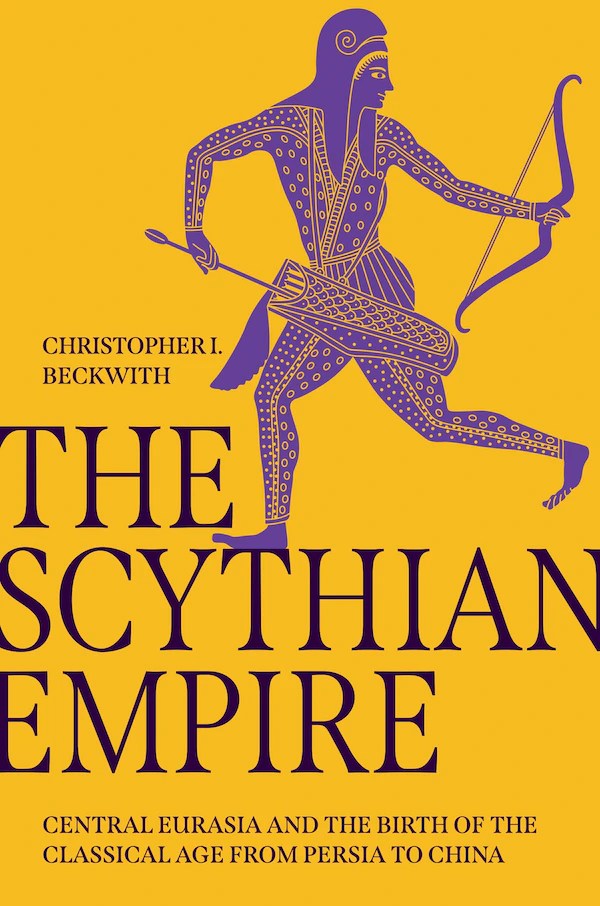
In the late 8th and early 7th centuries BCE, Scythian warriors conquered and unified most of the vast Eurasian continent, creating an innovative empire that would give birth to the age of philosophy and the Classical age across the ancient world—in the West, the Near East, India, and China. Mobile horse herders who lived with their cats in wheeled felt tents, the Scythians made stunning contributions to world civilization—from capital cities and strikingly elegant dress to political organization and the world-changing ideas of Buddha, Zoroaster, and Laotzu—Scythians all. In The Scythian Empire, Christopher I. Beckwith presents a major new history of a fascinating but often forgotten empire that changed the course of history.
At its height, the Scythian Empire stretched west from Mongolia and ancient northeast China to northwest Iran and the Danube River, and in Central Asia reached as far south as the Arabian Sea. The Scythians also ruled Media and Chao, crucial frontier states of ancient Iran and China. By ruling over and marrying the local peoples, the Scythians created new cultures that were creole Scythian in their speech, dress, weaponry, and feudal socio-political structure. As they spread their language, ideas, and culture across the ancient world, the Scythians laid the foundations for the very first Persian, Indian, and Chinese empires.
Filled with fresh discoveries, The Scythian Empire presents a remarkable new vision of a little-known but incredibly important empire and its peoples.
Ce livre d’entretiens revient sur un itinéraire et des chantiers ouverts dès les années 1970. Il restitue les rencontres, les échanges et les travaux menés avec Michel Foucault ou Robert Badinter. Cette histoire pénitentiaire s’ouvre par la révolte des prisons, en France comme aux États-Unis, et montre comment la question carcérale est devenue d’actualité. Michelle Perrot pousse ensuite les portes des maisons d’arrêt et des centrales, s’intéresse aux « modèles » d’enfermement, mais aussi au « gibier pénal », c’est-à-dire aux détenus et aux prisonnières. Elle s’arrête enfin sur la séduction du fait divers qui, par la médiatisation du crime, attise le voyeurisme mais constitue aussi une entrée pour saisir l’état d’une société et la part obscure des individus.
Over the last month I have made some progress on a few different aspects of this project.
The main task in Paris was continuing working through the boxes of Georges Dumézil’s courses, held at the Collège de France archives. I’ve now done a quick first pass through all the courses he delivered there, and then went back to the less complete materials for his courses at the École pratique des hautes études (EPHE). I’d already looked at some of those before, when editing Mitra-Varuna, as that book was first delivered as a course. His handwriting remains exceptionally difficult to read, and his course materials are very messy, with lots of crossing out and marginal additions – including some on scraps of paper pasted onto the main sheets. It would be difficult, I think, to work out the order he presented things in the class. It seems to me there are good reasons, beyond his smaller audience, why these have not been edited for publication. But there are some benefits to his way of working. For one, unlike Foucault, he dates things quite precisely, and makes notes of when material has been removed to be used elsewhere. When sent letters he often adds the date he received them, and/or completes incomplete dating by the writers. In his books he often gives quite precise indications of when he first delivered material, and it does seem much, possibly most, of what he published developed from teaching. There are also a lot of additional materials in the teaching boxes – offprints, some correspondence, reading notes, etc. Some of these are interesting and make some connections I hadn’t thought about before.
I also worked through most of the first of two boxes of material relating to the administration of his courses, this one relating to the EPHE. These are something of a treasure trove of small details, with an ability to track who attended classes, and various bits of correspondence with those students. He also often indicates who attended lectures as notes on his course manuscripts. After previously reading reports of the large audiences for Foucault and Barthes, these numbers are often very small indeed. But there are some interesting names.
Various things, along with the strikes on 19th January, when the archive was closed, meant that I didn’t get to work through the second of these two boxes, relating to the Collège de France teaching, in any detail. That will be the first thing on my list when I am next back in Paris. There are also some boxes relating to Dumézil’s teaching outside of France, which I also plan to work through on a later visit.
While in the archive I try to resist following interesting lines of inquiry that the materials suggest, or even locating texts they mention, but just take down details on what is there. I make lots of notes to follow up on some things, and return to these periodically. Some lead down some long paths that would have taken up far too much time in the archive, but are interesting to explore when the archive is closed. For example, a letter to Dumézil from the Bollingen foundation, leading to a bursary for Mircea Eliade, led me to look into the funding, which came from the fortunes of Paul Mellon. The foundation was initially set up to support Carl Jung’s English translations, which opened up the question of the links between Eliade and Jung and the Eranos circle, the connection to an early French Heidegger translator, Dumézil’s trip to Peru, and the link, obliquely, to Henri Lefebvre’s friend Norbert Guterman. A rabbit hole that became a warren. Lots of paths to follow here.
I also spent a lot of time at the Bibliothèque nationale, but this time exclusively at the modern Mitterand site. There I filled in some gaps in my record of Émile Benveniste’s early teaching. The records for the EPHE are easy to access on Gallica (or Persée), but the Annuaire du Collège de France only has limited coverage there, and the British Library copies don’t go back before the war. At the BnF, the 1930s and 1940s issues I wanted to look at are only on microfilm, which is a pain – unlike the British Library, the machines are not linked to computers, so it’s not possible to export images. But the records are worth digging through. As I knew from Foucault’s courses, and the work I’d done on Dumézil, the titles of courses are preannounced, and then there are, usually, reports on their content at the end of the academic year. Benveniste was elected to a chair in 1937, but only taught for two years before the war, and then not again until 1944-45 after the Liberation. As he was Jewish, he left France before the German invasion. I already had seen the records for the post-war period, where he taught until his stroke in 1969. Material from his final courses has been published as Last Lectures. Going through the old issues of the Annuaire was worthwhile, not just for the first two years he taught after his election, but also some other teaching he did there, and for some other information I found. All this will be really useful as I work in more detail on his publications, and I hope at some point with his archive.
I also did some more work on Barthes’s lecture courses, and his occasional use of Benveniste there and in his published writings. I think my notes on this are now a comprehensive survey, though I’m not sure it adds up to more than that. I also spent some time working through Lacan’s limited references to Benveniste. For knowing where to look, I am grateful to Dany Nobus, who particularly alerted me to the useful Index des noms propres et titres d’ouvrages dans l’ensemble des séminaires de Jacques Lacan, by Guy Le Gaufey and others. A couple of the references to Benveniste are in as-yet unpublished seminars, for which there are various unauthorised transcripts online, so it’s good news that the legal problems have been addressed, and the slow publication of the remaining seminars is starting up again. As I’ve previously mentioned, Seminar XIV, La Logique du fantasme was published recently.
I’ve also worked through Deleuze and Guattari’s use of Dumézil in A Thousand Plateaus, which is interesting though brief, though a bit misleading in its stark oppositions. More useful for its critical approach is Derrida’s engagement with Benveniste, especially in the hospitality and death penalty lectures, and on the question of testimony. Only parts of the testimony material are published so far, so this might be something to revisit when those lectures are published, as I imagine they are the next in the series – or perhaps to consult the manuscripts at IMEC or Irvine.
While in Paris I did some other stuff at the Mitterand site, following up on several references to things which are not easy to find in the UK. Some of these concerned some of the more obscure sources for the story of Paul Pelliot, the publications of Robert Gauthiot and related studies to the early writings of Benveniste. While I’m not sure how much I will do with the discussions of Barthes, Lacan and Derrida’s use on Benveniste, I do think there will be something on the Pelliot, Gauthiot, Meillet and Benveniste connections. I also went back to the Musée Guimet when in Paris, now with a better idea of what I was looking at. Only a little of the material Pelliot brought back is on display, but it was interesting to see at least some of his haul.
Salle Pelliot, Musée national des arts asiatiques Guimet
Shortly after I got home, I had the good news of the acceptance of a piece I wrote over the summer on “Foucault and Dumézil on Antiquity”. The minor revisions are now done, and the piece is in production with Journal of the History of Ideas. Since initially finishing that piece in September, along with a couple of other pieces still out to review, it’s been good to take a bit of distance from Foucault, after his work being the focus of my research for most of the last decade. But before Christmas I did write a review of Elisabetta Basso’s excellent Young Foucault: The Lille manuscripts on psychopathology, phenomenology, and anthropology, 1952–1955, translated by Marie Satya McDonough (Columbia University Press, 2022) in The Journal of the History of the Behavioral Sciences. The review is unfortunately behind a paywall, so I posted some key excerpts on this blog, and I’m happy to share the full review if you email me. I have agreed to write a chapter on “Foucault and structuralism” for a major collection, but that’s not due for eighteen months so I have plenty of time to think about that. I think these are likely to be the last pieces on Foucault for a while.
Previous updates on this project can be found here, along with links to some research resources and forthcoming publications, including the reedition of Dumézil’s Mitra-Varuna. There is a lot more about the Foucault work here. The final volume, The Archaeology of Foucault, is now out in the UK, with the rest of the world to follow shortly.
Digital technologies are having a profound effect on the temporalities of individuals, households and organisations. We now expect to be able to instantly source a vast array of information at any time and from anywhere, as well as buy goods with the click of a button and have them delivered within hours, while time management apps and locative media have altered how everyday scheduling and mobility unfolds.
Digital Timescapes makes the case that we have transitioned to an era where the production and experience of time is qualitatively different to the pre-digital era. Rob Kitchin provides a synoptic account of this transition, charting how digital technologies, in a wide range of manifestations, are reconfiguring everyday temporalities. Attention is focused on the temporalities associated with six sets of everyday practices: history and memory; politics and policy; governance and governmentality; mobility and logistics; planning and development; and work and labour. Critically, how to challenge and reorder digitally mediated temporal power is examined through the development of an ethics of temporal care and temporal justice.
Conceptually and empirically rich, Digital Timescapes is an essential guide to our new temporal regime. It will be of interest to students and scholars of Media Studies, Science and Technology Studies, Sociology, Anthropology, Human Geography, and History and Memory Studies, as well as those who are interested in how digital technologies are transforming society.
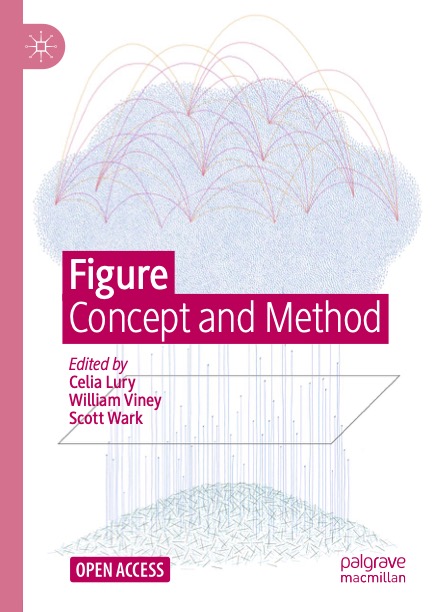
Celia Lury, William Viney, Scott Wark (eds.), Figure: Concept and Method – Palgrave Macmillan, 2022 (open access)
This open access book shows how figures, figuring, and configuration are used to understand complex, contemporary problems. Figures are images, numbers, diagrams, data and datasets, turns-of-phrase, and representations. Contributors reflect on the history of figures as they have transformed disciplines and fields of study, and how methods of figuring and configuring have been integral to practices of description, computation, creation, criticism and political action. They do this by following figures across fields of social science, medicine, art, literature, media, politics, philosophy, history, anthropology, and science and technology studies. Readers will encounter figures as various as Je Suis Charlie, #MeToo, social media personae, gardeners, asthmatic children, systems configuration management and cloud computing – all demonstrate the methodological utility and contemporary relevance of thinking with figures. This book serves as a critical guide to a world of figures and a creative invitation to “go figure!”
The editors have told me that there is a less expensive e-book available, and that currently if you buy direct from Routledge, code FLE22 gives a 20% discount.
One for libraries, at this price… [update Jan 2023: a more affordable e-book is also available. If you buy direct from Routledge, code FLE22 currently gives a 20% discount]
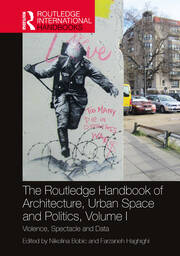
For architecture and urban space to have relevance in the 21st Century, we cannot merely reignite the approaches of thought and design that were operative in the last century. This is despite, or because of, the nexus between politics and space often being theorized as a representation or by-product of politics. As a symbol or an effect, the spatial dimension is depoliticized. Consequently, architecture and the urban are halted from fostering any systematic change as they are secondary to the event and therefore incapable of performing any political role. This handbook explores how architecture and urban…
A few years ago I wrote a piece on Foucault, Shakespeare and ceremony, and then, pre-pandemic, considered whether there might be a bigger project on this question. It led to a survey piece for a handbook edited by some Warwick colleagues. The pieces are available here:
While the Foucault and Shakespeare project remains in the background – I’ve published one other piece on the relation, and have some draft pieces delivered as lectures – the ceremony idea did not get developed. I didn’t feel I had anything distinctive to say, and I wasn’t sure I was sufficiently interested to explore further. But maybe the second piece is useful for others exploring these ideas.


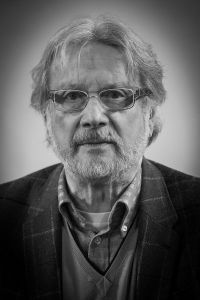 Daniel Defert (2015)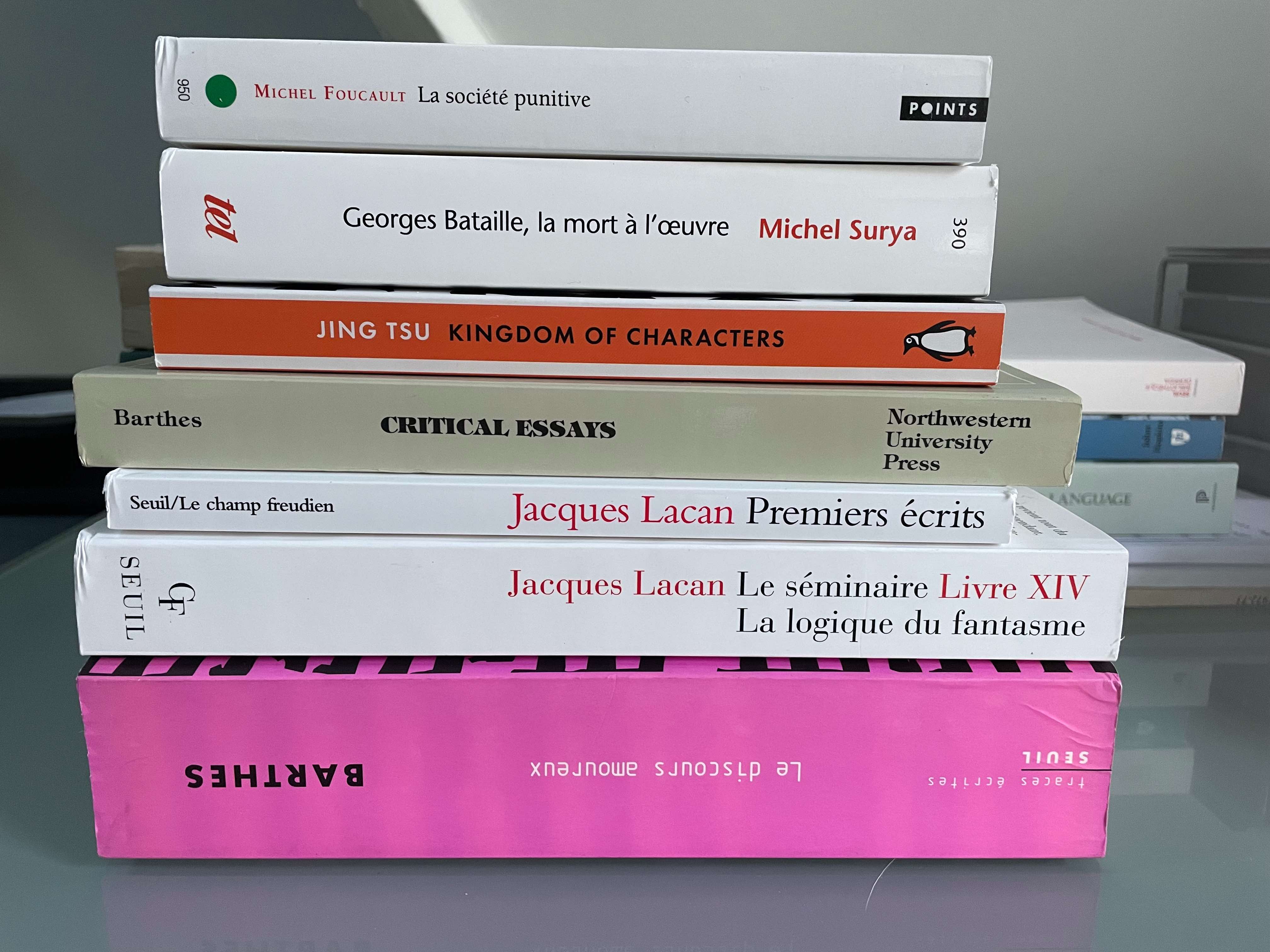
 Michelle Perrot, Punir et comprendre. Entretiens avec Frédéric Chauvaud, Presses Universitaires de Rennes, 2023.